Chola Dynasty: Capital, Founder, Kings, Time Period and History
The President of India (Articles 52-62)

Get in Touch with RASonly!



The President of India is the head of state of the Republic of India. The President is the formal head of the executive, legislative, and judicial branches of India and is also the commander-in-chief of the Indian Armed Forces.
- The Constitution of India, 1950 (COI), provides a detailed framework for the election, powers, and functions of the President, ensuring a balance between ceremonial duties and substantial powers in times of necessity.
- The President of India is the executive head of State and the supreme commander of the Indian Armed Forces.
- All the executive business of the country is carried out in the name of the president.
- Article 52 of the COI states that there shall be a president.
President of India (Articles 52–62)
Part V — The Union
Chapter I — The Executive
| Article | Description |
|---|---|
| Article 52 | The President of India |
| Article 53 | Executive Power of the Union |
| Article 54 | Election of President |
| Article 55 | Manner of Election of President |
| Article 56 | Term of office of President |
| Article 57 | Eligibility for re-election |
| Article 58 | Qualifications for Election as President |
| Article 59 | Conditions of President’s office |
| Article 60 | Oath or affirmation by the President |
| Article 61 | Procedure for Impeachment of the President |
| Article 62 | Time of holding election to fill a vacancy in the office of President and the term of office or person elected to fill a casual vacancy |
1. Article 52: The President of India
Article 52 establishes the position of the President as the head of state of India. The President represents the unity and integrity of the nation, acting as a symbol of the country's sovereignty while performing constitutional duties in line with the guidance of the government.
2. Article 53: Executive Power of the Union
The executive power of the Union shall be vested in the President and shall be exercised by him directly or through officers subordinate to him in accordance with this Constitution. The President acts on the advice of the Prime Minister and the Council of Ministers.
3. Article 54: Election of President
Article 54 outlines the process of electing the President of India. The election is held by an electoral college consisting of elected members from both Houses of Parliament and State Legislative Assemblies. The procedure ensures a democratic and representative election of the nation's head of state.
4. Article 55: Manner of Election of President
Article 55 spells out that the election of the President of India is conducted by a proportional representation system through a single transferable vote. Every voter votes and the candidate with the necessary amount of votes is declared the winner, so that the representation is fair among the states.
5. Article 56: Term of office of President
Article 56 defines the term of office of the President of India as five years, beginning from the date they assume office. The President holds office until a successor is elected, with provisions for the extension of tenure under certain circumstances, such as re-election or constitutional changes.
6. Article 57: Eligibility for Re-election
Article 57 gives the President of India a privilege to re-elect after the expiry of his term. The President has no limit on the terms that he/she can serve in a single term thus they are able to serve more years as long as they are re-elected into the office by the electoral college as per the election process.
7. Article 58: Qualifications for Election as President
Article 58 sets forth the qualifications for becoming President of India. A candidate must be a citizen of India, at least 35 years old, and eligible to be elected as a member of the Lok Sabha. They should not hold any office of profit under the government.
8. Article 59: Conditions of President’s office
Article 59 establishes the conditions of the President’s office. It highlights that the President cannot hold any office of profit, and their office is subject to the jurisdiction of the Indian Constitution. The President’s term is safeguarded by rules preventing interference in their duties while ensuring political neutrality.
9. Article 60: Oath or affirmation by the President
Article 60 asks the President of India to swear an oath of office before assuming his responsibilities. The President swears to preserve, protect, and defend the Constitution of India and uphold the integrity, sovereignty, and well-being of the nation. This oath emphasizes the President’s constitutional responsibility.
10. Article 61: Procedure for Impeachment of the President
Article 61 gives the procedure of impeaching the President of India. This may include the impeachment of the President on the basis of breaching the Constitution by resolution of two-thirds of majority in both Houses of Parliament. It is a process that makes it accountable and protects the integrity of the highest office in India.
11. Article 62: Time of holding election to fill a vacancy in the office of President and the term of office or person elected to fill a casual vacancy
Article 62 outlines how a presidential election should be conducted in case of a vacancy. The election should be run either in six months of the vacancy. The individual who is chosen to fill the vacancy is in office until the end of the term thus stable leadership in the country.
Conclusion
The President of India serves as the constitutional head of the nation, ensuring unity, integrity, and the smooth functioning of the democratic framework. While most powers are exercised on ministerial advice, the President plays a vital role in upholding the Constitution and maintaining the balance of governance.
BEST SELLER
🏆 PRELIMS
RAS Pass
Prelims focused Hindi & English
₹399
✓
Prelims Topic-Wise Tests
✓
Subject-Wise Tests
✓
Full-Length Prelims Tests
✓
Daily Current Affairs Tests
✓
Prelims PYQs Tests
✓
Detailed Solutions & Analysis
✓
All Rajasthan Ranking
✓
Unlimited Reattempts
✓
Mains Tests
✓
Hindi & English Tests
✓
All Rajasthan Ranking
Trusted by 5,000+ Students
Post Category
- RAS Salary
- Result
- RAS Admit Card
- RAS Job
- RAS Cutoff
- Preparation Tips
- RAS Answer Key
- RAS Exam Analysis
- RAS Syllabus
- RAS Previous Year Papers
- RPSC RAS Exam Pattern
- RAS Interview
- RAS Exam Date
- RAS Vacancy
- RAS Test Series
- RAS Best Books
- RAS Preparation Resources
- RAS Coaching Centre
- History
- Polity
- Geography
- Economics
- Science
- Art and Culture
- RPSC RAS Application Form
- RPSC RAS Notification
- RAS Eligibility Criteria
- UPSC Exam
- RPSC RAS Mains
Visit Our RASonly Offline Center
Our Expert Faculty

Bhunesh Sir
Current Affairs · 13+ Yrs

Aamir Khan Sir
RAS-2017 · IIM Ahm.
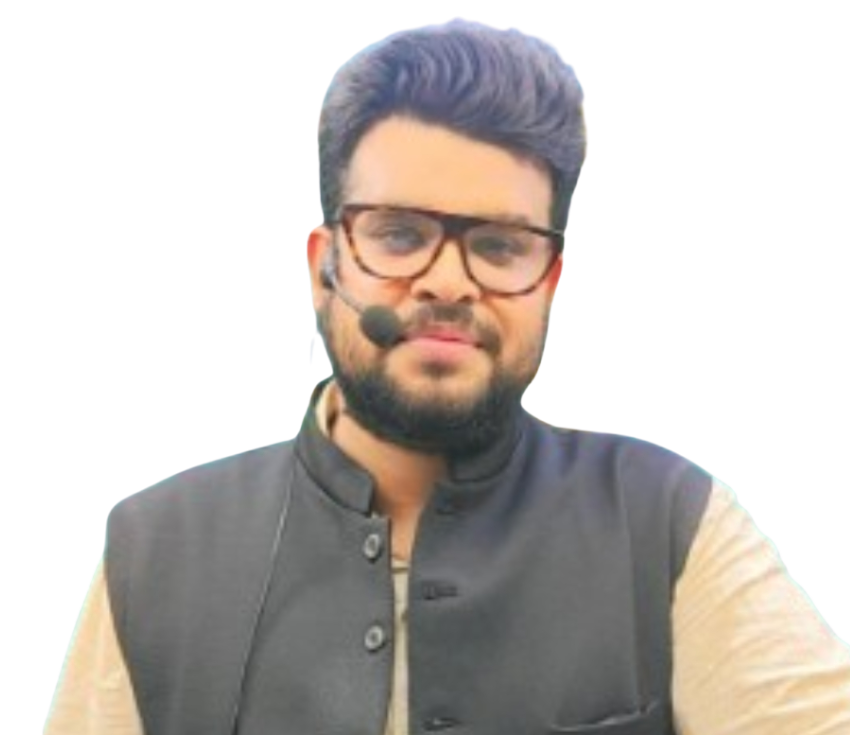
Akash Sir
Polity · 8+ Yrs
Free Resources
Official Mobile App

RASOnly App
by OTSAdda · Free
Full Video Lectures
Mock Tests & PYQs
Daily Current Affairs
AI Mock Interview
Free Download · No subscription needed to install
RAS 2024 Toppers — RASonly
Rank 2
Virendra Charan
Rank 9
Bhoopinder Singh
Rank 26
Aanchal Nagpal
Rank 33
Lokendra Singh
Rank 45
Amar Rathore
Rank 46
Manasvini Verma

Join RASonly WhatsApp Community
Get daily current affairs, exam alerts, free study material and tips from expert faculty — right on WhatsApp.
Join for Free →RASonly Interview Guidance Program

Mr. Ashok Jain
Ex-Chief Secretary Govt of Rajasthan
- IAS officer of the 1981 batch, Rajasthan cadre.
- Passionate about mentoring the next generation of RAS officers with real-world insights.
- Got retired in Dec 2017 from the post of Chief Secretary of the state of Rajasthan.

Mr. Guru Charan Rai
Ex-ASP / SP in Jaisalmer
- Guru Charan Rai, IPS (Retd), retired as Inspector General of Police (Security), Rajasthan, Jaipur in 2017.
- Served as ASP and SP in Jaisalmer, Nagaur, Sri Ganganagar, Sawai Madhopur, Dausa, Sikar, and Karauli.
- He also held key positions as DIGP and IGP in the Law and Order division.

Mr. Rakesh Verma
Ex-IAS Officer, B.Tech, MBA, and M.A. (Economics)
- IAS officer of the 1981 batch and retired in Chief Secretary Rank.
- Civil servant of high repute and vast experience.
- Has been teaching UPSC CSE subjects for the last six years.
Related Post
Daily Current Affairs for RAS Exam Preparation 2026
9th Rashtriya Poshan Maah 2026
October 16, 2026
Seva Sankalp, Khadi Mahotsav 2026
October 16, 2026
Conclusion of Multinational Exercise Tarang Shakti 2.0
October 15, 2026