Kushan Empire: History, Rulers, Administration, Economy, Art, Decline
RPSC Personality Test: What It Is & How to Prepare (2026 Guide)
Get in Touch with RASonly!

The RPSC personality test is the last, and often the most nerve-wracking, hurdle before you become an RAS officer. After months of grinding through the Prelims and Mains, this stage feels different - there's no syllabus to finish, no fixed answer to write. It's just you, a panel, and a conversation. And that's exactly what makes it tricky. This guide walks you through what actually happens in the interview and how to genuinely prepare for it.

If you've cleared the RPSC RAS Mains exam, congratulations - you're now one step away from the finish line. But that last step, the RPSC personality test, is the one that trips up even the most well-prepared candidates. It's not because they don't know enough. It's because the personality test doesn't test what you know. It tests who you are.
In this guide, we will actually discuss these things - what exactly happens during the RPSC personality test, how it differs from the written exams you have already cleared, and a preparation plan that you can genuinely follow.
What Is the RPSC Personality Test?
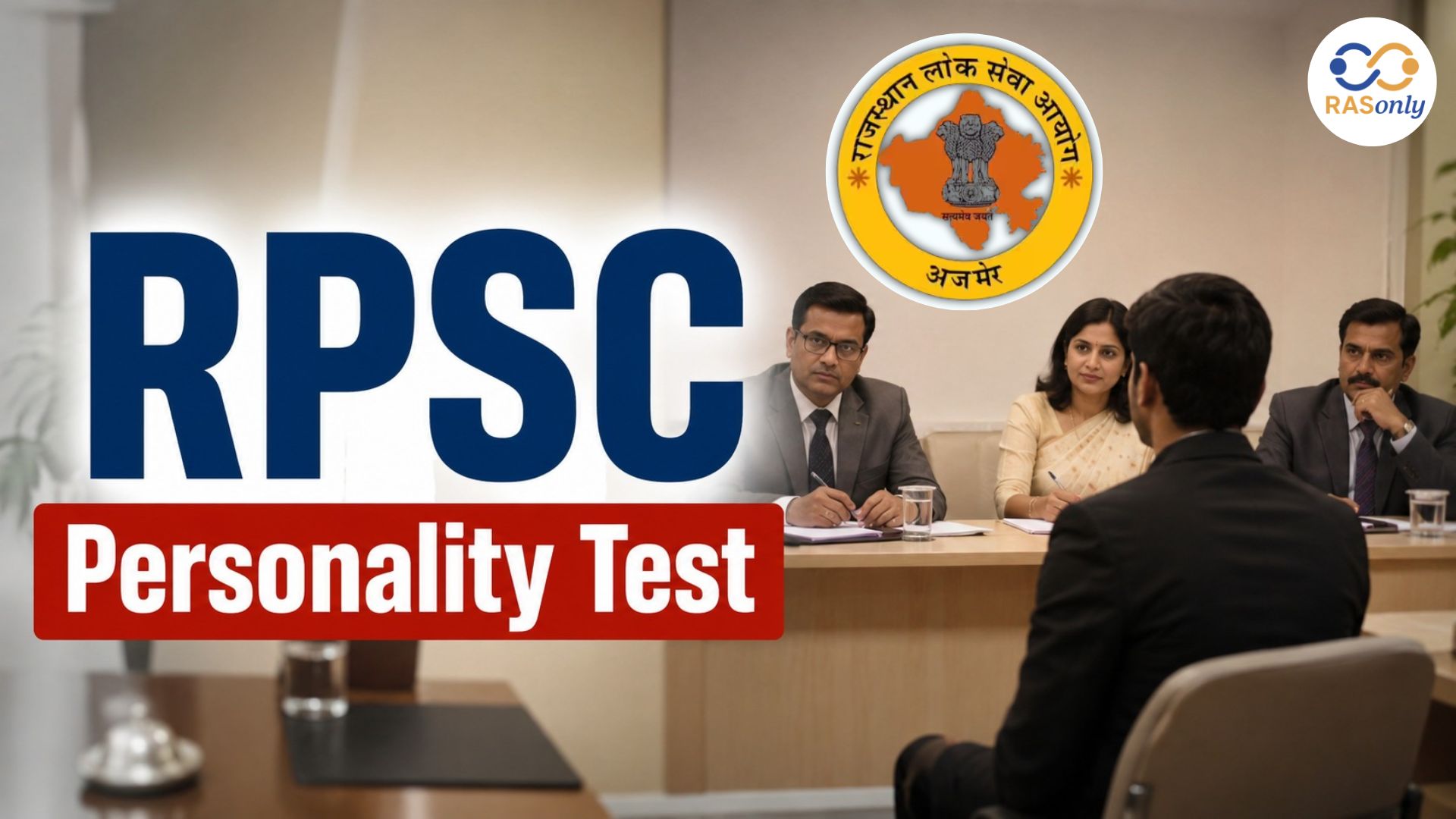
The RPSC personality test, commonly called the RAS interview or viva voce, is the final stage of the RAS selection process, conducted after the Preliminary and Main examinations. Unlike the written papers, this round doesn't measure how much you've memorized. It measures how you think, how you communicate, and how well-suited you are for a career in public administration.
A panel of experienced RPSC members - usually retired bureaucrats and subject experts - sits across from you and has a conversation. That conversation covers your background, your opinions on current issues, your understanding of Rajasthan's governance and challenges, and sometimes tricky ethical dilemmas designed to see how you react under pressure.
The interview typically lasts 20 to 30 minutes and carries 100 marks, which are added directly to your Mains score to determine the final merit list. Given how close RAS rankings usually are, these 100 marks can genuinely make or break your selection.
What Does the Panel Actually Evaluate?
It helps to know what the panel is looking for before you start preparing, because it changes how you prepare. Broadly, they're assessing four things:
- Personality and composure - your body language, tone, and how comfortable you are under scrutiny.
- Awareness - how well you understand current affairs, especially anything connected to Rajasthan.
- Problem-solving ability - how you approach real administrative dilemmas, not textbook answers.
- Ethics and integrity - whether your values align with what's expected of a civil servant.
None of these can be crammed the night before. That's exactly why most candidates struggle here more than in the written exams.
How to Prepare for the RPSC Personality Test
1. Know Your DAF Better Than Anyone Else
Your Detailed Application Form (DAF) is the panel's starting point. Every hobby, every job, every academic detail you've mentioned is fair game. If you've written that you enjoy trekking, be ready to talk about the last trek you actually went on. If you've mentioned your hometown, know its local issues, schemes, and history in some depth. Vague or rehearsed answers about your own life are one of the fastest ways to lose the panel's confidence.
2. Build a Daily Current Affairs Habit
You don't need to read five newspapers a day. You need a consistent, focused habit - one that prioritizes Rajasthan-specific news (schemes, local governance, economic developments) alongside national issues. Make short notes so you can recall specifics, not just headlines, when asked.
3. Practice Structured, Honest Answers
You can always tell when someone's giving a rehearsed answer - and trust me, so can the panel. When they ask about your strengths, weaknesses, or a tough decision you've made, don't recite something you memorized. Just walk them through it naturally: what the situation was, what you were thinking at the time, what you actually did, and how it turned out. This matters even more with ethical questions. There's usually no "right" answer here - the panel just wants to see how your mind works when things aren't black and white.
4. Take Mock Interviews Seriously
This is the one step most aspirants underprepare for. Reading about interviews and actually sitting through one under panel-like pressure are completely different experiences. A real mock interview forces you to think on your feet, exposes gaps in your preparation, and helps you get comfortable with the discomfort of being questioned. If you're preparing on your own and don't have access to a panel of experienced mentors, structured mock interview practice - like the sessions offered on RAS Only's mock interview platform - can give you that real-panel experience along with feedback you can actually act on before the real thing.
5. Get the Basics Right — Documents and Dress Code
Preparation isn't only intellectual. Keep your documents organized well in advance: admit card, ID proof, original and photocopied certificates, and category certificates, if applicable. Dress formally and simply - a light shirt with dark trousers for men, or a saree or salwar-kameez in sober colors for women, works well. These details won't win you marks, but getting them wrong creates unnecessary stress on interview day.
Common Questions Asked in the RPSC Personality Test
While every panel is different, certain themes come up repeatedly:
- Why do you want to join the Rajasthan administrative services?
- What are the biggest challenges facing Rajasthan today?
- Questions tied directly to your optional subject or academic background.
- Questions about tough situations or right-and-wrong choices in government work.
- Your strengths, your weaknesses, and how you dealt with failure or a conflict in the past.
For these questions, don't try to memorize answers. Just think about what you want to say simply. This way, no matter what the panel asks, you can talk naturally instead of getting stuck.
Quick Tips to Crack the RPSC Personality Test
- Keep answers clear and concise; avoid overly flowery language.
- It's completely fine to say "I don't know" rather than guessing incorrectly - panels respect honesty over bluffing.
- Maintain eye contact and a calm tone, even with unexpected or provocative questions.
- Don't contradict what you've written in your DAF.
- Stay updated until the morning of your interview - panels sometimes ask about that day's news.
Important Links
Conclusion
The RPSC personality test rewards preparation that's honest and consistent - not preparation that's rushed in the final week. Know your own profile, stay genuinely updated on Rajasthan's issues, and put yourself through real mock interview pressure before the actual day. Do that, and you walk into the interview room with far less to worry about than most candidates in the queue with you.
FAQs
It's the interview round of the RAS selection process, where a panel assesses your personality, awareness, and suitability for administrative roles rather than your academic knowledge.
The personality test carries 100 marks, which are added to your Mains score for the final RAS merit list.
Typically between 20 and 30 minutes, depending on the panel and the flow of questions.
It isn't "difficult" in the way a written exam is, but it's unpredictable - which is exactly why consistent current affairs reading and mock interview practice matter so much.
BEST SELLER
🏆 PRELIMS
RAS Pass
Prelims focused Hindi & English
₹399
✓
Prelims Topic-Wise Tests
✓
Subject-Wise Tests
✓
Full-Length Prelims Tests
✓
Daily Current Affairs Tests
✓
Prelims PYQs Tests
✓
Detailed Solutions & Analysis
✓
All Rajasthan Ranking
✓
Unlimited Reattempts
✓
Mains Tests
✓
Hindi & English Tests
✓
All Rajasthan Ranking
Trusted by 5,000+ Students
Post Category
- RAS Salary
- Result
- RAS Admit Card
- RAS Job
- RAS Cutoff
- Preparation Tips
- RAS Answer Key
- RAS Exam Analysis
- RAS Syllabus
- RAS Previous Year Papers
- RPSC RAS Exam Pattern
- RAS Interview
- RAS Exam Date
- RAS Vacancy
- RAS Test Series
- RAS Best Books
- RAS Preparation Resources
- RAS Coaching Centre
- History
- Polity
- Geography
- Economics
- Science
- Art and Culture
- RPSC RAS Application Form
- RPSC RAS Notification
- RAS Eligibility Criteria
- UPSC Exam
- RPSC RAS Mains
Visit Our RASonly Offline Center
Our Expert Faculty

Bhunesh Sir
Current Affairs · 13+ Yrs

Aamir Khan Sir
RAS-2017 · IIM Ahm.
Akash Sir
Polity · 8+ Yrs
Free Resources
Official Mobile App

RASOnly App
by OTSAdda · Free
Full Video Lectures
Mock Tests & PYQs
Daily Current Affairs
AI Mock Interview
Free Download · No subscription needed to install
RAS 2024 Toppers — RASonly
Rank 2
Virendra Charan
Rank 9
Bhoopinder Singh
Rank 26
Aanchal Nagpal
Rank 33
Lokendra Singh
Rank 45
Amar Rathore
Rank 46
Manasvini Verma

Join RASonly WhatsApp Community
Get daily current affairs, exam alerts, free study material and tips from expert faculty — right on WhatsApp.
Join for Free →RASonly Interview Guidance Program

Mr. Ashok Jain
Ex-Chief Secretary Govt of Rajasthan
- IAS officer of the 1981 batch, Rajasthan cadre.
- Passionate about mentoring the next generation of RAS officers with real-world insights.
- Got retired in Dec 2017 from the post of Chief Secretary of the state of Rajasthan.

Mr. Guru Charan Rai
Ex-ASP / SP in Jaisalmer
- Guru Charan Rai, IPS (Retd), retired as Inspector General of Police (Security), Rajasthan, Jaipur in 2017.
- Served as ASP and SP in Jaisalmer, Nagaur, Sri Ganganagar, Sawai Madhopur, Dausa, Sikar, and Karauli.
- He also held key positions as DIGP and IGP in the Law and Order division.

Mr. Rakesh Verma
Ex-IAS Officer, B.Tech, MBA, and M.A. (Economics)
- IAS officer of the 1981 batch and retired in Chief Secretary Rank.
- Civil servant of high repute and vast experience.
- Has been teaching UPSC CSE subjects for the last six years.


Daily Current Affairs for RAS Exam Preparation 2026
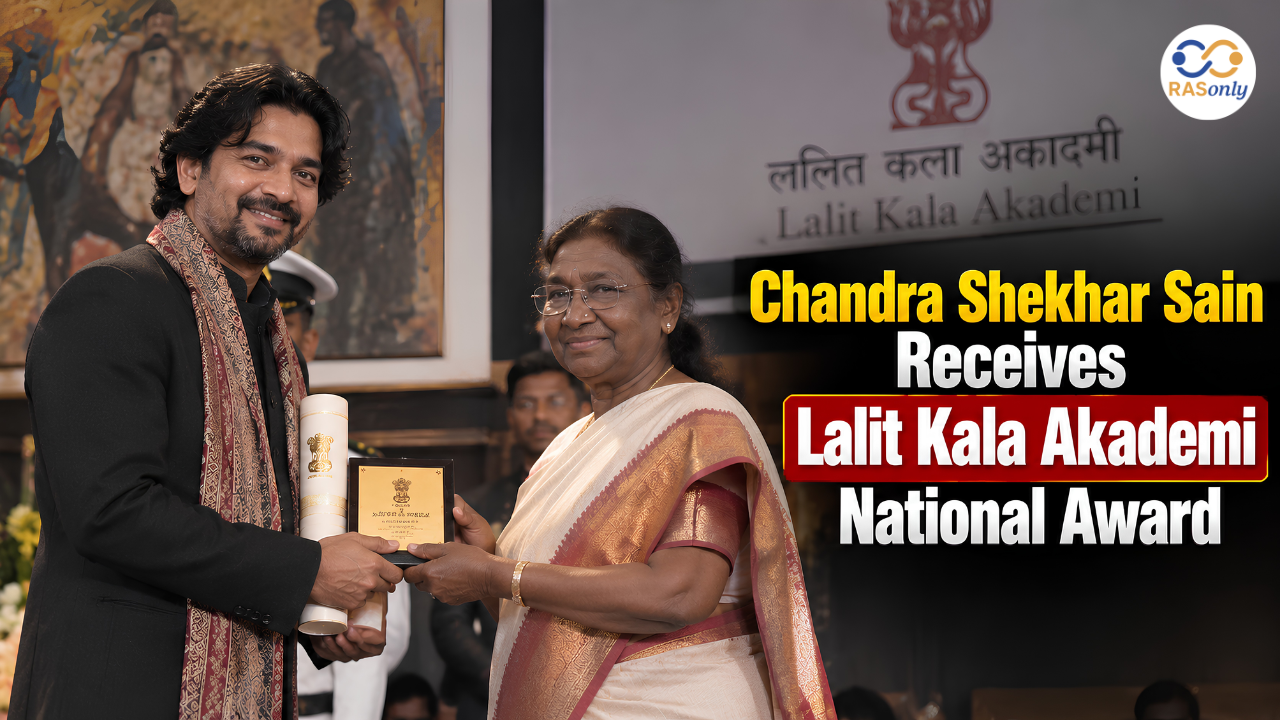
Chandra Shekhar Sain Receives Lalit Kala Akademi National Award
October 01, 2026
Jodhpur to Get India’s Third Dedicated Tropical Medicine Institute
October 01, 2026
Establishment of the Aesthetic Office
September 30, 2026