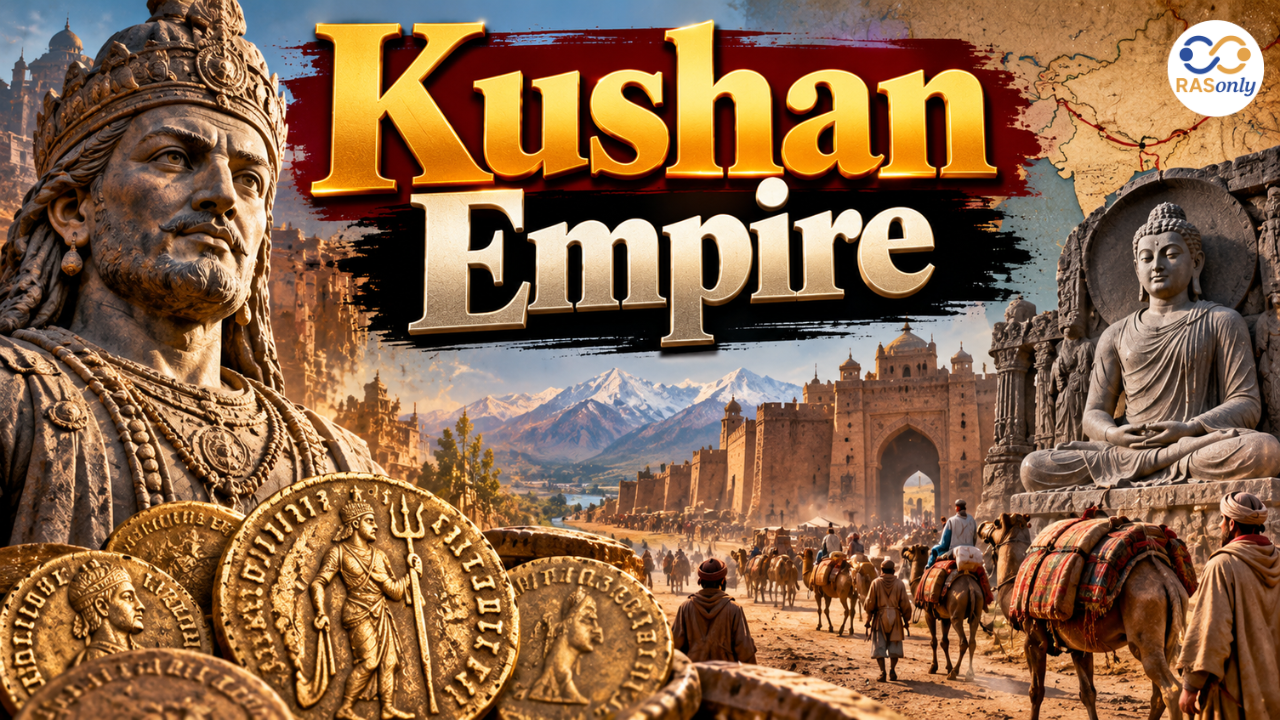
Kushan Empire: History, Rulers, Administration, Economy, Art, Decline
Rajasthan GK for RAS 2026: Complete Syllabus, Important Topics, Notes, MCQs & Preparation Strategy

Get in Touch with RASonly!

Rajasthan GK plays a decisive role in RAS 2026 preparation, as a large number of questions in both Prelims and Mains are directly based on state-specific topics. This complete guide covers the full Rajasthan GK syllabus, including History, Geography, Polity, Economy, Culture, Environment and Current Affairs along with practice MCQs. If prepared strategically, Rajasthan GK can significantly boost your cut-off score and overall merit ranking in the RPSC RAS examination.

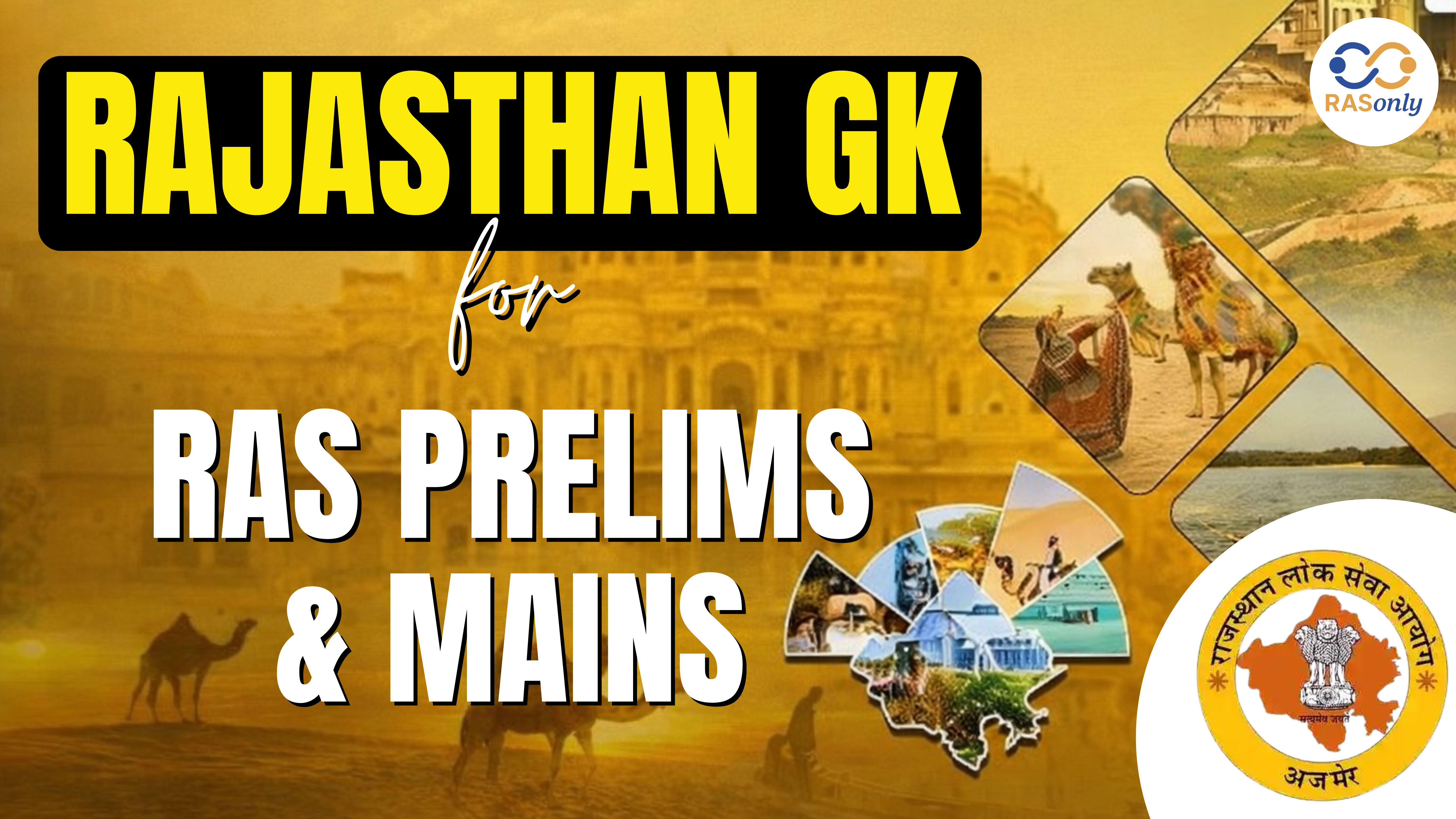
Rajasthan GK for RAS 2026 is one of the most scoring and decisive sections in the RPSC RAS Exam. In both RAS Prelims General Knowledge and RAS Mains General Studies papers, Rajasthan-specific topics carry significant weightage. Questions from Rajasthan History, Rajasthan Geography, Rajasthan Polity, Rajasthan Economy, Rajasthan Art and Culture, Rajasthan Environment, and Rajasthan Current Affairs are consistently asked every year. A strong command over Rajasthan GK for RAS Prelims and Mains can directly improve your cut-off score and final merit ranking.
For serious aspirants preparing for RAS 2026, mastering Rajasthan GK is not optional—it is essential. The RPSC RAS syllabus clearly emphasizes state-specific knowledge, and many direct as well as analytical questions are framed from Rajasthan-based topics. This complete syllabus-based Rajasthan GK guide for RAS 2026 covers important topics, subtopics, and high-priority areas, along with practice MCQs and Mains answer-writing questions to help you prepare in a focused, structured, and exam-oriented manner.
Rajasthan Geography for RAS 2026
Rajasthan Geography for RAS 2026 is one of the most scoring and high-weightage areas in Rajasthan GK for RAS Prelims and Mains. Physical features, rivers, mineral distribution, climate, soils, agriculture, irrigation projects and wildlife are often questions that are asked. The correct conceptualization and preparation using maps is crucial in achieving a good result in the RPSC RAS Exam.
Rajasthan Geography is directly linked to RAS Prelims General Knowledge (objective questions) and RAS Mains GS Paper I & III (analytical and descriptive questions). RAS 2026 is particularly interested in such topics as the Indira Gandhi Canal Project, mineral resources of Rajasthan, desertification, and water management.
Physical Features of Rajasthan
Understanding the physiography of Rajasthan is crucial for both conceptual clarity and map-based MCQs.
- Aravalli Range – One of the oldest mountain ranges in the world; divides Rajasthan into eastern and western parts.
- Thar Desert (Great Indian Desert) – Located in western Rajasthan; characterized by sand dunes and arid climate.
- Eastern Plains – Fertile alluvial plains suitable for agriculture.
- Plateau Regions – Hadoti Plateau and Mewar Plateau.
- Drainage System – Internal drainage in desert areas; Chambal as a major perennial river system.
Rivers & Lakes of Rajasthan
River systems and lakes are frequently asked in RAS Prelims.
- Major Rivers – Chambal, Banas, Luni, Sabarmati, Mahi
- Chambal River – Only major perennial river of Rajasthan.
- Luni River – Flows into the Rann of Kutch (inland drainage).
- Sambhar Lake – Largest inland salt lake in India.
- Artificial Lakes – Pichola, Fateh Sagar, Jaisamand (Udaipur region).
- Indira Gandhi Canal Project – Major irrigation project transforming western Rajasthan.
Climate & Soils
- Climate and soil types are important for agriculture-based questions.
- Climate – Arid and semi-arid; extreme temperature variations.
- Western Rajasthan – Very low rainfall (less than 200 mm in some areas).
- Soil Types:
- Desert soil
- Alluvial soil (eastern plains)
- Black soil (Hadoti region)
- Red and yellow soil
Agriculture & Irrigation in Rajasthan
Agriculture is closely connected with geography in RAS syllabus.
- Major Crops – Wheat, Mustard, Bajra, Gram, Cotton, Guar
- Irrigation Sources – Wells, tube wells, canals
- Indira Gandhi Canal Command Area – Major agricultural transformation
- Micro-irrigation – Drip and sprinkler systems in arid zones
Mineral Resources of Rajasthan
Rajasthan is known as the mineral-rich state of India.
- Leading producer of zinc, lead, gypsum and marble
- Makrana Marble – Used in Taj Mahal
- Barmer Basin – Petroleum production
- Important mineral belts – Udaipur, Bhilwara, Jodhpur
Mineral location-based questions are very common in RAS Prelims.
Wildlife & Environment
Environmental awareness is increasingly important in RAS.
- Ranthambore National Park – Tiger Reserve
- Sariska Tiger Reserve
- Keoladeo National Park (Bharatpur) – UNESCO World Heritage Site
- Desert National Park – Great Indian Bustard habitat
- Biosphere reserves and desert ecology conservation programs
Note: Study of the Rajasthan Geography using a physical map of Rajasthan. Memorize mineral distribution, source of rivers, and national parks on a regular basis.
GK Geography for RAS 2026 – MCQs
Q1. The Aravalli Range runs from:
A. North to South
B. East to West
C. Southwest to Northeast
D. Southeast to Northwest
Answer: C. Southwest to Northeast
Q2. Luni River drains into:
A. Arabian Sea
B. Bay of Bengal
C. Rann of Kutch
D. Sambhar Lake
Answer: C. Rann of Kutch
Q3. The largest inland salt lake of India is:
A. Didwana
B. Pachpadra
C. Sambhar
D. Lunkaransar
Answer: C. Sambhar
Q4. Black soil in Rajasthan is mainly found in:
A. Jaisalmer region
B. Hadoti region
C. Shekhawati region
D. Mewar hills
Answer: B. Hadoti region
Q5. Barmer Basin is associated with:
A. Coal
B. Iron ore
C. Petroleum
D. Bauxite
Answer: C. Petroleum
Rajasthan History for RAS 2026
Rajasthan History for RAS 2026 is one of the highest-weightage sections in Rajasthan GK for RAS Prelims and Mains. Fact based questions are often questioned in Prelims, questions that are analytical and cause and effect orientated are mostly asked in RAS Mains GS Paper I. Issues like the Rajput period, freedom movement in Rajasthan, and integration of princely states are particularly vital to achieving good marks in RPSC RAS Exam.
It is important that a well-designed knowledge of Ancient, Medieval, Modern and Post-Independence Rajasthan be prepared regarding objective preparation as well as answer writing practice.
Ancient Rajasthan
Ancient Rajasthan covers prehistoric culture, Indus Valley Civilization sites, and early tribal settlements.
- Kalibangan (Hanumangarh) – Major Indus Valley Civilization site
- Evidence of pre-Harappan and Harappan culture
- Early tribal communities – Bhils, Meenas
- Matsya Janapada and early regional powers
Ancient Rajasthan questions are often location-based in Prelims.
Rajput Period (Medieval Political History)
The Rajput era is one of the most important topics in Rajasthan History for RAS.
- Major Rajput States – Mewar, Marwar, Amber (Jaipur), Bikaner
- Important rulers – Maharana Pratap, Rana Sanga, Prithviraj Chauhan
- Battle of Haldighati (1576) – Maharana Pratap vs Akbar
- Battle of Khanwa (1527) – Rana Sanga vs Babur
Political resistance, valor traditions and state formation are key themes for Mains.
Mughal–Rajput Relations & Architecture
- Political alliances between Rajputs and Mughals
- Administrative integration under Akbar
- Fort architecture:
- Chittorgarh Fort
- Kumbhalgarh Fort
- Amer Fort
- Mehrangarh Fort
- UNESCO-listed hill forts of Rajasthan
Architecture and cultural synthesis are important analytical areas in Mains
Freedom Movement in Rajasthan
Modern Rajasthan History is extremely important for RAS Mains.
- Praja Mandal Movements in princely states
- Peasant movements in Bijolia and Begun
- Role of leaders like Vijay Singh Pathik
- Political awakening in princely Rajasthan
Questions from Praja Mandal and peasant struggles are repeatedly asked in RAS.
Integration & Formation of Rajasthan (1948–1956)
This is a high-priority topic for RAS 2026.
- Rajasthan formed in multiple phases (1948–1956)
- Integration of 22 princely states
- Matsya Union and Greater Rajasthan formation
- Administrative reorganization after independence
Note: Integration of Rajasthan, Praja Mandal movements, and Rajput resistance movements are extremely high-yield topics for RAS Mains answer writing.
RPSC RAS History for RAS 2026 – MCQs
Q1. Battle of Haldighati (1576) was fought between:
A. Rana Sanga and Babur
B. Maharana Pratap and Akbarv
C. Prithviraj Chauhan and Ghori
D. Rana Kumbha and Alauddin Khilji
Answer: B. Maharana Pratap and Akbar
Q2. Kalibangan is located in which district of Rajasthan?
A. Bikaner
B. Hanumangarh
C. Jodhpur
D. Barmer
Answer: B. Hanumangarh
Q3. The Bijolia Peasant Movement was led by:
A. Jai Narayan Vyas
B. Vijay Singh Pathik
C. Manikya Lal Verma
D. Haribhau Upadhyay
Answer: B. Vijay Singh Pathik
Q4. Rajasthan was fully integrated as a state in which year?
A. 1948
B. 1949
C. 1950
D. 1956
Answer: D. 1956
Q5. Battle of Khanwa (1527) was fought between:
A. Babur and Rana Sanga
B. Akbar and Maharana Pratap
C. Humayun and Sher Shah
D. Jahangir and Amar Singh
Answer: A. Babur and Rana Sanga
Rajasthan Polity & Administration
Rajasthan Polity and Administration is a core component of Rajasthan GK for RAS 2026, especially important for RAS Mains GS Paper II and RAS Interview. Questions are frequently asked about the structure of the Rajasthan Government, constitutional provisions, Panchayati Raj institutions, RPSC functions, and administrative reforms. A clear understanding of state governance and constitutional framework is essential for both objective and analytical questions in the RPSC RAS exam.
State Government Structure
- Governor of Rajasthan – Constitutional head of the state
- Chief Minister & Council of Ministers – Real executive authority
- Rajasthan Legislative Assembly (Vidhan Sabha) – Unicameral legislature
Judiciary in Rajasthan
- Rajasthan High Court (Jodhpur & Jaipur Bench)
- District and subordinate courts
- Role in judicial review and state-level justice administration
Panchayati Raj System
- Three-tier system:
- Gram Panchayat
- Panchayat Samiti
- Zila Parishad
- Rajasthan was the first state to implement Panchayati Raj in 1959 (Nagaur).
Rajasthan Public Service Commission (RPSC)
- Constitutional body under Article 315 of the Indian Constitution
- Conducts RAS and other state service examinations
- Advises the state government on recruitment and service matters
Administrative Divisions of Rajasthan
- District and divisional administrative structure
- Periodic reorganization and creation of new districts
- Role of District Collector and divisional administration
Note: Focus on constitutional articles related to state governance, Panchayati Raj provisions, and RPSC functions for both Prelims and Mains.
Rajasthan Polity & Administration – MCQs
Q1. Rajasthan follows which type of legislature?
A. Bicameral
B. Unicameral
C. Federal
D. Presidential
Answer: B. Unicameral
Q2. Rajasthan was the first state to implement Panchayati Raj in:
A. 1957
B. 1958
C. 1959
D. 1960
Answer: C. 1959
Q3. RPSC is established under which Article of the Constitution?
A. 312
B. 315
C. 320
D. 324
Answer: B. 315
Q4. The Rajasthan High Court is located at:
A. Jaipur only
B. Jodhpur only
C. Jodhpur with bench at Jaipur
D. Udaipur
Answer: C. Jodhpur with bench at Jaipur
Q5. The real executive authority in Rajasthan is:
A. Governor
B. Chief Secretary
C. Chief Minister
D. Speaker
Answer: C. Chief Minister
Rajasthan Economy for RAS 2026 (Rajasthan GK for RAS)
Rajasthan Economy for RAS 2026 is a highly important section of Rajasthan GK for RAS Prelims and Mains. Economic development, state budget analysis, agriculture patterns, mining output, and tourism growth are frequently asked in the RPSC RAS Exam.During Prelims, there usually are factual and scheme-based questions and during RAS Mains GS Paper III, analytical questions based on development issues facing Rajasthan, resource management and policy changes tend to be phrased.
The structure of agriculture in Rajasthan Economic Survey, State Budget, and trends in industrial growth will be necessary in order to score well in Rajasthan GK of RAS 2026.
Agriculture & Allied Sectors (Rajasthan GK for RAS Economy)
The economy of Rajasthan is agricultural in nature and is a common theme in Rajasthan GK of RAS.
- Major crops: Wheat, Mustard, Bajra, Gram, Cotton, Guar
- Livestock economy – Rajasthan has one of the highest livestock populations in India
- Dairy cooperatives and milk production
- Arid agriculture challenges – low rainfall, water scarcity, desertification
- Irrigation through Indira Gandhi Canal and groundwater resources
Industrial Development in Rajasthan (Important for RAS GK)
Rajasthan’s industrial growth is closely linked with its mineral resources.
- Textile industry – Bhilwara, Jaipur
- Mining industry – Zinc, Lead, Marble, Gypsum
- Petroleum production – Barmer Basin
- Handicrafts and MSME sector
- Industrial corridors and infrastructure expansion
Mineral-based industry questions are common in Rajasthan GK for RAS Prelims.
Tourism Sector in Rajasthan (RAS Exam Focus)
Tourism significantly contributes to Rajasthan’s service economy.
- Heritage tourism – Jaipur, Udaipur, Jodhpur
- Desert tourism – Jaisalmer, Bikaner
- Religious tourism – Pushkar, Nathdwara
- UNESCO World Heritage Sites – Hill Forts of Rajasthan, Keoladeo National Park
Tourism-based direct questions are frequently seen in Rajasthan GK for RAS.
Rajasthan State Budget & Economic Survey (High Priority for RAS 2026)
This section is extremely important for RAS Mains and Interview.
- Rajasthan Budget 2025–26 highlights
- Employment and welfare schemes
- Infrastructure development projects
- Growth rate and sectoral contribution (Agriculture, Industry, Services)
- Fiscal policies and revenue sources
Important: For Rajasthan GK for RAS 2026, regularly revise Rajasthan Economic Survey and Budget data, as scheme-based and data-oriented questions are frequently asked in both Prelims and Mains.
RAS 2026 Rajasthan Economy Practice MCQs
Q1. Rajasthan is the leading producer of which mineral?
A. Coal
B. Zinc
C. Iron
D. Manganese
Answer: B. Zinc
Q2. The textile city of Rajasthan is:
A. Kota
B. Jaipur
C. Bhilwara
D. Ajmer
Answer: C. Bhilwara
Q3. Which sector contributes significantly to Rajasthan’s service economy?
A. Steel
B. Tourism
C. Shipbuilding
D. IT exports
Answer: B. Tourism
Q4. Indira Gandhi Canal mainly benefits which region?
A. Hadoti
B. Mewar
C. Western Rajasthan
D. Shekhawati
Answer: C. Western Rajasthan
Q5. Livestock economy is important because Rajasthan has:
A. Highest rainfall
B. Largest forest cover
C. High livestock population
D. Large fishing industry
Answer: C. High livestock population
GK for RAS Rajasthan Art, Culture & Heritage
Rajasthan Art and Culture for RAS 2026 is one of the most scoring sections of Rajasthan GK for RAS Prelims. Direct factual questions, match-the-following, and statement-based MCQs are frequently asked from folk dances, festivals, architecture, and traditional art forms.Cultural identity, heritage conservation and tourism linkage in RAS Mains can be posed analytically. To achieve a high level of accuracy in Prelims there must be a systematic revising of the Rajasthan culture.
Folk Dances (Important for Rajasthan GK for RAS)
- Ghoomar
- Kalbelia (UNESCO recognized)
- Bhavai
- Terah Taali
- Chari
Folk Music & Instruments
- Maand (traditional classical folk style)
- Sarangi
- Algoza
- Ravanhatta
- Morchang
Festivals of Rajasthan
- Gangaur
- Teej
- Pushkar Fair
- Desert Festival (Jaisalmer)
- Mewar Festival
Architecture & Heritage
- Hill Forts of Rajasthan (UNESCO World Heritage Sites)
- Chittorgarh, Kumbhalgarh, Amer, Jaisalmer Fort
- Temple architecture (Dilwara Temples, Eklingji)
- Havelis of Shekhawati
Match-the-following and location-based questions from Rajasthan Art & Culture are common in Rajasthan GK for RAS Prelims.
Rajasthan Art, Culture & Heritage – MCQs
Q1. Ghoomar dance is mainly associated with:
A. Tribal community
B. Royal women of Rajasthan
C. Farmers
D. Desert nomads
Answer: B. Royal women of Rajasthan
Q2. Kalbelia dance belongs to which community?
A. Meena
B. Bhil
C. Kalbelia
D. Garasia
Answer: C. Kalbelia
Q3. Maand is a form of:
A. Sculpture
B. Painting
C. Folk music
D. Dance
Answer: C. Folk music
Q4. Hill Forts of Rajasthan are listed as:
A. Ramsar Site
B. UNESCO World Heritage Site
C. Biosphere Reserve
D. Tiger Reserve
Answer: B. UNESCO World Heritage Site
Q5. Pushkar Fair is famous for:
A. Camel and cattle trade
B. Desert dance festival
C. Temple festival
D. Harvest celebration
Answer: A. Camel and cattle trade
Rajasthan Society & Demographics for RAS 2026 (Rajasthan GK for RAS)
Rajasthan Society and Demographics is a significant part of Rajasthan GK in RAS particularly RAS Mains and Essay writing. The questions can be on the tribal population, the literacy rates, gender, and the social reforms. There must be statistical awareness and conceptual clarity.
Tribal Communities
- Bhil
- Meena
- Garasia
- Sahariya
Demographic Indicators
- Literacy rate trends
- Sex ratio
- Rural-urban population distribution
- Migration patterns
Social Issues & Reform Movements
- Women empowerment schemes
- Education initiatives
- Social justice programs
- Tribal development policies
This section is particularly important for writing analytical answers in RAS Mains GS Paper II and III.
Rajasthan Society & Demographics – MCQs
Q1. The largest tribal group in Rajasthan is:
A. Garasia
B. Sahariya
C. Bhil
D. Meena
Answer: C. Bhil
Q2. Sahariya tribe is mainly found in:
A. Barmer
B. Jaisalmer
C. Kota-Baran region
D. Bikaner
Answer: C. Kota-Baran region
Q3. Sex ratio refers to:
A. Number of males per 1000 females
B. Number of females per 1000 males
C. Total population
D. Birth rate
Answer: B. Number of females per 1000 males
Q4. Urbanization in Rajasthan is highest in:
A. Jaisalmer
B. Jaipur
C. Dungarpur
D. Barmer
Answer: B. Jaipur
Q5. Tribal development programs mainly aim at:
A. Mining expansion
B. Cultural tourism
C. Social and economic upliftment
D. Military recruitment
Answer: C. Social and economic upliftment
Rajasthan Environment & Ecology for RAS 2026 (Rajasthan GK for RAS)
The RPSC RAS exams have been deemed to be of significant importance in recent exams in RPSC RAS. There are questions concerning desert ecology, water conservation, wildlife protection, and climate problems. Prelims and Mains both contain both factual as well as analytical questions.
Key Environmental Topics
- Desertification and land degradation
- Water conservation methods (traditional systems like Johads, Baoris)
- Wildlife protection laws
- National Parks and Wildlife Sanctuaries
- Afforestation and desert development programs
- Climate change impact in Rajasthan
Environment-related case studies are highly relevant for RAS Mains answers.
Rajasthan Environment & Ecology – MCQs
Q1. Desert National Park is located in:
A. Bikaner
B. Jaisalmer
C. Kota
D. Alwar
Answer: B. Jaisalmer
Q2. Johads are traditional systems of:
A. Forest conservation
B. Water harvesting
C. Mining
D. Irrigation canals
Answer: B. Water harvesting
Q3. Keoladeo National Park is famous for:
A. Tigers
B. Desert fox
C. Migratory birds
D. Camels
Answer: C. Migratory birds
Q4. Desertification is mainly caused by:
A. Excess rainfall
B. Overgrazing
C. Floods
D. Snowfall
Answer: B. Overgrazing
Q5. Sariska is a:
A. Wildlife Sanctuary
B. Bird Sanctuary
C. Tiger Reserve
D. Biosphere Reserve
Answer: C. Tiger Reserve
Rajasthan Current Affairs for RAS 2026 (Rajasthan GK for RAS)
Rajasthan Current Affairs for RAS 2026 is a dynamic and high-priority section of Rajasthan GK for RAS Prelims, Mains, and Interview. Reflective state-specific developments, schemes, budget announcements and policy reforms are often requested.
Important Areas
- New Rajasthan government schemes
- Rajasthan Budget 2025–26 highlights
- Infrastructure and industrial policy announcements
- Education, health and employment initiatives
- Awards, rankings and national recognition related to Rajasthan
Note: For Rajasthan GK for RAS 2026, cover at least 12-18 months of Rajasthan current affairs and connect them to the topics in the statics to write better answers in the RAS 2026.
Rajasthan Current Affairs for RAS 2026 – MCQs
Q1. Rajasthan Budget is presented by:
A. Governor
B. Chief Minister
C. Finance Minister
D. Speaker
Answer: C. Finance Minister
Q2. Rajasthan Economic Survey is important for:
A. Cultural data
B. Defense planning
C. Economic analysis
D. Foreign policy
Answer: C. Economic analysis
Q3. Infrastructure projects are mainly linked with:
A. Social justice
B. Economic growth
C. Cultural heritage
D. Wildlife protection
Answer: B. Economic growth
Q4. State-level welfare schemes are aimed at:
A. Industrial export
B. Social development
C. Military expansion
D. Foreign trade
Answer: B. Social development
Q5. Linking current affairs with static Rajasthan GK helps in:
A. Reducing syllabus
B. Memorizing dates
C. Better Mains answer writing
D. Avoiding revision
Answer: C. Better Mains answer writing
Rajasthan GK for RAS: Prelims vs Mains Focus (Syllabus Strategy)
The preparation of RAS in Rajasthan GK is different in Prelims and Mains. The questions tend to be factual, place based and data oriented in RAS Prelims and analytical discussion, explanation of causes and policy based discussion in RAS Mains. Understanding this difference helps aspirants prepare Rajasthan GK for RAS 2026 in a smart and exam-oriented manner.
| Section | Prelims Focus (RAS Prelims GK) | Mains Focus (RAS Mains GS) |
|---|---|---|
| History | Important dates, battles, rulers, events | Causes, consequences, historical impact, integration analysis |
| Geography | Map-based questions, rivers, minerals, locations | Environmental issues, irrigation impact, desertification, resource management |
| Polity | Constitutional articles, institutions, factual structure | Governance challenges, administrative reforms, policy evaluation |
| Economy | Budget facts, schemes, sectoral data | Development analysis, economic challenges, growth trends |
| Culture | Folk dances, festivals, art forms, heritage sites | Cultural preservation, tourism impact, socio-cultural significance |
RAS Strategy Tip: For Rajasthan GK for RAS 2026, prepare facts thoroughly for Prelims, but simultaneously develop analytical notes for Mains answer writing.
How to Prepare Rajasthan GK for RAS 2026 (Prelims & Mains Strategy)
The RAS 2026 preparation of Rajasthan GK must be totally syllabus based and revision based. Rajasthan-specific subjects have high weightage in RAS prelims and RAS main exams, so prospective aspirants should not study this subject randomly and ensure that they study it according to the official RPSC RAS syllabus. It is necessary to have a balanced approach of combining the static Rajasthan GK (History, Geography, Polity, Economy, Culture) with Rajasthan Current Affairs and Mains answer-writing practice.
✔ Follow the Official RPSC Syllabus
Start with the official RAS syllabus and divide it into small topics. Prepare section-wise and avoid studying outside syllabus areas.
✔ Study Rajasthan Economic Survey & Budget
Focus on Rajasthan Economic Survey data, Budget highlights, growth rate, schemes, and sectoral development. This is especially important for RAS Mains GS Paper III.
✔ Practice Previous Year Questions (PYQs)
Solve RAS previous year questions to understand patterns, repeated themes, and high-priority topics in Rajasthan GK.
✔ Make Short Revision Notes
Prepare concise notes for culture, minerals, wildlife, government schemes, and important historical events. Regular revision is the key to scoring high in Rajasthan GK for RAS Prelims.
Conclusion
Rajasthan GK for RAS 2026 is not just another section of the RPSC exam—it is a scoring advantage for serious aspirants. Rajasthan History and Geography to State Polity, Economy, Culture, Environment and Current Affairs, each of the fields in itself has a direct impact on Prelims performance and quality of the answers taken in the Mains.
A disciplined, syllabus-based approach combined with regular revision, map practice, Economic Survey analysis, and previous year questions can significantly improve accuracy and confidence. If you build conceptual clarity along with factual precision, Rajasthan GK can become your strongest pillar in clearing the RAS 2026 examination.
FAQ
Rajasthan GK carries significant weightage in both RAS Prelims and RAS Mains. Many direct and analytical questions are asked from state-specific topics every year.
Rajasthan History, Geography (rivers, minerals, climate), Art & Culture, and State Polity are highly important for Prelims.
Yes. At least 12–18 months of Rajasthan current affairs should be prepared along with Economic Survey and Budget highlights.
Focus on analytical understanding of integration of Rajasthan, Panchayati Raj, economic challenges, environmental issues, and governance reforms. Practice answer writing regularly.
Yes. RBSE textbooks are very helpful for building foundational knowledge in Rajasthan History, Geography and Culture.
BEST SELLER
🏆 PRELIMS
RAS Pass
Prelims focused Hindi & English
₹399
✓
Prelims Topic-Wise Tests
✓
Subject-Wise Tests
✓
Full-Length Prelims Tests
✓
Daily Current Affairs Tests
✓
Prelims PYQs Tests
✓
Detailed Solutions & Analysis
✓
All Rajasthan Ranking
✓
Unlimited Reattempts
✓
Mains Tests
✓
Hindi & English Tests
✓
All Rajasthan Ranking
Trusted by 5,000+ Students
Post Category
- RAS Salary
- Result
- RAS Admit Card
- RAS Job
- RAS Cutoff
- Preparation Tips
- RAS Answer Key
- RAS Exam Analysis
- RAS Syllabus
- RAS Previous Year Papers
- RPSC RAS Exam Pattern
- RAS Interview
- RAS Exam Date
- RAS Vacancy
- RAS Test Series
- RAS Best Books
- RAS Preparation Resources
- RAS Coaching Centre
- History
- Polity
- Geography
- Economics
- Science
- Art and Culture
- RPSC RAS Application Form
- RPSC RAS Notification
- RAS Eligibility Criteria
- UPSC Exam
- RPSC RAS Mains
Visit Our RASonly Offline Center
Our Expert Faculty

Bhunesh Sir
Current Affairs · 13+ Yrs

Aamir Khan Sir
RAS-2017 · IIM Ahm.

Akash Sir
Polity · 8+ Yrs
Free Resources
Official Mobile App

RASOnly App
by OTSAdda · Free
Full Video Lectures
Mock Tests & PYQs
Daily Current Affairs
AI Mock Interview
Free Download · No subscription needed to install
RAS 2024 Toppers — RASonly
Rank 2
Virendra Charan
Rank 9
Bhoopinder Singh
Rank 26
Aanchal Nagpal
Rank 33
Lokendra Singh
Rank 45
Amar Rathore
Rank 46
Manasvini Verma

Join RASonly WhatsApp Community
Get daily current affairs, exam alerts, free study material and tips from expert faculty — right on WhatsApp.
Join for Free →RASonly Interview Guidance Program

Mr. Ashok Jain
Ex-Chief Secretary Govt of Rajasthan
- IAS officer of the 1981 batch, Rajasthan cadre.
- Passionate about mentoring the next generation of RAS officers with real-world insights.
- Got retired in Dec 2017 from the post of Chief Secretary of the state of Rajasthan.

Mr. Guru Charan Rai
Ex-ASP / SP in Jaisalmer
- Guru Charan Rai, IPS (Retd), retired as Inspector General of Police (Security), Rajasthan, Jaipur in 2017.
- Served as ASP and SP in Jaisalmer, Nagaur, Sri Ganganagar, Sawai Madhopur, Dausa, Sikar, and Karauli.
- He also held key positions as DIGP and IGP in the Law and Order division.

Mr. Rakesh Verma
Ex-IAS Officer, B.Tech, MBA, and M.A. (Economics)
- IAS officer of the 1981 batch and retired in Chief Secretary Rank.
- Civil servant of high repute and vast experience.
- Has been teaching UPSC CSE subjects for the last six years.
Daily Current Affairs for RAS Exam Preparation 2026
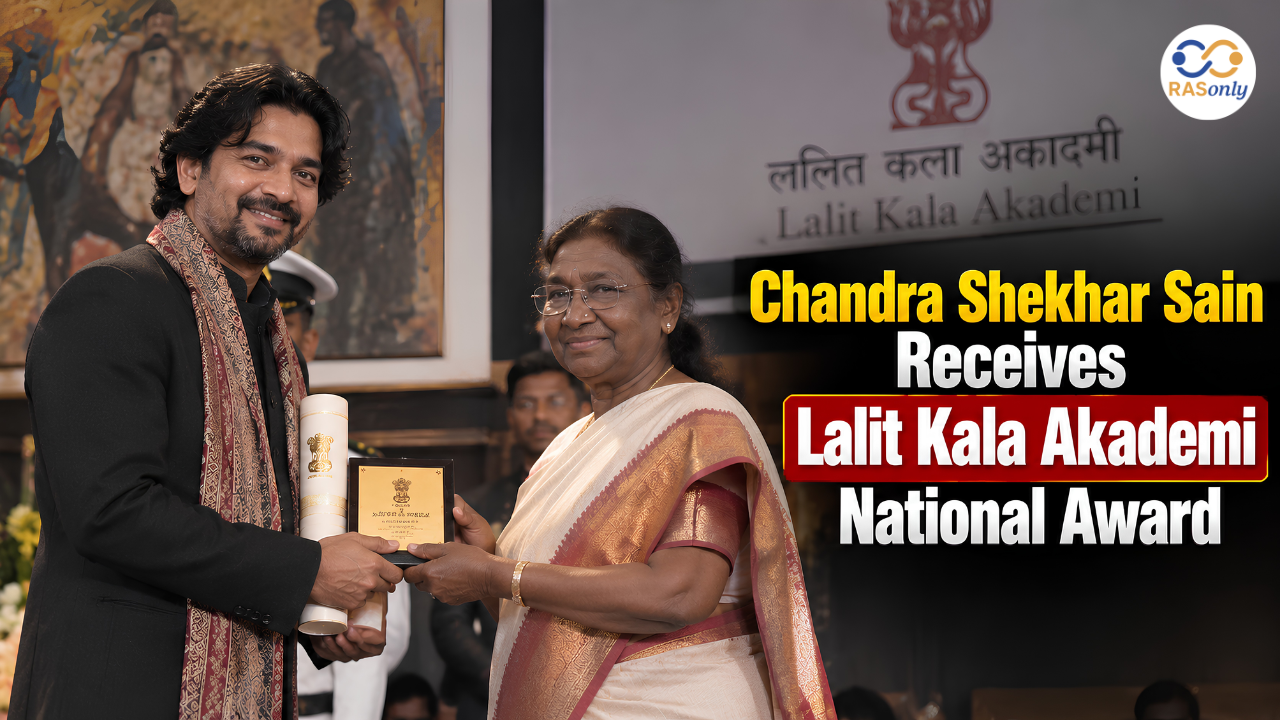
Chandra Shekhar Sain Receives Lalit Kala Akademi National Award
October 01, 2026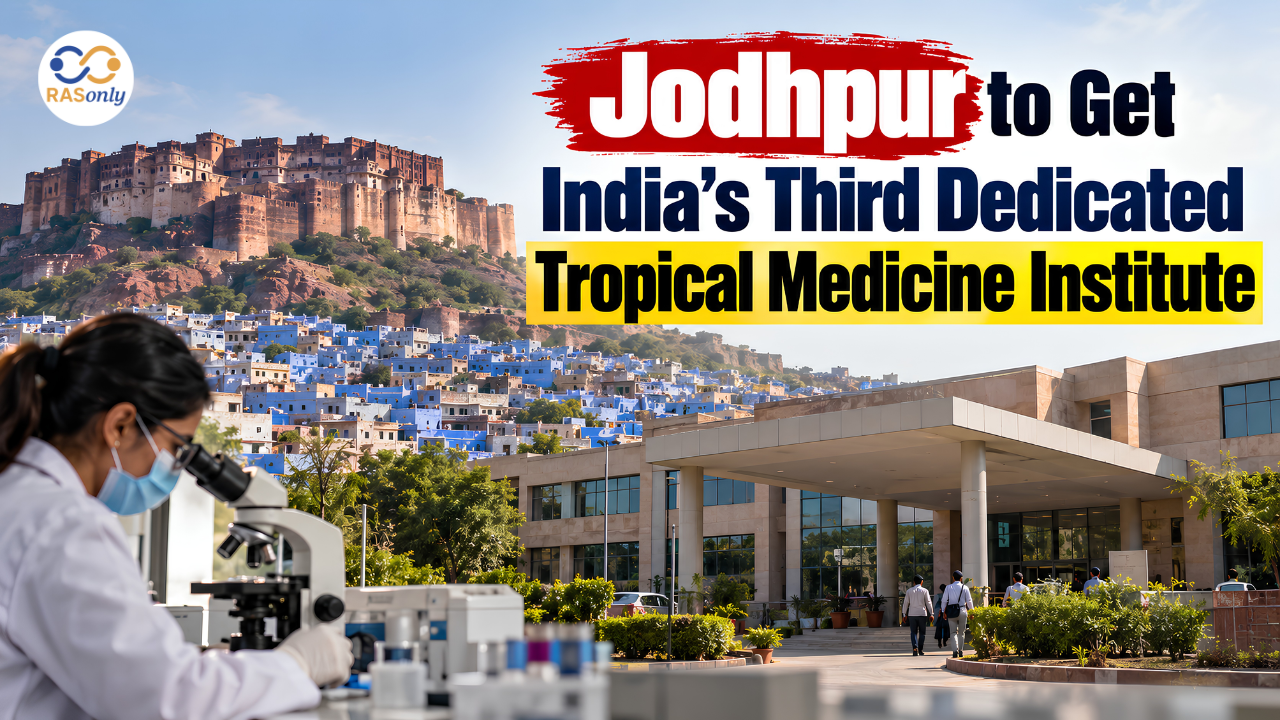
Jodhpur to Get India’s Third Dedicated Tropical Medicine Institute
October 01, 2026
Establishment of the Aesthetic Office
September 30, 2026