Chola Dynasty: Capital, Founder, Kings, Time Period and History
Types of Vitamins: Importance, and Benefits

Get in Touch with RASonly!

This blog explores the importance of vitamins, their types, sources, and key benefits for overall health. It explains how vitamins support immunity, energy, skin, and bone strength while preventing deficiencies. The guide helps readers understand essential vitamins and their role in maintaining a balanced, healthy lifestyle.


Vitamins are organic substances which are required in different physiological processes in the body of human beings. The body is unable to produce these micronutrients in adequate amounts hence they need to be found in food or diet supplements. They are useful in regulating metabolism, immunity, digestion and most other functions of the body.
There are 13 key vitamins, which are divided into two major categories, namely, fat-soluble and water-soluble. Vitamins that are fat soluble are stored in fat cells and liver of the body, whereas the water soluble vitamins are not stored and they have to be consistently replaced with food.
Types of Vitamins
Vitamins are organic elements, which may be obtained through food and are essential in the metabolism of the body. They are engaged in diverse processes, including minerals and bones metabolism, cells and tissues development, and energy metabolism. Vitamins are commonly denoted by specific letters of the alphabet, e.g. vitamin D or vitamin C, but can also be denoted by their chemical names, e.g. niacin, Riboflavin and retinal. Vitamins that have the greatest contribution to metabolism are known as B vitamins.
James Lind, a Scottish surgeon, discovered in 1747 that dietary intake of citrus based foodstuffs could prevent scurvy. Decades after this, Frederick Hopkins suggested that there were some foods that contained some factors that were required by the human body alongside proteins, carbohydrates and lipids among other body nutrients.
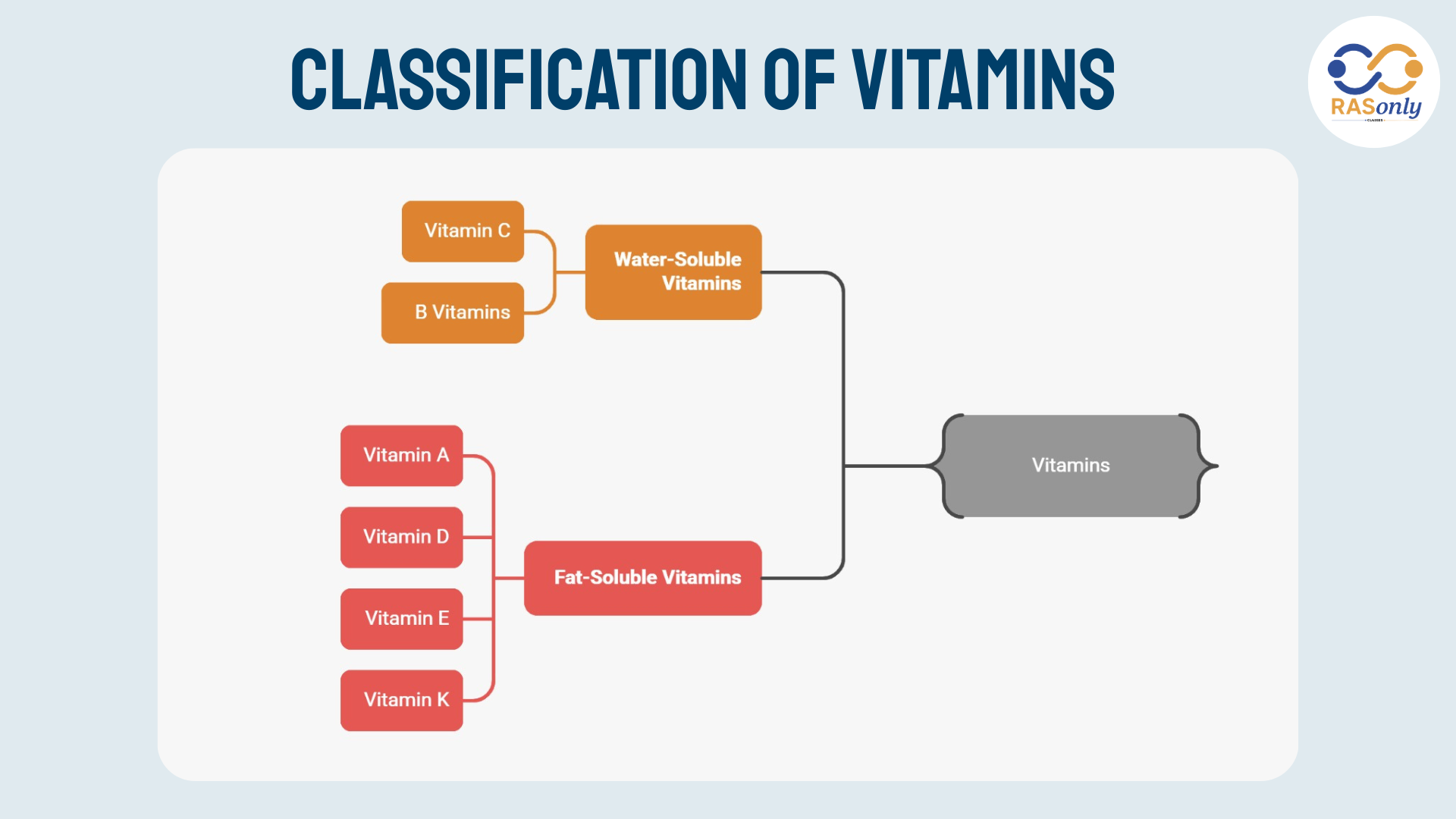
The vitamins fall into two broad categories namely, fat-soluble and water-soluble.
Fat-Soluble Vitamins
Fat-soluble vitamins are vitamins, which are able to dissolve in fats and oils. These vitamins establish a relationship with lipids on solubility. The liver and fatty tissue contain fat-soluble vitamins, which are absorbed in the liver along with the fats in the diet. These are present in various animal and plant diets, and also in nutritional supplements. The vitamins A, D, E and K are the fat soluble vitamins.
Water-Soluble Vitamins
The solubility of water-soluble vitamins in water is easy and hence is usually rapidly excreted through the body and urine is a good indicator of vitamin intake. The frequent use of water soluble vitamins is important as they do not store well.
Vitamin C (ascorbic acid) and the B vitamins are water-soluble vitamins. The three primary components of these fairly complex compounds are carbon, hydrogen and oxygen. Other ones do have nitrogen, sulphur or cobalt as well.
The soluble vitamins in water should be converted to coenzyme form in order to be active. Phosphate groups are added onto thiamin, riboflavin, and vitamin B6. A change in structure activates biotin. The formation of the complex of the free vitamin and the constituents of the other molecules activates niacin, pantothenic acid, folic acid and vitamin B12.
This table will serve as an idea of the various kinds of vitamins, their sources, and the diseases related to the deficiency and the alternative names.
| Vitamin | Alternative Name | Deficiency | Sources |
|---|---|---|---|
| Vitamin A | Retinal / Retinol / Retinoic acid | Night blindness, immune system deficiency, keratomalacia | Orange & yellow fruits & vegetables, cod liver oil, broccoli, green leafy vegetables, egg, milk, liver, etc. |
| Vitamin B1 | Thiamine | Beriberi, Wernicke-Korsikoff syndrome | Whole grains, milk, meat, cereals, asparagus, kale, etc. |
| Vitamin B2 | Riboflavin | Lips inflammation, fatigue, digestive problems, retarded growth | Organ meats, legumes, fortified bread & cereals, broccoli, asparagus, brewer’s yeast, almonds, milk. |
| Vitamin B3 | Niacin | Dementia and Pellagra | Peanuts, eggs, tomatoes, green vegetables, meat, fish, poultry, fortified bread, cereals, etc. |
| Vitamin B5 | Pantothenic acid | Paresthesia, fatigue, insomnia | Meat, enriched bread, potatoes, poultry, whole grain, avocado, yogurt, etc. |
| Vitamin B6 | Pyridoxine | Anemia, confusion, mouth and tongue sores | Meat, nuts, bananas, potatoes, chickpeas, squash, etc. |
| Vitamin B7 | Biotin | Dermatitis and hair loss | Fruits, egg yolk, liver, cheese, etc. |
| Vitamin B9 | Folic Acid | Gingivitis, loss of appetite, shortness of breath, digestive issues, mental deficiencies; affects fetal nervous system during pregnancy | Legumes, liver, leafy vegetables, peas, sunflower seeds, etc. |
| Vitamin B12 | Cyanocobalamin | Pernicious anaemia | Fish, milk, meat, eggs, dairy products, poultry, shellfish, etc. |
| Vitamin C | Ascorbic Acid | Scurvy and compromised immunity | Citrus fruits and vegetables including lemon, oranges, tomatoes, green leafy vegetables, etc. |
| Vitamin D | Cholecalciferol | Rickets and Osteomalacia | Sun exposure, dairy products, egg yolks, mushrooms, fatty fish, beef liver, etc. |
| Vitamin E | Tocopherol | Anemia | Vegetable oil, avocado, seeds, nuts, wheat germ, kiwi, green leafy vegetables, etc. |
| Vitamin K | Phylloquinone | No blood clotting or bleeding diathesis | Green leafy vegetables, pumpkin, broccoli, figs, etc. |
Benefits of Vitamins
Vitamins provide numerous health benefits, from boosting immunity to enhancing metabolism and supporting healthy skin. Let's look at how they benefit the body:
| Benefit | Vitamins Involved | Description |
|---|---|---|
| Immune System Support | Vitamin C, Vitamin D, Vitamin A | These vitamins boost immune function, helping the body fight infections. Vitamin D is crucial for immune regulation. |
| Bone Health | Vitamin D, Vitamin K, Calcium, Vitamin C | Essential for bone density and calcium absorption, reducing the risk of osteoporosis. |
| Skin Health | Vitamin A, Vitamin E, Vitamin C | Promote skin repair and collagen production, and protect against oxidative damage. |
| Energy Production | B-complex vitamins, Vitamin C | Help the body convert food into energy, playing a role in metabolism. |
Vitamins and Their Impact on Specific Health Conditions
Vitamins are integral to various bodily functions and conditions. Here's how specific vitamins play a role in health:
Skin Health: Vitamin A supports skin cell production, while Vitamin E protects against skin damage from the sun and free radicals. Bone Health: Vitamin D plays a major role in calcium absorption, while Vitamin K helps in bone mineralization. Eye Health: Vitamin A is crucial for maintaining good vision, especially in low-light conditions, and preventing conditions like night blindness.
Conclusion
As a vital component of the healthy diet, vitamins are an important attribute in ensuring the overall health and functionality of the body. They aid in various processes including energy generation, immunity, bone density, and the skin. Balanced diet that includes a lot of vitamins is important to prevent deficiencies and enhance the quality of life. Although supplements are needed in some situations, it is always better to receive the majority of the vitamins through natural food sources.
Knowledge of the significance of each vitamin and proper intake will help you to combat many diseases and enhance your health to a great extent. Frequent medical examinations and nutritious but balanced diet can do wonders towards long time health.

BEST SELLER
🏆 PRELIMS
RAS Pass
Prelims focused Hindi & English
₹399
✓
Prelims Topic-Wise Tests
✓
Subject-Wise Tests
✓
Full-Length Prelims Tests
✓
Daily Current Affairs Tests
✓
Prelims PYQs Tests
✓
Detailed Solutions & Analysis
✓
All Rajasthan Ranking
✓
Unlimited Reattempts
✓
Mains Tests
✓
Hindi & English Tests
✓
All Rajasthan Ranking
Trusted by 5,000+ Students

Post Category
- RAS Salary
- Result
- RAS Admit Card
- RAS Job
- RAS Cutoff
- Preparation Tips
- RAS Answer Key
- RAS Exam Analysis
- RAS Syllabus
- RAS Previous Year Papers
- RPSC RAS Exam Pattern
- RAS Interview
- RAS Exam Date
- RAS Vacancy
- RAS Test Series
- RAS Best Books
- RAS Preparation Resources
- RAS Coaching Centre
- History
- Polity
- Geography
- Economics
- Science
- Art and Culture
- RPSC RAS Application Form
- RPSC RAS Notification
- RAS Eligibility Criteria
- UPSC Exam
- RPSC RAS Mains
Visit Our RASonly Offline Center
Our Expert Faculty

Bhunesh Sir
Current Affairs · 13+ Yrs

Aamir Khan Sir
RAS-2017 · IIM Ahm.

Akash Sir
Polity · 8+ Yrs
Free Resources
Official Mobile App

RASOnly App
by OTSAdda · Free
Full Video Lectures
Mock Tests & PYQs
Daily Current Affairs
AI Mock Interview
Free Download · No subscription needed to install
RAS 2024 Toppers — RASonly
Rank 2
Virendra Charan
Rank 9
Bhoopinder Singh
Rank 26
Aanchal Nagpal
Rank 33
Lokendra Singh
Rank 45
Amar Rathore
Rank 46
Manasvini Verma

Join RASonly WhatsApp Community
Get daily current affairs, exam alerts, free study material and tips from expert faculty — right on WhatsApp.
Join for Free →RASonly Interview Guidance Program

Mr. Ashok Jain
Ex-Chief Secretary Govt of Rajasthan
- IAS officer of the 1981 batch, Rajasthan cadre.
- Passionate about mentoring the next generation of RAS officers with real-world insights.
- Got retired in Dec 2017 from the post of Chief Secretary of the state of Rajasthan.

Mr. Guru Charan Rai
Ex-ASP / SP in Jaisalmer
- Guru Charan Rai, IPS (Retd), retired as Inspector General of Police (Security), Rajasthan, Jaipur in 2017.
- Served as ASP and SP in Jaisalmer, Nagaur, Sri Ganganagar, Sawai Madhopur, Dausa, Sikar, and Karauli.
- He also held key positions as DIGP and IGP in the Law and Order division.

Mr. Rakesh Verma
Ex-IAS Officer, B.Tech, MBA, and M.A. (Economics)
- IAS officer of the 1981 batch and retired in Chief Secretary Rank.
- Civil servant of high repute and vast experience.
- Has been teaching UPSC CSE subjects for the last six years.
Related Post



Daily Current Affairs for RAS Exam Preparation 2026

Kundan Art Display in Hong Kong
October 23, 2026
Rajasthan International Folk Festival 2026
October 23, 2026
Inauguration of 100 New Kalika Patrolling Units in Rajasthan
October 21, 2026