Chola Dynasty: Capital, Founder, Kings, Time Period and History
Human Blood: Functions, Blood Groups

Get in Touch with RASonly!


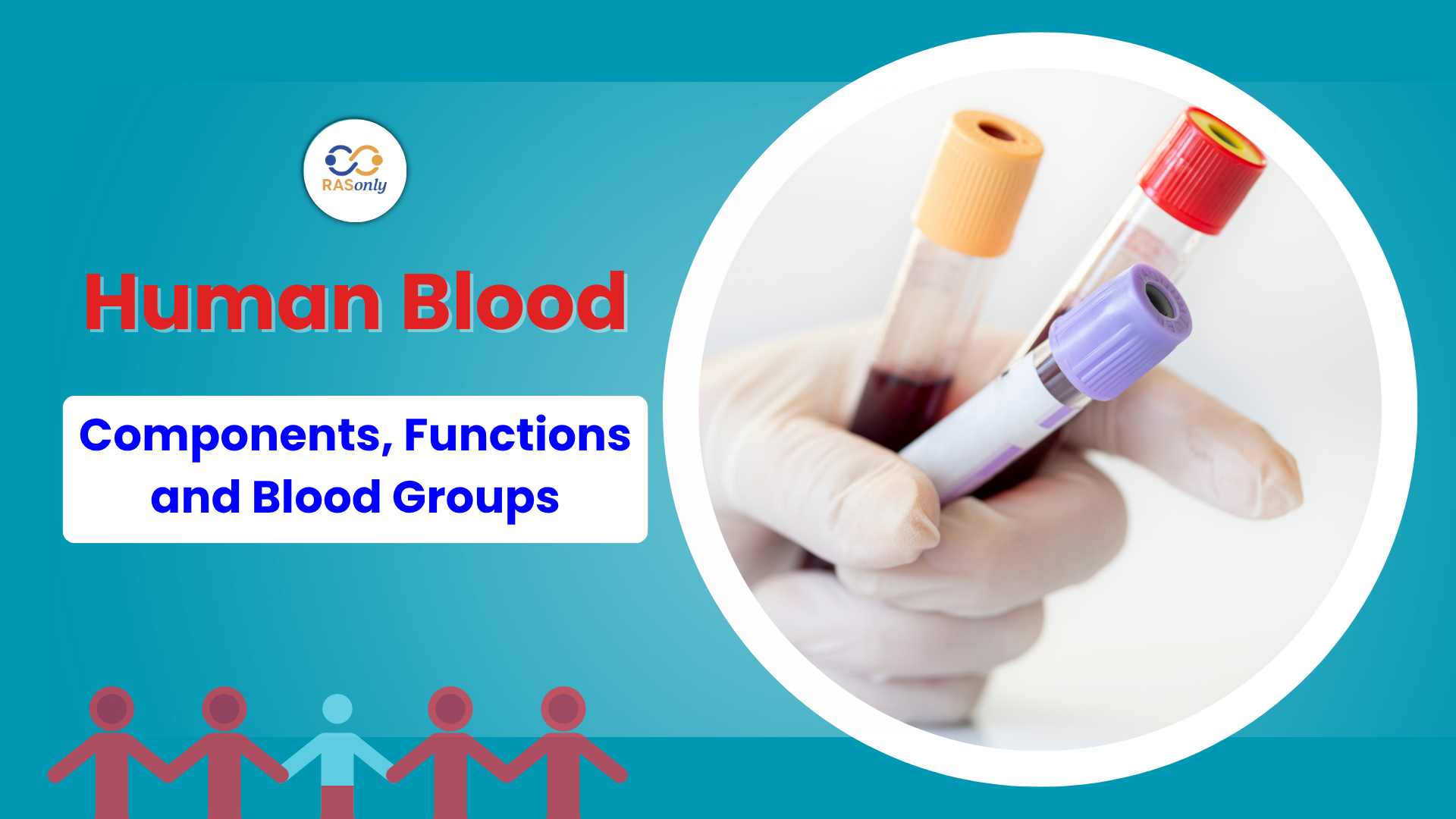
Blood is such an important connective tissue, which accomplishes various important processes in the human organism. It carries out oxygen, nutrients, and hormones and eliminates wastes of the metabolic process. Blood ensures homeostasis since it is composed of plasma as well as formed elements, including RBCs, WBCs and platelets. Transfusions are made safe depending on its classification into various blood groups. The knowledge of the components and functions of blood is important in respect to health and medical science.
Key Highlights for RAS Mains
1. Blood constituents
A. Plasma (55 % Blood Volume)
- Yellowish-brown viscid liquid containing 90-92 % water.
- Contains proteins:
- Fibrinogen- assists in blood clotting.
- Globulins- immune protection.
- Albumins- maintains osmotic balance.
- It also comprises minerals (Na +, Ca ++, Mg ++, HCO 3 -), nutrients, hormones and wastes.
- Serum = non-clotting factors of plasma.
B. Elements of Form (45%)
Comprising RBCs, WBCs and Platelets.
i. Erythrocytes (RBCs)
- Most plentiful; biconcave, lacking a nucleus in the case of mammals.
- Carry oxygen (haemoglobin 12-16 g/100ml).
- Life span: approximately 120 days; killed in the spleen (RBC graveyard).
ii. Leucocytes (WBCs)
- Nucleate and fewer in abundance.
- Two categories:
- Granulocytes:
- Neutrophils (60 - 65%): Phagocytic, destroy microbes.
- Eosinophils (2-3%): Combats Allergies and infections.
- Basophils (0.5-1%): Secret stam, heparin (inflammation).
- Agranulocytes:
- Lymphocytes (20-35%): B & T cells to respond to an immune response.
- Monocytes (6-8 %): scrappy cells.
- Granulocytes:
iii. Platelets (Thrombocytes)
- Megakaryocytes cell fragments.
- Assistance in coagulation, low numbers leads to a bleeding disorder.
Blood Groups
A. ABO Gruplama
- Depending on red blood cells antigens (A, B) and plasma antibodies.
- Blood Type is classed as A, B, AB or O.
B. Universal Donor And Recipient
- O group: Universal donor (no antigene).
- AB group: Universal donor (no anti-bodies).
ABO Compatibility Table
|
|
|
|
|
|
|
|
|
|
|
|
|
|
|
|
|
|
|
|
|
|
|
|
|
Rh Antigen, and Blood Transfusion
- Rh+ (positive): Rh antigen: ~80 percent of human beings.
- Rh Rh- (negative): Absent Rh antigen; this person would develop antibodies were exposed.
- In Pregnancy Rh Incompatibility
- In case Rh+-baby has Rh- mother:
- First pregnancy: Nothing to worry about (the placenta shields).
- Subsequent pregnancies: There is a risk of destruction of fetal RBCs, of Erythroblastosis Foetalis, by mother antibodies.
- Prevention: Anti-Rh administration upon the first delivery.
Lymphatic System
- Interstitial Fluid: Solutes and water of capillaries move into tissue space.
- Lymph: Interstitial fluid that has been accumulated, colourless, it comprises lymphocytes.
- Functions:
- Immunity through the lymphocyte.
- Nutrient, hormones and fats transport (through lacteals, which are present in villi).
- Restores fluid balance by re-circulating fluid.
Conclusion for RPSC
Physiologically, blood is irreducible and disease-preventative. It is possible to comprehend essential medical processes with the knowledge of its parts, compatibility of the bloodgroups, and functions of the lymphatic system. Safe Healthcare delivery requires proper transfusion and recognition of Rh factors.
Also Read: Radioactivity and its application
FAQs for RPSC RAS
Plasma (liquid part) and formed elements: RBCs, WBCs, and platelets.
- Fibrinogen: Helps in clotting
- Globulins: Fight infection
- Albumins: Maintain fluid balance
Classified as A, B, AB, and O based on antigens.
O: Universal donor
AB: Universal recipient
O: Universal donor
AB: Universal recipient
Occurs when an Rh-negative mother carries an Rh-positive baby; can harm the baby in later pregnancies.
Supports immunity, carries fats, and balances body fluids.
BEST SELLER
🏆 PRELIMS
RAS Pass
Prelims focused Hindi & English
₹399
✓
Prelims Topic-Wise Tests
✓
Subject-Wise Tests
✓
Full-Length Prelims Tests
✓
Daily Current Affairs Tests
✓
Prelims PYQs Tests
✓
Detailed Solutions & Analysis
✓
All Rajasthan Ranking
✓
Unlimited Reattempts
✓
Mains Tests
✓
Hindi & English Tests
✓
All Rajasthan Ranking
Trusted by 5,000+ Students
Post Category
- RAS Salary
- Result
- RAS Admit Card
- RAS Job
- RAS Cutoff
- Preparation Tips
- RAS Answer Key
- RAS Exam Analysis
- RAS Syllabus
- RAS Previous Year Papers
- RPSC RAS Exam Pattern
- RAS Interview
- RAS Exam Date
- RAS Vacancy
- RAS Test Series
- RAS Best Books
- RAS Preparation Resources
- RAS Coaching Centre
- History
- Polity
- Geography
- Economics
- Science
- Art and Culture
- RPSC RAS Application Form
- RPSC RAS Notification
- RAS Eligibility Criteria
- UPSC Exam
- RPSC RAS Mains
Visit Our RASonly Offline Center
Our Expert Faculty

Bhunesh Sir
Current Affairs · 13+ Yrs

Aamir Khan Sir
RAS-2017 · IIM Ahm.

Akash Sir
Polity · 8+ Yrs
Free Resources
Official Mobile App

RASOnly App
by OTSAdda · Free
Full Video Lectures
Mock Tests & PYQs
Daily Current Affairs
AI Mock Interview
Free Download · No subscription needed to install
RAS 2024 Toppers — RASonly
Rank 2
Virendra Charan
Rank 9
Bhoopinder Singh
Rank 26
Aanchal Nagpal
Rank 33
Lokendra Singh
Rank 45
Amar Rathore
Rank 46
Manasvini Verma

Join RASonly WhatsApp Community
Get daily current affairs, exam alerts, free study material and tips from expert faculty — right on WhatsApp.
Join for Free →RASonly Interview Guidance Program

Mr. Ashok Jain
Ex-Chief Secretary Govt of Rajasthan
- IAS officer of the 1981 batch, Rajasthan cadre.
- Passionate about mentoring the next generation of RAS officers with real-world insights.
- Got retired in Dec 2017 from the post of Chief Secretary of the state of Rajasthan.

Mr. Guru Charan Rai
Ex-ASP / SP in Jaisalmer
- Guru Charan Rai, IPS (Retd), retired as Inspector General of Police (Security), Rajasthan, Jaipur in 2017.
- Served as ASP and SP in Jaisalmer, Nagaur, Sri Ganganagar, Sawai Madhopur, Dausa, Sikar, and Karauli.
- He also held key positions as DIGP and IGP in the Law and Order division.

Mr. Rakesh Verma
Ex-IAS Officer, B.Tech, MBA, and M.A. (Economics)
- IAS officer of the 1981 batch and retired in Chief Secretary Rank.
- Civil servant of high repute and vast experience.
- Has been teaching UPSC CSE subjects for the last six years.
Related Post
Daily Current Affairs for RAS Exam Preparation 2026

Kundan Art Display in Hong Kong
October 23, 2026
Rajasthan International Folk Festival 2026
October 23, 2026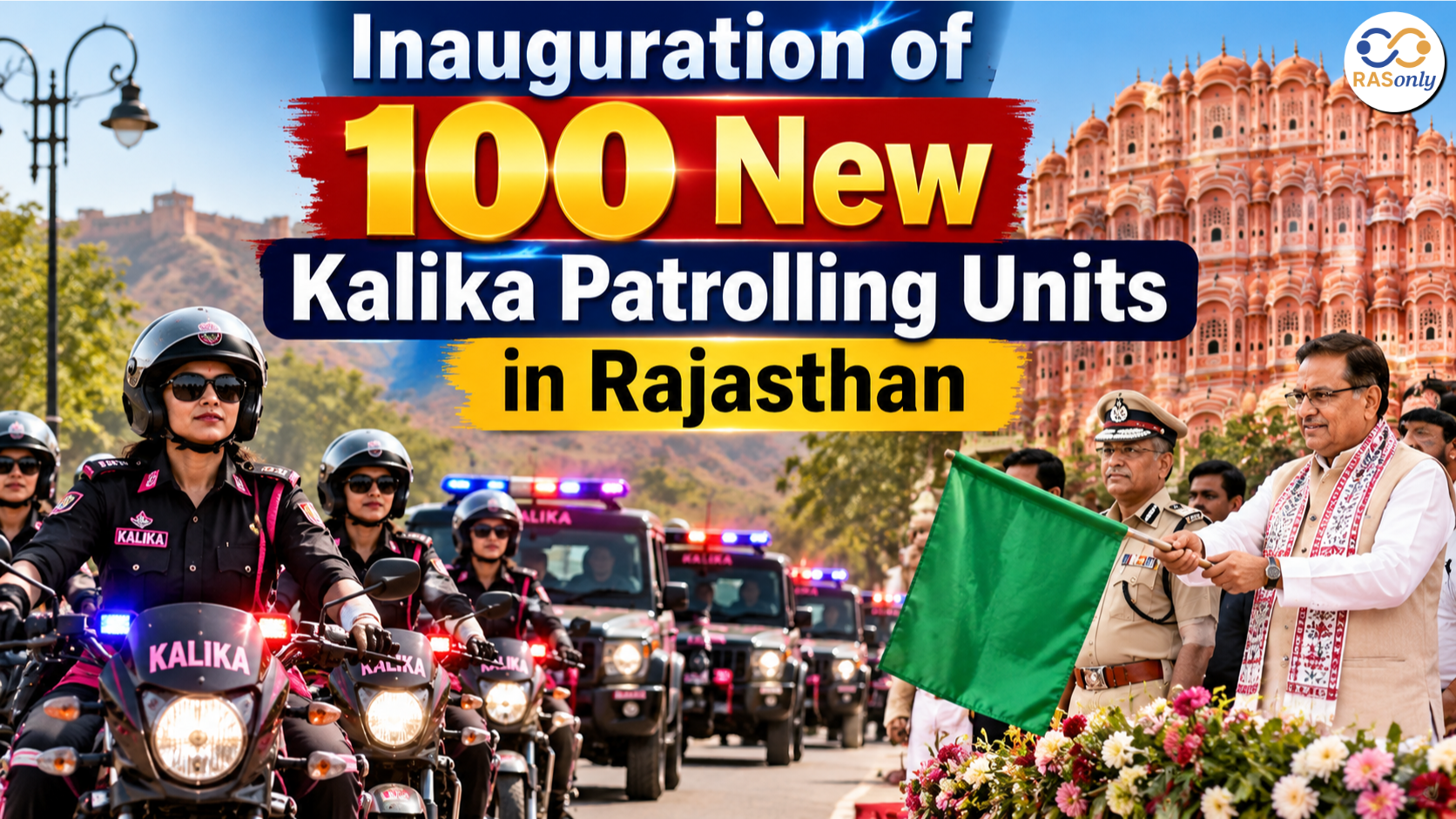
Inauguration of 100 New Kalika Patrolling Units in Rajasthan
October 21, 2026