Chola Dynasty: Capital, Founder, Kings, Time Period and History
RAS 2026 Expected Cutoff: Prelims, Mains & Category-Wise Analysis

Get in Touch with RASonly!

Explore the expected RAS 2026 cutoff for Prelims and Mains with category-wise predictions, previous year cutoff trends, TSP vs Non-TSP analysis, and preparation tips to help you set a realistic target score for the upcoming RPSC RAS examination.

RAS 2026 expected cutoff is one of the most searched topics among aspirants preparing for the Rajasthan Administrative Service exam this year. Since the Rajasthan Public Service Commission (RPSC) has already announced the exam schedule, candidates are naturally curious about how tough the qualifying marks might be at each stage — Prelims, Mains, and the Final merit list. The commission has not yet announced an official number, but a realistic prediction can be made by looking at trends, paper difficulty, number of applicants and the number of openings.
This blog explains everything an aspirant should know about RPSC RAS Cutoff – how it is calculated, category-wise and TSP/Non-TSP variations, and what is the best data-driven prediction to make for this year's exam cycle? Whether you're targeting the General category or a reserved category like OBC, SC, ST, or EWS, this guide will help you set a realistic score target and plan your preparation strategy accordingly.
What Is RAS Cutoff and Why It Matters
There is no doubt that the RAS cut-off is the minimum score required by the candidate to go to the next stage of selection, that is, from Prelims to Mains, Mains to the Interview. This is not a fixed value; RPSC re-calculates this annually according to the actual performance of the examination.
Candidates often make these two errors by not preparing enough because they think the cut-off is going to be lower or by stressing too much because they think the cut-off will be higher. What this "cutoff" means at each stage:
- Prelims cutoff – Minimum score needed to be shortlisted for Mains (usually calculated on a scale of 15 times the number of vacancies).
- Mains cutoff – Minimum aggregate score across four papers required to qualify for the interview.
- Final cutoff – Combined Mains + Interview score that decides the final merit list and post allocation.
RAS 2026 Exam Overview: Structure You Should Know
It is always important to grasp the exam pattern of the RAS exam, as the marks obtained in each stage directly affect the calculation of cutoffs. Before predicting numbers, it is essential to understand how the exam pattern is structured. RPSC conducts the exam in three stages, and each stage carries a different weightage in the final selection.
| Stage | Total Marks | Papers | Purpose |
|---|---|---|---|
| Prelims | 200 | 1 (Objective) | Screening stage only, not counted in final merit |
| Mains | 800 | 4 Papers × 200 Marks | Descriptive, counted in final merit |
| Interview | Varies | Personality Test | Added to Mains score for final merit |
Since Prelims marks are not added to the final merit list, this stage is purely a qualifying/screening round — but clearing it with a safe margin is still essential to reach the more competitive Mains stage.
Factors That Will Decide the RAS 2026 Expected Cutoff
The actual cutoff marks for the RAS 2026 will not be based on just one of the factors, and RPSC will take multiple factors into account while determining the qualifying score for each category. The following is a list of the most significant factors that influence the cutoff each year.
- Difficulty level of the paper – A tougher paper generally pulls the cutoff down, while an easier paper pushes it up.
- Number of applicants – Higher competition among candidates tends to raise the cutoff.
- Total vacancies announced – If the total vacancies are more, the cut-offs are comparatively less, and vice versa; this will push the cut-offs up.
- Reservation Policy – Reservation policy is based on the cutoffs that have been calculated separately for General, OBC, SC, ST, EWS and MBC as per government reservation norms.
- Non-TSP vs TSP area – RPSC releases separate cutoffs for Tribal Sub-Plan (TSP) and Non-TSP regions.
- Different relaxed cutoffs for sub-category adjustments – Female, Widow, Divorcee and Ex-Servicemen candidates.
RAS Previous Year Cutoff Trends (2021–2024)
To build a realistic RAS cutoff trend analysis, it's important to look at how the General category Prelims cutoff has moved over the last few exam cycles. The swings below clearly illustrate that paper difficulty and vacancy numbers can move the numbers by a lot.
| Year | General (Male) Prelims Cutoff | Trend Observation |
|---|---|---|
| 2021 | 84.72 | Moderate difficulty paper |
| 2022 | 100.69 | High competition, more applicants |
| 2023 | 100.69 | Comparatively easier paper |
| 2024 | 71.59 | Tougher paper, cutoff dropped sharply |
As the table shows, the RPSC RAS previous year cutoff has fluctuated significantly — dropping by nearly 30 marks between 2022 and 2024. This shows that the difficulty of the paper does have a greater influence on the cut-off than most candidates realise and that the score in one year cannot be used as a permanent indicator.
RAS 2026 Prelims Expected Cutoff (Category-Wise)
Given the pattern followed during the last 4 exam cycles, this is a good range of cut-off points that can be used as a guide for planning — not a definite cut-off, just a planning marker until RPSC releases the official cut-off.
| Category | Expected Range (Out of 200) |
|---|---|
| General | 75–90 |
| EWS | 75–90 |
| OBC / MBC | 70–85 |
| SC | 60–75 |
| ST | 55–70 |
| SC/ST (TSP Area) | 50–65 |
These are reasonable estimates based on past information and are intended to be a minimum score to enter prelims, not a cut-off score. Candidates need to be able to achieve a score that is well into the higher end of the category marks scale to ensure they are not caught up by the last-minute fluctuations.
RAS 2026 Mains Expected Cutoff
The RAS mains cutoff is the start of the real competition as this is the stage that ultimately matters in the final merit list. In recent cycles, the cutoff for the General category has been in the 310-330 range (out of 800), and reserved categories have been roughly 10-50 points behind the General depending on category and sub-category.
- General/EWS candidates have typically needed to stay close to the 310–330 mark range.
- The OBC and MBC cutoffs are typically a bit lower than that of the General category.
- Reservation norms mean that SC and ST cutoffs are generally lower, especially in TSP areas.
- Within each group, female, widow, and divorcee sub-categories have more relaxed cut-offs than the male category.
Since Mains involves four descriptive papers, evaluation subjectivity and answer quality play a much bigger role here than in the objective Prelims paper, which is why the RAS mains cutoff 2026 prediction carries more uncertainty than the Prelims estimate.
RAS 2026 Cutoff: TSP vs Non-TSP Areas
Rajasthan is divided into Tribal Sub-Plan (TSP) and Non-TSP regions, and RPSC issues separate cutoff lists for both. It is very important for candidates who are applying for the tribal dominated areas such as Banswara, Dungarpur, Udaipur, etc.
- Generally, the Non-TSP cutoff is in line with the general/Reserved category trend across the state of Rajasthan.
- TSP cutoff is calculated separately and is usually lower than the Non-TSP cutoff for the same category, reflecting local reservation and demographic factors.
- It should be noted that candidates should always compare their scores with the released list corresponding to the post/district they applied for.
RAS 2026 Category-Wise and Sub-Category Cutoff
In addition to the general, OBC, SC, ST, and EWS split, RPSC also releases sub-category-wise cutoffs for those who fall under special categories. This helps to ensure that groups can compete at the same level as a general male candidate.
| Sub-Category | Cutoff Behaviour |
|---|---|
| Female (General/Reserved) | Lower than male cutoff in the same category |
| Widow | Significantly relaxed cutoff |
| Divorcee | Relaxed, close to Widow category |
| Ex-Servicemen | Separate, relatively lower cutoff |
| PwBD (Divyang) | Category-specific relaxed cutoff |
RPSC evaluates eligibility based on the criteria provided, and if a candidate fulfills multiple criteria, then he or she should check with the most favorable category to them, as they are given the liberty to compare.
How to Check RAS 2026 Cutoff Online
After release, the RAS 2026 cutoff will be released by RPSC along with the official result. Once out, the easiest method to check it is:
- Visit the official RPSC website — rpsc.rajasthan.gov.in.
- Go to the "Results" or "Cut-Off" section relevant to RAS 2026.
- Download the category-wise PDF for Prelims, Mains, or Final stage as applicable.
- Check your roll number and category to ensure your eligibility.
- Cross-check TSP/Non-TSP classification based on your applied region.
It is to be noted that RPSC cutoff and results are final and binding – candidates can not challenge the published cutoff on the official PDF – so only the official PDF (before and after the cutoff) and not the estimates made by third parties is to be taken into account once the official results are out for the real cutoff.
Tips to Prepare for a Safe RAS 2026 Score
Instead of just targeting the number, it is better to aim for a score which is higher than the expected one, without any worry of falling short of it. A few practical pointers:
- Solve at least the last five years of RAS previous year question papers to understand recurring patterns.
- Monitor your category's range in the past and try to be 10 to 15 points above the highest number in that category.
- Focus on the Rajasthan GK, current affairs, and polity, which are the areas where close calls are usually won or lost near the cut-off line.
- Take full-length practice tests under timed conditions to simulate real test conditions.
- Keep an eye on the official RAS exam date 2026 and admit card updates so preparation stays aligned with the actual timeline.
Conclusion
It is important to note that the expected cutoff for the RAS 2026 is not certain until RPSC officially releases it along with the results, but the historical data gives the aspirants an accurate idea. The General category Prelims cutoff has varied considerably over the past four years, from roughly 71 marks to more than 100 marks — a stark reminder that paper difficulty, number of applicants, and vacancies can all have a strong impact on the numbers from one year to the next. The best strategy for any serious candidate is not to obsess about a cut-off he/she is expecting, but be ready to meet the highest cut-off from recent years in the category they are applying for. It is much more important to always be updated with the official RPSC notifications, know about the benefits applicable to you in the category you belong to (TSP/Non-TSP) and how to solve the previous papers again and again rather than following any particular predictions of cutoffs. After the official RPSC cutoff for RAS 2026 is released, always check the result from the official website and not on any third-party site, as the official cutoff is provided.
FAQs
The expected RAS 2026 Prelims cutoff for the General category is likely to be between 75 and 90 marks out of 200. The actual cutoff will depend on factors such as paper difficulty, vacancies, and the number of candidates.
No. The expected cutoff is only an estimate based on previous years' trends. The official cutoff will be released by RPSC along with the exam results.
No. RAS Prelims is only a screening examination. Only Mains and Interview marks are considered for the final merit list.
RPSC releases separate cutoffs for TSP (Tribal Sub-Plan) and Non-TSP regions due to different reservation policies and demographic considerations. Generally, TSP cutoffs are lower than Non-TSP cutoffs.
For the General category, the expected Mains cutoff is around 310–330 marks out of 800. The cutoff may vary across different categories and sub-categories.
BEST SELLER
🏆 PRELIMS
RAS Pass
Prelims focused Hindi & English
₹399
✓
Prelims Topic-Wise Tests
✓
Subject-Wise Tests
✓
Full-Length Prelims Tests
✓
Daily Current Affairs Tests
✓
Prelims PYQs Tests
✓
Detailed Solutions & Analysis
✓
All Rajasthan Ranking
✓
Unlimited Reattempts
✓
Mains Tests
✓
Hindi & English Tests
✓
All Rajasthan Ranking
Trusted by 5,000+ Students
Post Category
- RAS Salary
- Result
- RAS Admit Card
- RAS Job
- RAS Cutoff
- Preparation Tips
- RAS Answer Key
- RAS Exam Analysis
- RAS Syllabus
- RAS Previous Year Papers
- RPSC RAS Exam Pattern
- RAS Interview
- RAS Exam Date
- RAS Vacancy
- RAS Test Series
- RAS Best Books
- RAS Preparation Resources
- RAS Coaching Centre
- History
- Polity
- Geography
- Economics
- Science
- Art and Culture
- RPSC RAS Application Form
- RPSC RAS Notification
- RAS Eligibility Criteria
- UPSC Exam
- RPSC RAS Mains
Visit Our RASonly Offline Center
Our Expert Faculty

Bhunesh Sir
Current Affairs · 13+ Yrs

Aamir Khan Sir
RAS-2017 · IIM Ahm.

Akash Sir
Polity · 8+ Yrs
Free Resources
Official Mobile App

RASOnly App
by OTSAdda · Free
Full Video Lectures
Mock Tests & PYQs
Daily Current Affairs
AI Mock Interview
Free Download · No subscription needed to install
RAS 2024 Toppers — RASonly
Rank 2
Virendra Charan
Rank 9
Bhoopinder Singh
Rank 26
Aanchal Nagpal
Rank 33
Lokendra Singh
Rank 45
Amar Rathore
Rank 46
Manasvini Verma

Join RASonly WhatsApp Community
Get daily current affairs, exam alerts, free study material and tips from expert faculty — right on WhatsApp.
Join for Free →RASonly Interview Guidance Program

Mr. Ashok Jain
Ex-Chief Secretary Govt of Rajasthan
- IAS officer of the 1981 batch, Rajasthan cadre.
- Passionate about mentoring the next generation of RAS officers with real-world insights.
- Got retired in Dec 2017 from the post of Chief Secretary of the state of Rajasthan.

Mr. Guru Charan Rai
Ex-ASP / SP in Jaisalmer
- Guru Charan Rai, IPS (Retd), retired as Inspector General of Police (Security), Rajasthan, Jaipur in 2017.
- Served as ASP and SP in Jaisalmer, Nagaur, Sri Ganganagar, Sawai Madhopur, Dausa, Sikar, and Karauli.
- He also held key positions as DIGP and IGP in the Law and Order division.

Mr. Rakesh Verma
Ex-IAS Officer, B.Tech, MBA, and M.A. (Economics)
- IAS officer of the 1981 batch and retired in Chief Secretary Rank.
- Civil servant of high repute and vast experience.
- Has been teaching UPSC CSE subjects for the last six years.
Related Post




Daily Current Affairs for RAS Exam Preparation 2026

Inauguration of 100 New Kalika Patrolling Units in Rajasthan
October 21, 2026
Jaipur International Film Festival 2027
October 21, 2026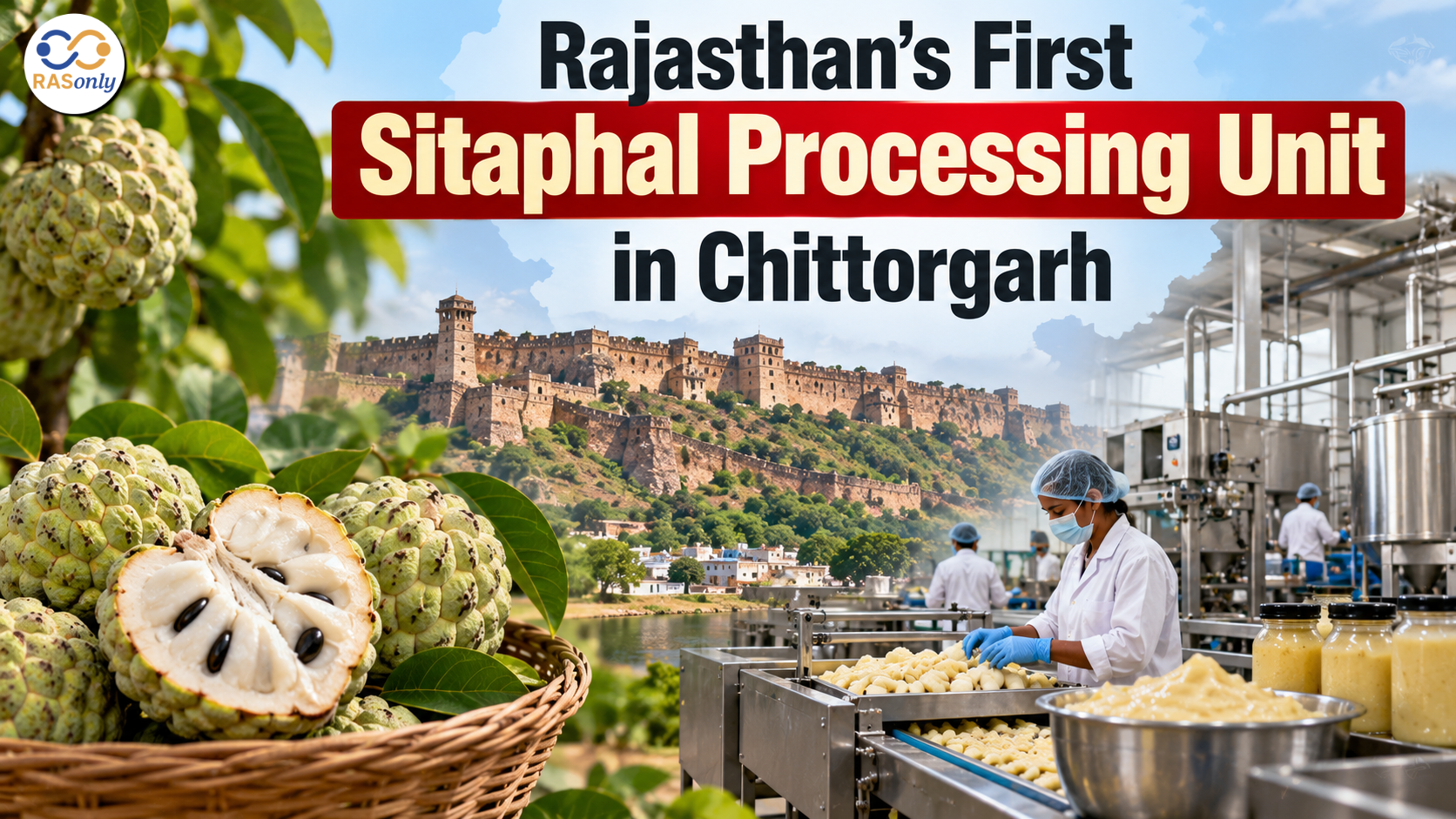
Rajasthan’s First Sitaphal Processing Unit in Chittorgarh
October 19, 2026