Chalukya Dynasty: Origin, Rulers, Three Branches and Architecture
Rajasthan Infrastructure & Sustainability Vision 2047

Get in Touch with RASonly!

Rajasthan’s Vision 2047 roadmap focuses on renewable energy expansion, smart grid modernisation, green hydrogen, expressway growth, aviation infrastructure and AI-driven transport systems. By strengthening sustainable mobility, climate-resilient infrastructure and digital governance, the state aims to become a national leader in clean energy, smart connectivity and inclusive economic development.

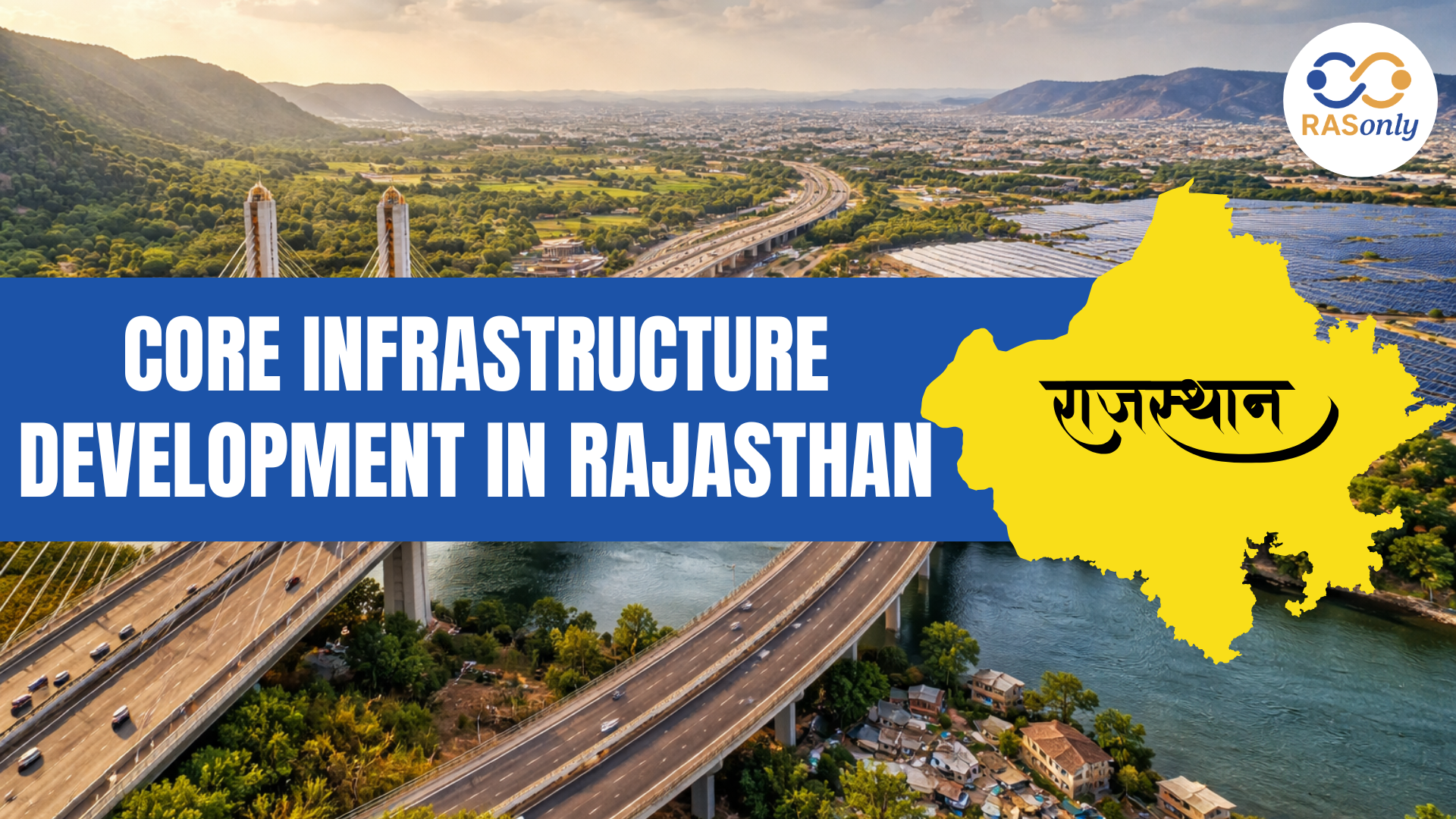
Rajasthan, India’s largest state, has witnessed rapid economic growth, with a GSDP CAGR of 9.68% (2011-2020), driven by expanding power, transport and logistics networks. The state is a leader in renewable energy, with solar and wind power potential driving its 90 GW target by 2030. Rajasthan also focuses on road, rail and civil aviation expansion, supporting trade, tourism and industry while adopting smart transport and energy-efficient technologies for sustainability.
- Rajasthan leads in solar energy, with 5.2-5.7 kWh/m²/day Insolation
- Power supply reliability Urban 23.54 hrs/day, Rural 21.57 hrs/day
- 13 RTOs, 45 DTOs and 33 sub-transport offices operational
- State’s road network covers 5.84% of India’s total roads
- Rajasthan State Road Transport Corporation (RSRTC) operates around 3,000 buses daily
- Target Smart transport, electric mobility and AI-driven road safety
- Civil aviation policy issued on July 4, 2024, for air connectivity
- 2023-24 1.57 million new vehicles registered including 99,592 electric vehicles
- Renewable energy State produces 27,636 MW of solar energy
- Wind energy potential 284 GW, with 45 GW at high-speed sites
VISION 2047
By 2047, Rajasthan will be a leader in sustainable energy, innovation and resilient infrastructure, harnessing its natural resources for economic growth and environmental preservation.
The state will ensure safe, efficient and eco-friendly transport, promoting green mobility and global connectivity while fostering technological advancements for a modern, inclusive and sustainable Rajasthan.
Thrust Areas
Core Infrastructure Development in Rajasthan
Generation Capacity Expansion & Renewable Energy
Scaling up solar, wind and hybrid power projects to ensure energy security
Road Safety & Traffic Management
Eliminating railway crossings, integrating AI-driven road safety systems and creating a Centre of Excellence for Road Safety
Grid Modernisation & Smart Infrastructure
Upgrading transmission networks, integrating energy storage and deploying smart grids for efficiency
Integrated Multimodal Transport System
Developing smart public transport solutions to enhance regional and intrastate connectivity
Electrification of Transport & EV Promotion
Expanding electric vehicle infrastructure, incentivising green mobility and promoting public EV adoption
Sustainable & Climate-Resilient Infrastructure
Using eco-friendly materials, asphalt recycling and geo-grid technology to reduce environmental impact
Aviation Infrastructure & Air Travel
Modernising airports, airstrips and heliports, ensuring safe, affordable and sustainable air travel
Technology-Driven Infrastructure Development
Deploying AI, IoT and data analytics for real-time monitoring and predictive maintenance
Investment in Training & Maintenance
Establishing Flying Training Organisations (FTOs), Maintenance Repair & Overhaul (MROs) and AME training centers
Institutional Reforms & Policy Incentives
Implementing investment-friendly policies, streamlining governance and tax incentives under RIPS 2024 for infrastructure growth
Power
Rapid Renewable Energy Growth
Rajasthan generates 27,636 MW of solar energy, using 8,000 MW locally and exporting the rest, driven by low costs, policy support and environmental concerns.
Decentralised Energy & Consumer Empowerment
Adoption of DERs like rooftop solar and small-scale wind turbines enables consumers to generate and manage their energy, reducing dependence on centralised power grids.
Energy Storage & Grid Stability
Battery storage advancements support renewable energy integration, balancing supply-demand, enhancing grid stability and ensuring uninterrupted electricity supply.
Digitalisation & Smart Grid Modernisation
100% metering of 11 kV feeders with 93% modem-equipped for real-time monitoring under National Feeder Monitoring System (NFMS) enhances reliability and security.
Electrification of Transport & Industry
Rajasthan promotes EV adoption, Vehicle-to-Grid (V2G) technology and electric heating systems to lower emissions, improve efficiency and reduce fossil fuel dependency.
Solar for Every Household Initiative
87,186 consumers installed rooftop solar systems (1,766 MW capacity) by December 2024, with a Web Portal ensuring seamless online applications.
ENERGY CONSUMPTION PROFILE (2023-24)
- AGRICULTURE: 40%
- INDUSTRIAL: 27%
- DOMESTIC: 21%
- COMMERCIAL: 7%
- OTHERS: 5%
SOURCE-WISE CAPACITY MIX (26,838 MW as of FEBRUARY 2025)
- THERMAL (coal, gas, lignite): 52%
- SOLAR: 22%
- WIND & BIOMASS: 17%
- HYDRO: 7%
- NUCLEAR: 2%
SOURCE-WISE CAPACITY MIX (1,06,879 MW in 2047)
- SOLAR: 47%
- THERMAL (coal, gas, lignite): 30%
- WIND & BIOMASS: 15%
- HYDRO: 5%
- NUCLEAR: 3%
Road
Village Connectivity Expansion
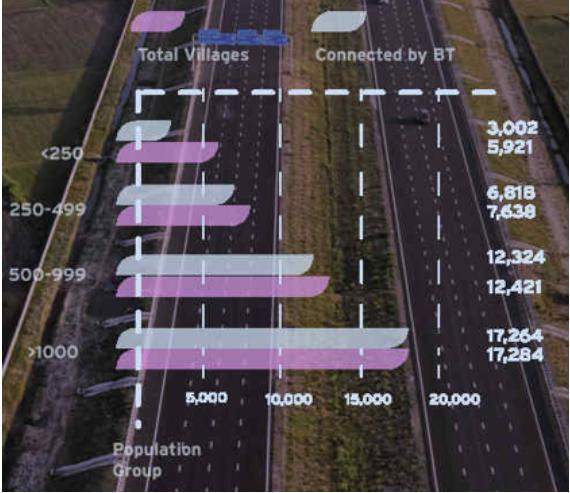
91.09% of villages are now connected by Bitumen Tar (BT) roads (as of June 30, 2024), improving access to water, electricity, healthcare, education and economic opportunities.
Expressways & Economic Corridors
Green Corridor expressways like Delhi-Vadodara-Mumbai and Amritsar-Jamnagar are enhancing safety, reducing travel time and establishing Rajasthan as a key economic hub.
Mining Road Development
Rajasthan focuses on concrete roads for mining areas to support heavy machinery, reduce transport costs and drive rural economic growth.
E-Governance & Digital Services
Online services include contractor registration, e-procurement (above INR 5 lakh), road cutting permissions and PWD Seva for road/building maintenance, ensuring transparency and efficiency.
Rail Over/Under Bridges & Urban Bypasses
Eliminating level crossings and constructing city bypasses improves road safety, traffic flow and decongestion in growing urban areas with increasing vehicle movement.
Infrastructure Challenges in Desert Areas
Harsh climate, rugged terrain and sparse population make road construction expensive, requiring specialised techniques to improve connectivity, economic access and living standards.
NATIONAL HIGHWAY LENGTH
10,790 Km.
STATE HIGHWAY LENGTH
17,376 Km.
ROAD LENGTH
3,17,121 Km.
ROAD DENSITY
92.66 Km./100 Sq. Km.
462.95 Km./lakh population
Civil Aviation
Aviation Growth & Economic Impact
Civil aviation expansion boosts GDP, employment and logistics efficiency, supporting airports, airlines, cargo, MROs and FTOs, while driving regional business, tourism and trade connectivity.
Government Initiatives & Policy Support
Rajasthan Civil Aviation Policy-2024 promotes Greenfield airports, cargo services, aviation training and tax incentives on ATF, enhancing infrastructure, investments and regional air connectivity.
Infrastructure Modernisation & Expansion
Upgrading airports to international standards, expanding terminals, integrating advanced technologies and refurbishing old airstrips will improve passenger handling, cargo traffic and tourism.
Regional Connectivity Enhancement
Increasing flights to underserved areas under RCS-UDAN scheme by upgrading and modernising airstrips, constructing heliports at district headquarters and developing world class aviation hubs for business and tourism growth.
Transport
Rapid Growth in Electric Vehicles (EVs)
Rajasthan registered 99,592 EVs in 2023-24, including 62,690 two-wheelers and 31,660 three-wheelers, accelerating the shift towards clean mobility and reducing carbon emissions.
Adoption of Hydrogen & Alternative Fuels
Hydrogen fuel cells and biofuels are being explored for heavy-duty transport, ensuring sustainable logistics and reducing dependence on fossil fuels.
Advancements in Smart & Autonomous Vehicles
Deployment of AI-driven transport management systems, real-time tracking and autonomous vehicle research aims to enhance safety, efficiency and traffic flow.
Integration of Mobility-as-a-Service (MaaS)
Rajasthan is working on seamless multimodal transport, integrating buses, trains, e-bikes and ride-sharing services for efficient and connected urban mobility.
Expansion of Smart Traffic Management
AI and IoT-based traffic systems are improving signal synchronisation, predictive congestion management, real-time updates, enhancing urban mobility and road safety.
Sustainable Logistics & Last-Mile Delivery
Rajasthan is adopting electric delivery fleets, automated logistics hubs and drones to optimise e-commerce supply chains and reduce carbon footprints.
Strengthening Public Transport Infrastructure
Rajasthan State Road Transport Corporation (RSRTC) operated around 3,000 buses in 2023-24, serving 26.28 million passengers, improving intercity and rural connectivity.
Road Safety & Infrastructure Modernisation
Rajasthan is upgrading highways, eliminating level crossings and promoting road safety awareness programs for a safer transport ecosystem.
Inland Container Depot
Energy
| INDICATORS | CURRENT STATUS | TARGET (2030) | TARGET (2035) | TARGET (2040) | TARGET (2047) |
|---|---|---|---|---|---|
| Peak Demand (MW) | 19,165 | 25,048 | 30,723 | 38,027 | 48,557 |
| Renewable Energy (GW) | 33 | 125 | 175 | 225 | 290 |
| Decentralised Solar Plants Capacity (ON-Grid) (GW) | 1.5 | 16.5 | 19.0 | 21.5 | 25.0 |
| Solar Rooftop Plants Capacity (GW) | 1.5 | 5.0 | 8.5 | 12.0 | 16.0 |
| Pump Solarisation for Agriculture (Off-Grid) | 97,825 pump sets | 2,00,000 pump sets | 3,00,000 pump sets | 75% pump sets | 100% pump sets |
| Agriculture power demand from Renewable Sources (%) | - | 75 | 83 | 90 | 100 |
| Green Hydrogen projects (MTPA) | - | 1.0 | 1.25 | 1.5 | 2.0 |
| Aggregate Technical and Commercial (AT&C) losses (%) | 15.86 | ≈10 | ≈10 | ≈10 | ≈10 |
| Online digital payments (%) | 61.48 | 90 | 92 | 94 | 97 |
Roads
| INDICATORS | CURRENT STATUS | TARGET (2030) | TARGET (2035) | TARGET (2040) | TARGET (2047) |
|---|---|---|---|---|---|
| Expressways on PPP Toll / HAM Model (Km) | 991 (Developed by NHAI) | 1,821 (+ 830 km by State) | 2,429.40 (+ 608.40 km by State) | 2,987.40 (+ 558 km by State) | 3,635.40 (+ 648 km by State) |
| SH / NH - Four-lane (Km) | 607 | 3,000 | 6,500 | 10,000 | 17,376 |
| MDR - Two-lane (Km) | 4,722 | 6,377 | 8,690 | 11,000 | 14,529 |
| ODR - All Weather Roads (Km) | 53,696 | 57,952 | 67,475 | 77,000 | 90,000 |
| All-Weather Roads for Village/Habitation Connectivity (Km) | 1,60,219 | 1,70,000 | 1,79,000 | 1,88,000 | 1,99,157 |
| Elimination of Level Crossing through ROB & RUB | 26 Nos. ROB on various level crossings in progress | Eliminate TVU more than 1.0 Lakh (67 Nos) | Eliminate all level crossings | Eliminate all level crossings | Eliminate all level crossings |
| Access Roads to DFCC Stations | Moderate (Cart track to single lane) | 59 Km two lane | 22 Km four lane | 40 Km four lane | 59 Km four lane |
| Road Safety - Reduction in Road Accident Fatalities | 11,762 fatalities (2024) | 50% (Black Spots rectified on State NH Roads) | 62% (Future Black Spots rectified regularly) | 75% (Future Black Spots rectified regularly) | 90% (Future Black Spots rectified regularly) |
| Implementation of Intelligent Transport System (ITS) | 5 State Highways under implementation by RSHA (395 Km) | High-Risk & High-Density Corridors (2,288 Km on 15 SH) | High-Risk & High-Density Corridors (5,000 Km) | High-Risk & High-Density Corridors (8,000 Km) | All State-Highway Corridors (15,000 Km) |
| Ring Roads for Cities | Only by-passes existing | All divisional headquarters | All divisional & district headquarters | All divisional & district headquarters | All divisional & district headquarters |
| Roadside Afforestation (No. of Trees Planted) | Plantation along NH, SH, MDR and VR | 195 lakh Trees | 450 lakh Trees | 700 lakh Trees | 1,000 lakh Trees |
Civil Aviation
| INDICATORS | CURRENT STATUS | TARGET (2030) | TARGET (2035) | TARGET (2040) | TARGET (2047) |
|---|---|---|---|---|---|
| Upgrade and Modernisation of Airports | Uttarlai (Barmer) defence airbase; Udaipur functioning as domestic airport | City-side development at Jaipur airport, Aero-city near Kota airport, civil enclave at Uttarlai (Barmer) | Modernise Udaipur as model regional airport | Upgrade Udaipur to international airport | Expand city-side development to high-traffic airports and modernise others |
| Induction of Greenfield Airports | Proposal initiated for Greenfield Airport in Kota | Operationalise Kota Greenfield Airport | Initiate second Greenfield Airport project based on traffic | Operationalise second Greenfield Airport | Develop additional Greenfield Airports based on demand and feasibility |
| Upgradation of State-Owned Airstrips | 19 unmanned state airstrips for non-scheduled flights | Upgrade Kumher (Deeg) and Sikar airstrips for larger aircraft | Upgrade 4–5 more airstrips for larger aircraft | Operationalise 8–10 airstrips with amenities and night landing facilities | Modernise other airstrips under NAPD and enhance connectivity under RCS-UDAN |
| Investment Promotion | One FTO operational at Kishangarh | Start FTOs at Sikar, Bhilwara, Jhalawar, Pratapgarh, Jhunjhunu; aero sports at Abu Road | Set up FTOs, MROs, aero sports; promote drone manufacturing & services | Promote aviation equipment manufacturing; initiate air taxi (eVTOL) under AAM | Develop aviation hubs; expand air taxi services at larger scale |
Transport
| INDICATORS | CURRENT STATUS | TARGET (2030) | TARGET (2035) | TARGET (2040) | TARGET (2047) |
|---|---|---|---|---|---|
| Urban Mobility Services for Reducing Pollution | EV Policy launched (01.09.2022) to promote cleaner urban mobility and EV Promotion Fund established for public transport transition | 10% of public transport vehicles shifted to cleaner fuels; discourage private vehicle use in cities | 25% of public transport vehicles transition to cleaner fuels like hydrogen-based e-Rail/Buses and EVs for last-mile connectivity | 50% of public transport vehicles shifted to advanced cleaner fuels; strong EV fleet network developed | 100% of public transport vehicles shifted to cleaner fuels; introduce innovations like drone taxis |
| AI Based Transport Management System | ITMS only on selected expressways in the State | ITMS on high-risk/high-density corridors & million-plus cities; AI-based ATMS introduced | ATMS on all major state highways and selected roads & cities | ATMS on all major state highways and selected roads & cities | Statewide AI-based IT-enabled transport & traffic management system |
| Reducing Pollution & Providing Better Connectivity of Towns & Villages | Negligible EV share in public transport & limited interconnectivity | Incentivise EV usage; promote multimodal transport with common mobility card 10% of new private LMV registrations from EVs & cleaner fuels |
Enhance connectivity of towns & villages; majority public transport on EVs & hydrogen systems 25% of new private LMV registrations from EVs & cleaner fuels |
Majority public transport on EVs & advanced cleaner fuels 50% of new private LMV registrations from EVs & cleaner fuels |
All public transport on advanced cleaner fuels with multimodal connectivity 100% of new private LMV registrations from EVs & cleaner fuels |
Mid-Term Action Plan
Renewable Energy Growth
Increase renewable energy share up to 70%, including 1,100 MW wind power, 5,000 MW energy storage solutions.
Renewable Energy for Transport
Develop RE facilities for EVs, shifting 25% of transportation load from fossil fuels to renewable sources, promoting green mobility.
Energy Infrastructure Expansion
Install 51,321 MVA transformation capacity, 9,719.82 cKm transmission lines and green energy corridors to evacuate power efficiently across regions.
Self-Sustainable Power Distribution
Eliminate ACS-ARR gap, improve DISCOM profitability and modernise electrical infrastructure through RDSS and private investments.
Solar and Rooftop Energy Adoption
Expand rooftop solar initiatives, enhancing decentralised power generation and energy security in rural and urban areas.
Technology-Driven Consumer Services
Achieve 90% digital bill payments, implement online service requests and ensure compliance with Right of Consumer Rules, 2020.
Expressway Expansion
991 km expressways operational, 2,644.40 km new DPRs and 830 km under construction, boosting connectivity and logistics efficiency.
Road Development & Connectivity
Expand State highways for four lanes to 3,000 km, MDR for two lane to 6,377 km, ODRs to 57,952 km and village roads to 170,000 km, ensuring all-weather rural connectivity.
Freight & Industrial Access Roads
Build 59 km two-lane access roads to 12 DFCC stations, strengthening freight corridors and trade routes.
Road Safety Enhancements
Reduce fatalities by 50%, rectify 40 blackspots (INR 812.64 Cr) and 30 Nos. blackspots rectification on State NH roads (INR 42 Cr investment).
Smart Road Technologies & E-Governance
Implement asphalt recycling, geo-grid reinforcement, use waste plastic, bio bitumen and AI-driven traffic management, integrating GIS and satellite data for planning.
Electric Corridors for EVs
Conduct pilot studies with MoRTH for electric overhead lines along major highways to reduce CO2 emissions and promote sustainable transport.
Public-Private Investment in Infrastructure
Expand PBRMC road maintenance contracts, enhance private funding models and integrate PPP mechanisms for sustainable infrastructure financing.
Aviation Infrastructure Development
Upgrade Uttaralai and Udaipur airports, build Kota Greenfield Airport and establish a cargo hub at Jaipur, enhancing regional connectivity under RCS - UDAN initiatives.
Civil Aviation Growth & Training
Set up Flying Training Organisations (FTOs) at Sikar, Jhalawar, Kishangarh, Bhilwara, Pratapgarh, Jhunjhunu, Aerosport Club at Mount Abu and offer aviation sector incentives under RIPS 2024.
Sustainable Urban Transport
Establish a dedicated EV promotion fund, transition public transport to electric/clean fuels and implement ride-sharing programs.
Smart Traffic & AI-Based Transport Systems
Deploy ITMS, e-detection, vehicle tracking and AI-powered enforcement to enhance road safety, reduce congestion and improve efficiency.
Modernised Public Transport Infrastructure
Build divisional HQ bus stands (PPP model) and integrate electric buses on city/suburban routes for eco-friendly transit.
Highway Security & Road Safety
Establish a Highway Security & Protection Force, introduce AI-driven hit-and-run case tracking and integrate road safety education.
Transport Research & Training Excellence
Upgrade HCM RIPA State Institute for Road Safety to a Centre of Excellence for training, research and policy development.
Long-Term Action Plan
Renewable Energy Expansion
Develop 290 GW renewable energy capacity, including 25 GW distributed solar and 16 GW rooftop solar, ensuring 100% agricultural power demand from renewables.
Green Hydrogen Development
Establish 2 MTPA Green Hydrogen projects, achieving 80% renewable electricity share in industrial energy mix, promoting sustainability and a carbon credit trading system.
Smart Power Infrastructure & AI Integration
Implement AI-driven smart grid management, predictive maintenance, drone-based fault detection and large-scale consumer smart metering for 10% AT&C loss reduction.
Self-Reliant Rural Energy
Make rural villages energy self-sufficient, replacing diesel pumps with standalone solar pumps, 24x7 agriculture power supply and ensuring 97% online electricity payments.
Expressway & Highway Expansion
Construct 3,635.40 km expressways, 17,376 km four-lane state highways and 14,529 km major district roads, ensuring 100% road connectivity.
All-Weather Rural Road Network
Upgrade 199,157 km village roads (>250 population) and 90,000 km Other District Roads (ODR) to all-weather connectivity, enhancing rural development.
Advanced Road Safety Measures
Reduce road fatalities by 90%, eliminate railway level crossings and adopt AI-driven Intelligent Traffic Management Systems (ITMS) and high-grade signage.
Integration of Emerging Road Technologies
Implement geo-grid reinforcement, foamed bitumen, short slab concrete pavement and eco-friendly materials, ensuring durable and sustainable road networks.
Green Road Construction & Recycling
Utilise waste plastic in pavements, CTB/CTSB road stabilisation and satellite-based planning for cost-effective, environmentally friendly road development.
EV Corridors & Smart Transport Solutions
Develop electric overhead corridors, GNSS-based tolling and AI-driven traffic monitoring to reduce congestion and emissions.
Modernisation of Aviation Infrastructure
Upgrade airports, airstrips, heliports and expand city-side development, ensuring efficient utilisation of aviation facilities.
New Airports & Expanded Connectivity
Develop new airports, improve regional air connectivity and attract aviation sector investments with a favourable tax regime.
Advanced Aerial Transportation
Introduce e-VTOL aircraft and drones for urban mobility, reducing travel time and congestion in metropolitan areas.
Smart Enforcement & Traffic Safety
Implement IT-enabled enforcement, Vehicle Location Tracking Devices (VLTD) and establish a highway security force for real-time safety monitoring.
Integrated Road Safety Systems
Set up AI-based Road Safety Command Centres, hit-and-run case monitoring portals and ensure trauma centers operate under the Golden Hour rule.
Sustainable Urban Mobility & Public Transport
Promote electric public transport, ride-sharing services and policy frameworks for pedestrian safety, reducing traffic emissions and congestion.
Digitisation & AI-Based Transport Management
Deploy AI-powered analytics for road maintenance prioritisation, smart traffic signals and automated incident detection systems.
Comprehensive Emergency Response System
Develop an integrated app for trauma centers, blood banks and police stations, ensuring faster response to road accidents.
Inclusive Transport Policy
Implement a pedestrian and vulnerable road user policy, ensuring safe walkways, cycling paths and barrier-free access.
Global Navigation Satellite System (GNSS) Based Tolling
Establish satellite-based toll collection to reduce traffic congestion, eliminate manual toll booths and enhance revenue efficiency.
This roadmap ensures Rajasthan’s leadership in clean energy, smart infrastructure and sustainable transport by 2047

BEST SELLER
🏆 PRELIMS
RAS Pass
Prelims focused Hindi & English
₹399
✓
Prelims Topic-Wise Tests
✓
Subject-Wise Tests
✓
Full-Length Prelims Tests
✓
Daily Current Affairs Tests
✓
Prelims PYQs Tests
✓
Detailed Solutions & Analysis
✓
All Rajasthan Ranking
✓
Unlimited Reattempts
✓
Mains Tests
✓
Hindi & English Tests
✓
All Rajasthan Ranking
Trusted by 5,000+ Students
Post Category
- RAS Salary
- Result
- RAS Admit Card
- RAS Job
- RAS Cutoff
- Preparation Tips
- RAS Answer Key
- RAS Exam Analysis
- RAS Syllabus
- RAS Previous Year Papers
- RPSC RAS Exam Pattern
- RAS Interview
- RAS Exam Date
- RAS Vacancy
- RAS Test Series
- RAS Best Books
- RAS Preparation Resources
- RAS Coaching Centre
- History
- Polity
- Geography
- Economics
- Science
- Art and Culture
- RPSC RAS Application Form
- RPSC RAS Notification
- RAS Eligibility Criteria
- UPSC Exam
- RPSC RAS Mains
Visit Our RASonly Offline Center
Our Expert Faculty

Bhunesh Sir
Current Affairs · 13+ Yrs

Aamir Khan Sir
RAS-2017 · IIM Ahm.

Akash Sir
Polity · 8+ Yrs
Free Resources
Official Mobile App

RASOnly App
by OTSAdda · Free
Full Video Lectures
Mock Tests & PYQs
Daily Current Affairs
AI Mock Interview
Free Download · No subscription needed to install
RAS 2024 Toppers — RASonly
Rank 2
Virendra Charan
Rank 9
Bhoopinder Singh
Rank 26
Aanchal Nagpal
Rank 33
Lokendra Singh
Rank 45
Amar Rathore
Rank 46
Manasvini Verma

Join RASonly WhatsApp Community
Get daily current affairs, exam alerts, free study material and tips from expert faculty — right on WhatsApp.
Join for Free →RASonly Interview Guidance Program

Mr. Ashok Jain
Ex-Chief Secretary Govt of Rajasthan
- IAS officer of the 1981 batch, Rajasthan cadre.
- Passionate about mentoring the next generation of RAS officers with real-world insights.
- Got retired in Dec 2017 from the post of Chief Secretary of the state of Rajasthan.

Mr. Guru Charan Rai
Ex-ASP / SP in Jaisalmer
- Guru Charan Rai, IPS (Retd), retired as Inspector General of Police (Security), Rajasthan, Jaipur in 2017.
- Served as ASP and SP in Jaisalmer, Nagaur, Sri Ganganagar, Sawai Madhopur, Dausa, Sikar, and Karauli.
- He also held key positions as DIGP and IGP in the Law and Order division.

Mr. Rakesh Verma
Ex-IAS Officer, B.Tech, MBA, and M.A. (Economics)
- IAS officer of the 1981 batch and retired in Chief Secretary Rank.
- Civil servant of high repute and vast experience.
- Has been teaching UPSC CSE subjects for the last six years.
Related Post




Daily Current Affairs for RAS Exam Preparation 2026
Rajasthan Initiative to Build India’s First UNESCO Global Geopark
October 07, 2026
Indigenous Tejas Mk-1 Inducted into IAF
October 07, 2026
Vedanta to Increase Oil Production in Rajasthan
October 06, 2026