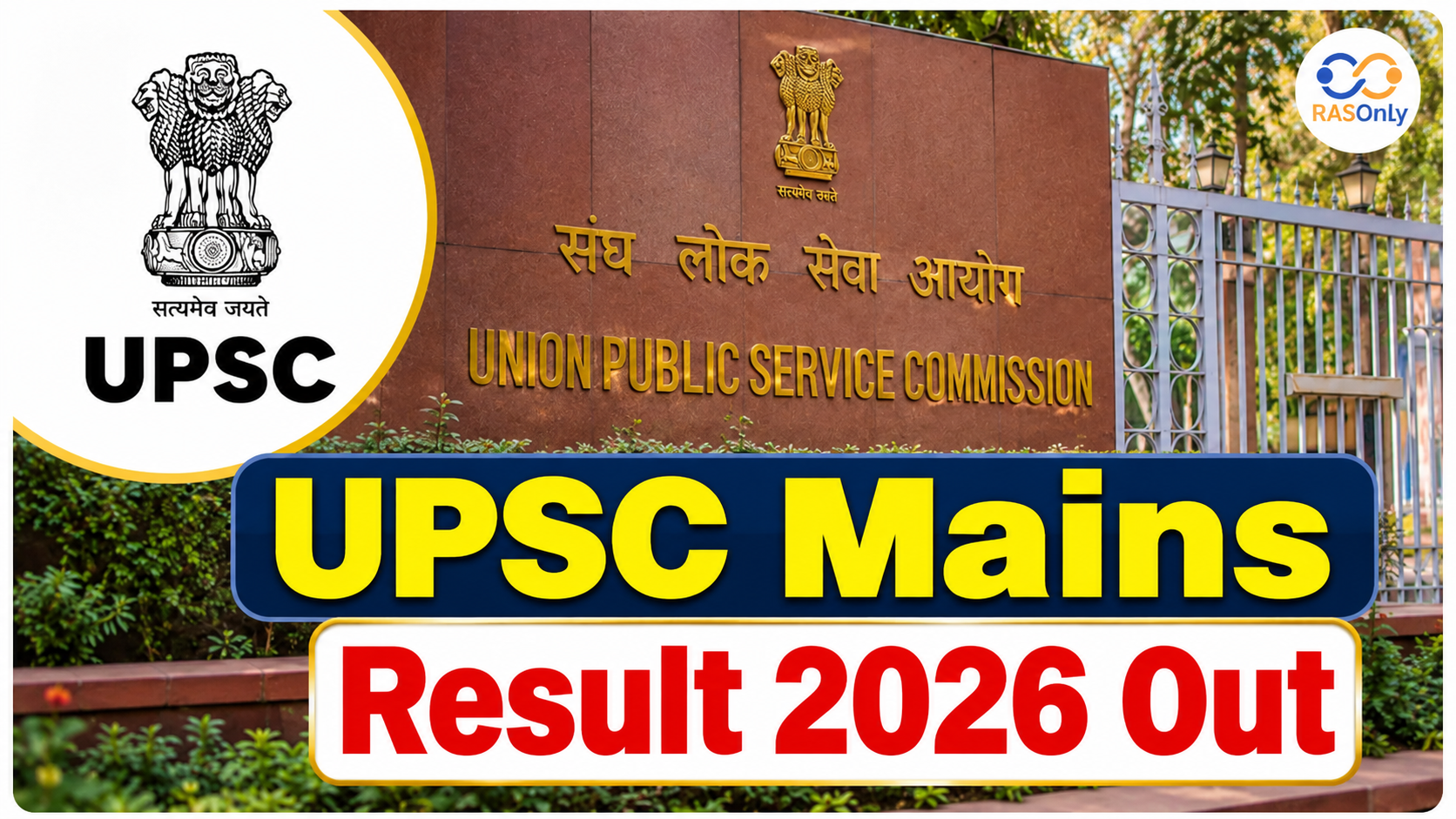
UPSC Mains Result 2026 Out: Download PDF, Selection List, Cut Off & Interview Details
SDO Full Form Sub Divisional Officer Salary Eligibility and How to Become

Get in Touch with RASonly!

The SDO Full Form stands for Sub Divisional Officer, a powerful administrative position in the Indian state government system. An SDO is responsible for supervising sub-division level governance, implementing government schemes, managing public grievances, and coordinating development projects. With an attractive salary under the 7th Pay Commission, strong job security, and structured promotion opportunities, the SDO post is one of the most respected government careers in India.

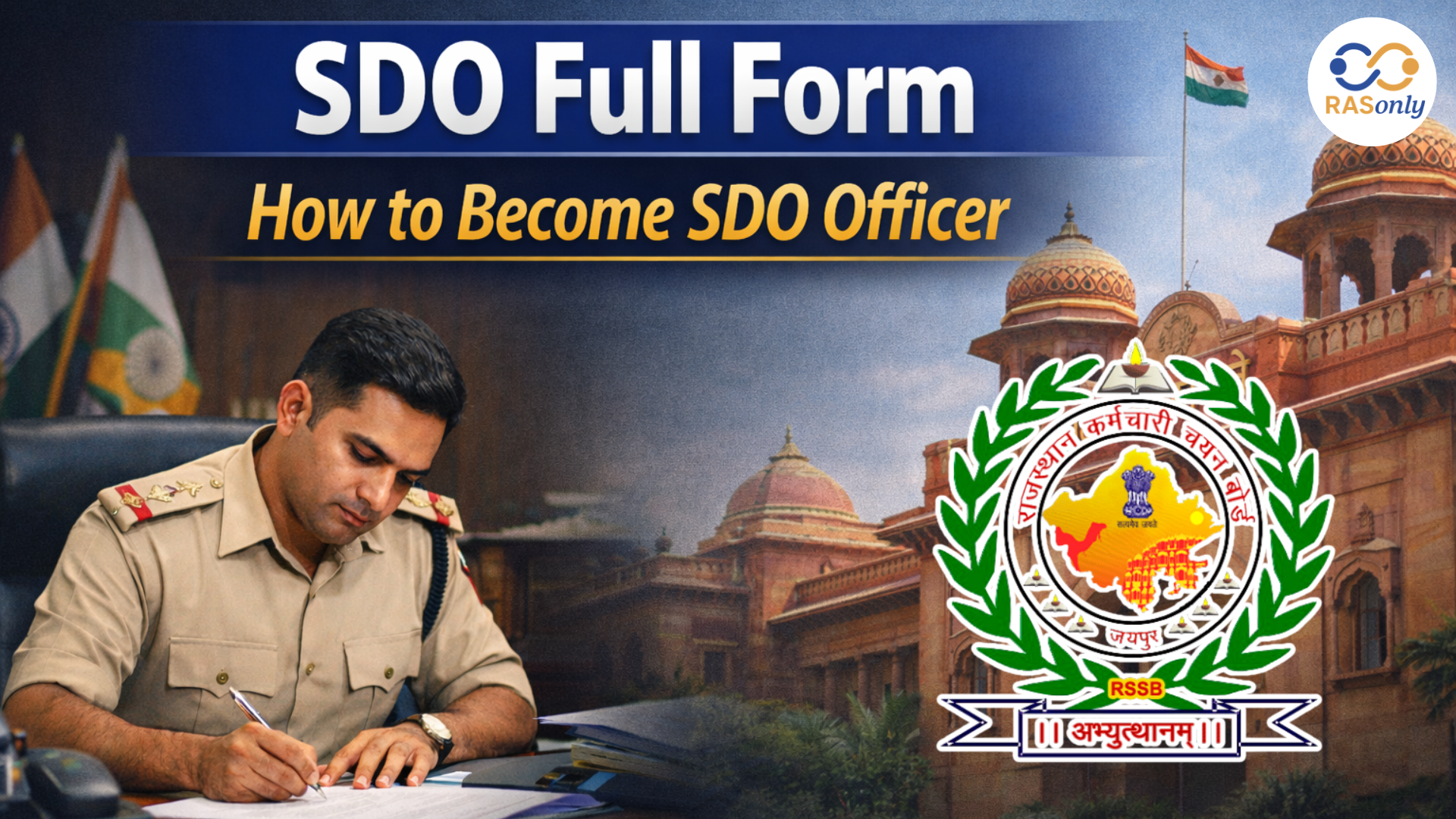
The full form of SDO is Sub-Divisional Officer. It is a government designation used in different state government departments, including Revenue, Public Works, and Irrigation. Many candidates preparing for competitive exams frequently search for terms like SDO Full Form in Government, SDO salary per month 2026, SDO eligibility criteria, and how to become an SDO in India. The responsibilities of an SDO depend on the department and area of appointment. In the Revenue Department, the officer generally handles sub-divisional administration, while departmental SDOs supervise technical and operational activities.
A Sub Divisional Officer (SDO) is appointed in departments such as Revenue, Public Works Department (PWD), Irrigation, Electricity, and Rural Development. SDO role consists of administrative control, monitoring of projects, submission of grievances to the people, and liaising with the district authorities. The SDO post is still among the most desired state government jobs in India with an attractive SDO salary structure under the 7th Pay Commission and job security plus long-term career growth.
What is the SDO Full Form in Government?
The SDO Full Form is Sub Divisional Officer, a significant administrative post in the state government system of India. SDO full form in government, SDO meaning, and SDO post details are some of the searches made by many aspirants who are preparing for government exams because this job comes with both authority and responsibility at the sub-divisional level.
SDO Full Form: Sub Divisional Officer
In Hindi, SDO is known as:
- Up Mandal Adhikari (उप मंडल अधिकारी)
- Up Vibhagiya Adhikari (उप विभागीय अधिकारी)
The SDO Full Form, Sub Divisional Officer (SDO), is the government representative who is assigned to control and oversee the sub-division in a district. To improve administrative control and ease governance, Districts may be divided into administrative subdivisions, which are generally headed by a Sub-Divisional Magistrate (SDM) or an equivalent revenue officer, depending on the state's administrative structure. The officer makes sure that the government policies are implemented, the work of the departments is supervised, and the coordination between the local administration and district authorities is realised.
What is a Sub Divisional Officer (SDO)?
A Sub-Divisional Officer (SDO) is an officer responsible for supervising the administration or departmental operations of a designated subdivision. In the Revenue Department, the SDO generally oversees revenue administration and performs duties delegated by the district administration. In technical departments, the SDO supervises departmental work within the assigned area. Candidates often search for SDO post details, SDO work profile, and SDO roles and responsibilities to understand the authority and scope of this position in government service.
In revenue administration, an SDO acts as an important link between the District Collector and field-level revenue officials. In technical departments, the officer coordinates with the divisional and departmental authorities. The officer ensures smooth implementation of government policies, supervises staff, monitors development projects, and maintains administrative control within the assigned jurisdiction.
Roles and Responsibilities of Sub-Divisional Officer (SDO)
After understanding the SDO Full Form, it is important to know that the responsibilities of a Sub Divisional Officer vary depending on the department, but the core objective remains the same: efficient governance, policy implementation, and supervision at the sub-division level.
Core Administrative Duties
An SDO generally performs the following functions:
- Supervises subordinate officers, engineers, inspectors, and clerical staff
- Implements government schemes and welfare programs
- Conducts field inspections to monitor ongoing projects
- Reviews departmental reports and evaluates progress
- Handles public grievances and resolves local disputes
- Coordinates development activities across departments
- Ensures adherence to government rules and departmental regulations
- Reports to senior district-level authorities
The SDO has an executive and oversight role, and it is among the most significant positions in the middle level of administrative posts of the state government system.
Department-Specific Responsibilities of an SDO
While the administrative framework remains similar, the nature of work changes based on the department of posting.
Revenue Department
- Handles land records and revenue administration
- Manages land disputes and related documentation
- Oversees revenue collection processes
Public Works Department (PWD)
- Supervises the construction of roads, bridges, and public buildings
- Monitors quality control and project timelines
- Conducts site inspections
Irrigation Department
- Oversees canal systems and water distribution
- Monitors irrigation projects and maintenance work
Electricity / Power Department
- Supervises power supply and maintenance operations
- Ensures proper functioning of distribution systems
Rural Development Department
- Monitors the implementation of welfare schemes
- Coordinates field staff and grassroots development activities
Because of this wide administrative and supervisory scope, the SDO post demands strong leadership skills, decision-making ability, problem-solving capacity, and effective public dealing experience. The combination of authority, responsibility, and field exposure makes the Sub Divisional Officer position highly respected in the state government structure.
SDO Salary 2026 – Pay Scale and Monthly Income
After learning the SDO Full Form, the SDO salary per month in 2026 becomes one of the most searched topics among government job aspirants. Candidates frequently look for details about SDO salary structure, the SDO pay level under the 7th Pay Commission, and the Sub Divisional Officer's monthly income to understand the financial benefits of this post.
The salary of a Sub-Divisional Officer (SDO) varies according to the state government, department, service cadre and applicable pay rules. There is no single salary structure or pay level applicable to all SDO positions in India.
Estimated SDO Salary Structure 2026
Pay Level 8 (Approximate)
| Salary Component | Estimated Amount |
|---|---|
| Basic Pay | ₹47,600 – ₹55,200 |
| Dearness Allowance (DA) | ₹17,000 – ₹20,000 |
| House Rent Allowance (HRA) | ₹12,000 – ₹15,000 |
| Travel Allowance (TA) | ₹3,600 – ₹4,800 |
| Other Allowances | ₹5,000 – ₹8,000 |
| Gross Salary | ₹86,000 – ₹1,02,000 per month |
Pay Level 10 (Approximate)
| Salary Component | Estimated Amount |
|---|---|
| Basic Pay | ₹56,100 – ₹65,000 |
| Dearness Allowance | ₹20,000 – ₹23,000 |
| House Rent Allowance (HRA) | ₹15,000 – ₹18,000 |
| Travel Allowance (TA) | ₹3,600 – ₹4,800 |
| Other Benefits | ₹6,000 – ₹10,000 |
| Gross Salary | ₹1,01,000 – ₹1,22,000 per month |
Note: The current SDO salary will be determined depending on the policies of the state government, location of posting (urban/rural division on the basis of HRA) and occasional changes in Dearness Allowance (DA). Further growth in the monthly income can be achieved by increments after one year and promotional upgrades.
Allowances and Benefits of an SDO
Apart from the basic pay, after understanding the SDO Full Form, it is clear that the SDO salary package includes several allowances and long-term benefits that significantly increase the overall compensation. Many candidates searching for SDO perks and benefits, SDO allowances under the 7th Pay Commission, and Sub Divisional Officer facilities should understand that the total package goes beyond just the monthly salary.
These allowances provide financial security, social security and employment security and thus the SDO government job is one of the safest, and most sought after jobs in the state administration.
Major Allowances and Benefits of an SDO
- Dearness Allowance (DA) – Revised periodically to offset inflation
- House Rent Allowance (HRA) – Based on city classification (X, Y, Z category cities)
- Travel Allowance (TA) – Provided for official travel and field duties
- Medical Facilities – Health benefits for the officer and eligible family members
- Pension under NPS – Retirement benefits under the National Pension System
- Government Accommodation – Provided in certain postings, subject to availability
- Official Vehicle – Available in some departments for field supervision
- Paid Leaves – Including earned leave, medical leave, and maternity/paternity leave
- Job Security – Strong employment protection under state government service rules
These monetary and non-financial perks provide the SDO post with not just an attractive salary level but long-term career security and social status.
SDO Eligibility Criteria and Qualifications Required
After understanding the SDO Full Form, before applying for the SDO post, candidates must clearly understand the SDO eligibility criteria, including educational qualification, age limit, and nationality requirements. Aspirants frequently search for SDO qualification required, SDO age limit, and how to become a Sub Divisional Officer, so meeting these basic conditions is the first step toward selection.
Although specific rules may vary slightly from state to state, the general eligibility requirements for becoming a Sub Divisional Officer (SDO) are outlined below.
Educational Qualification
- Bachelor’s degree from a recognised university
- An engineering degree is preferred for technical departments
Age Limit
- Usually 21 to 30/32 years
- Age relaxation for reserved categories
Nationality
- Must be an Indian citizen
How to Become an SDO in India?
After knowing the SDO Full Form, if you are aiming for a Sub Divisional Officer (SDO) post, it is important to understand the proper selection route and recruitment process. Applicants usually have queries on how to become an SDO in India, SDO examination procedure, and SDO recruiting process, since the post is to be filled by competitive State PSC examinations or departmental promotion.
Through State PSC Exams
Most SDOs are recruited through State Public Service Commission (PSC) examinations conducted by various state authorities, such as:
- Rajasthan Public Service Commission
- Uttar Pradesh Public Service Commission
- Bihar Public Service Commission
- Madhya Pradesh Public Service Commission
- West Bengal Public Service Commission
- Maharashtra Public Service Commission
Selection Process
The general selection stages include:
- Preliminary Examination – Objective-type screening test
- Mains Examination – Descriptive written examination
- Interview / Personality Test – Assessment of leadership and administrative skills
- Final Merit List – Based on combined performance in Mains and Interview
Successful candidates with a good rank in the final merit list can be selected to hold administrative positions such as the SDO position according to cadre allocation and vacancy.
Through Departmental Promotion
Within technical departments (like PWD) or Irrigation or Electricity, one can join service as a Junior Engineer or an Assistant Engineer. On attaining the necessary experience and passing internal departmental examinations, they may be promoted to the rank of Sub Divisional Officer (SDO).
Both routes offer a clear pathway to achieving the SDO post, but the PSC route is the most common method for direct administrative recruitment.
Career Growth and Promotion After SDO
Career development of an SDO is among the key factors that make this post very appealing to government job seekers. SDO promotion hierarchy, progression after SDO, and future perspective of Sub Divisional Officer is usually sought by the candidates since this is the only post that has a long-term prospective growth in the state administration system.
An SDO is not a final designation. With experience, consistent performance, and seniority, officers can move to higher administrative positions within the state government structure.
Promotion Path After SDO
An SDO may be promoted to:
- Additional District Magistrate (ADM) – Handles higher-level administrative responsibilities at the district level.
- District Magistrate (DM) – In certain cadres and depending on service rules, experienced officers may reach this senior executive position.
- Senior Administrative Roles – Including divisional-level or secretariat-level positions within the state government.
Factors Affecting Promotion
Promotion to higher posts depends on:
- Seniority in service
- Performance record and annual confidential reports
- Departmental rules and cadre structure
- Availability of vacancies
With steady service progression, the SDO post serves as a strong foundation for reaching top administrative positions in the state government system.
RAS GK & GS Subject-Wise Preparation Links
Conclusion
The SDO Full Form is Sub Divisional Officer, a very prestigious administrative post in the Indian state government system. As explained in this guide, the SDO is crucial in overseeing subdivisions, enforcing government schemes, overseeing departmental staff and facilitating smooth coordination between district authorities as well as administration in the field.
From knowing about the SDO full form in Government to knowing about SDO salary 2026, eligibility, how to take up the post, and career advancement, it becomes apparent that the post comes along with power, financial security, and a long-term career. The Sub Divisional Officer is one of the most coveted and safe government posts in India, regardless of the mode of appointment, whether by State PSC examination or by the department. For aspirants who are planning to take competitive exams, complete information on the SDO Full Form and career scope is the first step to success.
FAQs - SDO Full Form
The SDO Full Form is Sub Divisional Officer. It is an administrative officer responsible for managing a sub-division within a district under the state government.
In government administration, the SDO Full Form in Government stands for Sub Divisional Officer, a gazetted officer appointed to supervise development work, implement policies, and manage administrative activities at the sub-division level.
The SDO salary per month in 2026 is expected to range between ₹86,000 and ₹1,22,000, depending on pay level (Level 8 or Level 10), state government rules, and allowances under the 7th Pay Commission.
To become a Sub Divisional Officer, candidates must have a bachelor’s degree from a recognised university. Technical departments may prefer engineering graduates. Age limits and other criteria are determined by the respective State Public Service Commission.
To become an SDO in India, candidates generally need to clear State Public Service Commission (PSC) examinations, which include Prelims, Mains, and Interview stages. In technical departments, promotion from Junior Engineer or Assistant Engineer positions is also possible.
BEST SELLER
🏆 PRELIMS
RAS Pass
Prelims focused Hindi & English
₹399
✓
Prelims Topic-Wise Tests
✓
Subject-Wise Tests
✓
Full-Length Prelims Tests
✓
Daily Current Affairs Tests
✓
Prelims PYQs Tests
✓
Detailed Solutions & Analysis
✓
All Rajasthan Ranking
✓
Unlimited Reattempts
✓
Mains Tests
✓
Hindi & English Tests
✓
All Rajasthan Ranking
Trusted by 5,000+ Students
Post Category
- RAS Salary
- Result
- RAS Admit Card
- RAS Job
- RAS Cutoff
- Preparation Tips
- RAS Answer Key
- RAS Exam Analysis
- RAS Syllabus
- RAS Previous Year Papers
- RPSC RAS Exam Pattern
- RAS Interview
- RAS Exam Date
- RAS Vacancy
- RAS Test Series
- RAS Best Books
- RAS Preparation Resources
- RAS Coaching Centre
- History
- Polity
- Geography
- Economics
- Science
- Art and Culture
- RPSC RAS Application Form
- RPSC RAS Notification
- RAS Eligibility Criteria
- UPSC Exam
- RPSC RAS Mains
Visit Our RASonly Offline Center
Our Expert Faculty

Bhunesh Sir
Current Affairs · 13+ Yrs

Aamir Khan Sir
RAS-2017 · IIM Ahm.

Akash Sir
Polity · 8+ Yrs
Free Resources
Official Mobile App

RASOnly App
by OTSAdda · Free
Full Video Lectures
Mock Tests & PYQs
Daily Current Affairs
AI Mock Interview
Free Download · No subscription needed to install
RAS 2024 Toppers — RASonly
Rank 2
Virendra Charan
Rank 9
Bhoopinder Singh
Rank 26
Aanchal Nagpal
Rank 33
Lokendra Singh
Rank 45
Amar Rathore
Rank 46
Manasvini Verma

Join RASonly WhatsApp Community
Get daily current affairs, exam alerts, free study material and tips from expert faculty — right on WhatsApp.
Join for Free →RASonly Interview Guidance Program

Mr. Ashok Jain
Ex-Chief Secretary Govt of Rajasthan
- IAS officer of the 1981 batch, Rajasthan cadre.
- Passionate about mentoring the next generation of RAS officers with real-world insights.
- Got retired in Dec 2017 from the post of Chief Secretary of the state of Rajasthan.

Mr. Guru Charan Rai
Ex-ASP / SP in Jaisalmer
- Guru Charan Rai, IPS (Retd), retired as Inspector General of Police (Security), Rajasthan, Jaipur in 2017.
- Served as ASP and SP in Jaisalmer, Nagaur, Sri Ganganagar, Sawai Madhopur, Dausa, Sikar, and Karauli.
- He also held key positions as DIGP and IGP in the Law and Order division.

Mr. Rakesh Verma
Ex-IAS Officer, B.Tech, MBA, and M.A. (Economics)
- IAS officer of the 1981 batch and retired in Chief Secretary Rank.
- Civil servant of high repute and vast experience.
- Has been teaching UPSC CSE subjects for the last six years.
Related Post

Daily Current Affairs for RAS Exam Preparation 2026

QUAD Leaders' Summit 2026 in Manila
November 20, 2026
India–Malaysia Joint Military Exercise HARIMAU SHAKTI–VI
November 20, 2026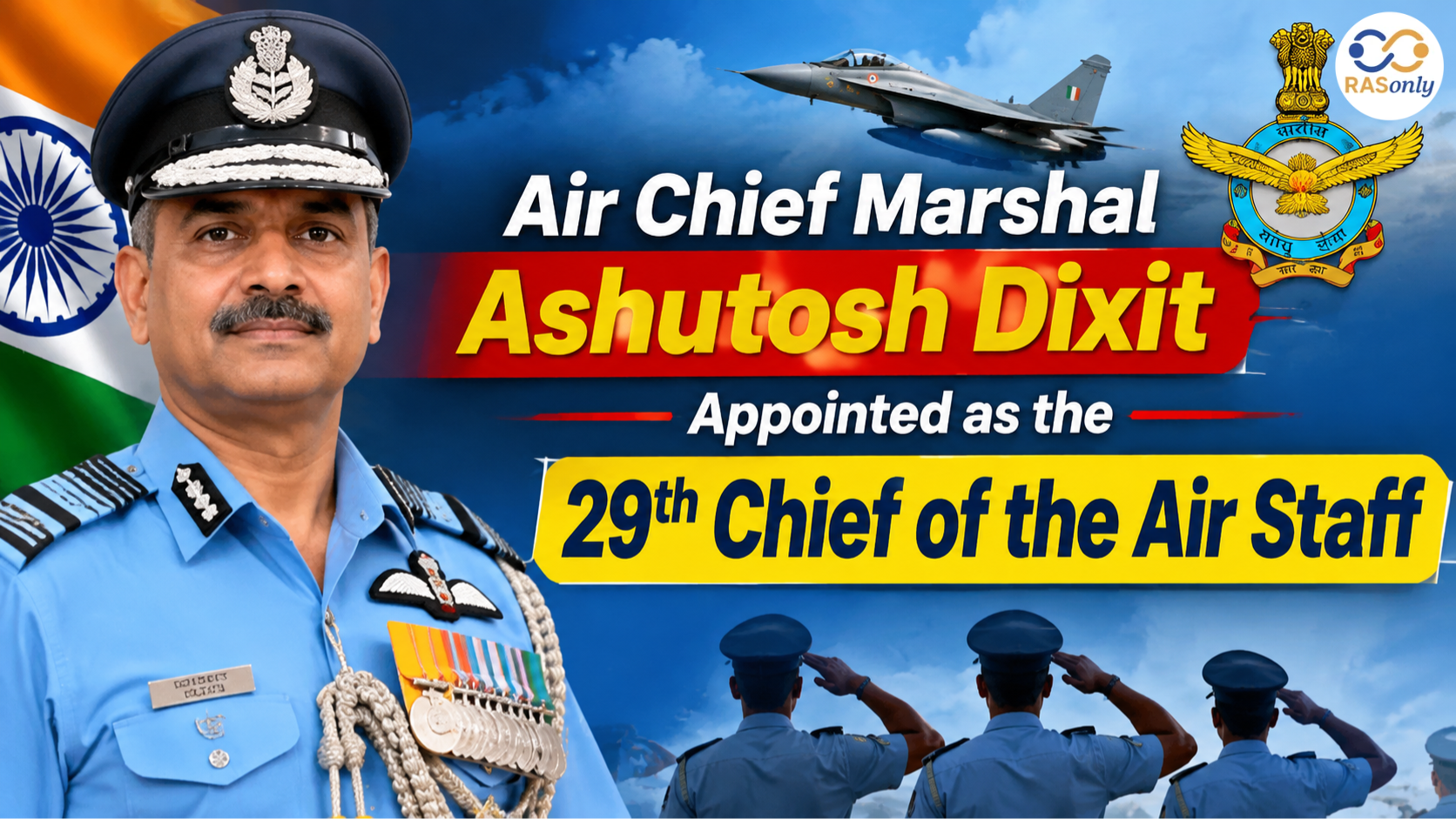
Ashutosh Dixit Appointed 29th Chief of Air Staff
November 19, 2026