Kushan Empire: History, Rulers, Administration, Economy, Art, Decline
Rajasthan Budget 2026–27 Summary for RAS 2026

Get in Touch with RASonly!

The Rajasthan Budget 2026–27 presents a fiscally disciplined yet growth-oriented roadmap aligned with “Viksit Rajasthan @2047,” emphasizing agriculture, infrastructure, social welfare, and green development. For RPSC RAS 2026 aspirants, it is a high-value topic linking fiscal policy, governance reforms, economic development, and sustainable growth.

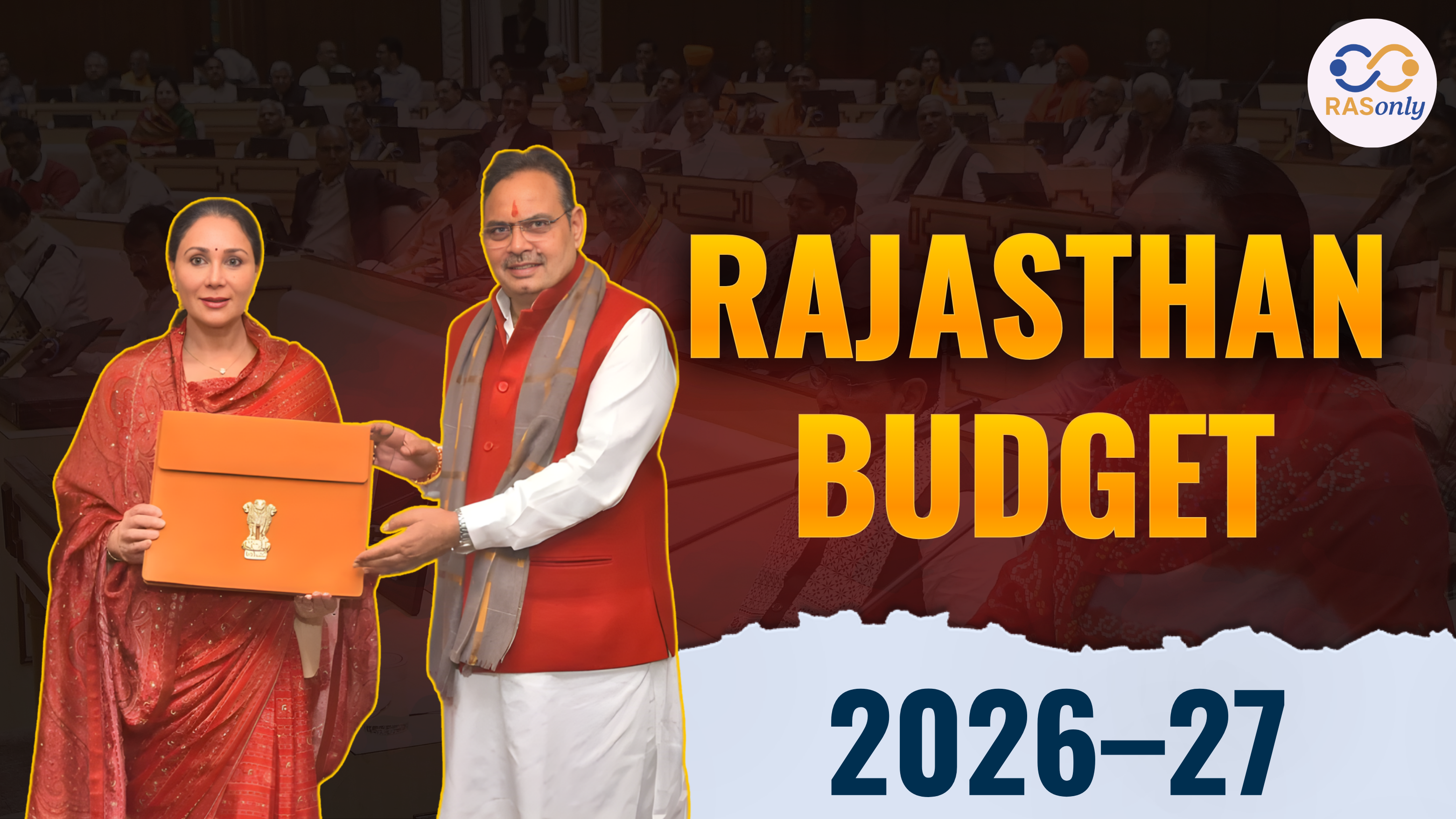
- Deputy Chief Minister (Finance) Diya Kumari presented her third budget in Rajasthan Assembly on Wednesday and opened the speech with the poetic verse.
- Rajasthan Budget 2026-27 says for instance that there is no new tax but there is some relief in some of the old taxes.
- The budget is presented as an action plan to implement the "Developed Rajasthan" vision document on ground, the budget is framed around to the
- reform and performance, capacity building and inclusive development principles.
- The budget story is continuously underlined that the true yardstick will be on-the-ground rollouts and time-bound implementation.
- Revenue Department will be merged with the old Colonisation Department.
Opening Verse Used in the Budget Speech
“कश्ती चलाने वालों ने जब हार के दी पतवार हमें। लहर-लहर तूफान मिले
और संग-संग मझधार हमें। फिर भी दिखलाया है हमने, और आगे दिखा
भी देंगे। इन हालातों में आता है दरिया करना पार हमें।।“
Major Budget Figures (2026-27)
- Total Budget amounts to Rs 6,10,956 crore while the total budget for 2025-26 was Rs 5,37,068 crore.
- Increase is ₹52,360 crore.
- Fiscal Deficit is ₹79,492 crore.
Thematic Budgets
Unit of measurement: Crores of Rupees
- Statement of Government Services Revenue (Personal and Capital) Only Agricultural Revenue
- The 2025-26 Agriculture Budget is estimated at Rs1,19,408 crore against Rs1,10,981 crore in 2025-26.
- Gender Budget is Rs.74,312 crores whereas in 2025-26, it is Rs.51,800 crores.
- Child Budget - is Rs 51,138 crores as against Rs 49,327 crores in 2025-26
- Green Budget is of the order of Rs 33,475 crores as against Rs 27,853 crores in 2025-26
Taxes and Governance Stand
- And, what the Budget released job is "No new tax has been introduced in this budget."
- Relief has been made in some existing taxes.
- A State Testing Agency will be set up on the lines of National Testing Agency for conducting examinations in a timely manner.
- As, "A "Rajbhavey" programme has been announced to make Rajasthan a drug free state.
Changes to Duty, Surcharge and Registration Charge
- As, there has been an increase in the stamp paper surcharge from 30% to 33%.
- In the case of documents prepared for loans from banks or financial institutions, the registration charge has been reduced by half.
- Earlier, 1% fee was payable on registration but now it has been reduced to 0.5% for documents up to 1 Lacs.
- Stamp duty has been brought down from 0.25% to 0.125%.
- Farm registry has become more expensive.
- Tax relief has been given on introducing the vehicle purchased from some other state.
Vision 2047 and the Government's Framing
- Chief Minister Bhajanlal Sharma termed budget an action plan for implementation of "Developed Rajasthan" vision document on ground.
Announcements Mentioned Division-Wise
- New airports, tourism circuits, smart service centres in SC/ST habitations, mini e-Mitra centres for services related to employment etc have been mentioned.
- Conservation of Shekhawati havelis has been brought forward, steps associated with protection and heritage recognition.
Child Development: "Magic Box" (Jadui Pitara) of Anganwadis
- ₹323 crore will be used for providing materials and a "magic box" for holistic development, play-based education in 22748 Anganwadi centres.
- Deputy Chief Minister Diya Kumari has said this "magic box" is intended for development of children.
Education: Buildings, Innovation, Skills and Exam Reforms
- The budget contains provisions of school buildings and also introduce the reform in exams by establishing a State Testing Agency on the lines of National Testing Agency.
- Value-added innovation and vocational research programmes will be conducted in selected colleges in each district with the support of college campuses.
- Rani Laxmibai Centres will be set up in 300+ Colleges for the training of 25,000 girl students.
- Youth will be trained in English, Japanese, French, German and Spanish by 1,000 youth.
- What has happened so far - The following is a summary of the key issues that were raised during the seminar.
- In Ajmer, Bharatpur and in Kota, tinkering labs, deep tech, data and AI hubs are to be set up.
- One decision of giving students a voucher of up to Rs 20,000 has been mentioned in the budget coverage and analysis material.
- AI-based labs in 1000 schools has been listed as a headline announcement.
- Repair and renovation of 2500+ schools to the tune of Rs. 550 crores has been mentioned as one of the announcements.
Health: Trauma, Emergency Care, Digital Health, and Mental Health
- ₹150 crore has been allocated for strengthening the trauma services.
- Raj Suraksha Yojana is one such that has been mentioned for quick treatment in case of emergencies such as road accidents, childbirth, and heart attacks.
- A campaign of monitoring for "binding substances" has been mentioned.
- Thermal Power Plants Nuclear Power Plants Coal Fired Power Plant Three are used to generate electricity. 3. 2.
- Raj Manas programme has been mentioned with special focus on narcotics and suicide prevention.
- Digital Health Centres will be established on PPP mode to share the correct information about medical institutions and facilities.
- Example: - "Sulabh Kendra" found in connection with doctors and hospitals.
- In cases of serious accidents, local doctors will have direct consultation assistance from experts at the national level.
- All doctors and paramedical staff will be trained in heart life saving management training course.
- Doctors performing surgical procedures after the hours of operation are going to be rewarded with an incentive share under the package as well.
- operators as follows: - Advanced rest areas will be created in 13 medical college hospitals.
- ₹500 crore for rest houses in medical college hospitals has been mentioned as a highlight announcement.
Water: Recruitment, JJM, AMRUT 2.0, Rural Coverage, 2047 Target
- Recruitment on 3000 posts of technical officers and junior staff has been announced.
- of nearby villages will be included in the Chief Minister Jal Jeevan Mission (Urban) with 5000 crore rupees to be spent.
- JJM Phase-2 is said to enhance water supply in 83 cities at a cost of Rs 2,530 crore.
- Under AMRUT 2.0, 3 Lacs drinking water connections will be provided.
- Total connections of new handpumps * 20,000 new handpumps and 3 lakh new tubewell connections have been mentioned.
- Again, there is a mention of 600 new tubewells and 1,200 handpumps also for meeting summer water shortage.
- Since the headline targets are to be achieved by 2047, the following were mentioned in the declaration: - A target of water security through conservation and equitable consumption, up to 2047.
Piped Water & Drinking Water Works
- Bisalpur-Bikaner drinking water supply has 250 crore provision.
- For 1,092 villages in Udaipur and Tonk districts where new pipeline from Surajpura to Malarna is mentioned for improved Bisalpur drinking water supply with (650 Crore) expenditure.
- Drinking water works for more than 160 crore which work across the state has been mentioned.
- Jaipur to receive Water Management Centre of Excellence with rupees 10 crores.
- A special cell will be created in order to increase the consumption efficiency of water and proper water testing laboratories will be developed.
Electricity: Solar Parks, GSS Expansion and AI Enabled Grid
- Solar parks of around 4,630 MW capacity will be developed at Bikaner (Nokha - Daitras - Napasar), at Bap - Phalodi (Bhatiyan - Mainsra) and at Jaisalmer (Ramgarh - Lachhuda area).
- Total expenditure of these solar parks is Rs 2,900 crores.
- For power expansion, construction of GSS comprises of 6 of 220 KV, 13 of 132 KV and 110 of 33 KV.
- For cyber and network security of State Load Dispatch Centre, Security Operation Centre and network operation centre will be set up for a cost of Rs 21 crore.
- Grid to be made AI enabled under "Ajmer Discom"
- An AI-based digital platform will be developed to give emergency alerts, digital payment process, electricity services for the agricultural consumers, tariff-wise schemes and real-time information on the supply of power.
Industry: Industrial Parks, Land Development, and Credit Improvement
- This is concerning: - India, the World Bank is the only country that has increased the loan limit from Rs 50 lakh to Rs 1 crore in the Chief Minister Heavy Investment Promotion Scheme.
- About 3,500 hectares of land will be developed in a phased manner for the Jodhpur-Pali-Marwar industrial area in order to develop new industrial parks.
- New industrial parks would be developed at Karauli (Hindaun), Salumber (Jaisamand) and Balotra (Pachpadra) at a total cost of Rs. 400 crore.
- Some of the major proposals include: - "Plug-and-play facilities at divisional headquarters is mentioned with the expenditure of 350 crore."
- The term "logistics" is mentioned through a warehousing model.
- New industrial areas are mentioned where a total of 15 is mentioned with a development of 1000 crore.
- Rajasthan Foundation is stated to have new chapters in 14 places including South Africa and Uganda for entrepreneurs.
- pooling, converting arrangements under Rules 2025 is noted to continue
- Apart from women and enterprise support, it is stated as part of women and enterprise support that: - Under Nari Shakti Udyam Protsahan Yojana, loan limit increased from Rs 50 lakhs to Rs 1 crore.
Social Security: SHGs, Raj Sakhi Stores & Women Child Measures
- ₹20 crore is given to facilitate self-help group products through 50 new enterprises in dairy, textiles, shoes, millets, spices and allied products.
- "Raj Sakhi Stores" will be commenced at divisional headquarters for marketing of these products.
- More than 16 lakh women have been made "Lakhpati Didi."
- Very indicate question is: - District level "Rural Women BPO" will be set up with an expenditure of 100 crores.
- Under Chief Minister Lakhpati Didi Loan Scheme, the loan limit was increased from one lakh to one and a half lakhs.
- Do note that there is a statement saying, "Concessional-interest loans up to Rs 1.5 lakh for Lakhpati Didis have been stated."
- Till the time the loans are to the tune of Rs. 1 crores to women self-help groups have been stated.
- Support to 100 Cluster Level Federations with to the tune of Rs 25 crore has been stated.
- The following objectives will be achieved through the project: - 5000 women will become Bank Sakhi/Bank Wali and 1000 will become "Mahila Bank Sakhi."
- This has been stated by - 7,500 Anganwadis to be developed as "nand ghar " centres with ₹225 crore.
- Repair of 3,800 Anganwadis to the tune of Rs 80 crores has been claimed.
- Electricity connections in 17,095 Anganwadis have been stated.
- In 27 aspirational blocks, 50,000+ girls will get self-defence training.
- ₹50 crore for child care institutions, observation homes and children homes has been mentioned with renovation/repairs being mentioned for the building of 40 institutions.
- At Jawaharji Government Intellectual Disability Rehabilitation Home, the capacity of boys' and girls' wing will be increased from 125 to 250.
- List of buildings for 30 Child Welfare Committees and 29 Juvenile Justice Boards to be listed were decided as a part of the headline announcements.
Information Technology and Digital Governance
- Smart Service Centres will be opened in new local bodies for online services such as birth, death and marriage registration certificates, building NOC and other permissions.
- Through e-Mitra, 600+ services are available or in phases 100 key services will also begin on WhatsApp.
- 25,000 youth and women will be authorised as "Mini e-Mitra" for mobile based face verification.
- Solution: A new IT policy will be introduced.
- Two AI Centres of Excellence will be set up, which will be focused on. health, industry and environment.
- Geospatial mapping will be done for disaster management, urban planning, agriculture and environment monitoring.
- Leakage in welfare schemes will be prevented by implementing one-time verification.
- ₹10 crore expenditure in strengthening RITI.
- Rajasthan Jan vishwas Act 2.0 will be brought.
- Drone Policy will be made and the State Drone Cell will be constituted.
Governance: Mini Secretariats, Assembly Works, Buildings and Quality Labs
- Mini secretariats to be built at Sanganer (Jaipur), Kekri- Ajmer, Nadbai - Bharatpur and Ramgarh - Alwar.
- ₹20 crore for strengthening of mini Secretariat campus is stated.
- Revenue Bhawan and a new building in Ajmer has been mentioned for the amount of Rs. 150 crore.
- Building for mini secretaries and other offices in 8 new districts have been stated.
- Infrastructure works in 94 New Panchayat Samitis and 3467 Gram panchayats with 3000 crore has been stated.
- Construction of Assembly Central Hall and renovation of facade with an investment of Rs14 crore has been mentioned.
- of the funds of the Jaldhaka IAS, 2015-17, the following projects are mentioned: - 50.2 sq km of Upsil area was reclaimed, converted to use, and reclaimed to this date
- A centralized GIS Lab for digital mapping, monitoring of urban bodies, regional and water schemes with Rs 10 Crore has been mentioned.
- Hostel at Harish Chandra Mathur Institute of Public Administration (Jaipur) of amounting to Rs. 35 crore has been mentioned.
- In 3 years, new furniture and computers will be provided for all the offices of District Collector, Sub-division offices (323), and Tehsils (425).
- Construction of sub-division/tehsil/up-tehsil level buildings with an amount of 100 crore has been mentioned.
- Modern public facilitation centres and municipal buildings in urban bodies with rs 600 crore has be stated.
- Centralized Quality Control Lab- will test quality of road works, water resources, drinking water projects and building construction works.
Infrastructure (Roads, Cameras, Drainage, ROB/RUB, Traffic Systems)
- Central government gives 2700 crores rupees to develop 500 km of state highways.
- 2000 cameras will be installed at a cost of 100 crore to prevent accident .
- Master drainage plan for headquarters cities is to be prepared at a cost of 40 crores.
- ROB/RUB construction at 15 railway crossings will be done at a cost of ₹920 crore.
- So, the roadmap for the next two years is as follows: - 1 000+ km of roads will be upgraded to State Highways and 2 000+ km of roads will be upgraded to Major District Roads.
- 250 Atal Pragati Path will be built with a provision of alia 500 crores.
- ₹200 crore to be spent on Intelligent Traffic Management Systems on national/state highways and also for city-level integrated systems.
- Development of 42,000 Km of roads across the state has been highlighted with a mention of spending of Rs 1800 crore on these development-focused announcements covering both urban and rural areas.
- ₹3,000 crore to be spent on beautification and restoration works.
- The plan is that under the Panch Gaurav Yojna, for the next year, Rs150 crore will be allocated for basic infrastructure projects in the districts, tourism accommodations, cultural preservation, branding of local products and projects with employment linkage.
- Flyovers, elevated roads, road and junction improvement works, underpasses, traffic solution works, signal-free traffic systems, parking-related
- works in major cities are the proposed works under signal-free traffic push and this spending is mentioned as Jaipur - 10,000 crore and other cities -2,325 crore.
- Stated benefits are easier movement in major cities, less stopping at red lights, reduced pollution levels and diesel and petrol consumption savings.
- There are 100 parking sites of corporations where PPP mode e-charging points are mentioned.
- The amount of 435 crore is mentioned for the improvement of 11 BOT roads.
- áva fund will be created for traffic arrangements and intelligence systems
Tourism and Art and Cultural Heritage
- ₹5000 crore is allocated for tourism development on the theme of "Vikas ki Virasat bhi".
- Thar cultural circuit will be created which will include neighbour desert district.
- 50,000 senior citizens will receive pilgrimage travel by airplane.
- D**lia will be established in Devasthan lands by BOT mode.
- Proposed activities: - 25,000 women and youth will be authorised as guides in the private sector.
- . A war museum will be set up at Jhunjhunu .
- An state of the art braj convention centre will be developed in Bharatpur at a cost of Rs. 100 Crore.
- Airports: - airports are proposed in Sikar - Jhunjhunu, Bharatpur - Deeg (feasibility studies are begun)
- Flying Training Organizations are being proposed in Sawai Madhopur and Banswara.
- Jaisalmer is mentioned for ultra-luxury special tourism zone of Khudi area.
- Thar cultural circuit is mentioned including Jodhpur, Bikaner, Jaisalmer, Barmer and Jalore
- 6000 senior citizens are mentioned for air travel to Pashupatinath and 50 000 are mentioned for ac train travel to pilgrimage sites.
- Bharatpur, Jhunjhunu, and respectively, with respect to the respective proposals, are mentioned respectively for Rs 100 Crore construction of Braj Convention Centre and war Museum.
- Jhunjhunu , churu and Sikar has been mentioned for rejuvenation of 660+ haveli sites with the amount of rupees 200 crores.
- Some of the conservation steps for Shekhawati havelis are by bringing a heritage bill and towards becoming a world heritage site.
Environment and "Save Aravalli"
- ₹130 crore is mentioned for Aravalli afforestation including plantation over 4,000 hectares.
Cultural Symbolism Emphasized
- More than that, the budget coverage is presented in the colours of Molela art which states that Molela clay expresses faith, labour, craftsmanship and continuity of tradition through creation and design.
City-Wise "Gifts" Mentioned (State wise list)
- Jaipur has 500 bed ICD tower at JK Lon Hospital.
- 2.3 New airports: - Feasibility study is mentioned for new airports at Sikar, Jhunjhunu, Deeg, and Bharatpur.
- Advanced rest homes are to be initiated in medical colleges of Jaipur, Ajmer, Bikaner, Udaipur, Kota and Jodhpur.
- Quality monitoring stations are mentioned in the NCR region including Alwar and Behror and other cities.
Jaipur City-Focused Package (Narrative - Mobility-led: 3,000 crores)
- Jaipur is reported to be the 'centre of power' of the country and the budget is proposed as a 'quality life' revival plan for the city.
- Jaipur is said to have received special attention as the Chief Minister Bhajanlal Sharma, Deputy Chief Minister (Finance) Diya Kumari are the representatives from Jaipur assembly constituencies.
- ₹1,000 crore has been allocated to be used in improving traffic arrangements and reducing congestion under a Comprehensive Mobility Plan.
- The mobility plan includes Integrated Traffic Management System on major roads, Urban Mobility App, road and junction improvement works, traffic signalling improvements and "signal free traffic" works, parking related reforms.
- Traffic jam areas have been listed as Walled City (Parkota), Ajmer Road, Tonk Road, Jhotwara Road, Sikar Road, Diggi Road, Sanganer and Mansarovar, Vaishali Nagar, Jawahar Nagar and it has been indicated that jams are routine during the peak hours of morning and evening.
- As regards the benefits of this facility, the following are stated as the expected outcomes: fuel savings, reduction in pollution in as much as there should be smoother flow of traffic, improved urban quality of life by reduced congestion.
- Around 3,000 crore worth of Jaipur announcements are mentioned for health sector strengthening, sports infrastructure, pollution control measures, administrative strengthening and drainage and sewerage improvements.
- Jaipur drainage strengthening is said with rupees 500 crores provision.
- Water Management Centre of Excellence is mentioned with wherein the amount of Rs 10 crore is stated.
- Project list includes- Rs 560 crore elevated corridor from Aranya Bhawan- Jagatpura ROB, RUB between Haldighati Gate and Diggi-Malpura Road, Rs 280 crore drainage work around Muhana, Kalwar Road and Murlipura, Sanganer region missing link and road construction works.
- City amenities include smart parking and charging stations on PPP mode, convenience centres for general public and tourists, and a development at Jal Mahal Chowpati of Rs. 7 crore, a Science Park with a Space and Children's Gallery, development of Chitrakoot Stadium.
- Pollution Control steps like vehicle scrapping centres, silent zones at fixed place, common biogas plant based CETP mode for leather waste disposal, Govind Devji complex green development, hostel in OTS, Central Hall in the Assembly, Establishment of "Sankalp eco-bambar" and new mini secretariat.
- Art, tourism and heritage mentions include new construction works for "Akela" and "Shikshashram", world-class exhibition space along with "Rajasthan Mahal", Heritage Handicraft Development and Promotion Centre, Amer Fort and town facilities including digital museum, library and expansion of light-and-sound with the cost of Rs 50 crore.
- For example: - JK Lon Hospital has a new 500 bed IPD tower announced with cost mentioned as around Rs 75 crore, and RUHS has a 200 bed paediatric department and Neonatal ICU to take a pressure off JK Lon Hospital.
- Additional "stats column" items comprise of 500 bed Ayurveda tower in Jagatpura with cost of Rs 75 crore, and Paediatric Neurosurgery Department and 200 bed Paediatric ICU and Neonatal ICU at RUHS hospital.
- Rajya Sabha Bill: A number of bills have been approved to raise funds for sports university and rowing/sports facilities.
- An integrated processing plant of 500 tonnes/day is mentioned for solid waste disposal at Sevarda.
- Among them are the following points of the list of "several works" like - road works of Rs 125 crores in Bainad Road, Sirsi Road, Kalidah road and Mansarovar sectors, Rs 5 crores work on roads in Hawa Mahal area, Rs 20 crores work on underpass at Purani Chungi Junction, Rs 60 crores work to "put "smart line" underground in the city, Rs 15 crores work on sewerage facility in the Ramgarh and Mandawar area, Rs
- Local demand list has new central jail, boundary wall development on "NBC pattern", modern meeting room in women inmates reform home, SMS Gastroenterology unit and kidney transplant surgery and a traffic squad centre.
- Expert view summary notes traffic pressure could be reduced if projects are implemented, that metro not being talked about is described as surprising, and that effectiveness depends on is time bound implementation, work speed and long term maintenance and quality construction.
Employment, Youth, Skills and "Gen Z" Focus
- This means: - The budget is stated as youth centred direction with an objective of helping Gen Z to transition from job seekers to job creators.
- The government claims that it has used youth policy, skill policy and an employment policy in the budget policy.
- Work is stated as being done on the direction of making 4 lakh recruitments.
- Skill Development and Vocational Training Institutes will be established in every district to strengthen the employment opportunities.
- Interest free loans of up to Rs 10 lakhs is said to be given to 1 lakhs youth for employment.
- The youth is figure mentioned is 2.84 crores.
- Employment allowance and skill related support is mentioned for 50000 college students.
- Provision for tablet with advance technology are mentioned.
- 30,000 youth are said to be being covered under interest-free loans for business/startups.
- AI and data science centres are said to be set up in Ajmer, Bharatpur, and Kota with an expenditure of 20 Crore.
- And for this, the Rajasthan State Human Resource Development Corporation secretary stated that "14 new human resource institutes are stated to open and the Rajasthan Skill Mentor Board formation is stated to support employability."
- Vocational education in 500 schools is mentioned as a part of the employability pipeline.
- Flying training and aviation academies are mentioned in connection with Sawai Madhopur and Banswara making Rajasthan one of the key training centres of pilots.
- Each of these aspects includes: - Mental health actions are mentioned to include mental health care cells in de-addiction centres, activities in schools and colleges, mandatory monthly stress-reduction counselling sessions in all higher secondary schools with trained advisors and special emphasis on mentoring and counselling for pressures associated with lifestyle change and social media.
- Some of the key points of the Women Gen Z focus are said to be greater support under Lakhpati Didi, larger loans to SHGs, encouragement to women entrepreneurship, working women's hostels in every district, career opportunities through industrial parks, support to startups and mentoring through AI, and distribution of sanitary napkins with strong safety and confidence.
- For colleges that have anti-ragging cells: - 150 more colleges are stated to get anti-ragging cells.
- RSA" has been mentioned as Rajasthan State Testing Agency, being on the lines of National Testing Agency to bring transparency in ability/competitive examinations as well as mentorship, entrepreneurship and incubation-related support.
Agriculture and Farmers (Annadata)
- More than 35 lakh farmers are said to receive no interest loans of Rs 25,000 crore.
- Distribution of 50000 solar vans/pumpsets is said with 1500 crore expenditure.
- Farmers figure mentioned is 1.36 crore and agricultural labourers mentioned figure is 49.39 lakh.
- Foodgrain production mentioned is 309.64 (2024-25).
- Mission Rajmin is mentioned for better prices for produce.
- 3,300 farmers are stated to get an opportunity for study visits outside the state for intellectual development.
- It is mentioned: - Training for 1 lakh livestock rearers for better preparation outcomes.
Poor, Youth, Farmers, Women - "GYAN" Focus
- Poor (Garib) items include Vanjal programme for education of children from nomadic and semi-nomadic communities with school and women's hostel in every district, Ry 39.03 crores for TB prevention, new labour hostels and district level school and hostel for children of workers, free treatment of patient during treatment as mentioned ("Pachpadra ke abhav mein") and free sanitary products for adolescent girls in 27 aspirational blocks.
- Youth (Yuva) items are: State Testing Agency (for timely examinations), Interest free loans up to 10 Lacs to 1 Lakh youth, yuvas 2.84 crores, employment allowance and skill related support to 50,000 college students, tablets with advanced technology provision and Raj Manas programme for suicide prevention.
- Farmers (Annadata) Items 3,300 farmers study visits outside the state 50,000 solar vans/pumpsets with expenditure of 1500 crores Farmers figure 1.36 crores and agricultural labourers 49.39 lakh Foodgrain production 309.64 (2024-25) More than 35 lakh farmers to receive interest-free loans of 25000 crores Mission Rajmin and training of 1 lakh livestock rearers
- Women (Nari) items include 7,500 Anganwadis to be developed as "Sanskar" centres with a sum of Rs.225 crore, women figure mentioned 4.08 crore and girls figure mentioned 1.07, 15 lakhs 95 thousand women engaged in Government farming, district level "Kokil" women PTOs, concessional interest loans amounting to Rs.1.5 lakhs for Lakhpati Didis, Raj Sakhi Stores at Divisional headquarters and loans amounting to Rs.1 crore
Tourism and Heritage (Extended List)
- Dharamshalas will be constructed on Devasthan lands on PPP Mode.
- 25,000 women and youth will be authorised to act as guides in the private sector.
Sports: University, Academy, Stadium Improvements, Youth Games
- Rajasthan Budget 2026-27 is a signal to develop sports professionals as well as sportspeople.
- ₹100 crore is allocated for the building work of the Maharana Pratap Sports University.
- Land already allotted at Achrol, Jaipur and JDA have provided 1.9 lakh of square metre land.
- Some examples are: - Cabinet has already passed the Sports University bill
- The university will initiate sports related courses like B.P.Ed and M.P.Ed, as well as doctoral degree courses.
- PhD and diploma courses will be offered in sports science, sports technology and performance analytics.
- The university will function as a Centre of Excellence in line with goals and objectives of National Education Policy; and planned on the lines of NIS, Patiala.
- Will produce: - The name of the university was announced in the budget of July 2024.
- A handball academy will be established at Lalgarh Jatan (Sri Ganganagar), which is said to be the handball hub of the state.
- Chitrakoot stadium (Jaipur) will be made more modern.
- Selected stadiums and academies will be upscale improved through PPP mode for better equipment and coaching and quality of ground.
- Sports Council academies will assess the performance of athletes using SPEED
- ₹50 crore is allotted to the organisation of Rajasthan Youth Games.
- Diverse sports in Rajasthan: - "The Khelo India University Games held in Rajasthan recently was a successful event and was termed as the first appearance of a multi-sport national competition held in Rajasthan.
- Some of the governance measures under sports are: open gyms and sports grounds ingram panchayats having population more than 2,500, PPP mode of improvement of sports grounds, solar panels in residential sports academies run by the sports council, and Rs. 1 lakh for state level school sports competitions.
Region-Wise "Development Picture" Highlights mentioned
- Marwar, includes Jodhpur inner - outer ring road DPR, Machiya station ROB - 100 crores of rupees, Machiya biological park Gulabbag area - 20 crores of rupees
- Connectivity intensive roads in Udaipur (Mewar) are as follows: - Udaipur elevated road from Sukher junction to Ambamata and Hathipol - Connectivity roads at Udaipur City railway station.
- Vagad: includes Banswara road work for 14-crores from Ajna to Galiyakot-bridge and a bridge on Mahi river.
- Shekhawati includes Churu elevated road and 32000 crore of Yamuna water to Jhunjhunu, Churu, Sikar
- Mewat comprises of modern onion mandi in Alwar and Rudawal bypasses of Rs 60 crore.
- Braj encompasses a Braj tourism circuit, development of roads, connectivity and facilities on religious tourism routes.
- Dhundhar comprises Jaipur drainage - 58 crore and Ajmer - Pushkara Badi Ghati road work - 12 crore
- There are two projects in Hadoti: Kota techno hub and irrigation project proposed at around 1,100 crore.
Revenue and Expenditure Pattern
- Revenue sources are State GST 11.86%, State excise 3.44%, Vehicle tax 1.80%, Other taxes 3.99%, Sales tax 5.53%, Non-tax revenue 4.65%, Central assistance 7.23%, Share in central taxes 14.80%, and internal borrowings, net public account, central loans, loan recoveries and various capital receipts 46.70%
- Expenditure distribution are: Interest payment 7.15%, Capital outlay 8.84%, Repayment of internal and central loans 33.61%, Loans and advances 0.26% and Revenue expenditure excluding interest payment 50.15%.
Issues Reflected in Budget
- Anti-drug campaign: "Rajbhavey" drive to make Rajasthan drug-free.
- Shekhawati havelis: Conservation steps to be taken: A heritage bill to be introduced, efforts towards getting the World Heritage status.
- Road safety includes high technology traffic systems and use of drones to reduce accidents and casualties.
- Save, awareness, and Aravalli in Aravalli afforestation, plantation of over 4,000 hectares.
Political Reactions and Criticisms
- Opposition Leader Tikaram Jully said the budget was dull and disappointing and announcements were not clear on restriction or clarity on issues such as electric buses and school repairs.
- He also said that the government talked about the future economy but did not mention the basis of data and people are facing difficulties in treatment although there are praises for the Chiranjeevi scheme.
Named Public Representative Reactions of Jaipur
- Kalicharan Saraf said that special announcement to deal with traffic jams, and for the treatment of children, and said that the long standing demand of JK Lon OPD tower was included.
- Rafiq Khan stated that Jaipur Metro is not even called by its name, focus on education, loans and employment is missing, and called provisions "paper."
- Gopal Sharma called the State Budget of Rs. 6.11 lakh crore historic and related it to 'every hand work, every field water' resolve.
- Ameen Kagzi, in an interview to the Hindustan Times, stated that he found it disappointing as there were hollow announcements and that earlier announcements regarding heritage had failed to translate into work.
- 100, Balmukundacharya was anticipating relief from traffic jams and said proposals can be used to support world-class roads, good connectivity and heritage protection.
- Amit Goyal described it as a problem-solving budget with focus on system, jobs and public participation with focus on roads, power, water, drainage, education, tourism and health.
- Sunil Sharma called it directionless for Jaipur and said there is not a roadmap or time bound work plan and timeline is missing.
- Shankar Agrawal referred to it as a development vision for Jaipur said the absence of mention of metro was surprising and the city image can improve with time.
- On the ground, citizen groups report that a "flood of problems" are being raised, from sand mafia, to excise policy, to governance and corruption concerns. "Giriraj Khandelwal said middle class, unemployed youth, women and farmers are disappointed and raised issues around sand mafia, excise policy, governance and corruption concerns".
Expert Panel Views
- A tax expert said that the presence of textile, logistics and renewable energy clusters with special packages and incentives can establish
- Rajasthan as a manufacturing and green energy hub and help increase employment.
- Another expert welcomed provisions of over Rs 1,200 crore for traffic management, urban infrastructure but underlined that the benefits are conditional on improving implementation with the aid of smart transport systems and a holistic mobility plan.
- An industry representative said that the expansion of rural water supply and with the grants of Rs 200 crore, greenhouse/polyhouse/shed net/low tunnel/plastic mulch in farms of 4000 farmers can be established and horticulture can be encouraged.
- Another expert was of the opinion that loans upto a level of around Rs 10 lakh for youth are a good step but not sufficient in the light of unemployment, and the need to reduce paperwork, use of single window digital systems and scaling up of subsidies to increase employment.
Conclusion
Rajasthan Budget 2026-27 is presented in the form of "no new tax" while increasing the overall outlay and theme budgets of agriculture, gender, children and green.
It uses a combination of institutional reforms such as a State Testing Agency, district-level skilling, major spending on infrastructure, renewable energy, urban mobility and drainage plans, and focused interventions for youth, farmers, women, children, tourism and heritage.
The consolidated budget narrative underlines on several occasions the critical importance of time-bound implementation, on-the-ground delivery, quality construction and sustained maintenance of the announced works to deliver outcomes and public relief.
BEST SELLER
🏆 PRELIMS
RAS Pass
Prelims focused Hindi & English
₹399
✓
Prelims Topic-Wise Tests
✓
Subject-Wise Tests
✓
Full-Length Prelims Tests
✓
Daily Current Affairs Tests
✓
Prelims PYQs Tests
✓
Detailed Solutions & Analysis
✓
All Rajasthan Ranking
✓
Unlimited Reattempts
✓
Mains Tests
✓
Hindi & English Tests
✓
All Rajasthan Ranking
Trusted by 5,000+ Students
Post Category
- RAS Salary
- Result
- RAS Admit Card
- RAS Job
- RAS Cutoff
- Preparation Tips
- RAS Answer Key
- RAS Exam Analysis
- RAS Syllabus
- RAS Previous Year Papers
- RPSC RAS Exam Pattern
- RAS Interview
- RAS Exam Date
- RAS Vacancy
- RAS Test Series
- RAS Best Books
- RAS Preparation Resources
- RAS Coaching Centre
- History
- Polity
- Geography
- Economics
- Science
- Art and Culture
- RPSC RAS Application Form
- RPSC RAS Notification
- RAS Eligibility Criteria
- UPSC Exam
- RPSC RAS Mains
Visit Our RASonly Offline Center
Our Expert Faculty

Bhunesh Sir
Current Affairs · 13+ Yrs

Aamir Khan Sir
RAS-2017 · IIM Ahm.
Akash Sir
Polity · 8+ Yrs
Free Resources
Official Mobile App

RASOnly App
by OTSAdda · Free
Full Video Lectures
Mock Tests & PYQs
Daily Current Affairs
AI Mock Interview
Free Download · No subscription needed to install
RAS 2024 Toppers — RASonly
Rank 2
Virendra Charan
Rank 9
Bhoopinder Singh
Rank 26
Aanchal Nagpal
Rank 33
Lokendra Singh
Rank 45
Amar Rathore
Rank 46
Manasvini Verma

Join RASonly WhatsApp Community
Get daily current affairs, exam alerts, free study material and tips from expert faculty — right on WhatsApp.
Join for Free →RASonly Interview Guidance Program

Mr. Ashok Jain
Ex-Chief Secretary Govt of Rajasthan
- IAS officer of the 1981 batch, Rajasthan cadre.
- Passionate about mentoring the next generation of RAS officers with real-world insights.
- Got retired in Dec 2017 from the post of Chief Secretary of the state of Rajasthan.

Mr. Guru Charan Rai
Ex-ASP / SP in Jaisalmer
- Guru Charan Rai, IPS (Retd), retired as Inspector General of Police (Security), Rajasthan, Jaipur in 2017.
- Served as ASP and SP in Jaisalmer, Nagaur, Sri Ganganagar, Sawai Madhopur, Dausa, Sikar, and Karauli.
- He also held key positions as DIGP and IGP in the Law and Order division.

Mr. Rakesh Verma
Ex-IAS Officer, B.Tech, MBA, and M.A. (Economics)
- IAS officer of the 1981 batch and retired in Chief Secretary Rank.
- Civil servant of high repute and vast experience.
- Has been teaching UPSC CSE subjects for the last six years.



Daily Current Affairs for RAS Exam Preparation 2026
Chandra Shekhar Sain Receives Lalit Kala Akademi National Award
October 01, 2026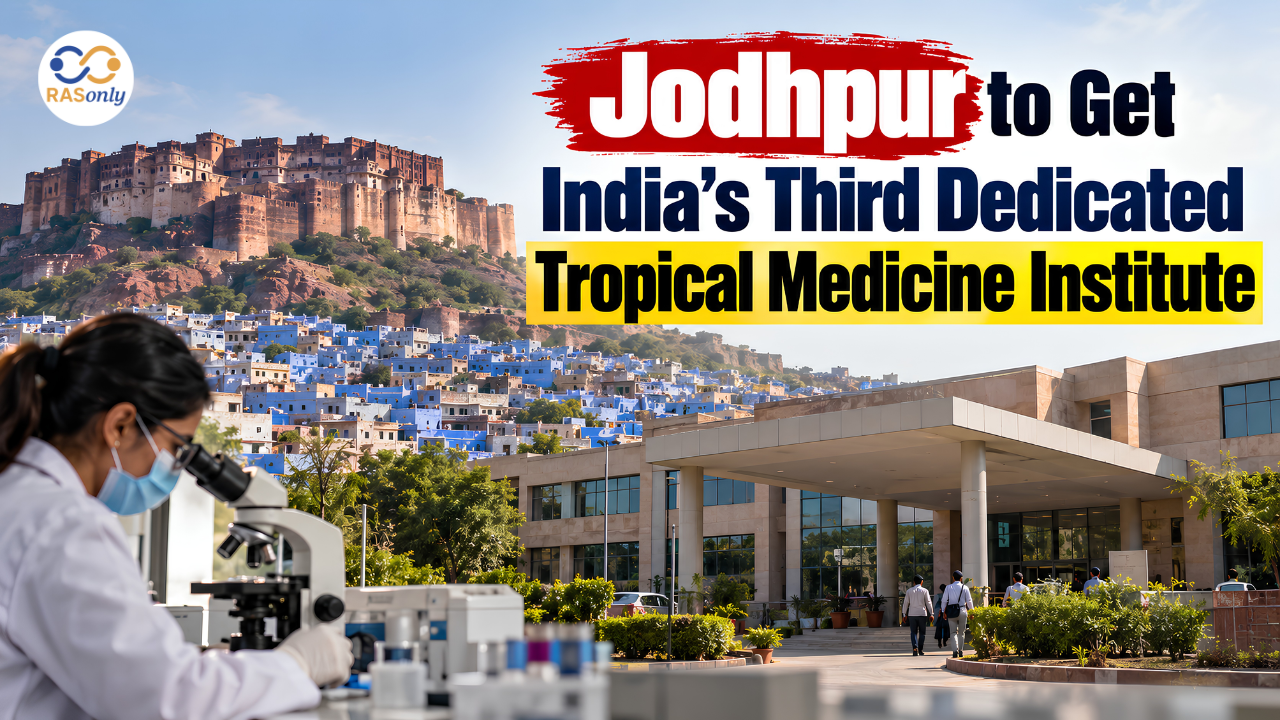
Jodhpur to Get India’s Third Dedicated Tropical Medicine Institute
October 01, 2026
Establishment of the Aesthetic Office
September 30, 2026