Kushan Empire: History, Rulers, Administration, Economy, Art, Decline
Tourism of Rajasthan: A Complete Overview

Get in Touch with RASonly!

Tourism of Rajasthan blends royal heritage, desert landscapes, vibrant festivals, and wildlife reserves into one unforgettable journey. From Jaipur's forts to Jaisalmer's dunes and Udaipur's lakes, discover how tourism drives Rajasthan's economy, culture, and rural development while shaping its global identity.

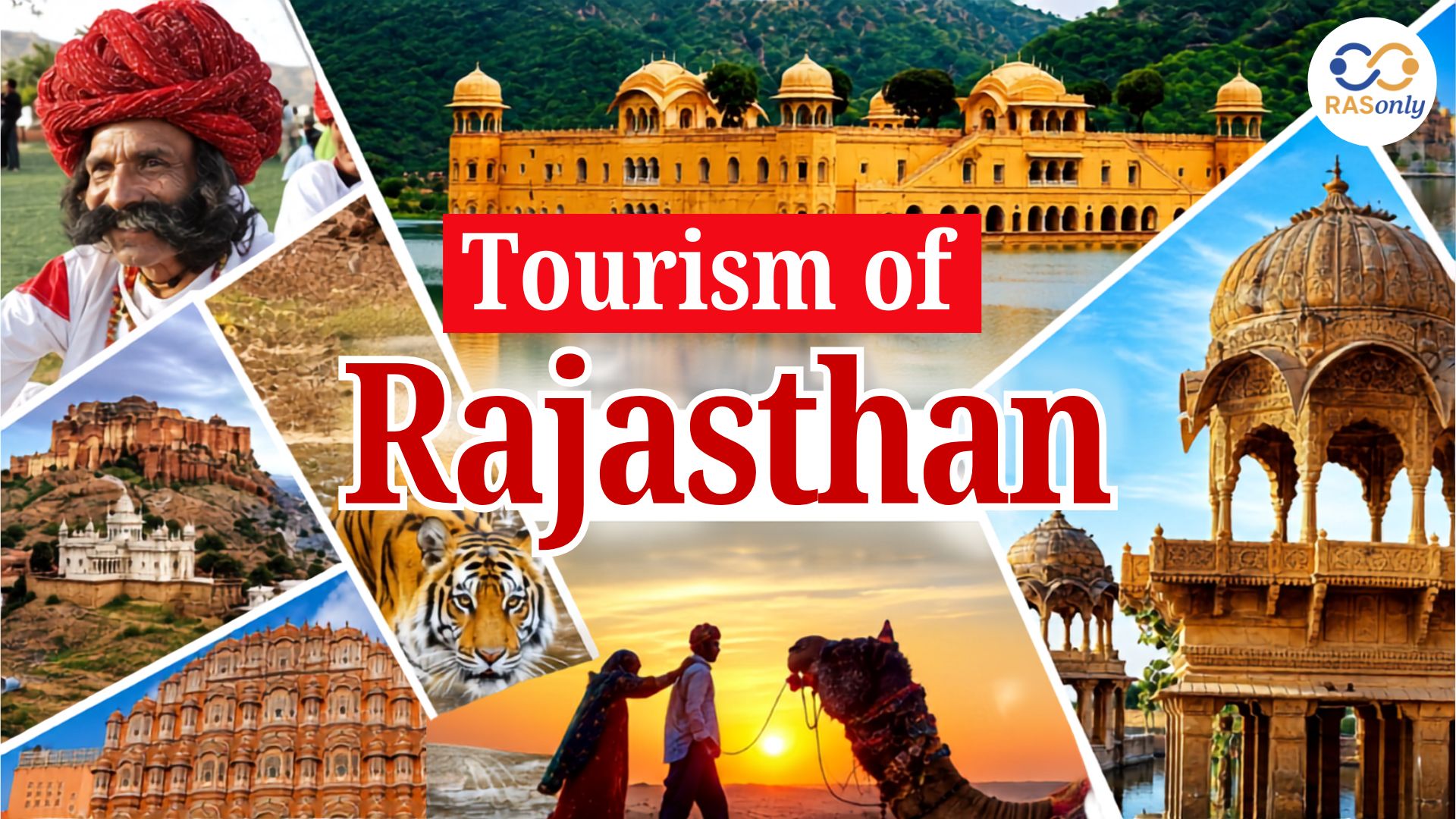
Rajasthan, popularly known as the "Land of Kings," is one of the most vibrant and culturally rich states of India. When people talk about tourism of Rajasthan, they usually picture golden deserts, majestic forts, royal palaces, and colourful fairs. But the story goes much deeper than that. Rajasthan tourism is not just an economic activity, it is a bridge between India's glorious past and its present-day identity. The state's blend of history, architecture, folk culture, and natural landscapes has made it one of the top tourist destinations not only in India but across the world.
For a state like Rajasthan, where a large part of the geography is arid or semi-arid, tourism has become one of the most reliable sources of income, employment, and rural development. Unlike many other Indian states that depend heavily on agriculture or industry, Rajasthan has managed to turn its natural limitations, sand, rock, and scarcity of water into one of its biggest strengths. The very desert that once made survival difficult for its people today draws millions of visitors who come specifically to experience the stark, golden beauty of the Thar.
This article covers the various dimensions of Rajasthan's tourism industry its history, types, importance, government initiatives, challenges, and the road ahead along with practical details that make the subject easier to understand and remember.
A Brief History of Tourism in Rajasthan
Rajasthan's tourism story did not begin overnight. For centuries, the region was known mainly for its warrior clans, trade routes, and desert kingdoms. It was only after independence, when the princely states merged into the Indian Union, that many of these erstwhile royal families began converting their palaces into hotels. The Rambagh Palace in Jaipur and the Lake Palace in Udaipur are early examples of this transformation, and they set a precedent that would later define Rajasthan's entire hospitality identity, royalty made accessible to the public.
By the 1970s and 1980s, international travellers, especially from Europe, started arriving in large numbers, drawn by the exotic imagery of maharajas, camels, and forts. The Indian government and the state administration soon recognised tourism as a serious economic opportunity, and from the 1990s onward, Rajasthan systematically developed circuits, infrastructure, and marketing campaigns around its heritage. Today, that same journey has evolved into a well-structured tourism economy that supports lakhs of families directly and indirectly.
Why Rajasthan is a Tourist's Paradise
Rajasthan offers something for every kind of traveller history lovers, adventure seekers, spiritual pilgrims, wildlife enthusiasts, and even those who simply want a peaceful rural retreat. A few reasons why Rajasthan stands out are
- Rich royal heritage - forts, palaces, and havelis built by Rajput rulers, each telling a story of valour, romance, or sacrifice
- Desert landscapes - the Thar Desert offers a unique experience found nowhere else in India, from camel safaris to overnight stays under open skies
- Vibrant culture - folk music, dance, handicrafts, and colourful attire that reflect the everyday life of the local people
- Religious significance - temples, dargahs, and pilgrimage sites that attract devotees from across the country
- Wildlife diversity - tiger reserves and bird sanctuaries that offer some of India's best wildlife-viewing experiences
- Festivals and fairs - Pushkar Fair, Desert Festival, Teej, Gangaur, each offering a completely different flavour of Rajasthani life
- Culinary richness - a cuisine shaped by desert conditions, known for its bold flavours and long shelf-life dishes
Major Categories of Tourism in Rajasthan
| Type of Tourism | Description | Popular Locations |
|---|---|---|
| Heritage Tourism | Forts, palaces, havelis reflecting Rajput architecture | Amber Fort, City Palace Udaipur, Mehrangarh Fort |
| Desert Tourism | Camel safaris, dune camping, desert festivals | Jaisalmer, Sam Sand Dunes, Bikaner |
| Cultural Tourism | Folk dance, music, handicrafts, fairs | Pushkar, Jodhpur, Barmer |
| Religious Tourism | Temples, dargahs, pilgrimage circuits | Ajmer Sharif, Nathdwara, Ranakpur Jain Temple |
| Wildlife Tourism | National parks and sanctuaries | Ranthambore, Sariska, Keoladeo National Park |
| Rural Tourism | Village life, farming, local crafts | Shekhawati, Samode, Chandelao |
| Eco-Tourism | Lakes, hills, nature trails | Mount Abu, Udaipur Lakes, Aravalli Hills |
| MICE Tourism (Meetings, Incentives, Conferences, Exhibitions) | Business tourism and destination weddings | Udaipur, Jaipur |
| Adventure Tourism | Ziplining, hot air ballooning, dune bashing | Jaipur, Jaisalmer, Pushkar |
| Medical & Wellness Tourism | Ayurvedic retreats, yoga centres | Udaipur, Mount Abu |
Famous Tourist Destinations of Rajasthan
1. Jaipur - The Pink City
The capital city is home to Hawa Mahal, Amber Fort, City Palace, and Jantar Mantar, a UNESCO World Heritage astronomical observatory built by Sawai Jai Singh II, who also founded the city in 1727. Jaipur is often the first stop for international tourists exploring Rajasthan, largely because of its excellent connectivity by air, rail, and road. The city's bustling bazaars, famous for gemstones, textiles, and jootis (traditional footwear), add to its charm as both a heritage and shopping destination. RAS point: Jaipur, along with Agra and Delhi, forms India's famous "Golden Triangle" tourist circuit.
2. Udaipur - The City of Lakes
Known for its romantic charm, Udaipur features Lake Pichola, City Palace, and Jag Mandir. Founded by Maharana Udai Singh II in 1559, the city was built after the fall of Chittorgarh and served as the new capital of Mewar. It is one of the most preferred destinations for destination weddings in India, and international celebrities have chosen Udaipur's palaces for high-profile ceremonies, giving the city extensive global media attention.
3. Jaisalmer - The Golden City
Located deep in the Thar Desert, Jaisalmer Fort (a living fort, meaning people still reside within its walls) was built in 1156 by Rawal Jaisal and is a UNESCO World Heritage Site as part of the "Hill Forts of Rajasthan" listing. The nearby Sam Sand Dunes attract travellers looking for a true desert experience, including camel safaris and overnight desert camping under starlit skies.
4. Jodhpur - The Blue City
Famous for Mehrangarh Fort and its blue-painted houses, Jodhpur was founded in 1459 by Rao Jodha, a Rathore chief, and served as the capital of the Marwar kingdom. The blue colour, traditionally used by Brahmin households, is said to keep homes cooler and repel insects, making the city as functional as it is photogenic. It remains a key gateway to the Thar Desert.
5. Pushkar
Known for the Pushkar Camel Fair and the only Brahma Temple in India, this town blends spirituality with vibrant culture. Thousands of pilgrims take a holy dip in Pushkar Lake, believed to cleanse sins, while traders and tourists gather every November for one of Asia's largest cattle and camel fairs, a major event for both cultural and rural tourism.
6. Ranthambore National Park
Located in Sawai Madhopur district, Ranthambore is one of India's most famous tiger reserves and a leading example of Project Tiger's success. It is known for rare daytime tiger sightings, along with the historic Ranthambore Fort located within the park boundary, making it a unique blend of wildlife and heritage tourism.
7. Sariska Tiger Reserve
Located in Alwar district, Sariska was among the first reserves to be brought under Project Tiger in 1978. It gained national attention when tigers had locally vanished due to poaching and were later reintroduced, making it an important case study on wildlife conservation and forest management for RAS aspirants.
8. Mount Abu
The only hill station in Rajasthan, situated in the Aravalli range in Sirohi district, and known for the Dilwara Jain Temples and Nakki Lake. It offers a cooler climate compared to the rest of the state, making it a popular retreat during the summer months and an important eco-tourism destination.
9. Bikaner
Founded in 1488 by Rao Bika, a Rathore prince, Bikaner is known for its massive Junagarh Fort (notable for never having been conquered) and the unique Karni Mata Temple, home to thousands of sacred rats. The city is also a major center for camel breeding and hosts the annual Bikaner Camel Festival.
10. Chittorgarh
Chittorgarh Fort is the largest fort complex in India and a UNESCO World Heritage Site under the "Hill Forts of Rajasthan" listing. It was the capital of Mewar before Udaipur and symbolises Rajput valour, remembered for the legendary sacrifices (jauhar) of Rani Padmini and the resistance led by Maharana Pratap's ancestors against Mughal and Sultanate invasions. It remains one of the most historically significant sites for understanding Rajasthan's medieval history.
Culture, Cuisine, and Handicrafts: The Soul Behind the Sights
Tourism in Rajasthan is not just about visiting monuments; it is equally about experiencing a living culture. The state's folk performers - including Kalbelia dancers, Manganiyar and Langa musicians, are often invited to perform at heritage hotels and festivals, keeping traditional art forms alive through tourist patronage.
Rajasthani cuisine, shaped by desert conditions, has become a tourist attraction in itself. Dishes like dal-baati-churma, gatte ki sabzi, and ker sangri are prepared using ingredients that can survive long storage in a water-scarce region. Food tourism has grown considerably, with many travellers specifically seeking out authentic thalis in Jaipur, Jodhpur, and rural homestays.
Handicrafts form another important pillar. Blue pottery, block printing, leather juttis, meenakari jewellery, and hand-knotted carpets are produced by generations of skilled artisans. Tourist demand has directly sustained many of these crafts, some of which might otherwise have faded due to changing consumer habits.
Economic and Social Importance of Tourism in Rajasthan
Tourism plays a multi-dimensional role in Rajasthan's economy and society. Some of the key contributions include:
- Employment Generation - Tourism creates direct jobs (hotels, guides, transport) and indirect jobs (handicrafts, local vendors, transportation, food services).
- Revenue for the State - Tourism contributes significantly to Rajasthan's GDP and generates revenue through taxes and foreign exchange earnings.
- Promotion of Handicrafts - Local artisans producing block-printed textiles, blue pottery, and jewellery benefit directly from tourist demand.
- Rural Development - Rural and eco-tourism initiatives help villages generate income without forcing migration to cities.
- Cultural Preservation - Tourism has encouraged the preservation of forts, havelis, and traditional art forms that might otherwise have been neglected or lost.
- Women Empowerment - Many tourism-linked micro-enterprises, homestays, and handicraft units are run by women in rural Rajasthan, giving them independent sources of income.
- Infrastructure Development - Roads, airports, and public facilities are often upgraded first in areas with high tourist footfall, indirectly benefiting local residents.
Government Initiatives for Tourism Promotion
The Rajasthan government has taken several steps to boost tourism in the state:
- "Padharo Mhare Desh" - the state's official tourism promotion campaign, meaning "welcome to my land"
- Rajasthan Tourism Unit Policy - incentives for private investment in hotels and resorts
- Heritage Hotel Scheme - converting old palaces and havelis into heritage hotels, allowing owners to preserve historic structures while earning revenue
- Rural Tourism Scheme - promoting village-based tourism to spread economic benefits beyond the major cities
- Desert Circuit and Shekhawati Circuit Development - infrastructure development in lesser-explored regions known for frescoed havelis
- Digital promotion - use of social media, influencer partnerships, and international roadshows to attract global tourists
- Single Window Clearance for Tourism Investment - simplifying approval processes for new hospitality projects
Challenges Faced by Rajasthan's Tourism Sector
Despite its strengths, Rajasthan's tourism sector faces certain challenges that need attention:
| Challenge | Impact |
|---|---|
| Seasonal Nature of Tourism | Heavy tourist inflow only in winter months, leaving other months underutilised |
| Poor Rural Infrastructure | Limited road and hotel infrastructure in remote heritage sites |
| Water Scarcity | Desert regions struggle to support large-scale tourism infrastructure |
| Lack of Skilled Manpower | Shortage of trained guides and hospitality staff in smaller towns |
| Environmental Degradation | Overcrowding at lakes and heritage sites causing ecological stress |
| Safety Concerns for Tourists | Occasional incidents affecting the state's international image |
| Over-dependence on a Few Circuits | Jaipur-Udaipur-Jodhpur-Jaisalmer get most footfall, while other regions remain underexplored |
| Rising Cost of Travel | Premium pricing at heritage properties can discourage budget travellers |
Way Forward: Sustainable Tourism Development
To ensure long-term benefits from tourism, Rajasthan needs a balanced and sustainable approach:
- Promoting off-season tourism through festivals and discounted packages
- Developing lesser-known destinations like Bundi, Chittorgarh, and Shekhawati to reduce pressure on popular circuits
- Strengthening eco-tourism practices to protect lakes, forests, and wildlife habitats
- Skill development programs for local youth in hospitality and tourism management
- Better connectivity through rail, road, and air links to remote areas
- Encouraging community-based tourism, where local communities directly benefit from tourist spending
- Use of technology for smart ticketing, virtual tours, and digital marketing
- Strengthening waste management systems around heritage sites and lakes to avoid environmental damage
Best Time to Visit Rajasthan
| Season | Months | Suitability |
|---|---|---|
| Winter | October to March | Best time - pleasant weather, ideal for sightseeing and desert camping |
| Summer | April to June | Extremely hot, suitable mainly for Mount Abu |
| Monsoon | July to September | Fewer crowds, lush landscapes, but travel to desert areas can be less comfortable |
Conclusion
Tourism of Rajasthan is much more than an industry, it is a reflection of the state's identity, history, and culture. From the forts of Jaipur to the golden dunes of Jaisalmer, from the lakes of Udaipur to the tiger reserves of Ranthambore, Rajasthan offers an experience that is deeply rooted in tradition yet increasingly shaped by modern tourism practices. With the right policy support, sustainable planning, and community participation, Rajasthan's tourism sector has the potential to become an even stronger pillar of the state's economy while preserving its rich heritage for future generations. As global travel trends shift towards authentic, experience-driven journeys, Rajasthan is well positioned to remain one of the world's most loved tourist destinations for decades to come.
Quick Facts Table (For Revision)
| Aspect | Detail |
|---|---|
| Nickname | Land of Kings |
| Famous Desert | Thar Desert |
| UNESCO World Heritage Sites | Jaipur City (Jantar Mantar), Hill Forts of Rajasthan, Keoladeo National Park |
| Major Tiger Reserves | Ranthambore, Sariska |
| Famous Fair | Pushkar Camel Fair |
| State Tourism Slogan | Padharo Mhare Desh |
| Only Hill Station | Mount Abu |
| Largest Fort Complex | Chittorgarh Fort |
Frequently Asked Questions (FAQs)
Rajasthan is famous for its forts, palaces, desert landscapes, colourful fairs and festivals, and rich Rajputana culture. It is also known for wildlife tourism, particularly its tiger reserves.
The official slogan is "Padharo Mhare Desh," which means "welcome to my land."
Jaipur, Udaipur, Jodhpur, Jaisalmer, and Pushkar are generally considered the top five destinations due to their heritage, culture, and accessibility.
The winter months, from October to March, are considered the best time to visit Rajasthan because of the pleasant weather, especially for desert and heritage tourism.
Tourism generates employment, boosts state revenue, supports local handicrafts, encourages rural development, and helps preserve cultural heritage.
It is a government initiative that allows the owners of old palaces and havelis to convert their properties into hotels, helping preserve historic structures while generating income.
Ranthambore National Park and Sariska Tiger Reserve are among the most popular wildlife destinations, along with Keoladeo National Park, known for its bird species.
Seasonal tourist inflow, poor rural infrastructure, water scarcity, lack of skilled manpower, and over-dependence on a few popular circuits are among the key challenges.
Rural tourism helps spread the economic benefits of tourism beyond major cities, giving villagers an opportunity to earn through homestays, local crafts, and cultural experiences without migrating to urban areas.
Yes, Rajasthan offers strong wildlife and eco-tourism opportunities, including tiger reserves, bird sanctuaries, lakes, and hill regions like Mount Abu, making it suitable for nature-focused travellers as well.

BEST SELLER
🏆 PRELIMS
RAS Pass
Prelims focused Hindi & English
₹399
✓
Prelims Topic-Wise Tests
✓
Subject-Wise Tests
✓
Full-Length Prelims Tests
✓
Daily Current Affairs Tests
✓
Prelims PYQs Tests
✓
Detailed Solutions & Analysis
✓
All Rajasthan Ranking
✓
Unlimited Reattempts
✓
Mains Tests
✓
Hindi & English Tests
✓
All Rajasthan Ranking
Trusted by 5,000+ Students
Post Category
- RAS Salary
- Result
- RAS Admit Card
- RAS Job
- RAS Cutoff
- Preparation Tips
- RAS Answer Key
- RAS Exam Analysis
- RAS Syllabus
- RAS Previous Year Papers
- RPSC RAS Exam Pattern
- RAS Interview
- RAS Exam Date
- RAS Vacancy
- RAS Test Series
- RAS Best Books
- RAS Preparation Resources
- RAS Coaching Centre
- History
- Polity
- Geography
- Economics
- Science
- Art and Culture
- RPSC RAS Application Form
- RPSC RAS Notification
- RAS Eligibility Criteria
- UPSC Exam
- RPSC RAS Mains
Visit Our RASonly Offline Center
Our Expert Faculty

Bhunesh Sir
Current Affairs · 13+ Yrs

Aamir Khan Sir
RAS-2017 · IIM Ahm.
Akash Sir
Polity · 8+ Yrs
Free Resources
Official Mobile App

RASOnly App
by OTSAdda · Free
Full Video Lectures
Mock Tests & PYQs
Daily Current Affairs
AI Mock Interview
Free Download · No subscription needed to install
RAS 2024 Toppers — RASonly
Rank 2
Virendra Charan
Rank 9
Bhoopinder Singh
Rank 26
Aanchal Nagpal
Rank 33
Lokendra Singh
Rank 45
Amar Rathore
Rank 46
Manasvini Verma

Join RASonly WhatsApp Community
Get daily current affairs, exam alerts, free study material and tips from expert faculty — right on WhatsApp.
Join for Free →RASonly Interview Guidance Program

Mr. Ashok Jain
Ex-Chief Secretary Govt of Rajasthan
- IAS officer of the 1981 batch, Rajasthan cadre.
- Passionate about mentoring the next generation of RAS officers with real-world insights.
- Got retired in Dec 2017 from the post of Chief Secretary of the state of Rajasthan.

Mr. Guru Charan Rai
Ex-ASP / SP in Jaisalmer
- Guru Charan Rai, IPS (Retd), retired as Inspector General of Police (Security), Rajasthan, Jaipur in 2017.
- Served as ASP and SP in Jaisalmer, Nagaur, Sri Ganganagar, Sawai Madhopur, Dausa, Sikar, and Karauli.
- He also held key positions as DIGP and IGP in the Law and Order division.

Mr. Rakesh Verma
Ex-IAS Officer, B.Tech, MBA, and M.A. (Economics)
- IAS officer of the 1981 batch and retired in Chief Secretary Rank.
- Civil servant of high repute and vast experience.
- Has been teaching UPSC CSE subjects for the last six years.

Daily Current Affairs for RAS Exam Preparation 2026

India Wins Bronze Medal in Men’s Double Sculls
September 25, 2026
India-France Maritime Exercise VARUNA 2026
September 25, 2026
Mirabai Chanu wins a silver medal in Asian Games
September 24, 2026