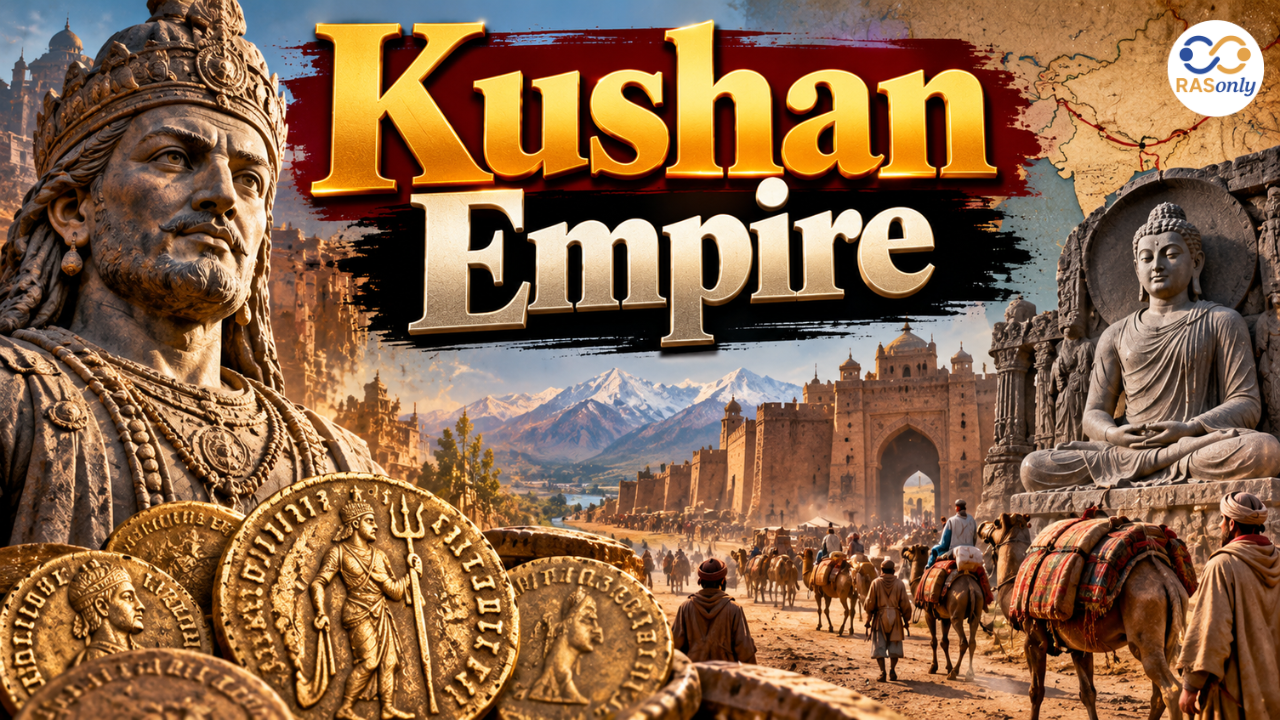
Kushan Empire: History, Rulers, Administration, Economy, Art, Decline
Ashoka history: Spread of Buddhism, Art and Architecture

Get in Touch with RASonly!



Ashoka was the grandson of Chandragupta Maurya, the founder and first ruler of the Maurya dynasty, who defeated Magadha. Ashoka's father, Bindusara, and mother, Subhadrangi, were blessed with a son in Pataliputra (present-day Patna) in 304 BCE, and his mother named him Ashoka, which literally means "A-Shok" in Sanskrit, meaning "free from sorrow."
Ashoka's father, Bindusara, was not very fond of him because of his ordinary appearance. Despite his displeasure with Ashoka's aesthetics, he entrusted him with responsibilities and sent him to suppress rebellions on several occasions.
Ashoka had five children: three sons, Mahinda, Tivala, and Kunala, and two daughters, Charumati and Sanghamitra. Mahendra was Ashoka's eldest son. Ashoka's son, Mahinda, was deeply involved in his father's mission to spread the teachings of Dhamma and Buddhism; for this purpose, he was sent to Ceylon.
Basic Information of Ashoka
Here’s your information neatly arranged in a table format:
|
|
|
|
|
|
|
|
|
|
|
|
|
|
|
|
|
|
|
|
|
|
|
|
|
|
|
Ashoka's Spread of Buddhism
Ashoka played a crucial role in the spread of Buddhism throughout India and other parts of Asia.
- After renouncing violence and embracing Buddhism following the Kalinga War, Ashoka became a devout Buddhist and worked tirelessly to promote the religion.
- He sent Buddhist missionaries to other parts of India and neighboring countries, such as Sri Lanka and Nepal, to spread the teachings of Buddhism.
- Ashoka also built numerous Buddhist monasteries and shrines, such as the famous Sanchi Stupa, which became important pilgrimage sites for Buddhists.
- He also used his royal patronage to support Buddhist institutions and scholars and encouraged the translation and dissemination of Buddhist texts in different languages.
- His legacy continued to be felt throughout Asia, as Buddhism spread to other countries such as China, Japan, and Korea, where it continues to be an important religion to this day.
- Ashoka’s efforts to promote Buddhism had a profound impact on Indian society and culture and helped establish Buddhism as one of the major religions of India.
Ashoka Art and Architecture
|
|
|
|
|
|
|
|
|
|
|
|
|
|
|
|
|
|
|
|
|
|
|
|
|
|
|
|
|
|
|
|
|
BEST SELLER
🏆 PRELIMS
RAS Pass
Prelims focused Hindi & English
₹399
✓
Prelims Topic-Wise Tests
✓
Subject-Wise Tests
✓
Full-Length Prelims Tests
✓
Daily Current Affairs Tests
✓
Prelims PYQs Tests
✓
Detailed Solutions & Analysis
✓
All Rajasthan Ranking
✓
Unlimited Reattempts
✓
Mains Tests
✓
Hindi & English Tests
✓
All Rajasthan Ranking
Trusted by 5,000+ Students
Post Category
- RAS Salary
- Result
- RAS Admit Card
- RAS Job
- RAS Cutoff
- Preparation Tips
- RAS Answer Key
- RAS Exam Analysis
- RAS Syllabus
- RAS Previous Year Papers
- RPSC RAS Exam Pattern
- RAS Interview
- RAS Exam Date
- RAS Vacancy
- RAS Test Series
- RAS Best Books
- RAS Preparation Resources
- RAS Coaching Centre
- History
- Polity
- Geography
- Economics
- Science
- Art and Culture
- RPSC RAS Application Form
- RPSC RAS Notification
- RAS Eligibility Criteria
- UPSC Exam
- RPSC RAS Mains
Visit Our RASonly Offline Center
Our Expert Faculty

Bhunesh Sir
Current Affairs · 13+ Yrs

Aamir Khan Sir
RAS-2017 · IIM Ahm.
Akash Sir
Polity · 8+ Yrs
Free Resources
Official Mobile App

RASOnly App
by OTSAdda · Free
Full Video Lectures
Mock Tests & PYQs
Daily Current Affairs
AI Mock Interview
Free Download · No subscription needed to install
RAS 2024 Toppers — RASonly
Rank 2
Virendra Charan
Rank 9
Bhoopinder Singh
Rank 26
Aanchal Nagpal
Rank 33
Lokendra Singh
Rank 45
Amar Rathore
Rank 46
Manasvini Verma

Join RASonly WhatsApp Community
Get daily current affairs, exam alerts, free study material and tips from expert faculty — right on WhatsApp.
Join for Free →RASonly Interview Guidance Program

Mr. Ashok Jain
Ex-Chief Secretary Govt of Rajasthan
- IAS officer of the 1981 batch, Rajasthan cadre.
- Passionate about mentoring the next generation of RAS officers with real-world insights.
- Got retired in Dec 2017 from the post of Chief Secretary of the state of Rajasthan.

Mr. Guru Charan Rai
Ex-ASP / SP in Jaisalmer
- Guru Charan Rai, IPS (Retd), retired as Inspector General of Police (Security), Rajasthan, Jaipur in 2017.
- Served as ASP and SP in Jaisalmer, Nagaur, Sri Ganganagar, Sawai Madhopur, Dausa, Sikar, and Karauli.
- He also held key positions as DIGP and IGP in the Law and Order division.

Mr. Rakesh Verma
Ex-IAS Officer, B.Tech, MBA, and M.A. (Economics)
- IAS officer of the 1981 batch and retired in Chief Secretary Rank.
- Civil servant of high repute and vast experience.
- Has been teaching UPSC CSE subjects for the last six years.

Daily Current Affairs for RAS Exam Preparation 2026
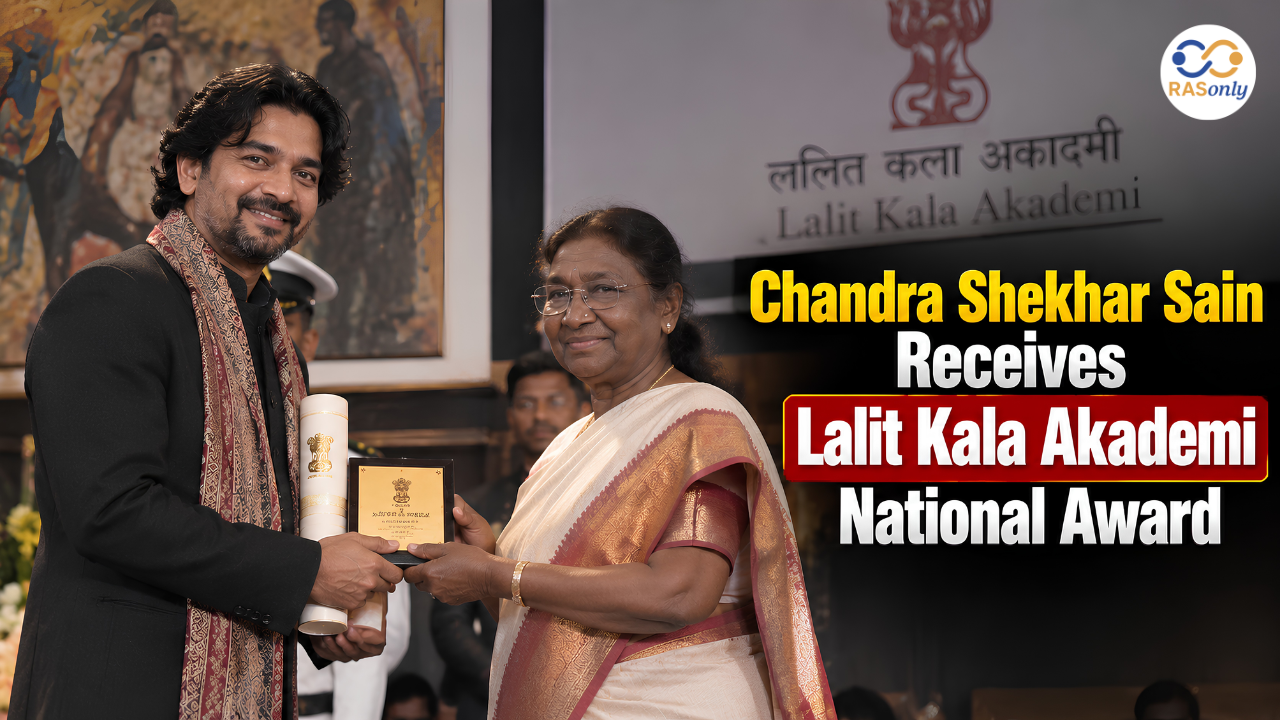
Chandra Shekhar Sain Receives Lalit Kala Akademi National Award
October 01, 2026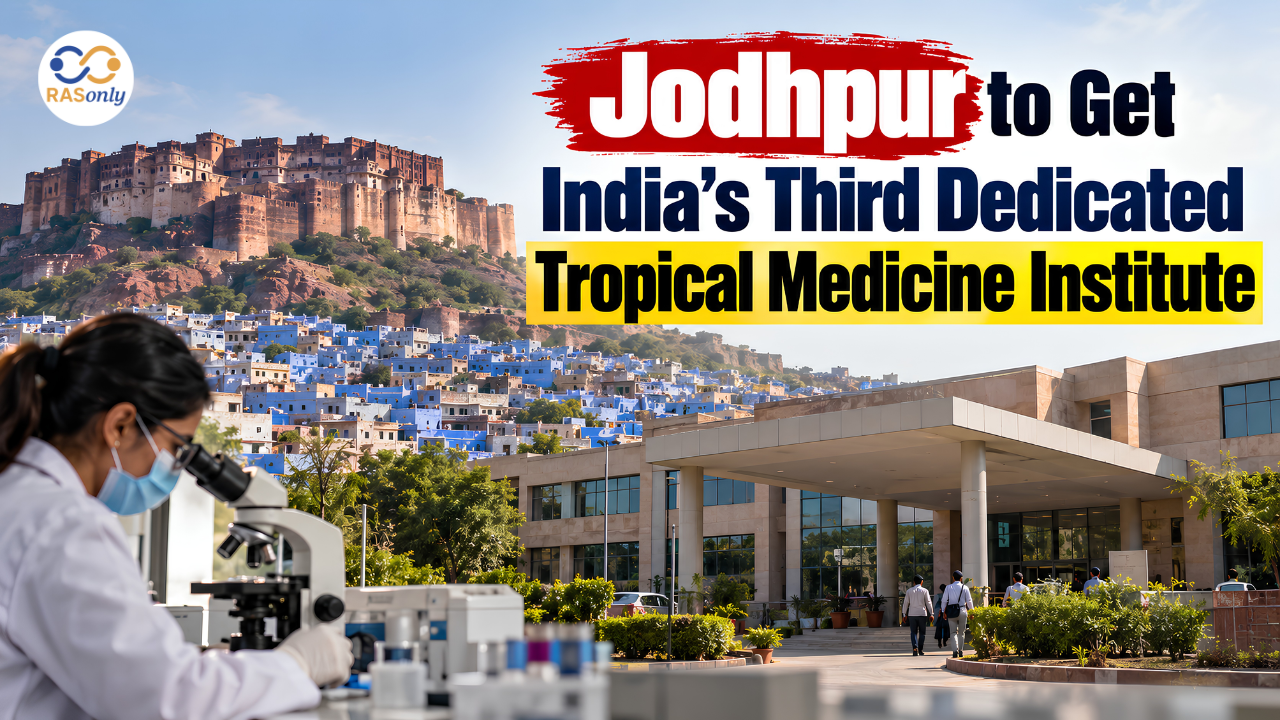
Jodhpur to Get India’s Third Dedicated Tropical Medicine Institute
October 01, 2026
Establishment of the Aesthetic Office
September 30, 2026