Kushan Empire: History, Rulers, Administration, Economy, Art, Decline
Bhil & Meena Movements in Rajasthan – Tribal Resistance, Reform & Political Awakening (RAS 2026 Guide)

Get in Touch with RASonly!

The Bhil and Meena Movements in Rajasthan marked a decisive phase of tribal resistance against feudal exploitation and colonial discrimination. From the Mangarh Massacre to Prajamandal participation, these movements shaped tribal political awakening and social reform in Rajasthan.

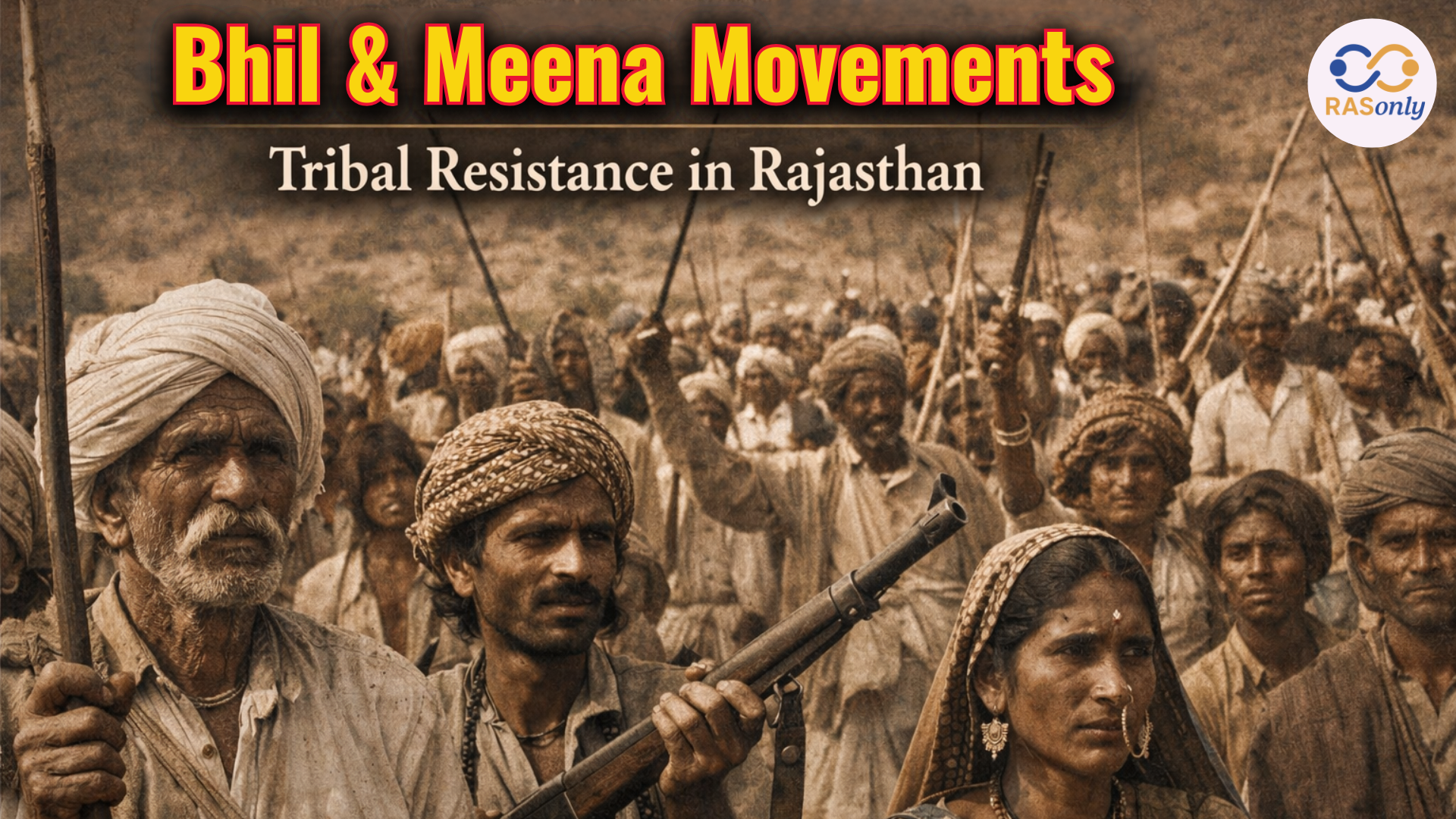
Bhil and Meena movements in Rajasthan represent significant phases of tribal resistance, socio-religious reform, anti-feudal struggle, and political mobilization during the late 19th and early 20th centuries. These movements emerged against feudal oppression, excessive taxation, forced labour (begar), forest restrictions, and colonial interference in tribal life.
The Bhil and Meena peoples found in southern and eastern Rajasthan reacted in different ways to the policies of the colonialist and princely states. Although Bhil movements were a mixture of religious reform and agrarian protest (e.g., Govind Gurus' movement, Eki Movement), the Meena mobilization was a development of socio-political assertion and involvement in the Prajamandal activities. It is critical to study their causes, leadership, ideology, and results to provide analytical answers in the RAS Mains.
For RPSC RAS 2026, this topic is highly important under:
- Rajasthan History
- Tribal Movements in Rajputana
- Peasant & Anti-Feudal Movements
- Prajamandal Movement
- Social Reform & Political Awakening
- Freedom Struggle in Rajasthan
Unlike purely agrarian peasant movements (Bijolia, Begun), Bhil and Meena mobilizations were deeply connected with tribal identity, community solidarity, socio-cultural reform, and assertion of rights over land and dignity. These movements laid the foundation for later tribal welfare policies and constitutional safeguards under the Fifth Schedule.
1. Historical Background: Tribal Society Under Feudal & Colonial Rule
The Bhil and Meena movements originated in the structural change of the polity of Rajasthan following the early 19th century. British paramountcy had been consolidated, and together with the already intact jagirdari system, deeper revenue levy, social control, and centralization of power were increased. Already at the bottom of the feudal structure, tribal societies were further marginalized economically, politically, and culturally, and over time, this translated into organized resistance and mobilization on a larger scale.
Political Context (Post-1818 Treaties)
After the 1818 treaties between the Rajput princely states and the British:
- Rajput rulers received military protection.
- British Residents gained indirect control.
- States were required to pay heavy tribute.
- Revenue extraction increased to meet tribute obligations.
The burden of increased taxation fell primarily on:
- Peasants
- Tribal communities
- Marginal cultivators
Socio-Economic Conditions of Tribals
Tribal communities such as the Bhils (Southern Rajasthan) and Meenas (Eastern Rajasthan) faced layered forms of exploitation under the feudal-colonial framework.
- Lag-bag (multiple cesses and taxes)
- Begar (forced unpaid labour)
- Forest restrictions on shifting cultivation
- Land alienation to jagirdars and moneylenders
- Criminal Tribes Act classification (especially affecting Meenas)
- Lack of access to education and administrative power
- Social marginalization and caste hierarchy discrimination
This background will be crucial in writing answers with a high score that goes beyond description and outlines the underlying socio-economic underpinnings of tribal movements in Rajasthan.
2. Bhil Movements in Rajasthan
The Bhil movements in Rajasthan are one of the earliest forms of tribal resistance to feudal oppression, interference by the colonies, and social exploitation. The Bhils, with their main bases in the southern tribal belt, came together with socio-religious reform, economic protest, and mobilization in the political arenas to demand dignity, land right and community independence. These movements were very instrumental in developing tribal consciousness, which was later to reflect extended agrarian and nationalistic movements in Rajasthan.
Regional Concentration
The Bhils, the largest Scheduled Tribe in Rajasthan, are primarily concentrated in:
- Udaipur
- Dungarpur
- Banswara
- Pratapgarh
- Sirohi
The area was commonly known as the Southern Tribal Belt, which was later the center of movements like the Bhagat Movement and Eki Movement.
Nature & Character of Bhil Movements
The Bhil movements were not just economic ones; they were multi-dimensional in nature. Their struggle combined:
- Socio-religious reform – Moral purification, rejection of alcoholism, and social discipline under reformist leaders.
- Anti-feudal resistance – Protest against excessive taxation, begar (forced labour), and arbitrary levies by jagirdars.
- Political awakening – Assertion of rights, demand for fair revenue practices, and mobilization against state repression.
- Tribal unity (Eki) – Collective identity formation across scattered Bhil settlements.
A. Govind Guru & Bhagat Movement (Late 19th Century – 1913)
One of the earliest organized tribal reform and rebellion movements in Rajasthan was the Bhagat Movement, which was led by Govind Guru (Govind Giri). It started as a socio-religious reform group of the Bhils of the Banswara-Dungarpur-Sunth belt, but slowly evolved into a strong anti-feudal and anti-colonial movement. The movement gave the basis of political consciousness of the tribal people in southern Rajasthan.
Leadership & Region
- Leader: Govind Guru
- Region: Banswara, Dungarpur, Sunth (now in Gujarat), parts of Mewar
- Nature: Religious reform + Anti-exploitation movement
Govind Guru organized the Bhils by forming the group known as “Samp Sabha,” which had an organized form of tribal harmony and reform.
Core Ideology
The Bhagat Movement emphasized moral reform and collective dignity:
- Unity among Bhils
- Abstinence from liquor
- Moral discipline and purity
- Rejection of social evils
- Assertion of tribal identity
- Resistance against exploitation
Initially reformist, the movement soon took a socio-political character due to economic oppression.
Economic & Administrative Grievances
- Heavy land revenue demands
- Illegal cesses (lag-bag)
- Begar (forced unpaid labour)
- Oppression by jagirdars and officials
- Exploitation by moneylenders
These grievances converted a religious reform campaign into an organized resistance movement.
Mangarh Massacre (17 November 1913)
The movement reached its peak at Mangarh Hills, where thousands of Bhils gathered under Govind Guru.
- British and princely state forces opened fire on the gathering.
- Hundreds of tribals were killed (exact numbers remain disputed).
- Govind Guru was arrested and later imprisoned
Significance
- Often referred to as the “Adivasi Jallianwala Bagh.”
- First large-scale organized tribal resistance in Rajasthan.
- It marked the beginning of political awakening among the Bhils.
- Mangarh Dham today stands as a symbol of tribal martyrdom.
Analytical Importance
- Illustrates tribal resistance against colonial–feudal nexus.
- Shows transition from social reform to political protest.
- Demonstrates how religion became a mobilization tool in tribal politics.
B. Eki Movement (1921–1923)
The Eki Movement, led by Motilal Tejawat, was a major tribal agrarian protest in southern Rajasthan. “Eki” means unity, reflecting the movement’s emphasis on collective resistance against feudal exploitation.
Region & Leadership
- Leader: Motilal Tejawat
- Region: Mewar, Dungarpur, Banswara
- Nature: Agrarian protest + Tribal unity movement
Causes
- Excessive taxation (lag-bag)
- Begar (forced labour)
- Arbitrary exactions by jagirdars
- Lack of administrative justice
Tejawat encouraged tribals to:
- Refuse illegal taxes
- Resist forced labour
- Organize collectively
The Non- Cooperation Movement influenced the movement, demonstrating the influence of Gandhian influence on the tribal mobilization.
Outcome & Impact
- Suppressed by state authorities.
- Motilal Tejawat arrested.
- Strengthened tribal political awareness.
- Reinforced unity across Bhil settlements.
Key Themes
- Tribal unity
- Anti-feudal resistance
- Gandhian influence
- Grassroots mobilization
- Political consciousness
3. Meena Movements in Rajasthan
The Meena movement in Rajasthan is the transformation of the traditional tribal opposition to social reform and political demands. With the Meena struggle, the agitation did not start as agrarian and religious movements, as was the case with the Bhils. The agitation was strongly informed by the legal discrimination, identity stigma, and the need to have civil rights and representation in the princely state.
The Meena community is mainly concentrated in Jaipur, Dausa, Sawai Madhopur, Karauli, and Alwar, and their mobilization gradually evolved from community reform to democratic participation.
A. Criminal Tribes Act & Meena Stigmatization
The social and political life of Meena groups was strongly influenced by the fact that some of them started to be considered as criminal tribes in accordance with the Criminal Tribes Act (1871). This colonial law labeled entire communities as hereditary criminals, institutionalizing discrimination and surveillance.
Impact
- Mandatory police registration
- Constant monitoring by authorities
- Restrictions on movement
- Severe social stigma
- Denial of equal civil rights
This legal discrimination created resentment and strengthened collective identity among Meenas. Over time, the struggle shifted from mere social survival to organized assertion for dignity and justice.
B. Meena Reform Movements
The early 20th century was the time when educated and socially aware Meena leaders started to hold the reform movements in order to resist the stigma and backwardness. These movements were both internally oriented and externally oriented.
Major Activities
- Organization of community conferences
- Social reform campaigns
- Demand for removal from the Criminal Tribes list
- Political mobilization in princely states
Core Focus Areas
- Promotion of education
- Social upliftment and modernization
- Strengthening community unity
- Demand for political representation
The movement gradually transformed into identity-based reform and organized political participation, paving the way to democratic integration following Independence.
C. Participation in Prajamandal Movement
The Meena community did not exist in the field of social reform. Leaders actively participated in:
- Jaipur Prajamandal
- Anti-feudal democratic movements
- Agitations demanding a responsible government
This marked a clear transition:
Caste Identity → Political Assertion → Democratic Integration
This Meena mobilization was therefore incorporated into the larger democratic awakening in Rajasthan.
4. Comparative Study: Bhil vs Meena Movements
Both the Bhil and Meena movements were different in origin, approach, and direction, but both played a significant role in the socio-political change of Rajasthan.
| Dimension | Bhil Movement | Meena Movement |
|---|---|---|
| Nature | Religious + Agrarian Protest | Social Reform + Political Assertion |
| Trigger | Feudal exploitation | Criminal Tribes Act & political exclusion |
| Major Leaders | Govind Guru, Motilal Tejawat | Community reformers & Prajamandal activists |
| Major Event | Mangarh Massacre (1913) | Reform mobilization & political assertion |
| Method | Mass tribal mobilization | Organizational & constitutional approach |
| Legacy | Tribal Awakening in Southern Rajasthan | Political integration in democratic reforms |
Analytical Insight: The initial Bhil movement started as agrarian mass resistance, whereas the Meena movement had taken a reformist and constitutional route. They combine various tendencies towards tribal assertion in Rajasthan.
5. Broader Impact on Rajasthan History
The Bhil and Meena movements were not based on immediate grievances. They transformed the political awareness and helped in the democratic change.
1. Tribal Political Awakening
- Marginalized communities became aware of their collective strength and rights.
2. Anti-Feudal Consciousness
- Jagirdari exploitation and forced labour systems were openly challenged.
3. Link with National Movement
- Tribal struggles connected with Gandhian ideology and Prajamandal activism.
4. Foundation for Post-Independence Safeguards
These movements indirectly contributed to:
- Recognition of Scheduled Tribes
- Fifth Schedule protections
- Tribal Sub-Plan policies
They helped integrate tribal concerns into mainstream governance.
6. Thematic Analysis for High-Scoring Mains Answers
To provide analytical responses in RAS Mains, be sure to frame your response in terms of wider themes and not just recount the events.
Key Frameworks:
- Colonial–feudal exploitation model
- Tribal identity and assertion
- Religion as a mobilization tool (Bhil case)
- Criminal Tribes Act and legal marginalization (Meena case)
- Tribal movements and mainstream nationalism
- Grassroots democracy and Prajamandal linkage
This strategy matures answers, structures them, and makes them conceptual.
7. RAS 2026 Preparation Strategy
Bhil and Meena movements are significant to understand the history of Rajasthan, Tribal administration, Social justice, and Democratic reforms.
Prelims Focus
- Mangarh Hills (1913)
- Govind Guru
- Eki Movement
- Motilal Tejawat
- Criminal Tribes Act and Meena community
Mains Practice
Prepare analytical answers on:
- Role of tribal movements in Rajasthan’s freedom struggle
- Comparative study of Bhil and Meena mobilization
- Evaluation of the Mangarh Massacre in tribal resistance history
Interview Themes
- Recognition and significance of Mangarh Dham
- Tribal development in Southern Rajasthan
- Historical roots of tribal marginalization
- Identity politics and constitutional safeguards
Conclusion
The Bhil and Meena movements in Rajasthan were not just regionalized tribal movements, but important events in the socio-political change of the state. Spiritual mobilization by Govind Guru and the Mangarh Massacre to the political claims of the Meena community by means of reform movements and participation in Prajamandal activities formed the basis of tribal identity, social justice, and democratic participation in Rajasthan.
For RAS 2026 aspirants, mastering this topic requires both factual clarity (leaders, dates, and regions) and analytical depth (feudalism, colonial policy, tribal assertion, and political awakening). The knowledge of those movements enhances the preparation of Rajasthan History, Tribal Studies, Social Reform Movements, and Freedom Struggle.
FAQ
Bhil and Meena Movements in Rajasthan are important for RAS 2026 because they link Rajasthan History, Tribal Resistance, Prajamandal Movement, and Anti-Feudal Struggles, which are frequently asked in Prelims and Mains.
The Mangarh Massacre of 1913, associated with Govind Guru and the Bhagat Movement, represents one of the earliest large-scale tribal resistances against the colonial-feudal nexus in Rajasthan.
The Eki Movement (1921–23), led by Motilal Tejawat, was a tribal unity movement in Mewar demanding an end to lag-bag, begar, and feudal oppression among Bhils.
Under the Criminal Tribes Act (1871), certain Meena groups were stigmatized as hereditary criminals, leading to surveillance, movement restrictions, and social discrimination, which later triggered reform and political mobilization.
The Bhil Movement was largely religious and agrarian in character, while the Meena Movement focused more on social reform, identity assertion, and political participation through Prajamandal activities.

BEST SELLER
🏆 PRELIMS
RAS Pass
Prelims focused Hindi & English
₹399
✓
Prelims Topic-Wise Tests
✓
Subject-Wise Tests
✓
Full-Length Prelims Tests
✓
Daily Current Affairs Tests
✓
Prelims PYQs Tests
✓
Detailed Solutions & Analysis
✓
All Rajasthan Ranking
✓
Unlimited Reattempts
✓
Mains Tests
✓
Hindi & English Tests
✓
All Rajasthan Ranking
Trusted by 5,000+ Students
Post Category
- RAS Salary
- Result
- RAS Admit Card
- RAS Job
- RAS Cutoff
- Preparation Tips
- RAS Answer Key
- RAS Exam Analysis
- RAS Syllabus
- RAS Previous Year Papers
- RPSC RAS Exam Pattern
- RAS Interview
- RAS Exam Date
- RAS Vacancy
- RAS Test Series
- RAS Best Books
- RAS Preparation Resources
- RAS Coaching Centre
- History
- Polity
- Geography
- Economics
- Science
- Art and Culture
- RPSC RAS Application Form
- RPSC RAS Notification
- RAS Eligibility Criteria
- UPSC Exam
- RPSC RAS Mains
Visit Our RASonly Offline Center
Our Expert Faculty

Bhunesh Sir
Current Affairs · 13+ Yrs

Aamir Khan Sir
RAS-2017 · IIM Ahm.

Akash Sir
Polity · 8+ Yrs
Free Resources
Official Mobile App

RASOnly App
by OTSAdda · Free
Full Video Lectures
Mock Tests & PYQs
Daily Current Affairs
AI Mock Interview
Free Download · No subscription needed to install
RAS 2024 Toppers — RASonly
Rank 2
Virendra Charan
Rank 9
Bhoopinder Singh
Rank 26
Aanchal Nagpal
Rank 33
Lokendra Singh
Rank 45
Amar Rathore
Rank 46
Manasvini Verma

Join RASonly WhatsApp Community
Get daily current affairs, exam alerts, free study material and tips from expert faculty — right on WhatsApp.
Join for Free →RASonly Interview Guidance Program

Mr. Ashok Jain
Ex-Chief Secretary Govt of Rajasthan
- IAS officer of the 1981 batch, Rajasthan cadre.
- Passionate about mentoring the next generation of RAS officers with real-world insights.
- Got retired in Dec 2017 from the post of Chief Secretary of the state of Rajasthan.

Mr. Guru Charan Rai
Ex-ASP / SP in Jaisalmer
- Guru Charan Rai, IPS (Retd), retired as Inspector General of Police (Security), Rajasthan, Jaipur in 2017.
- Served as ASP and SP in Jaisalmer, Nagaur, Sri Ganganagar, Sawai Madhopur, Dausa, Sikar, and Karauli.
- He also held key positions as DIGP and IGP in the Law and Order division.

Mr. Rakesh Verma
Ex-IAS Officer, B.Tech, MBA, and M.A. (Economics)
- IAS officer of the 1981 batch and retired in Chief Secretary Rank.
- Civil servant of high repute and vast experience.
- Has been teaching UPSC CSE subjects for the last six years.

Daily Current Affairs for RAS Exam Preparation 2026
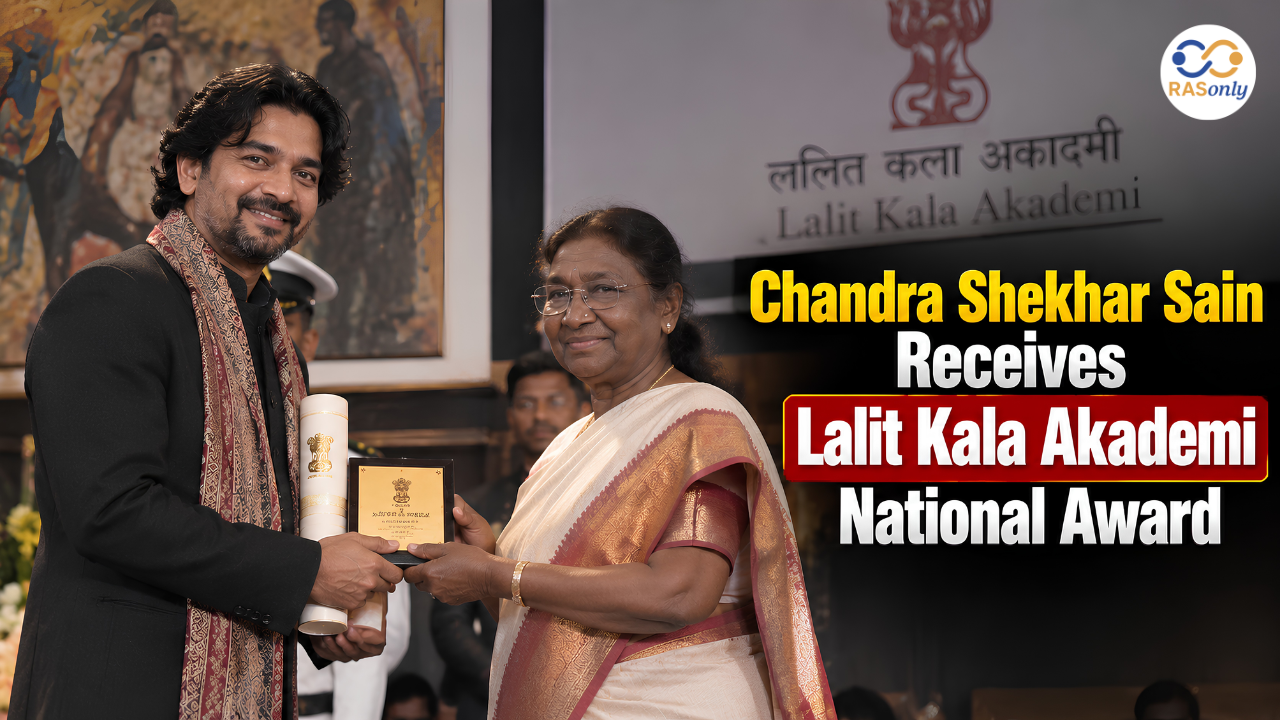
Chandra Shekhar Sain Receives Lalit Kala Akademi National Award
October 01, 2026
Jodhpur to Get India’s Third Dedicated Tropical Medicine Institute
October 01, 2026
Establishment of the Aesthetic Office
September 30, 2026