Chola Dynasty: Capital, Founder, Kings, Time Period and History
Cultural Heritage of Rajasthan (Art, Traditions, Festivals and Architecture)

Get in Touch with RASonly!

The Cultural Heritage of Rajasthan reflects the rich history, traditions, art, architecture, festivals, and folk culture of the state. From magnificent forts and palaces to vibrant festivals, folk dances, and traditional handicrafts, the Rajasthan culture and heritage showcase the unique identity of the region. Understanding the art and culture of Rajasthan is also important for RPSC RAS exam preparation and Rajasthan GK.

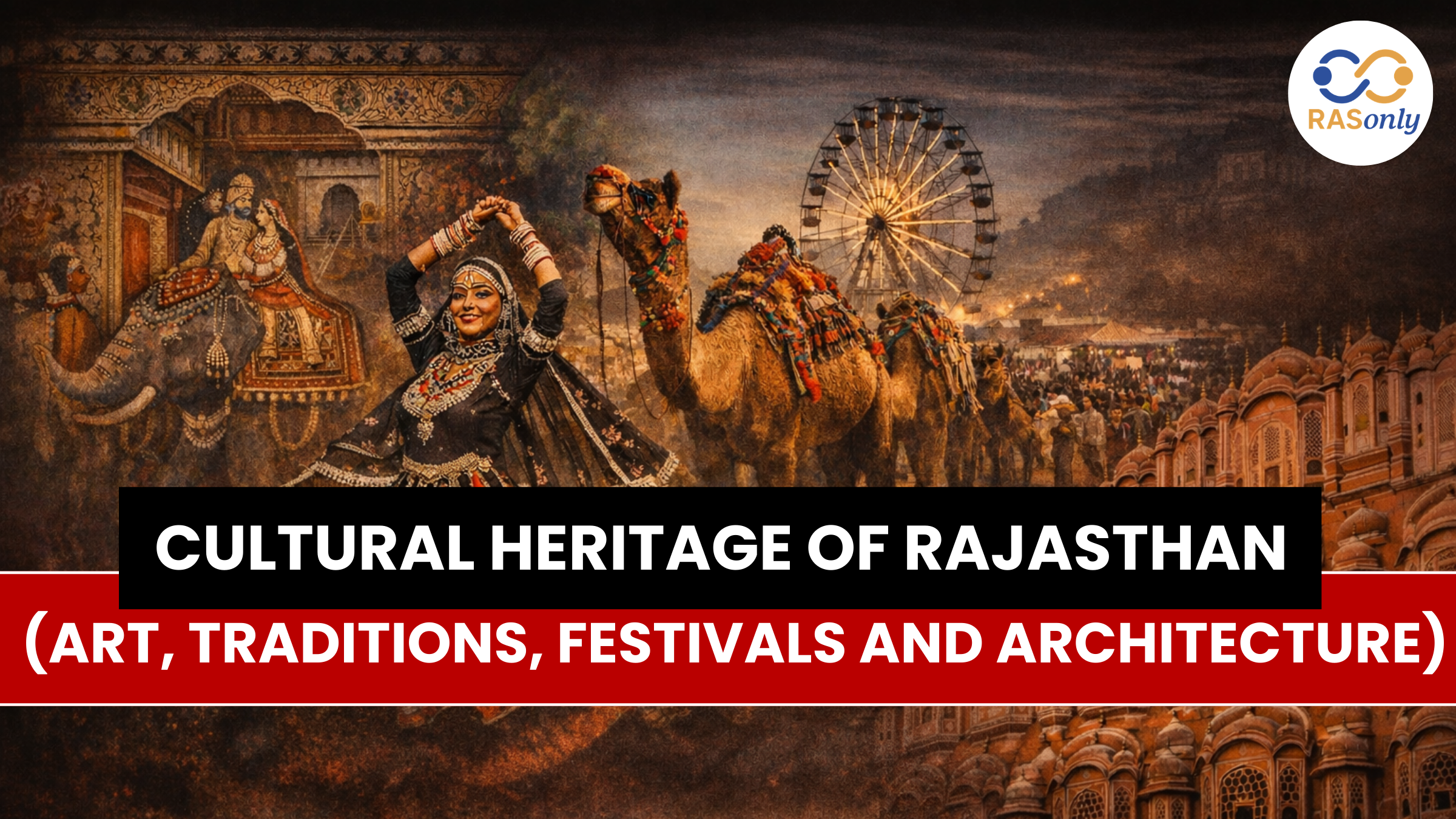
The Cultural Heritage of Rajasthan reflects the rich history, traditions, artistic achievements, and social customs that have developed in the region over centuries. Rajasthan, often known as the “Land of Kings”, has a unique cultural identity shaped by the legacy of Rajput rulers, desert communities, and various tribal groups. The culture and heritage of Rajasthan include magnificent architecture, traditional arts and crafts, colorful festivals, folk music and dance, literature, and distinct lifestyles that represent the historical richness of the state.
The Rajasthan cultural heritage is one of the most vibrant in India and attracts millions of visitors every year. The art and culture of the Rajasthan region is exemplified in grand forts and palaces, traditional handicrafts, and vibrant festivals, among other things. Cultural Heritage of Rajasthan is a highly sensitive topic to the candidates who are preparing to take the RPSC RAS Exam since a lot of questions in the RAS Prelims exam and the Rajasthan GK exams are always related to the architecture, folk dances, festivals, handicrafts, literature, and traditions of Rajasthan.
Major Components of Cultural Heritage of Rajasthan
The Cultural Heritage of Rajasthan is composed of several important cultural elements that together represent the unique Rajasthan culture, traditions, and lifestyle of the state. These components have developed over centuries under the influence of Rajput rulers, desert communities, and various social traditions. The heritage of Rajasthan includes artistic, social, and historical features that continue to shape the identity of the region and are widely studied in Rajasthan GK and RPSC RAS exam preparation.
The cultural heritage of Rajasthan consists of many significant cultural aspects that, in combination, form a distinct Rajasthan culture, traditions, and lifestyle of this state. These elements have been evolving throughout centuries due to the impact of the Rajput rulers, desert people, and other social cultures. Rajasthan has artistic, social, and historical aspects in its heritage that still determine the identity of the locality and are commonly studied in Rajasthan GK and RPSC RAS exams preparation.
The major components of Rajasthan culture and heritage include:
- Architecture and historical monuments of Rajasthan
- Folk music and folk dances of Rajasthan
- Festivals and traditional fairs of Rajasthan
- Traditional handicrafts and art forms of Rajasthan
- Language and literature of Rajasthan
- Traditional dress and cuisine of Rajasthan
Each of these cultural elements plays a significant role in preserving the rich cultural heritage of Rajasthan and reflects the historical traditions, artistic creativity, and social values that define the art and culture of Rajasthan.
Architecture and Historical Monuments of Rajasthan
Architecture is one of the most important and remarkable aspects of the Cultural Heritage of Rajasthan. It is also very popular in its splendid forts, palaces, temples, stepwells, and havelis that are its reminder of the architectural bliss of the Rajput and the Mughal era. The Rajasthan architecture is a blend of defensive military architecture and artistic beauty, which portrays elaborate carvings, vast courtyards, ornate balconies, and fortification. These ancient monuments are not just symbols of political power and prosperity of the royalty but also a reminder of the rich art and culture of Rajasthan.
Some of the most famous historical monuments and forts of Rajasthan include:
- Chittorgarh Fort
- Kumbhalgarh Fort
- Amer Fort (Jaipur)
- Mehrangarh Fort (Jodhpur)
- Jaisalmer Fort
- Ranthambore Fort
- Gagron Fort
These forts are included in an UNESCO World Heritage Site called the Hill Forts of Rajasthan, representing the distinctive military engineering and tactical thinking of the Rajput kingdoms of the 8th -18th centuries. The forts were used to protect the region and protect the cultural identity of Rajasthan.
Apart from forts, Rajasthan is also famous for its magnificent royal palaces, which reflect the luxurious lifestyle and artistic taste of the Rajput rulers. Some of the most famous palaces of Rajasthan include:
- City Palace of Udaipur
- Hawa Mahal in Jaipur
- Lake Palace in Udaipur
- Umaid Bhawan Palace in Jodhpur
These architectural achievements are significant icons of the architectural heritage in Rajasthan and reflect the architecture, the cultural richness and the history of the state. Rajasthan forts and palaces are still visited by tourists and historians worldwide and still play a significant role in the heritage of the culture of Rajasthan, besides the preparation of RAS exams.
Folk Music and Folk Dances of Rajasthan
The Cultural Heritage of Rajasthan includes folk music and folk dances of Rajasthan as they are significant measures of the rich traditions, customs, and social life of the people. These are the traditional forms of art that have been passed on through the generations and are very crucial in maintaining the Rajasthan culture and heritage. The Rajasthan folk music frequently narrates boldness, dedication, affection and historical themes and folk dances are employed to show happiness and the spirit of a community especially during festivals, marriage and cultural occasions.
The folk music and dances of Rajasthan are also practiced at the major festivals and fairs and the religious ceremonies. These are significant features of the art and culture of Rajasthan and the artistic innovativeness and cultural heterogeneity of the region.
Some of the most popular folk dances of Rajasthan include:
- Ghoomar
- Kalbelia
- Bhavai
- Gair
- Kachhi Ghodi
- Chari Dance
Among these dances, the Kalbelia dance of Rajasthan has gained international recognition and is included in the UNESCO Intangible Cultural Heritage List, representing the traditional dance culture of the Kalbelia community.
Traditional musical instruments used in Rajasthani folk music include:
- Sarangi
- Dhol
- Kamayacha
- Algoza
- Shehnai
- Morchang
These musical instruments create the distinctive sound of Rajasthan folk music and accompany traditional dance performances. Together, the folk music and folk dances of Rajasthan represent an important part of the cultural heritage of Rajasthan and showcase the artistic traditions and cultural identity of the state.
Traditional Arts and Handicrafts of Rajasthan
Another major component of the Cultural Heritage of Rajasthan is its traditional handicrafts and artistic creations. Rajasthan is widely known for its skilled artisans who produce unique handmade products that reflect centuries-old craftsmanship.
Important Rajasthan handicrafts include:
- Bandhani (tie and dye textiles)
- Block printed fabrics
- Blue pottery of Jaipur
- Marble carving and stone sculpture
- Wooden handicrafts
- Rajasthani miniature paintings
- Leather handicrafts and footwear
- Kathputli (traditional puppet art)
Cities like Jaipur, Jodhpur, Udaipur, Bikaner, and Jaisalmer are famous for producing traditional handicrafts and artworks. These crafts not only represent the art and culture of Rajasthan but also contribute significantly to tourism and the state economy.
Festivals and Fairs of Rajasthan
Festivals and fairs of Rajasthan are an important part of the Cultural Heritage of Rajasthan and represent the vibrant traditions, customs, and social life of the state. These celebrations reflect the rich Rajasthan culture and heritage, where people come together to celebrate religious beliefs, seasonal changes, and historical traditions. The festivals of Rajasthan are known for colorful decorations, traditional music and dance, cultural performances, and local handicrafts, making them an essential part of the art and culture of Rajasthan.
Some of the most famous festivals and fairs of Rajasthan include:
- Pushkar Camel Fair
- Desert Festival of Jaisalmer
- Gangaur Festival
- Teej Festival
- Mewar Festival
- Nagaur Fair
- Urs Festival of Ajmer
The Pushkar Camel Fair is one of the largest livestock fairs in the world and is famous for camel trading, traditional competitions, folk music, and cultural performances. Similarly, the Desert Festival of Jaisalmer celebrates the culture of the Thar Desert through folk dances, camel races, music performances, and traditional events that highlight the lifestyle of desert communities.
These festivals and fairs reflect the colorful and lively nature of Rajasthan traditions and cultural heritage and play an important role in promoting the tourism, art, and cultural identity of Rajasthan.
Traditional Dress and Lifestyle of Rajasthan
Traditional attire is an important element of the heritage of Rajasthan. The clothing reflects the desert climate, social traditions, and regional identity of the people.
Traditional Dress of Men
- Dhoti or Churidar
- Angrakha
- Pagdi or Safa (turban)
Traditional Dress of Women
- Ghagra
- Choli
- Odhni or Dupatta
Bright colors, mirror work, and embroidery are distinctive features of Rajasthani traditional clothing.
Language and Literature of Rajasthan
The language and literature of Rajasthan are significant aspects of the cultural heritage of Rajasthan and contribute greatly as a means of conserving the traditional history and social values of the area. There is a rich heritage of Rajasthani language, folk literature, poetry, and historical writings in the state that indicate the courage of the Rajput rulers, religious faiths, and the cultural beliefs of the inhabitants. Through oral tradition and folk songs and written manuscripts, the literary heritage of Rajasthan has been transmitted over centuries, and is an indispensable element of the Rajasthan art and culture.
Important forms of Rajasthani literature and traditional writings include:
- Dingal and Pingal poetry
- Charan and Bhatt's literature
- Folk ballads describing Rajput bravery
- Historical chronicles and legends of Rajasthan
These literary traditions preserve the cultural memories, heroic stories, and historical events of Rajasthan’s past. The language and literature of Rajasthan continue to play an important role in maintaining the cultural identity and historical heritage of the state, and they are also important topics for RPSC RAS exam preparation and Rajasthan GK.
Importance of Cultural Heritage of Rajasthan for RAS Exam
The subject of Cultural Heritage of Rajasthan is very critical in preparing for the RPSC RAS Exam. Many questions in the RAS Prelims and Rajasthan GK section are asked from the art, culture, festivals, architecture, and traditions of Rajasthan.
Important focus areas for the RAS exam include:
- Folk dances and folk music of Rajasthan
- Major festivals and fairs of Rajasthan
- Rajasthan handicrafts and traditional art forms
- Historical monuments and architecture
- Cultural traditions and lifestyle of Rajasthan
Understanding these topics helps candidates perform better in the RPSC RAS examination.
Conclusion
The Cultural Heritage of Rajasthan is an amazing combination and integration of history, traditions, arts, architecture, music, festivals, and social practices that have been developed over centuries. The culture and heritage of Rajasthan have portrayed the rich historical backgrounds of the area in terms of magnificent forts and palaces, colorful festivals, and traditional handicrafts.
The study of art and culture of Rajasthan is very crucial to aspirants facing the RPSC RAS exam since the questions based on Rajasthan festivals, folk dances, architecture, handicrafts, and cultural traditions are often examined in the RAS Prelims and Rajasthan GK sections. Cultural Heritage of Rajasthan is a comprehensive study that enhances preparation of exams and also offers priceless insights into the identity and culture of the state.
Frequently Asked Questions (FAQs)
The Cultural Heritage of Rajasthan refers to the rich traditions, historical monuments, folk music, folk dances, festivals, literature, and handicrafts that represent the unique art and culture of Rajasthan. It reflects the historical legacy and cultural identity of the state.
The main components of Rajasthan cultural heritage include architecture and historical monuments, folk music and folk dances, festivals and fairs, traditional handicrafts, language and literature, and traditional dress and cuisine.
The Hill Forts of Rajasthan recognized by UNESCO include Chittorgarh Fort, Kumbhalgarh Fort, Amer Fort, Ranthambore Fort, Gagron Fort, and Jaisalmer Fort, which represent the military architecture of the Rajput kingdoms.
Some of the most famous folk dances of Rajasthan include Ghoomar, Kalbelia, Bhavai, Gair, Kachhi Ghodi, and Chari dance. Among these, Kalbelia dance is recognized as part of the UNESCO Intangible Cultural Heritage.
The topic Cultural Heritage of Rajasthan is very important for RPSC RAS exam and Rajasthan GK because questions are frequently asked about Rajasthan festivals, folk dances, handicrafts, architecture, literature, and cultural traditions in the RAS Prelims and Mains examinations.

BEST SELLER
🏆 PRELIMS
RAS Pass
Prelims focused Hindi & English
₹399
✓
Prelims Topic-Wise Tests
✓
Subject-Wise Tests
✓
Full-Length Prelims Tests
✓
Daily Current Affairs Tests
✓
Prelims PYQs Tests
✓
Detailed Solutions & Analysis
✓
All Rajasthan Ranking
✓
Unlimited Reattempts
✓
Mains Tests
✓
Hindi & English Tests
✓
All Rajasthan Ranking
Trusted by 5,000+ Students
Post Category
- RAS Salary
- Result
- RAS Admit Card
- RAS Job
- RAS Cutoff
- Preparation Tips
- RAS Answer Key
- RAS Exam Analysis
- RAS Syllabus
- RAS Previous Year Papers
- RPSC RAS Exam Pattern
- RAS Interview
- RAS Exam Date
- RAS Vacancy
- RAS Test Series
- RAS Best Books
- RAS Preparation Resources
- RAS Coaching Centre
- History
- Polity
- Geography
- Economics
- Science
- Art and Culture
- RPSC RAS Application Form
- RPSC RAS Notification
- RAS Eligibility Criteria
- UPSC Exam
- RPSC RAS Mains
Visit Our RASonly Offline Center
Our Expert Faculty

Bhunesh Sir
Current Affairs · 13+ Yrs

Aamir Khan Sir
RAS-2017 · IIM Ahm.
Akash Sir
Polity · 8+ Yrs
Free Resources
Official Mobile App

RASOnly App
by OTSAdda · Free
Full Video Lectures
Mock Tests & PYQs
Daily Current Affairs
AI Mock Interview
Free Download · No subscription needed to install
RAS 2024 Toppers — RASonly
Rank 2
Virendra Charan
Rank 9
Bhoopinder Singh
Rank 26
Aanchal Nagpal
Rank 33
Lokendra Singh
Rank 45
Amar Rathore
Rank 46
Manasvini Verma

Join RASonly WhatsApp Community
Get daily current affairs, exam alerts, free study material and tips from expert faculty — right on WhatsApp.
Join for Free →RASonly Interview Guidance Program

Mr. Ashok Jain
Ex-Chief Secretary Govt of Rajasthan
- IAS officer of the 1981 batch, Rajasthan cadre.
- Passionate about mentoring the next generation of RAS officers with real-world insights.
- Got retired in Dec 2017 from the post of Chief Secretary of the state of Rajasthan.

Mr. Guru Charan Rai
Ex-ASP / SP in Jaisalmer
- Guru Charan Rai, IPS (Retd), retired as Inspector General of Police (Security), Rajasthan, Jaipur in 2017.
- Served as ASP and SP in Jaisalmer, Nagaur, Sri Ganganagar, Sawai Madhopur, Dausa, Sikar, and Karauli.
- He also held key positions as DIGP and IGP in the Law and Order division.

Mr. Rakesh Verma
Ex-IAS Officer, B.Tech, MBA, and M.A. (Economics)
- IAS officer of the 1981 batch and retired in Chief Secretary Rank.
- Civil servant of high repute and vast experience.
- Has been teaching UPSC CSE subjects for the last six years.
Related Post
Daily Current Affairs for RAS Exam Preparation 2026
Rajasthan’s First Sitaphal Processing Unit in Chittorgarh
October 19, 2026
Rajasthan Foundation Expansion New Chapters Announced
October 19, 2026
Continuous Biomass Torrefaction Reactor
October 17, 2026