Kushan Empire: History, Rulers, Administration, Economy, Art, Decline
Desert Ecosystem of Rajasthan 2026: Climate, Biodiversity, Adaptation, Challenges & Sustainable Development (RAS)

Get in Touch with RASonly!

The Desert Ecosystem of Rajasthan showcases how life adapts to extreme conditions through resilience, biodiversity, and traditional knowledge. It highlights the balance between environmental challenges like desertification and sustainable development practices. This topic is crucial for understanding climate adaptation, ecology, and governance for RPSC RAS 2026.

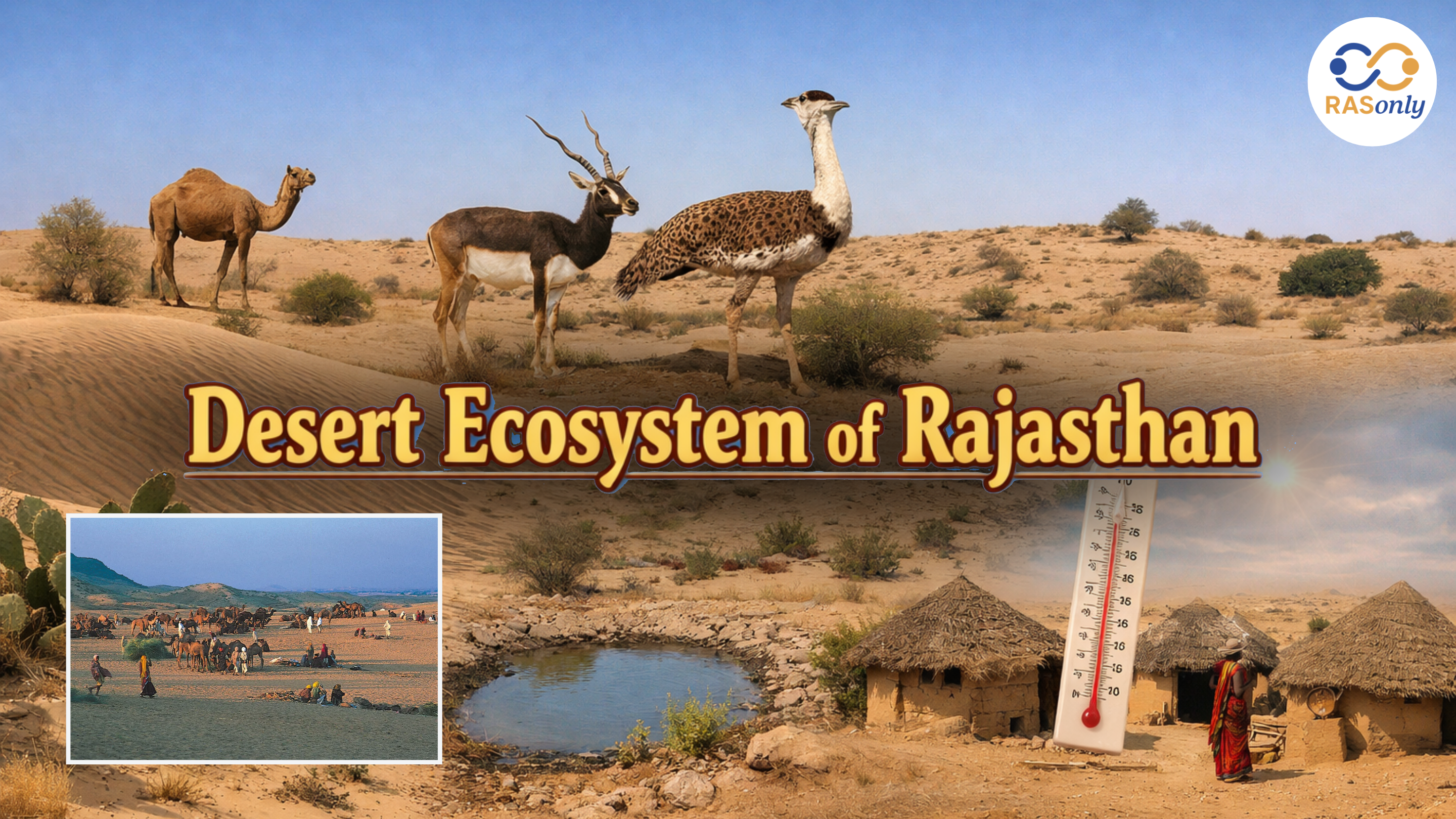
The Desert Ecosystem of Rajasthan, the main representative of which is the Thar Desert, is one of the most complex and fragile arid ecosystems of India. It is marked by the extremes of climatic conditions, low and erratic rainfall, sandy nature, scant vegetation, and highly-adapted flora and fauna; this is a unique ecological region.
From the perspective of the Rajasthan Geography, Environment and Ecology Curriculum of RPSC RAS 2026, the desert ecosystem is of high significance as it describes human-environment interaction, climate adaptation, biodiversity conservation and sustainable development issues. It also plays an important role in the development of economy, settlement pattern and culture in western Rajasthan.
Overview of Desert Ecosystem in Rajasthan
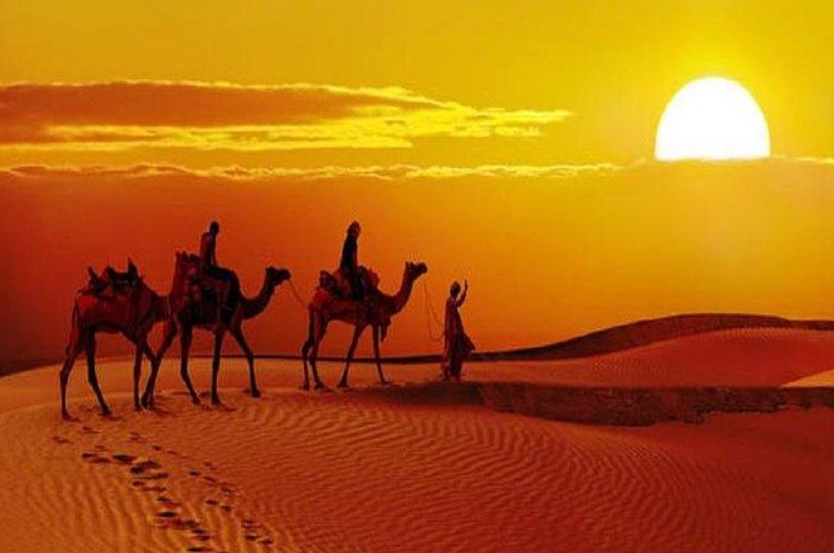
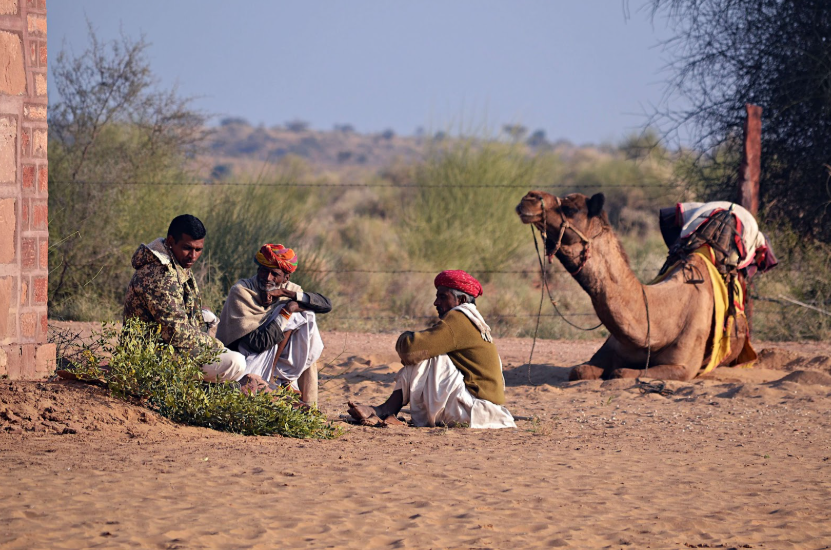
The Thar Desert ecosystem occupies a major area of the western Rajasthan that includes districts such as Jaisalmer, Barmer, Bikaner, Jodhpur, and Jalore. It is one of the world's most densely populated deserts where people have developed unique survival strategies.
This ecosystem is not only a natural region, but also a socio-economic system, where traditional practices such as pastoralism, rain-fed agriculture, and water conservation have enabled human life to survive even in extremely harsh conditions.
Physical and Geographical Features
The desert ecosystem of Rajasthan is defined by diverse physical features such as sand dunes, rocky plains, saline depressions, and arid plains, which together create a dynamic and constantly changing landscape.
These geographical features directly affect the climate pattern, distribution of vegetation, wildlife, and human settlement and geography is an important factor of desert ecology.
Major Landforms
| Landform | Description |
|---|---|
| Sand Dunes | Barchan (crescent-shaped) and longitudinal dunes |
| Interdunal Plains | Flat areas between dunes used for settlement |
| Rocky Terrain | Hard surfaces with minimal soil cover |
| Playa/Saline Lakes | Seasonal saltwater depressions |
Climate Characteristics of Desert Ecosystem
The climatic condition of Rajasthan desert ecosystem is extreme, arid and highly unpredictable with very low rainfall and high variation in day and night temperature.
Such climatic conditions generate stress in natural ecosystems, as well as in human life, and for survival, they need to have strong adaptation mechanisms.
Climate Features
- Rainfall: 100–300 mm annually (irregular and uncertain)
- Summer Temperature: Up to 48–50°C
- Winter Temperature: Drops below 5°C at night
- High wind velocity and evaporation rate
Vegetation (Flora) of Desert Ecosystem
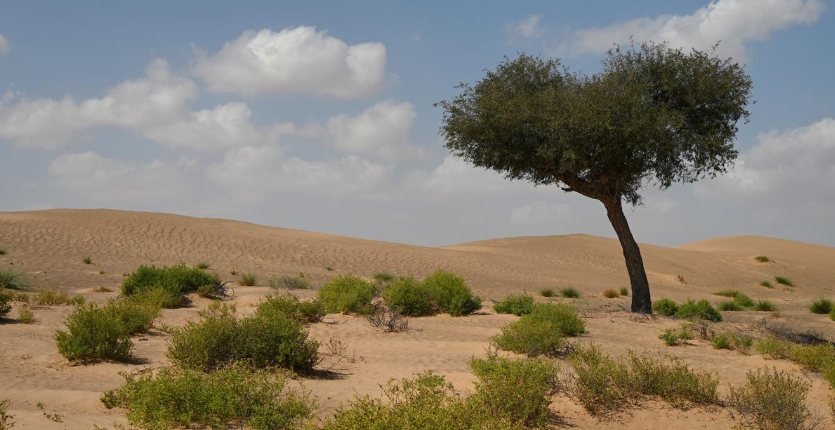
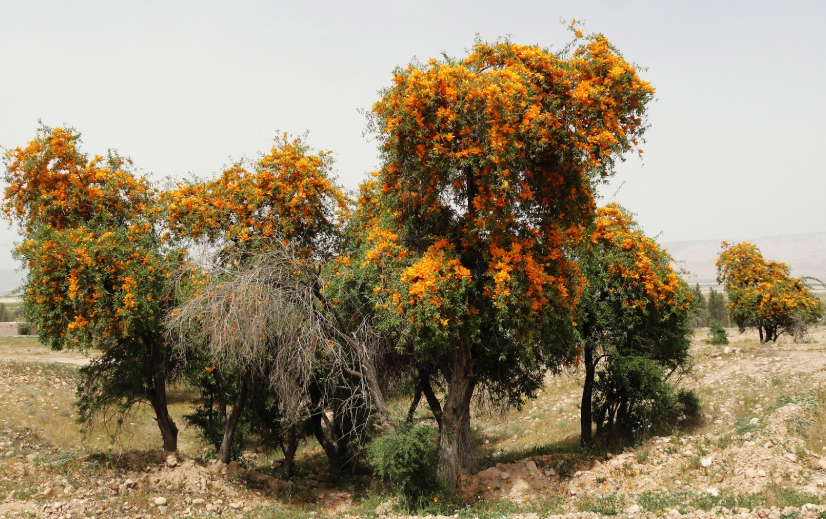
The vegetation of the Desert Ecosystem of Rajasthan is mainly of the xerophytic type, which means that the plants are specially adapted to survive the harsh climatic condition of arid climate, low rainfall and high temperature. These plants grow in soils with sand and have very limited access to moisture, which makes them very hardy and ecologically important plants.
Desert plants show unique adaptations such as deep root systems to access groundwater, reduced leaf size to minimize water loss, thick bark, and waxy coatings. These features help to maintain ecological balance and help in supporting the biodiversity of the desert.
Major Desert Plants
- Khejri (Prosopis cineraria) → Improves soil fertility, supports ecosystem
- Babool (Acacia) → Drought-resistant, thorny protection
- Rohida → Valuable timber, desert teak
- Sewan Grass → Important for grazing and livestock
Wildlife (Fauna) of Desert Ecosystem
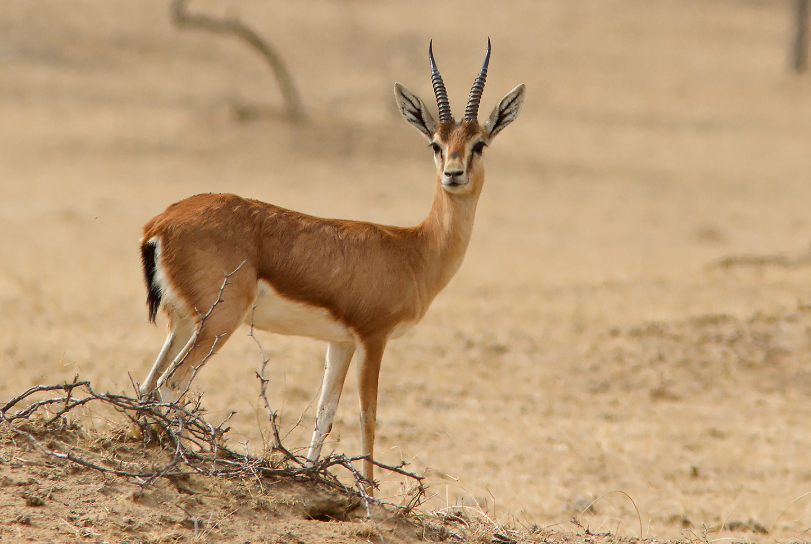
Despite extreme climatic conditions, the desert ecosystem supports a wide range of adapted wildlife species, many of which are rare and endangered. These species are specially evolved to live under reduced water and high temperature.
Desert animals show adaptations like nocturnal behavior, burrowing habits, water conservation, and heat resistance, which allow them to survive harsh environmental conditions and maintain ecological balance.
Major Wildlife Species
- Great Indian Bustard (Godawan) → Critically endangered
- Chinkara (Indian Gazelle) → Common desert herbivore
- Desert Fox & Desert Cat → Nocturnal predators
- Spiny-tailed Lizard → Adapted to sandy habitats
Human Adaptation and Livelihood
Human life in the desert ecosystem of Rajasthan is a great example of adaptation, resilience, and sustainable life. Communities have evolved traditional systems of knowledge to survive in water scarcity and extreme climate.
The desert economy is primarily pastoralist, dryland agricultural, based on handicrafts and tourism and ensures rural livelihoods and local development.
Key Livelihood Activities
- Animal husbandry (camel, sheep, goat)
- Bajra (millet) cultivation
- Handicrafts and textile production
- Water harvesting (Tankas, Johads)
Ecological Importance of Desert Ecosystem
The desert ecosystem is an important part of the ecological balance, biodiversity conservation and climate regulation in Rajasthan. It supports unique plant and animal species that are specially adapted to extreme conditions.
This ecosystem is also useful in understanding environmental sustainability and human adaptation, and thus important for ecological studies and conservation planning.
Ecological Role
- Biodiversity conservation
- Climate regulation and carbon balance
- Control of desertification
- Support for sustainable ecosystems
Challenges Facing Desert Ecosystem
The desert ecosystem is very fragile and is seriously threatened by both natural factors and human activities. These challenges are on the rise because of development pressure and climate change.
If not properly managed, these problems can cause land degradation, loss of biodiversity and ecological imbalance, not only for the environment but also for human life.
Major Challenges
| Issue | Impact |
|---|---|
| Desertification | Expansion of barren land |
| Overgrazing | Soil degradation |
| Mining | Habitat destruction |
| Climate Change | Rainfall variability |
| Urbanization | Resource pressure |
Conservation Efforts and Government Measures
Conservation of the desert ecosystem is vital in order to safeguard its fragile variety and assure sustainable development. Government initiatives as well as local community practices are all part of the conservation efforts.
These measures focus on wildlife protection, afforestation, water conservation, and ecosystem restoration, helping maintain ecological balance.
Key Measures
- Desert National Park (Jaisalmer)
- Great Indian Bustard conservation programs
- Afforestation and grassland development
- Traditional water conservation systems
Sustainable Development in Desert Region
Sustainable development in Rajasthan’s desert region aims to balance economic growth with environmental protection. It focuses on using natural resources efficiently without harming the ecosystem.
Modern strategies like renewable energy, eco-tourism, and sustainable agriculture are helping in creating long-term development opportunities.
Sustainable Practices
- Solar energy projects
- Eco-tourism and desert tourism
- Rainwater harvesting
- Climate-resilient agriculture
Desert Ecosystem and Climate Change
Climate change is having a significant effect on the desert ecosystem, including changes in temperature patterns, distribution of rainfall, and the frequency of extreme weather events. This brings uncertainty in the field of agriculture and water availability.
The growing impacts of climate change are compelling to use climate resilient approaches, water management and sustainable practices in safeguarding the desert ecosystem.
Conclusion
The Desert Ecosystem of Rajasthan is a unique blend of extreme environmental conditions and human resilience, in which nature and society have adapted in order to survive in arid conditions. It highlights how biodiversity, traditional knowledge, and sustainable practices can coexist even in the harshest climates.
However, increasing challenges like climate change, desertification, and human pressure are threatening this fragile ecosystem. Therefore, effective conservation strategies, sustainable development, and climate-resilient policies are essential to ensure the long-term ecological and economic stability of Rajasthan.
FAQ
The desert ecosystem of Rajasthan refers to the arid ecological region of the Thar Desert characterized by low rainfall, extreme temperatures, xerophytic vegetation, and specially adapted wildlife.
Major plants include Khejri, Babool, Rohida, and Sewan grass, which are drought-resistant and adapted to arid conditions.
The Great Indian Bustard (Godawan) is the most important and critically endangered species found in the desert ecosystem.
Overgrazing, deforestation, climate change, mining activities, and improper land use are the major causes of desertification.
It is important because it connects geography, environment, climate change, biodiversity, and sustainable development, making it highly relevant for both Prelims and Mains.

BEST SELLER
🏆 PRELIMS
RAS Pass
Prelims focused Hindi & English
₹399
✓
Prelims Topic-Wise Tests
✓
Subject-Wise Tests
✓
Full-Length Prelims Tests
✓
Daily Current Affairs Tests
✓
Prelims PYQs Tests
✓
Detailed Solutions & Analysis
✓
All Rajasthan Ranking
✓
Unlimited Reattempts
✓
Mains Tests
✓
Hindi & English Tests
✓
All Rajasthan Ranking
Trusted by 5,000+ Students

Post Category
- RAS Salary
- Result
- RAS Admit Card
- RAS Job
- RAS Cutoff
- Preparation Tips
- RAS Answer Key
- RAS Exam Analysis
- RAS Syllabus
- RAS Previous Year Papers
- RPSC RAS Exam Pattern
- RAS Interview
- RAS Exam Date
- RAS Vacancy
- RAS Test Series
- RAS Best Books
- RAS Preparation Resources
- RAS Coaching Centre
- History
- Polity
- Geography
- Economics
- Science
- Art and Culture
- RPSC RAS Application Form
- RPSC RAS Notification
- RAS Eligibility Criteria
- UPSC Exam
- RPSC RAS Mains
Visit Our RASonly Offline Center
Our Expert Faculty

Bhunesh Sir
Current Affairs · 13+ Yrs

Aamir Khan Sir
RAS-2017 · IIM Ahm.

Akash Sir
Polity · 8+ Yrs
Free Resources
Official Mobile App

RASOnly App
by OTSAdda · Free
Full Video Lectures
Mock Tests & PYQs
Daily Current Affairs
AI Mock Interview
Free Download · No subscription needed to install
RAS 2024 Toppers — RASonly
Rank 2
Virendra Charan
Rank 9
Bhoopinder Singh
Rank 26
Aanchal Nagpal
Rank 33
Lokendra Singh
Rank 45
Amar Rathore
Rank 46
Manasvini Verma

Join RASonly WhatsApp Community
Get daily current affairs, exam alerts, free study material and tips from expert faculty — right on WhatsApp.
Join for Free →RASonly Interview Guidance Program

Mr. Ashok Jain
Ex-Chief Secretary Govt of Rajasthan
- IAS officer of the 1981 batch, Rajasthan cadre.
- Passionate about mentoring the next generation of RAS officers with real-world insights.
- Got retired in Dec 2017 from the post of Chief Secretary of the state of Rajasthan.

Mr. Guru Charan Rai
Ex-ASP / SP in Jaisalmer
- Guru Charan Rai, IPS (Retd), retired as Inspector General of Police (Security), Rajasthan, Jaipur in 2017.
- Served as ASP and SP in Jaisalmer, Nagaur, Sri Ganganagar, Sawai Madhopur, Dausa, Sikar, and Karauli.
- He also held key positions as DIGP and IGP in the Law and Order division.

Mr. Rakesh Verma
Ex-IAS Officer, B.Tech, MBA, and M.A. (Economics)
- IAS officer of the 1981 batch and retired in Chief Secretary Rank.
- Civil servant of high repute and vast experience.
- Has been teaching UPSC CSE subjects for the last six years.


Daily Current Affairs for RAS Exam Preparation 2026

India Wins Gold in 10m Air Pistol
September 26, 2026
India’s Rank in Travel And Tourism Development Index 2026
September 26, 2026
India Wins Bronze Medal in Men’s Double Sculls
September 25, 2026