Gupta Empire, Founder, Time Period, Rulers, Map, Capital City
Fiscal Transformation Roadmap of Rajasthan: Growth, Investment & Sustainability by 2047

Get in Touch with RASonly!

Rajasthan is entering a decisive phase of economic transformation, backed by strong GSDP growth projections, fiscal reforms, and long-term investment planning. With a Gross State Domestic Product of $197 billion in FY 2024-25 and a clear roadmap to reach up to $5.2 trillion by 2047, the state is positioning itself as a major growth engine in India’s $30 trillion economic vision. The focus is not just on expanding the size of the economy, but on strengthening fiscal stability, improving revenue mobilisation, and accelerating sectoral diversification across agriculture, industry, and services.

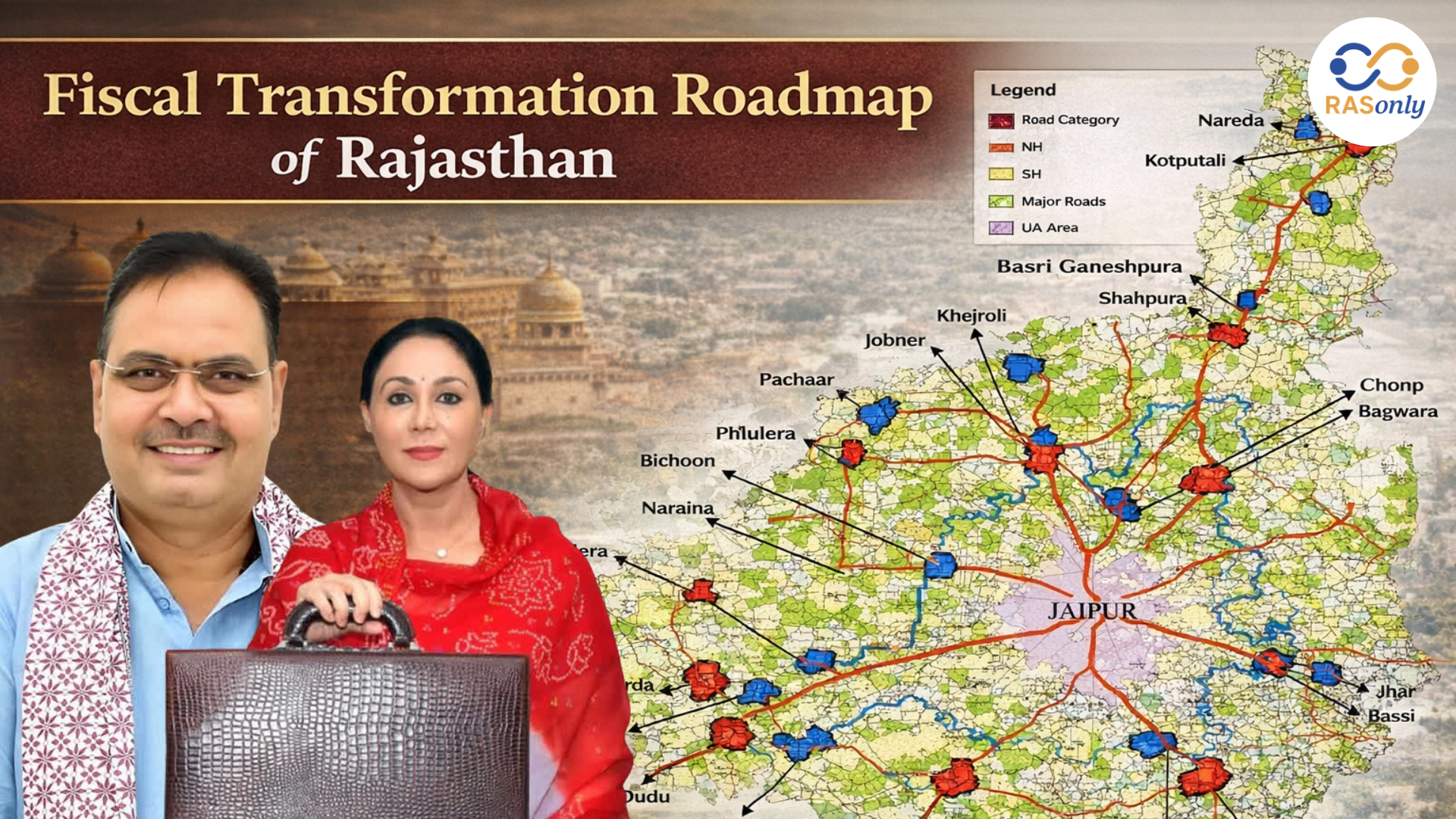
Under Vision 2047, Rajasthan’s fiscal strategy combines prudent public finance management, digital transformation, sustainable development and inclusive economic growth. From AI-based expenditure tracking and integrated tax systems to green budgeting and participatory governance, the state is building a transparent and accountable financial ecosystem. By aligning investment, policy reforms and technology adoption, Rajasthan aims to achieve high CAGR growth while ensuring financial discipline, social security expansion and sustainable long-term prosperity.
KEY TO FISCAL WELL-BEING
As of FY 2024-25 (AE),
Gross State Domestic Product (GSDP) of Rajasthan is $197 billion (INR 17.04 lakh crore)
By 2028-29, the state's economy is projected to reach approximately $350 billion
The state's economy is expected to reach around $0.8 trillion by 2034-35 at a 15% CAGR, with a high-impact scenario of $0.9 trillion at 16% CAGR
By 2039-40, the state's economy is projected to reach approximately $1.6 trillion at 15% CAGR with potential to reach $1.8 trillion at high impact 16% CAGR
Looking ahead to 2047, Rajasthan aims for a steady growth scenario, achieving a $4.3 trillion economy at 15% CAGR, with potential to reach $5.2 trillion at a high-impact 16% CAGR by investing in emerging sectors
This growth positions Rajasthan to significantly contribute to India's $30 trillion economic vision by 2047
VISION 2047
To establish Rajasthan as a model State for sustainable growth, financial stability & citizen centric governance. The action agenda for achieving this vision are Financial Stability and Growth, Digital Transformation, Inclusive Economic Development, Sustainable Development, Social Security, Transparency and Accountability.
Growth Scenarios of GSDP of Rajasthan in 2047
- 2025: USD 0.2 trillion
- 2030: USD 0.42 trillion / USD 0.40 trillion
- 2035: USD 0.9 trillion / USD 0.8 trillion
- 2040: USD 1.8 trillion / USD 1.6 trillion
- 2047: USD 5.2 trillion (16%) / USD 4.3 trillion (15%)
SCENARIO 1: STEADY PROGRESSION
A stable growth rate of 15% CAGR, driven by continued investments in infrastructure, agriculture and tourism.
Gradually, the economic structure diversifies beyond agriculture, fostering innovation and productivity.
SCENARIO 2: HIGH IMPACT GROWTH
An accelerating growth to 16% CAGR when Rajasthan strategically focuses on emerging sectors like renewable energy, advanced manufacturing and innovative services.
Targeted investments, technological adoption and skill development enhance productivity, job creation, economic diversification and securing long-term prosperity.
Ideal percentage composition of the core sectors that the state envisions to achieve @ 2047
2024 - 25
- AGRICULTURE: 26.92%
- INDUSTRIES: 27.16%
- SERVICES: 45.92%
2046 - 47
- AGRICULTURE: 15%
- INDUSTRIES: 35%
- SERVICES: 50%
Pillar 1: Prudent Fiscal Management of State Resources
ACTION AGENDA
Strategic Financial Planning and Budgeting
VISION
Enhance transparency, accountability and efficiency through streamlined governance and digital transformation.
CURRENT INITIATIVES
- Pool Budgeting & Single Nodal Account: Centralised fund management for optimised efficiency.
- Annual Budget Consultations: Engages stakeholders for policy alignment.
- Treasury Rules Revision: Modernises governance compliance.
- Just-in-Time Funding Mechanisms: Enhances cash flow, reduces idle funds.
- Data Analytics in Planning and Reporting: Enables data-driven decision-making.
WAY FORWARD
- Participatory Budgeting: Enhances transparency and inclusivity through citizen involvement.
- Real-Time Financial Oversight: Uses advanced analytics and external data (RBI, NABARD) for dynamic fiscal management.
- AI-Based Expenditure Tracking: Use of Machine Learning to optimise spending and resource allocation.
Public Expenditure Management
VISION
Optimise resource use by aligning expenditure with socio-economic priorities and effective debt management.
CURRENT INITIATIVES
- Debt Management Facilities: Time-bound facilities for effective state debt management.
- Performance Audits: Evaluate schemes for efficient resource use and outcomes.
- Scheme Rationalisation: Prioritise schemes for streamlined funding.
- Surplus Cash Investment: Strategically invest surplus cash for optimal returns.
- Revenue & Expenditure Forecasting: Forecast major revenue and expenditure heads to track to manage timely payments.
- Receipt & Payment Monitoring: Ensure accurate tracking of all transactions.
- Short-Term Liquidity Management: Maintain minimum cash balances as agreed with RBI, utilising RBI's Ways and Means Advances (WMAs) effectively for short term cash deficits.
WAY FORWARD
- Unified Debt & Cash Management Platform: Centralises all borrowing sources, including State Development Loan (SDL), NABARD & Externally Aided Project (EAP) for efficient debt tracking and management.
- Data-Driven Financial Forecasting and Decision Support: Implements analytics and external data (Bloomberg, RBI, NABARD) for accurate cash-flow forecasting and proactive decision-making.
Effective Revenue Mobilisation
VISION
Increase revenue collection by modernising tax systems and utilising advanced technologies.
CURRENT INITIATIVES
- Revised Excise Policy: Modernises excise framework for better revenue collection.
- Integrated Tax Management System (ITMS): Centralises tax collection, compliance and enforcement for transparency.
- Unified Billing System: Streamlines receipts to minimise leakages.
- Economic & Financial Development Monitoring: Continuous track major economic developments and emerging issues in economic and financial market for proactive fiscal adjustments.
- Tax Reforms & Rationalisation of Tax Regime to Improve Tax and Non-Tax Revenue: Offers waivers, reduced stamp duties and simpler procedures to enhance transparency and efficiency.
WAY FORWARD
- Blockchain for Revenue & Land Records: Enhances accuracy, security and transparency in property tax collection.
- Integrated Revenue Mobilisation Platform: Unified interface for excise, GST and property taxes; simplifies compliance, filing and payments.
Pillar 2: Empowered Governance for Enhancing Quality of Life
ACTION AGENDA
Digital Transformation
VISION
Create an agile, responsive governance model that enhances service delivery and citizen engagement.
CURRENT INITIATIVES
- IFMS 3.0 Rollout: Integrated financial management with data consolidation and salary automation.
- SSO Integration: Single platform enabling citizen access to multiple services (Jan Aadhar, RBI database).
WAY FORWARD
- Cyber-Security & Cloud-Based Reporting: Robust security and scalable reporting to protect data integrity.
- Predictive Analytics for Program Evaluation: Real-time KPIs and diagnostics to evaluate programme outcomes for adaptive policy decisions.
Sustainable Development
VISION
Prioritise funding for environmental resilience, renewable energy and sustainable growth for a balanced ecosystem.
CURRENT INITIATIVES
- Green Budgeting: Prioritises climate resilience and sustainability in fund allocation.
- PM Surya Ghar Yojana: Promotes solar energy adoption.
- New Renewable Energy Policy: Provides incentives and a framework for green energy investments.
WAY FORWARD
- Climate-Linked Budgeting: Allocate funds based on climate and sustainability impact.
- Green Financing Instruments: Leverage green bonds and innovative tools for eco-projects.
- Circular Economy Principles: Promote resource efficiency and long-term sustainability.
- Cross-Departmental Environmental Impact Reporting: Track environmental effects of spending across departments.
- Green Economy: Encourage sustainable investing through ESG-focused businesses.
Social Security
VISION
Ensure equitable access to welfare programmes and strengthen support systems for marginalised communities.
CURRENT INITIATIVES
- Integrated Gender & Child Budgeting: Ensures equitable fund allocation across gender and age demographics.
- GPF & SI Loan Auto-Approvals: Simplifies access to government loans and support services.
- SIPF & MDBYA Apps: Easy digital access to pension, insurance and accident coverage.
- On-Time Pension: Pension released from the date of retirement.
- Rajasthan Govt. Health Scheme: Ongoing reforms to meet citizens' evolving health needs.
WAY FORWARD
- AI-Enabled Scheme Administration: Automates social security processes for efficient fund use.
- Blockchain for Pension Security: Secures pension data with transparent record-keeping.
- Inclusive Scheme Delivery Network: Digital network ensures last-mile access to welfare and pension services.
Pillar 3: Incentivising Investment for Resource Mobilisation
ACTION AGENDA
Strategic Funding Allocation
VISION
Develop an ecosystem that supports high-impact investments, fosters economic diversification and promotes skill development
CURRENT INITIATIVES
- High-Impact Sector Funding: Focus on Dairy, MSMEs, High-Tech Cities and tech services.
- Ease of Doing Business Reforms: Simplified regulations to boost investment and operations.
- Innovative Financing Models: Leverage PPP, BOT, HUDCO and banks for infrastructure.
- New Investment & Amnesty Policies:
- Introduction of a new Investment Policy and promotion of locally sold and consumed goods and services.
- Introduction of the Amnesty Scheme and institutional reforms to ease tax burdens through reductions in VAT, stamp duties and motor vehicle taxes, along with the abolition of select taxes (e.g., land and mandi taxes).
- Focus on streamlining registrations and boosting investment and growth through new mining, transport and excise policies.
- Market Trend Analysis for Investment Optimisation: Track trends to optimise investments and attract private capital.
WAY FORWARD
- Public-Private Partnerships: Leverage private expertise for infrastructure development.
- Municipal Bonds for Local Infrastructure: Raise funds for local projects and attract investments.
- Regulatory Overhaul: Update business regulations to boost entrepreneurship.
- Integrated Financial Strategy: Align spending with measurable and inclusive growth outcomes.
Institutional Strengthening
VISION
An adaptive institution that drives efficient governance, fosters accountability and enhances service delivery
CURRENT INITIATIVES
- Integrated Excise Enforcement and Prevention Force: Enhances excise administration and control.
- Rajasthan Economic Task Force: Drives the state's economic development.
- Merger of Departments/Bodies: Eliminates redundancies for efficient service delivery.
- Commercial Tax Restructuring: Streamlines operations to meet workload and support taxpayers.
WAY FORWARD
Establish a dedicated Debt Management Office to oversee liabilities and interest payments and explore innovative options like foreign rupee bond placements to lower borrowing costs.
Pillar 4: Participatory Governance for Fiscal Accountability
ACTION AGENDA
People's Budget Framework
VISION
Foster a culture of inclusivity and transparency by engaging citizens and stakeholders in the budgeting process.
CURRENT INITIATIVES
- Budget Consultations: Engage citizens, industry and local bodies to align budgets with public needs.
- Open Feedback Platforms: Enable public input on fiscal policies and priorities.
WAY FORWARD
- Expanded Participatory Budgeting: Enable citizens to propose local projects and vote on funding allocations across districts.
- Engagement Workshops: Train community leaders to actively participate in budgeting processes.
Accessible Financial Governance
VISION
Promote transparency by regularly publishing key financial health indicators for citizens.
CURRENT INITIATIVES
- Regular Fiscal Responsibility and Budget Management (FRBM) Disclosures: Ensure timely, comprehensive FRBM reports that detail fiscal deficits, borrowing limits and budget targets.
WAY FORWARD
Digital Dashboard for Fiscal Indicators: Create a real-time public dashboard to track key fiscal indicators, ensuring transparency and trust.
Social and Performance Auditing
VISION
Ensure accountability by monitoring social impact and the performance of public schemes and expenditures.
CURRENT INITIATIVES
- Social Audits: Regularly assess flagship schemes' impact on target communities.
- Performance Audits: Monitor outcomes and resource use to ensure schemes' effectiveness.
WAY FORWARD
- Integrated Social & Performance Audit Framework: Combine social and performance audits for key schemes and budgets.
- Institutional Strengthening: Create committees with local stakeholders to monitor projects and boost accountability.
Enhanced Transparency through Digital Platforms
VISION
Leverage digital solutions to streamline information sharing and enhance fiscal transparency.
CURRENT INITIATIVES
- e-Governance Portal: Offers easy access to state finance, budget and spending data.
- Open Data on State Finances: Publicly release financial datasets for citizen analysis and independent scrutiny.
WAY FORWARD
- Public Financial Data Portal: Launch an interactive platform for citizens to track budgetary allocations & expenditures.
- Blockchain for Audit Trails: Ensures transparent, tamper-proof records of financial transactions.
Conclusion
Rajasthan’s fiscal roadmap reflects a long-term structural shift from a consumption-driven economy to an investment-led, innovation-driven growth model. With clear GSDP milestones and dual growth scenarios, the state is targeting not just expansion in size, but transformation in quality of growth. The planned shift in sectoral composition toward stronger industry and services signals a move toward higher productivity and global competitiveness.
Through prudent debt management, AI-enabled expenditure tracking, participatory budgeting and digital transparency tools, Rajasthan is strengthening fiscal discipline while expanding development spending. Green budgeting, climate-linked financing and inclusive welfare mechanisms further align economic growth with sustainability and social equity.
If strategic investments, institutional reforms and technology integration continue at scale, Rajasthan is well positioned to emerge as a fiscally resilient, investment-attractive and economically diversified state by 2047, contributing significantly to India’s long-term growth vision.
BEST SELLER
🏆 PRELIMS
RAS Pass
Prelims focused Hindi & English
₹399
✓
Prelims Topic-Wise Tests
✓
Subject-Wise Tests
✓
Full-Length Prelims Tests
✓
Daily Current Affairs Tests
✓
Prelims PYQs Tests
✓
Detailed Solutions & Analysis
✓
All Rajasthan Ranking
✓
Unlimited Reattempts
✓
Mains Tests
✓
Hindi & English Tests
✓
All Rajasthan Ranking
Trusted by 5,000+ Students
Post Category
- RAS Salary
- Result
- RAS Admit Card
- RAS Job
- RAS Cutoff
- Preparation Tips
- RAS Answer Key
- RAS Exam Analysis
- RAS Syllabus
- RAS Previous Year Papers
- RPSC RAS Exam Pattern
- RAS Interview
- RAS Exam Date
- RAS Vacancy
- RAS Test Series
- RAS Best Books
- RAS Preparation Resources
- RAS Coaching Centre
- History
- Polity
- Geography
- Economics
- Science
- Art and Culture
- RPSC RAS Application Form
- RPSC RAS Notification
- RAS Eligibility Criteria
- UPSC Exam
- RPSC RAS Mains
Visit Our RASonly Offline Center
Our Expert Faculty

Bhunesh Sir
Current Affairs · 13+ Yrs

Aamir Khan Sir
RAS-2017 · IIM Ahm.

Akash Sir
Polity · 8+ Yrs
Free Resources
Official Mobile App

RASOnly App
by OTSAdda · Free
Full Video Lectures
Mock Tests & PYQs
Daily Current Affairs
AI Mock Interview
Free Download · No subscription needed to install
RAS 2024 Toppers — RASonly
Rank 2
Virendra Charan
Rank 9
Bhoopinder Singh
Rank 26
Aanchal Nagpal
Rank 33
Lokendra Singh
Rank 45
Amar Rathore
Rank 46
Manasvini Verma

Join RASonly WhatsApp Community
Get daily current affairs, exam alerts, free study material and tips from expert faculty — right on WhatsApp.
Join for Free →RASonly Interview Guidance Program

Mr. Ashok Jain
Ex-Chief Secretary Govt of Rajasthan
- IAS officer of the 1981 batch, Rajasthan cadre.
- Passionate about mentoring the next generation of RAS officers with real-world insights.
- Got retired in Dec 2017 from the post of Chief Secretary of the state of Rajasthan.

Mr. Guru Charan Rai
Ex-ASP / SP in Jaisalmer
- Guru Charan Rai, IPS (Retd), retired as Inspector General of Police (Security), Rajasthan, Jaipur in 2017.
- Served as ASP and SP in Jaisalmer, Nagaur, Sri Ganganagar, Sawai Madhopur, Dausa, Sikar, and Karauli.
- He also held key positions as DIGP and IGP in the Law and Order division.

Mr. Rakesh Verma
Ex-IAS Officer, B.Tech, MBA, and M.A. (Economics)
- IAS officer of the 1981 batch and retired in Chief Secretary Rank.
- Civil servant of high repute and vast experience.
- Has been teaching UPSC CSE subjects for the last six years.
Related Post




Daily Current Affairs for RAS Exam Preparation 2026

Khelo Rajasthan Campaign
October 09, 2026
Apache Helicopters 30 mm Chain Gun Tested for Aerial...
October 09, 2026
CM Bhajan Lal Sharma Launches Rajasthan Portals
October 08, 2026