Gupta Empire, Founder, Time Period, Rulers, Map, Capital City
Citizen-Centric Governance in Rajasthan: Smart Policing, AI & Justice Reforms 2047

Get in Touch with RASonly!

Rajasthan is transforming its governance, law enforcement, and administration to meet evolving challenges. Smart policing, e-governance, AI-driven reforms, and digital land records enhance efficiency. Public service delivery acts, AI-driven administrative tools, and cyber-policing are improving transparency and responsiveness.

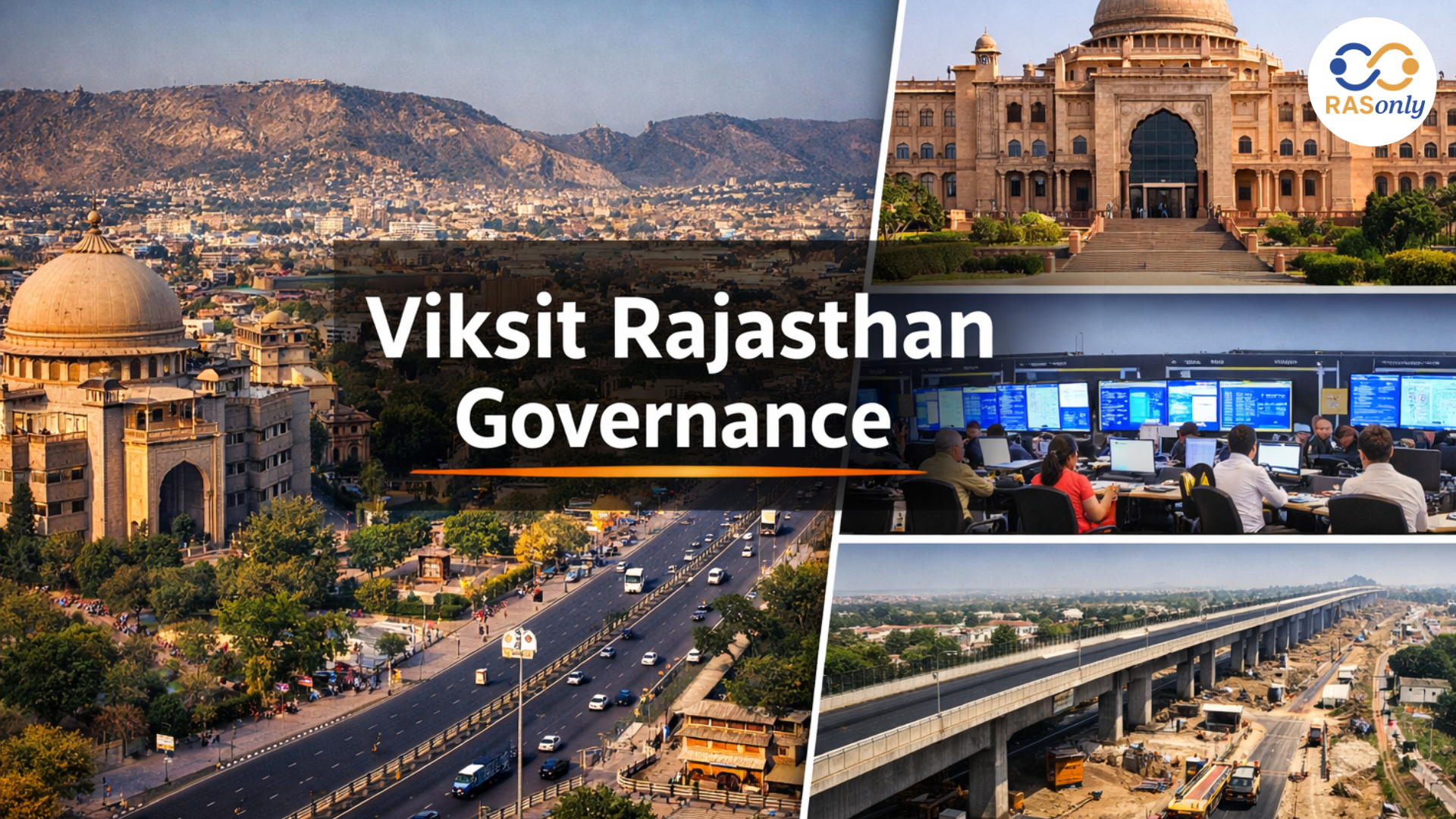
Law enforcement modernisation, land record management and citizen-centric reforms are shaping 'Viksit Rajasthan@2047', ensuring secure, transparent and technologically advanced governance for sustainable development and justice.
Rajasthan has 36 cyber police stations to combat digital crimes
e-FIR system reduces registration time for citizen complaints
Abhay Command Centers provide 24/7 CCTV surveillance across districts
Rajasthan ranked first in e-Governance Service Delivery (2021)
48,000+ revenue villages require digital land record management
'Viksit Rajasthan@2047' aims for AI-based service delivery
ERSS ensures rapid emergency response with statewide connectivity
Rajasthan Guaranteed Delivery of Public Services Act, 2011 mandates timely service delivery
Rajasthan resolved millions of cases in Good Governance Week 2022
New criminal laws align with digital transformation in justice delivery
Abhay Command Centre, Jaipur
VISION 2047
By 2047, Rajasthan will be a global leader in efficient, transparent and technology-driven governance. AI, blockchain and data analytics will enhance law enforcement, judicial efficiency and land management. SMART policing, cyber security and international law enforcement collaboration will ensure public safety.
A skilled, tech-savvy workforce especially trained for handling cybercrime will drive inclusive growth, sustainable development and citizen-centric service delivery, making Rajasthan a model of innovative, accountable and responsive governance.
Thrust Areas
Infrastructure Development for Future-Ready Rajasthan
- Strengthening digital, legal & policing infrastructure for efficient governance.
- Start-up acceleration & AI-driven solutions for innovation & growth.
Digital Governance & Public Accessibility
- Bridging the digital divide through digital literacy programs.
- Single-window public grievance redressal for faster resolutions.
Judicial & Legal System Modernisation
- Time-bound judicial proceedings & new state litigation policy.
- Use of AI & scientific tools in legal case management.
Transparent Land & Resource Management
- AI-driven land record digitisation for accurate resource allocation.
- Zero tolerance for encroachment & fair land use policies.
Sustainable Land Use & Environmental Monitoring
- Environmental Impact Assessments before land conversion.
- Smart monitoring infrastructure for transparency & accountability.
Enhancing Law Enforcement & Security
- Increase Police Population Ratio (PPR) to meet national standards.
- Advanced crime databases & cyber profiling for better intelligence.
- Specialised Crime Analysis & Intelligence Units for strategic policing.
Technology-Driven Policing & Surveillance
- CCTV networks, drones & anti-drone systems for enhanced security.
- AI, Big Data, AR/VR & analytics for predictive crime prevention.
Police Training & Capacity Building
- Modernised training infrastructure to bridge skill gaps.
- Incentivised performance appraisal system to boost efficiency.
Service Rule Amendments & Recruitment Reforms
- Simplified service rules for streamlined administration.
- Combined recruitment examinations for efficiency & fairness.
Citizen-Centric Governance
- Transparent framework for government programs & decision-making.
- Empowered citizens through digital governance & accessibility.
Home & Law Enforcement
Rising Social Inequality & Trust Deficit
Increasing inequality fuels violence, identity-based hate crimes, radicalisation and social unrest, threatening societal cohesion and public safety.
Inclusive Governance & Law Enforcement
Addressing disparities in police coverage, enhancing community policing and ensuring justice for marginalised communities remains a critical governance challenge.
Gender-Based Crimes & Protection Gaps
Strengthening laws, leveraging technology (helplines, apps), increasing female police representation and promoting gender-sensitive justice systems through community engagement and policy reforms.
Cybercrime & Digital Threats
Cyber fraud, dark web activities, cryptocurrency scams and digital privacy violations are rising, requiring advanced cybersecurity measures and public awareness initiatives.
Terrorism & Organised Crime
Cross-border terrorism, extremist ideologies and organised crime networks continue to exploit social and political fault lines, necessitating global intelligence collaboration.
Moral Degradation & Emerging Crimes
New-age crimes like acid attacks, stalking, voyeurism and digital exploitation demand enhanced law enforcement strategies and preventive community awareness programs.
Scientific Investigation Methods
Forensic Science Laboratories (FSL) are increasingly used to improve accuracy and efficiency in criminal investigations with advanced forensic techniques.
Revenue
Geospatial Technology Integration
GIS and remote sensing create digital land maps, optimise land resource management, reduce disputes and enable real-time land-use monitoring.
Digital India Land Records Modernisation Programme (DILRMP)
Complete digitisation of land records, accessible online, ensuring error-free registrations, transparency and streamlined services for rural and urban areas.
Apna Khata Portal
Enables farmers and citizens to verify land ownership, check transaction history and receive real-time alerts on property records.
Girdawari App for Farmers
Facilitates self-girdawari, improving transparency, accessibility and digital record-keeping for land use and crop assessment.
Revenue Officers App & Paperless Governance
Digital transformation of revenue offices ensures efficient, paperless workflows, improving record-keeping and accessibility for officials and citizens.
Modernised Land Dispute Resolution
Lok Adalats & digital court management systems (RRCMS) enable faster land dispute resolution through data-driven assessments and e-court initiatives.
Information Technology & Communication
AI-Optimised Manufacturing
AI-driven Factory of the Future will automate processes, predict maintenance, reduce costs and improve quality control for higher efficiency and minimal waste.
Predictive Analytics as a Service
AI-driven predictive analytics will optimise healthcare, agriculture, social services and finance, leveraging Jan Aadhaar data for fraud detection, risk reduction and improved decision-making.
GIS-Based Development & Smart Cities
GIS based master plans and zonal plans integrates urban planning, green infrastructure and water sensitive cities expanding 3D models from Jaipur to other cities and enabling AI based remote sensing analysis.
Quantum Computing for Secure Communication & Disaster Management
Rajasthan aligns with National Quantum Mission (NQM) to advance R&D in cryptography, healthcare and secure communication through quantum technology.
Blockchain, IoT, Robotics & AR/VR
Centers of Excellence for blockchain, robotics and AI-driven healthcare will drive innovations like robotic surgery, pandemic management and secure data systems.
Rajasthan Centre of Advanced Technology (RCAT)
RCAT offers AI, ML, IoT, Big Data, Robotics and Automation, Cyber Security, GIS, Cloud Computing, AWS, Virtualisation, Digital Marketing, Salesforce courses through MoUs with Oracle, Microsoft, Red Hat, SAS, ESRI, EC-Council etc to boost employability.
Personnel Management
Resolving Service-Related Issues
Address discrepancies in recruitment, appointment, promotions and rule interpretations to reduce legal disputes and streamline departmental procedures for efficiency.
Enhancing Workplace Productivity
Implement PRAGATI Dashboard for program supervision, cross-sector officer deputation and initiatives to improve employees' physical and mental well-being.
Performance-Based Incentives & Evaluation
Introduce 360-degree assessments, online appraisal systems, KPIs and departmental exams to enhance transparency, feedback and link performance with rewards.
Recruitment Reforms & Transparency
Strengthen recruitment calendars, prevent paper leaks and cheating, ensure fair representation and minimise litigation through clear policies and digitalised systems.
Paperless Governance & Digitalisation
Establish e-filing and Government Process Re-engineering (GPR) to expedite decision-making, reduce bureaucratic delays and foster citizen-centric service delivery.
Workplace Efficiency & Accountability
Improve grievance redressal, introduce structured training and implement automated tracking systems for performance evaluation and recruitment timelines.
Administrative Reforms & Redressal of Public Grievance
AI for Governance
Rajasthan is leveraging AI and big data for better governance, focusing on policy frameworks, awareness, training and AI-driven public service improvements.
Total Transparency in Government (TTG)
Emphasises public access to information, blockchain-based secure processes, fraud reduction and citizen participation in governance.
Digital Service Delivery
The state is enhancing e-governance through AI, automation (RPA), infrastructure development, data integration, employee training and citizen feedback systems.
AI-Driven Grievance Redressal
AI-powered automation, monitoring and awareness programs will strengthen grievance redressal and cybersecurity for secure, fraud-free public service access.
Cybersecurity & Digital Identity
Rajasthan focuses on modernising digital identity systems, advanced cybersecurity technologies and research to safeguard public services from fraud and security threats.
Law
Digital Transformation of Judiciary
Under the e-Courts Project, most District and Sessions Courts have been modernised with digital case management, e-filing and virtual hearing facilities. The remaining courts are being upgraded in a phased manner to ensure seamless and efficient judicial processes.
Expansion of Lok Adalats & Legal Aid
There are 36 District legal authorities, 36 Permanent lok adalats and 181 Taluka Legal Services Samitis which provided legal aid to 13,134 people, compensation of around INR 45,34,43,000 under victim compensation scheme and 1,23,03,117 matters were settled and INR 51,05,14,51,895 were awarded in national lok adalats.
Free Legal Assistance
Rajasthan Legal Services Authority (RALSA) ensures free legal aid, utilising pro bono advocates, para-legal volunteers and legal awareness programs to support underprivileged communities.
Cybercrime Prevention & Digital Security
Under New Criminal Laws, digital law enforcement measures are strengthening cybercrime prevention, online fraud detection and digital safety.
Vulnerable Witness Protection
Vulnerable Witness Deposition Centres (VWDCs) are being established in all districts to protect witnesses from intimidation and ensuring fair trials.
Secretariat, Jaipur
Goals
HOME & LAW ENFORCEMENT
Strengthening Police Force and Human Resource Development
|
INDICATORS |
CURRENT STATUS |
TARGET (2030) |
TARGET (2035) |
TARGET (2040) |
TARGET (2047) |
|
Police Population Ratio (PPR) |
153.4 policemen per lakh population (195 - National Average) |
200 policemen per lakh population |
225 policemen per lakh population |
250 policemen per lakh population |
300 policemen per lakh population |
|
Tooth-to-Tail Ratio |
47% of the force in field units (Tooth) |
60% of the force in field units (Tooth) |
62% of the force in field units (Tooth) |
65% of the force in field units (Tooth) |
70% of the force in field units (Tooth) |
|
Women in Police |
10% female police personnel |
30% female police personnel |
35% female police personnel |
35% female police personnel |
40% female police personnel |
|
Training Capacity |
5,000 Personnel can be trained at a time |
Increase capacity to train 9000 Personnel at a time |
Increase capacity to train 10000 Personnel at a time |
Increase capacity to train 11000 Personnel at a time |
Increase the capacity to train 15000 personnel at a time |
|
Skill Enhancement of Police Personnel |
Limited capabilities |
Identify and train 30% of police personnel in advanced skills |
Identify and train 40% of police personnel in advanced skills |
Identify and train 50% of police personnel in advanced skills |
Train 100 % of police personnel and hold periodical refresher courses |
Cybersecurity & Technology
|
INDICATORS |
CURRENT STATUS |
TARGET (2030) |
TARGET (2035) |
TARGET (2040) |
TARGET (2047) |
|
Cyber Police Stations |
36 Cyber Police Stations at Revenue District HQs |
To establish Cyber Police Stations in all the Police Districts |
Cyber Police Station at 25% Police Circles |
Cyber Police Station at 50% Police Circles |
Cyber Police Station at all Police Circles |
|
Digital Communication & Surveillance |
Digital Mobile Radio Networks are operational in 5 Districts |
Implement Digital Mobile Network across all districts, expand CCTV coverage |
Implement Digital Mobile Network across all districts and 50% police station, expand CCTV coverage |
Implement Digital Mobile Network across all districts and all police stations, expand CCTV coverage |
Fully digitalised mobile radio and CCTV network at all police stations, posts and critical locations |
|
e-Challan |
All District Headquarters are implementing e-challan |
Extension to all the Nagar Palika and other important locations |
Extension to all the Nagar Palika and other important locations |
Extension to other important locations |
Implemented in all police station areas |
|
Drones and Anti-Drones System |
50 drones are available as of now. No anti-drone infrastructure available |
Deploy drones at Police Circle level and Anti-Drone units in border areas |
Deploy drones at City Police Stations |
Establishing Drone Forensics and Maintenance Lab at every Police Range in a phased manner |
Establishing Drone Forensics and Maintenance Lab at every Police Range |
Public Safety & Emergency Response
|
INDICATORS |
CURRENT STATUS |
TARGET (2030) |
TARGET (2035) |
TARGET (2040) |
TARGET (2047) |
|
Emergency Response Support System (ERSS) units |
1000 ERSS vehicles sanctioned: 600 deployed and 400 in process |
Increase ERSS vehicles to 2500, reduce response time to 10 minutes (urban) / 20 minutes (rural) |
Increase ERSS vehicles to 2500, reduce response time to 10 minutes (urban) / 15 minutes (rural) |
Increase ERSS vehicles to 2500, reduce response time to 8 minutes (urban) / 15 minutes (rural) |
Increase ERSS vehicles to 5000, further improve response times |
|
Quick Response Team (QRT) |
Combined QRT with armed battalions |
One QRT at district level |
One QRT at district level |
Two QRTs at district level |
Separate QRT in the interstate border police circles |
|
Highway Mobile Units |
Each district unit |
Every stretch of 50 km on NH/SH |
Every stretch of 40 km on NH/SH |
Every stretch of 35 km on NH/SH |
Every stretch of 25 km on NH/SH |
Law Enforcement Specialised Units
|
INDICATORS |
CURRENT STATUS |
TARGET (2030) |
TARGET (2035) |
TARGET (2040) |
TARGET (2047) |
|
Anti-Terrorism & Special Operations Group |
Functional at State Level |
Establish ATS and SOG units at Range Level |
Expand ATS, SOG units to district-level in strategic areas in a phased manner |
Expand ATS, SOG units to district-level in strategic areas in a phased manner |
Expand ATS, SOG units to district-level in strategic areas |
|
Anti-Narcotics Task Force |
To be formed to control the drug menace in the state |
Constituted at each division level |
Cover sensitive districts like Jodhpur, Ganganagar, Hanumangarh, Bikaner, Jaisalmer, Barmer, Chittorgarh, Rajsamand etc. |
Cover all border area of the state |
Cover all the sensitive and border area of the state |
Disaster Management & Preparedness
|
INDICATORS |
CURRENT STATUS |
TARGET (2030) |
TARGET (2035) |
TARGET (2040) |
TARGET (2047) |
|
State Disaster Response Force (SDRF) |
SDRF working at Range Level |
Expand SDRF units up to the District Level |
Expand SDRF units at other selected disaster prone places in phased manner |
Expand SDRF units at other selected disaster prone places in phased manner |
Expand SDRF units at other selected disaster prone places also |
Critical Infrastructure Security
|
INDICATORS |
CURRENT STATUS |
TARGET (2030) |
TARGET (2035) |
TARGET (2040) |
TARGET (2047) |
|
Securing Critical Infrastructure |
Ensuring security of critical installations |
Secure cyber space and critical infrastructure |
Implement real-time threat detection and response mechanisms in a phased manner |
Implement real-time threat detection and response mechanisms in a phased manner |
Implement real-time threat detection and response mechanisms |
|
Intelligent Traffic Management System (ITMS) |
Available on NH |
Implement ITMS across NH/SH and in urban areas |
Implement ITMS in all districts headquarters |
Maximum work of the traffic police will be managed through ITMS |
All the work of the traffic police will be managed through ITMS |
|
Mobile Forensic units, Cyber Labs |
At District Level |
At Circle Level |
At Police Station level in a phased manner |
At police station level in a phased manner |
At the Police Station level |
|
Expert Hiring & Specialised Cadres |
Procedure required to be streamlined |
Streamline hiring for specialist in areas like law, IT, cyber, forensics etc. |
A dedicated cadre of experts to support evolving criminal trends in a phased manner |
A dedicated cadre of experts to support evolving criminal trends in a phased manner |
A dedicated cadre of experts to support evolving criminal trends |
REVENUE
|
INDICATORS |
CURRENT STATUS |
TARGET (2030) |
TARGET (2035) |
TARGET (2040) |
TARGET (2047) |
|
Computerisation of Land Records of Tehsils (Map Digitalisation) (%) |
98 |
100 |
100 |
100 |
100 |
|
Digitalised Record Room (completely developed) (%) |
7 |
80 |
85 |
90 |
100 |
|
Survey/re-survey of the land (%) |
33 |
80 |
85 |
90 |
100 |
|
Annual Disposal of Cases in Subordinate Courts (%) |
65 |
100 |
100 |
100 |
100 |
|
Disposal of Mutation Cases (%) |
96 |
100 |
100 |
100 |
100 |
|
Tehsils with Online Land Records (%) |
98 |
100 |
100 |
100 |
100 |
|
Land Revenue Collection (%) |
78 |
100 |
100 |
100 |
100 |
INFORMATION TECHNOLOGY & COMMUNICATION
|
INDICATORS |
CURRENT STATUS |
TARGET (2030) |
TARGET (2035) |
TARGET (2040) |
TARGET (2047) |
|
Cyber Security Workforce Development |
Basic cyber security concepts, threat detection and incident response training needed, limited trained personnel |
Prioritised cyber security courses & trainings for IT, cybercrime & departments dealing with economic offences |
Establish certified cyber security units in all key departments & integrated into a centralised national cyber defence framework |
All the department dealing with IT infrastructure shall be trained in cyber security |
100% Cyber Literacy, advanced cyber training for sensitive departments and appoint certified cybersecurity leads |
|
Cyber Education and Awareness |
Rajasthan is building a cyber-aware society with empowered citizens contributing to a secure digital future |
Cyber awareness campaigns and targeted training for students, senior citizens and small businesses |
Implement integrated comprehensive cyber security education and awareness programs across all levels |
Acting as enablers for incorporating cyber-security awareness in school/college curricula |
A cyber ready Rajasthan where cyber security is not just a technical function, but a fundamental life skill practiced by every citizen |
|
Robust Security Infrastructure |
Initial framework in place, limited Security Operations Centers (SOCs) |
Establish cutting-edge SOCs with business continuity, disaster recovery and cyber crisis management plans |
Establish a resilient security infrastructure for all departments with advanced threat detection and response |
Creating a robust and secure digital infrastructure that will resilient to cyber-attacks till endpoints |
AI-enabled Zero Trust, real-time threat intelligence across government safeguard citizen data & critical infra |
|
Zero Trust Cyber security Architecture (ZTCA) |
Cybersecurity landscape in Rajasthan is undergoing a significant transformation with the adoption of ZTA |
Adopting ZTA alongside existing security measures using advanced technologies like micro-segmentation, IAM and UBA |
Fully AI-driven Zero Trust with real-time verification of users and devices, automated adaptive micro-segmentation and self-evolving capabilities |
Adaptive security with autonomous threat detection & behavior analysis |
ZTCA across all government, critical infrastructure and public service networks |
|
Critical Information Infrastructure Protection (CIIP) |
Identifying CIIPs systems |
All departments have CIIP systems with real-time monitoring & response, conduct regular security audit |
A semi-automated CIIP systems across departments |
Deploy a fully integrated and automated CIIP system with self-healing capability to detect, resist and recover from cyber attacks |
Quantum-Resilient & Self-Healing Infrastructure integrating autonomous recovery systems |
|
INDICATORS |
CURRENT STATUS |
TARGET (2030) |
TARGET (2035) |
TARGET (2040) |
TARGET (2047) |
|
Incident Response and Management |
Incident Response System (IRS) exists, but limited to SOPs and human intervention |
Fully automated incident response system with rapid containment and recovery capabilities |
AI-driven autonomous response across CIIs |
Develop an AI-driven, self-adaptive cyber defence system that predicts, prevents and neutralises threats in real time by leveraging cutting-edge AI/ML models |
Develop a state-wide, AI-driven incident response and management ecosystem to enable real-time threat detection, rapid containment and swift recovery |
|
AI in Public Service Delivery |
AI adoption initiated (healthcare, education, energy), SMART project under development |
Personalised service delivery, resource optimisation & AI-powered governance dashboards |
AI-driven automation in all services, transparent, inclusive delivery |
AI-driven governance for smart resource management and personalised services, promote digital inclusion and entrepreneurship, develop eco-friendly smart cities and advanced healthcare |
AI-enabled real-time citizen engagement, policy simulation and fully intelligent public service platforms deploying AI chatbots and predictive ML models |
|
Public Safety & Mobility |
Video surveillance, upgraded Dial 100 & CAD systems and ITMS. Data centers at divisional HQs to support efficient data management |
100% penetration of central schemes enhanced by seamless digital platforms, AI-assisted emergency response and advanced ITMS for improved urban mobility |
Deploy AI-driven public safety, autonomous emergency response and smart eco-friendly urban mobility |
Smart governance and sustainability by embedding central schemes via AI-driven platforms, enabling instant emergency response and transforming ITMS into a smart, eco-friendly mobility network |
Implement AI/IoT-driven governance with smart platforms, real-time alerts and digital safety cells, while scaling citizen engagement programs |
LEGAL & JUSTICE REFORMS
|
INDICATORS |
CURRENT STATUS |
TARGET (2030) |
TARGET (2035) |
TARGET (2040) |
TARGET (2047) |
|
Justice Delivery System |
Modernizing infrastructure and developing court complexes |
Modernise judicial infrastructure and reduce case resolution time |
Integration of smart judicial management systems with AI enabled dashboards and performance analysis |
The coordinated approach and use of AI for pendency reduction in a phased manner |
Ensure timely justice delivery through comprehensive legal reforms |
|
Cybercrime Awareness |
Campaigns in schools, colleges and public places creating awareness in cybercrime |
Empower vulnerable groups through education |
Create proactive programs for cybercrime prevention in phased manner |
Develop AI system that can create awareness & anticipate cyber attack vulnerabilities |
Achieve 100% cyber literacy among citizens above 15 years |
PERSONNEL MANAGEMENT
|
INDICATORS |
TARGET (2030) |
TARGET (2035) |
TARGET (2040) |
TARGET (2047) |
|
Restructuring Bureaucracy & Recruitment Reforms |
Combined recruitment exams, rationalisation of service rules
Cadre Rationalisation: Conduct biennial reviews to optimise sanctioned posts based on workload analytics and redundancy elimination
Flattening Hierarchies: Reduce approval layers through delegation process engineering and role-based empowerment
Zero Tolerance for Malpractices: Embed biometric checks and e-invigilation |
Review 2030 recruitment models to align with future AI-driven systems for optimal output
Continuous Cadre Rationalisation System for regular updates
Blockchain secured examination systems to prevent fraud |
AI-Powered Rule Compliance: Develop digital compliance tools that interpret service rules, flag violations and suggest actions
Work Management System (WMS): Automate task assignments, monitor workflow and generate performance analytics in real time
AI-Based Screening: Use Artificial Intelligence systems for preliminary shortlisting scrutiny of documents and eligibility verification
Digital Verification & Tracking: Build an end-to-end recruitment portal with dashboards, alerts and grievance mechanisms |
Fully automated recruitment & work evaluation through AI digital HRMS |
|
Recognition & Performance-Based Incentives |
360-Degree Digital Appraisal System: Incorporate peer, subordinate and citizen feedback into annual reviews, Performance-based rewards & recognition |
Continuous Feedback Culture: Foster a culture of continuous feedback, where employees receive regular, constructive feedback from multiple sources, driving growth, engagement and performance
Publishing KPI-linked annual performance scorecard |
KPI-Linked Incentives: Tie measurable indicators (service delivery time grievance redressal, innovation) to rewards and recognition
Performance Scorecard for Departments: Publish public dashboards ranking departments on efficiency, transparency and innovation
Smart Recognition System: Automate nominations and award distribution via data-backed evaluations |
AI-based appraisal & automated incentive system |
ADMINISTRATIVE REFORMS & REDRESSAL OF PUBLIC GRIEVANCE
|
INDICATORS |
TARGET (2030) |
TARGET (2035) |
TARGET (2040) |
TARGET (2047) |
|
AI-Driven Smart Governance |
AI integration in governance, public service automation and employee upskilling |
Integrate AI decision-support systems into 50% of governance processes, deploying AI tools for administrative training, performance reviews and citizen data-driven policy formulation |
Develop and Implement a comprehensive, legally binding AI governance framework |
Fully AI-powered e-governance ecosystem with predictive decision-making |
|
Transparency & Accountability |
Real-time monitoring, online reporting, open data platforms |
District-level dashboards for real-time monitoring of programs using open data and public feedback portals |
Ensure ethical AI development and deployment, with strong emphasis on fairness, accountability and transparency |
Universal transparency portal, AI-powered decision analytics |
|
Automated & Efficient Service Delivery |
Process automation in governance, rollout of e-governance tools |
Auto-identification of eligible citizens for at least 50 key welfare schemes using life-event triggers and Blockchain pilots for land records, pensions and subsidy delivery in 50% districts |
Implement AI systems to proactively identify eligible citizens for government schemes and services, automating delivery or prompting minimal formalities |
End-to-end automation with blockchain for security & efficiency |
|
Citizen-Centric Digital Governance |
Centralised grievance redressal system with time-bound resolution |
Unified platform with mobile apps, websites, voice assistants and rural kiosks delivering 60% of services with minimal human intervention and integrated citizen feedback loops |
Ensure that all government services are accessible through a unified omni-channel platform (mobile apps, web portals, voice assistants, smart kiosks, physical common service centers) with real-time feedback from beneficiary facilities |
AI-powered complaint handling & unified feedback mechanism |
|
Adaptive & Responsive Policies |
Agile governance frameworks, public feedback loops |
AI-led Policy Labs for real-time evaluation and mid-course corrections, supported by dynamic Budgeting Tools for seasonal and need-based scheme adjustment |
Implement AI-powered, continuous monitoring and evaluation systems for all major government schemes and policies, providing real-time insights into their effectiveness and allowing for dynamic adjustments |
Real-time policy adjustments with predictive governance tools |
|
Secure Digital Identity & Authentication |
Digital ID system with Multi- Factor Authentication (MFA) |
Develop and Implement a state digital ID integrated with all welfare and administrative platforms |
Implement AI-powered real-time fraud detection and anomaly recognition for digital identity verification and authentication |
Universal digital ID with blockchain-based security |
Mid-Term Action Plan
- AI-Driven Smart Policing
Implement AI in crime detection, traffic management, forensic analysis and facial recognition, enhancing law enforcement efficiency and predictive policing.
- Strengthening Cybercrime Prevention
Establish dedicated cybercrime cells and Cyber Labs in all police training institutions to combat online fraud, dark web activities and digital threats.
- Public-Police Engagement Initiatives
Launch Village Guards, Suraksha Sakhi, Police Mitra, Student Police Cadet Scheme (SPCS) and Youth Clubs to improve community participation in crime prevention.
- Smart Traffic Management
Install Intelligent Traffic Management Systems (ITMS), enforce AI-driven speed monitoring and deploy 50 km interval Highway Police Aid Posts for road safety.
- Police Accountability & Transparency
Use body-worn cameras, digital reporting platforms and establish independent oversight bodies to improve trust and accountability in law enforcement.
- Judicial Digitisation & Court Modernisation
Implement e-Courts, AI-powered case tracking, e-filing and online hearings for speedy resolution and legal transparency.
- Speeding Up Dispute Resolution
Expand Alternative Dispute Resolution (ADR) methods like lok adalats, arbitration mediation, negotiation and conciliation for time bound resolution of civil and revenue cases.
- Land Management Modernisation
Implement Digital India Land Records Modernisation (DILRMP), GIS-based land mapping and online mutation tracking to ensure transparency in land transactions.
- Zero E-Waste & Green IT
Develop state-wide e-waste management policies, promote cloud computing and integrate energy-efficient technologies in governance for sustainability.
- Seamless AI-Enabled Governance
Launch SMART (Service Management with AI and Real-Time System) project to automate government service delivery and eligibility-based welfare schemes.
- Mobile Governance (m-Gov)
Replace e-Governance with m-Gov through mobile-based service delivery, real-time citizen engagement and paperless administration.
- Integrated AI & ML for Governance
Deploy AI-driven forecasting, data analytics and risk assessment in healthcare, education, urban planning and infrastructure management.
- Hybrid Work & Digital Workplace
Pilot hybrid work models, digital collaboration tools and AI-powered workplace automation to improve efficiency and employee productivity.
- Strengthening Disaster Preparedness
Deploy AI-driven early warning systems, drones, anti-drone surveillance and border security enhancements for national and internal security.
- Citizen Engagement & Social Media Integration
Mandate social media participation for governance, real-time citizen feedback and transparency in government operations.
- Expanding Renewable Energy & EV Infrastructure
Install EV charging stations, adopt Green IT and implement mandatory solar-powered government buildings to cut carbon emissions.
- AI-Based Smart Surveillance & Law Enforcement
Upgrade satellite-based Polnet communications, deploy drones for crime prevention and implement real-time monitoring systems.
- Restructuring Bureaucracy & Civil Service Reforms
Implement mandatory specialisation for civil servants, conduct annual competency-based training and revamp recruitment and appraisal systems.
- Smart & Secure Public Transport
Establish metro networks, AI-driven traffic enforcement and signal-free corridors to improve urban mobility and safety.
- Expanding Digital Inclusion & Cybersecurity
Deploy Zero Trust Security frameworks, blockchain-based land records and cyber awareness programs to protect personal and national data.
Long-Term Action Plan
- AI-Driven Law Enforcement
Rajasthan Police to integrate AI, Big Data and predictive analytics for crime mapping, forensic analysis, cybercrime prevention and smart surveillance.
- Smart & Secure Borders
Deploy drones, AI-based surveillance and anti-drone technologies to protect borders, sensitive zones and high-security installations.
- Zero Corruption & Transparent Governance
Implement Body-Worn Cameras, AI-powered audits, blockchain-based tracking and digital complaints for real-time transparency in policing and governance.
- Fully Digital & Paperless Judiciary
Achieve 100% e-Courts, AI-powered legal research, online dispute resolution and blockchain-secured judicial records for speedy justice.
- Cybersecurity Excellence
Establish Cyber Labs, AI-driven threat detection, national cyber coordination networks and awareness programs for a safe digital ecosystem.
- Citizen-Centric Mobile Governance (m-Gov)
One App, One Portal for All Government Services. Ensure 100% mobile-based governance with real-time citizen engagement, AI-powered feedback loops and decentralised service delivery.
- Integrated Smart Traffic Systems
Deploy AI-driven traffic management, ITMS, automated surveillance, digital highways and smart parking for safe and congestion-free transport.
- Revolutionising Civil Services
Introduce mandatory specialisation, AI-based training, 360-degree feedback, global capacity-building partnerships and data-driven policymaking.
- Sustainable Green IT & Zero E-Waste
Ensure 100% cloud computing, energy-efficient data centers, AI-powered waste management and renewable-powered digital infrastructure.
- Digital Identity & AI-Based Service Delivery
Implement biometric authentication, AI-powered public service platforms, digital land records and integrated governance systems.
- Smart Urban Development
Expand GIS-based master planning, smart city infrastructure, AI-powered public utilities and IoT-driven waste and water management.
- Integrated Land Records & Blockchain Governance
Establish secure digital land records, AI-based land dispute resolution and paperless revenue departments.
- Citizen-First AI-Driven Justice System
Deploy AI-powered legal assistants, online case tracking and remote court proceedings.
- AI & Robotics in Healthcare & Education
Develop AI-driven predictive healthcare, robotic surgery hubs, VR-enabled classrooms and personalised digital learning platforms.
- Total Digital Inclusion & Workforce Transformation
Ensure 100% digital literacy, AI-skilling for youth, hybrid work adoption and emerging technology incubation centers.
- Smart Surveillance & Emergency Response
Establish state-wide command centers, AI-driven disaster resilience, 5G-powered emergency response and automated risk management.
- Green Economy & Sustainable Infrastructure
Promote EV adoption, energy-efficient urban planning, AI-driven pollution control and 100% renewable-powered government buildings.
- Public-Private Partnerships for Digital Governance
Engage industry, academia and global organisations to co-develop AI-based governance solutions, civic-tech innovations and training programs.
- Resilient, Data-Driven Policy Frameworks
Deploy real-time AI analytics, GIS-based policy planning, decentralised governance and data-backed strategic decision-making.
- Minimum Litigation & Frictionless Dispute Resolution
Implement AI-driven legal advisory, blockchain for contracts, automated mediation centers and expeditious court settlements.
By 2047, Rajasthan envisions a crime-free, digitally empowered, AI-driven, sustainable and citizen-centric governance model, setting global benchmarks in law enforcement, justice and smart governance.
Conclusion
Rajasthan is redefining governance by placing citizens, transparency and justice at the core of administrative reforms. From AI-driven smart policing and cybercrime prevention to digital land record management and judicial modernisation, the state is building a responsive and technology-enabled governance framework.
The expansion of e-governance platforms, Emergency Response Systems, blockchain-backed land records and AI-powered grievance redressal reflects a shift toward efficiency, accountability and real-time service delivery. Strengthening police capacity, improving gender representation and investing in cybersecurity infrastructure further reinforce public trust and safety.
Under Viksit Rajasthan 2047, the vision is clear: a crime-free, digitally empowered and fully transparent state where governance is predictive, inclusive and citizen-centric. If sustained implementation and institutional reforms continue, Rajasthan can emerge as a national benchmark in smart governance, law enforcement modernisation and justice delivery.
BEST SELLER
🏆 PRELIMS
RAS Pass
Prelims focused Hindi & English
₹399
✓
Prelims Topic-Wise Tests
✓
Subject-Wise Tests
✓
Full-Length Prelims Tests
✓
Daily Current Affairs Tests
✓
Prelims PYQs Tests
✓
Detailed Solutions & Analysis
✓
All Rajasthan Ranking
✓
Unlimited Reattempts
✓
Mains Tests
✓
Hindi & English Tests
✓
All Rajasthan Ranking
Trusted by 5,000+ Students
Post Category
- RAS Salary
- Result
- RAS Admit Card
- RAS Job
- RAS Cutoff
- Preparation Tips
- RAS Answer Key
- RAS Exam Analysis
- RAS Syllabus
- RAS Previous Year Papers
- RPSC RAS Exam Pattern
- RAS Interview
- RAS Exam Date
- RAS Vacancy
- RAS Test Series
- RAS Best Books
- RAS Preparation Resources
- RAS Coaching Centre
- History
- Polity
- Geography
- Economics
- Science
- Art and Culture
- RPSC RAS Application Form
- RPSC RAS Notification
- RAS Eligibility Criteria
- UPSC Exam
- RPSC RAS Mains
Visit Our RASonly Offline Center
Our Expert Faculty

Bhunesh Sir
Current Affairs · 13+ Yrs

Aamir Khan Sir
RAS-2017 · IIM Ahm.

Akash Sir
Polity · 8+ Yrs
Free Resources
Official Mobile App

RASOnly App
by OTSAdda · Free
Full Video Lectures
Mock Tests & PYQs
Daily Current Affairs
AI Mock Interview
Free Download · No subscription needed to install
RAS 2024 Toppers — RASonly
Rank 2
Virendra Charan
Rank 9
Bhoopinder Singh
Rank 26
Aanchal Nagpal
Rank 33
Lokendra Singh
Rank 45
Amar Rathore
Rank 46
Manasvini Verma

Join RASonly WhatsApp Community
Get daily current affairs, exam alerts, free study material and tips from expert faculty — right on WhatsApp.
Join for Free →RASonly Interview Guidance Program

Mr. Ashok Jain
Ex-Chief Secretary Govt of Rajasthan
- IAS officer of the 1981 batch, Rajasthan cadre.
- Passionate about mentoring the next generation of RAS officers with real-world insights.
- Got retired in Dec 2017 from the post of Chief Secretary of the state of Rajasthan.

Mr. Guru Charan Rai
Ex-ASP / SP in Jaisalmer
- Guru Charan Rai, IPS (Retd), retired as Inspector General of Police (Security), Rajasthan, Jaipur in 2017.
- Served as ASP and SP in Jaisalmer, Nagaur, Sri Ganganagar, Sawai Madhopur, Dausa, Sikar, and Karauli.
- He also held key positions as DIGP and IGP in the Law and Order division.

Mr. Rakesh Verma
Ex-IAS Officer, B.Tech, MBA, and M.A. (Economics)
- IAS officer of the 1981 batch and retired in Chief Secretary Rank.
- Civil servant of high repute and vast experience.
- Has been teaching UPSC CSE subjects for the last six years.
Related Post




Daily Current Affairs for RAS Exam Preparation 2026

Khelo Rajasthan Campaign
October 09, 2026
Apache Helicopters 30 mm Chain Gun Tested for Aerial...
October 09, 2026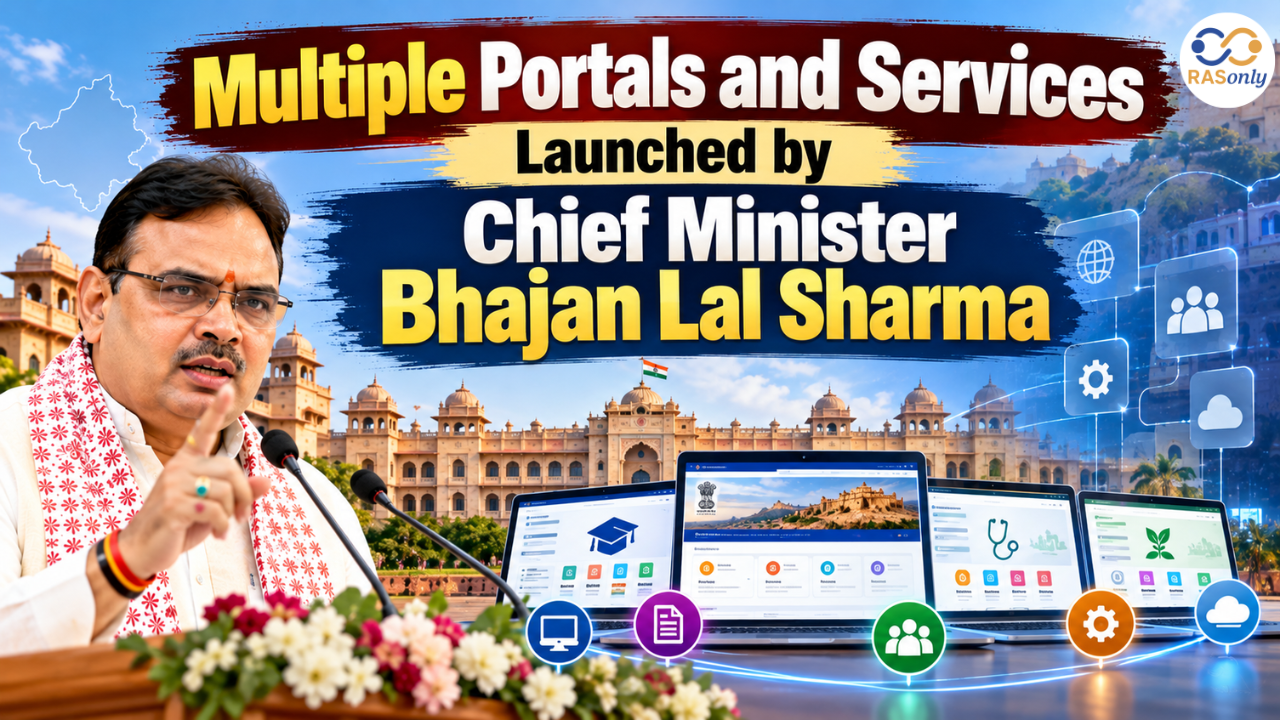
CM Bhajan Lal Sharma Launches Rajasthan Portals
October 08, 2026