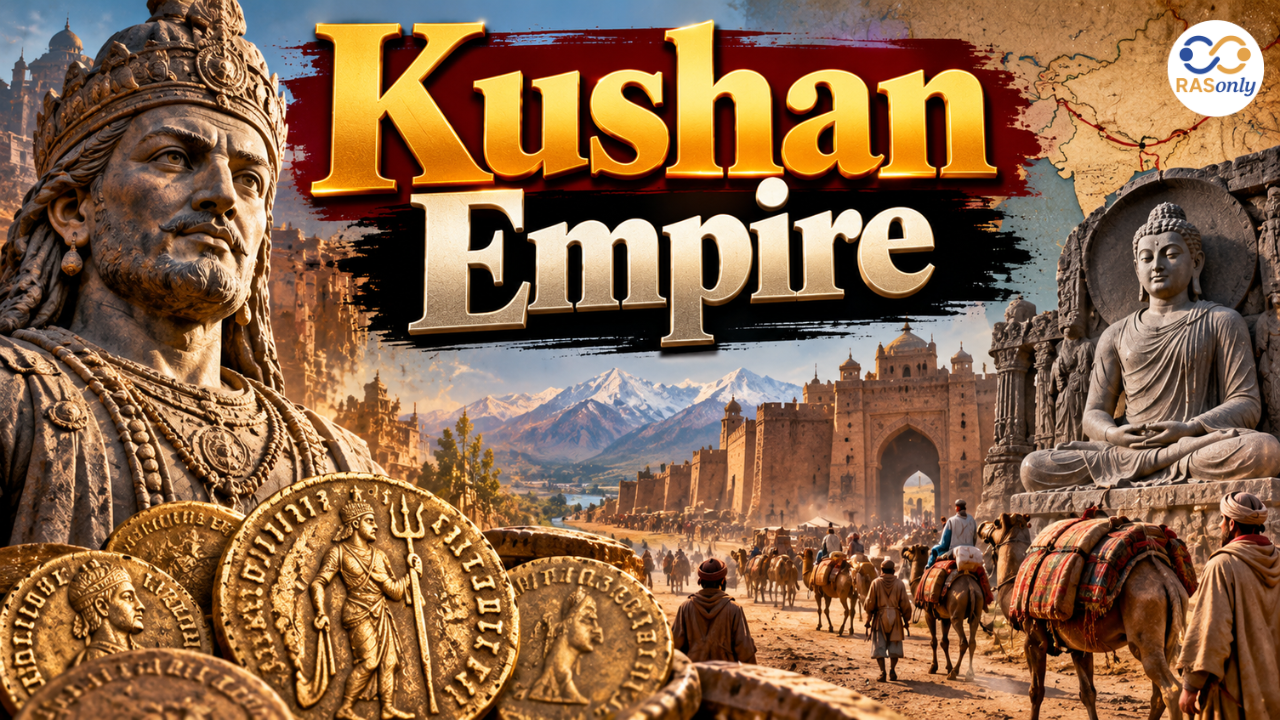
Kushan Empire: History, Rulers, Administration, Economy, Art, Decline
Folk Deities of Rajasthan 2026: Lok Devta, Panch Pir, Traditions, Culture, Social Impact & Complete Analysis (RAS)

Get in Touch with RASonly!

Folk Deities of Rajasthan, known as Lok Devtas, are historical heroes worshipped as divine protectors of society. They represent a unique blend of culture, faith, and social values rooted in rural life. These deities promote equality, harmony, and tradition, making them a vital part of Rajasthan’s identity.

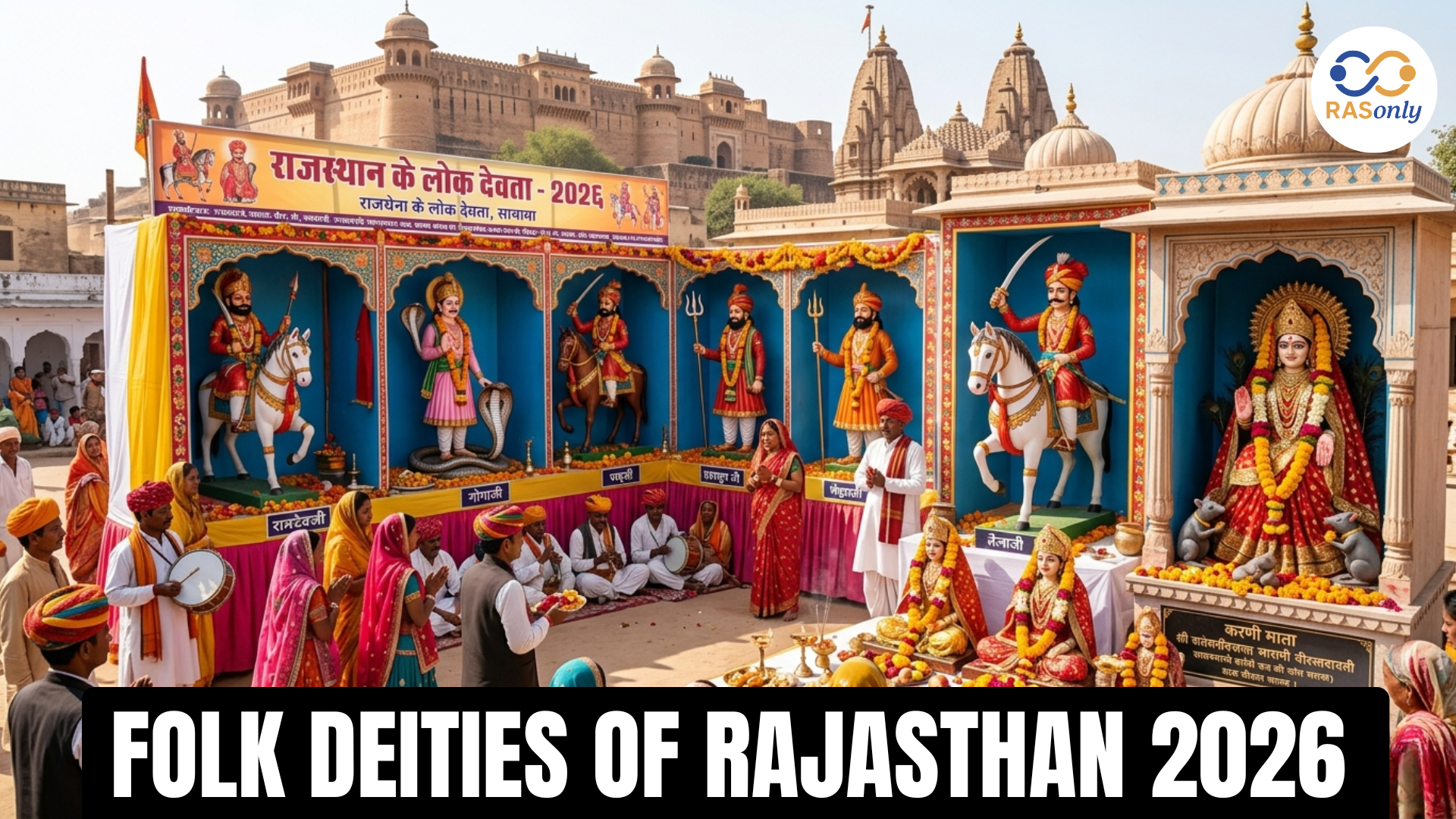
Folk Deities of Rajasthan, popularly known as Lok Devta, represent one of the most unique and powerful aspects of Rajasthan’s cultural and religious landscape. These deities are not purely mythological figures but are historical heroes, saints, warriors, and reformers who earned divine status due to their extraordinary deeds, sacrifices, and service to society.
In Rajasthan, particularly in the rural region, Lok Devtas are so much in the middle of the daily life. They are perceived as guardians, healers, dispensers of justice and moral standards strongly bound to agriculture, animals and social order and local ways of doing things.
According to RPSC RAS 2026, Rajasthan GK, Art and Culture and History, this is a very crucial topic since it outlines the belief systems at grassroots, social reform, communal harmony and cultural continuity. Folk deities are not merely the figures of religion, but the pillars of the living tradition of Rajasthan, the rural identity.
Meaning and Concept of Folk Deities (Lok Devta)
The Folk Deities (Lok Devta) in Rajasthan are deities that are said to be locally worshipped, and were at one time historical figures, i.e., warriors, saints, social reformers, and protectors. Throughout the years, their incredible courage, martyrdom, miracles and service to the society pushed people to worship them as gods.
Lok Devtas are very much based on local geography, communal life, and daily problems, unlike classical or scriptural gods. They are strongly related to the practical issues in life like cattle protection, agriculture, precipitation, curing of illnesses and justice, and this makes them very applicable in rural society.
These deities represent a unique blend of history, faith, culture, and social values, and their stories are preserved through oral traditions, folk songs, rituals, and local festivals. Therefore, they are not just religious symbols but also cultural icons and social protectors of Rajasthan.
Characteristics of Folk Deities in Rajasthan
The characteristics of folk deities in Rajasthan are unique and they do not relate to classical religious traditions. These attributes emphasize that they are closely related to rural life, community affiliation, and social-cultural values which make them region specific.
They are not only religious because of spiritual reasons, but also practical assistance such as protection, justice and well-being, that is why they are considered a significant aspect of daily life, particularly in villages and pastoral societies.
Key Characteristics
- Based on real historical personalities who were later deified
- Strong connection with rural economy and pastoral lifestyle
- Worshipped through oral traditions, folk songs, and storytelling
- Associated with specific communities (Gurjar, Rebari, farmers, etc.)
- Represent values like justice, sacrifice, protection, and equality
- Worshipped through Phad paintings, fairs (melas), bhajans, and rituals
- Linked with local problems and solutions (rain, cattle, health, crops)
Panch Pir of Rajasthan (Most Important Section)
The five most important and commonly practiced folk deities in Rajasthan are called the Panch Pir. They are characterized by divine powers, contribution in the society and protective functions.
Their biggest importance lies in the fact that they are worshipped by both Hindus and Muslims, making them a powerful symbol of communal harmony and cultural unity.
Panch Pir Table (Highly Important for Exams)
| Deity | Role | Key Importance |
|---|---|---|
| Pabuji | Protector of livestock | Camel & cattle protection |
| Ramdevji | Social reformer | Equality & justice |
| Gogaji | Snake deity | Protection from snake bites |
| Harbuji | Saint | Spiritual guidance |
| Mehaji | Warrior | Cow protection |
Pabuji Rathore (Protector of Livestock)
Pabuji is a deity of the Rajasthan folk especially among pastoral communities such as Raika/Rebari who consider him to be one of the most worshiped folk gods. He is adored as the guardian of camels, cows and livestock, the main sources of desert life. His personal life is a representation of sacrifice, courage and obligation since he died saving cattle. In the course of time, he turned into a god of defense and bravery.
Key Facts
- Birth: 13th century, Kolumand (Jodhpur)
- Mount: Kesar Kalmi horse
- Symbol: Warrior with spear
- Community: Rebari/Raika
Cultural Importance
- Pabuji ki Phad (scroll painting tradition)
- Folk songs sung by Bhopas
- Worship linked to animal protection
Gogaji Chauhan (Snake God / Jahar Pir)
The Snake God (Nag Devta) is the god of snakes, Gogaji that is assumed to save individuals against snake bites. Another title of his is Jahar Pir, which emphasizes the unity of Hinduism and Muslims. He is closely associated with agriculture, and farmers worship him for protection, rainfall, and prosperity.
Key Facts
- Birth: Dadrewa (Churu)
- Symbol: Snake
- Guru: Gorakhnath
- Fair: Gogamedi
Importance
- Protection from snake bites
- Associated with farming communities
- Strong belief in healing powers
Ramdev Ji (Ramdev Pir – Symbol of Equality)
Ramdev Ji is one of the most popular folk deities, known for promoting social equality, justice, and unity. He strongly opposed caste discrimination. He is worshipped by both Hindus and Muslims, making him a symbol of inclusive spirituality and communal harmony.
Key Facts
- Birth: Runicha (Barmer)
- Other Name: Ramdev Pir
- Major Fair: Ramdevra
Teachings
- Equality and social justice
- Opposition to untouchability
- Unity among communities
Tejaji (Protector of Cattle and Farmers)
Tejaji is a major folk deity associated with agriculture and cattle protection. Farmers worship him for crop safety and livestock protection. He is also believed to cure snake bites, making him both a warrior and healer.
Key Facts
- Birth: Kharnal (Nagaur)
- Role: Protector of cows
- Associated with: Agriculture
Devnarayan Ji (Vishnu Avatar of Gurjars)
Devnarayan Ji is considered an incarnation of Lord Vishnu and is mainly worshipped by the Gurjar community.
His story is depicted through the famous Phad tradition, which is one of the longest storytelling traditions in Rajasthan.
Key Facts
- Birth: Bhilwara region
- Community: Gurjar
- Worship: Phad painting
Extended List of Folk Deities (Detailed Coverage)
Folk deities Rajasthan has a rich and varied folk tradition of folk deities outside the Panch Pir, each treated as a locality, community, and social ideology. These gods represent the localized character of religion in that various regions venerate their own guardians according to historical events, legends and customs.
The folk deities are significant in rural life, agriculture, protection, health, and spiritual direction, which is why they are considered a necessary component of the cultural and social organization of Rajasthan.
Extended Deities Table
| Deity | Role |
|---|---|
| Mallinath Ji | Regional deity (Barmer) |
| Kallaji | Warrior deity |
| Tallinath Ji | Spiritual saint |
| Jhunjhar Ji | Martyr deity |
| Hariram Baba | Healing saint |
| Bhomiya Ji | Land protector |
| Khetrapal | Field protector |
| Mama Dev | Rain deity |
Mallinath Ji
Mallinath Ji is a prominent folk deity of western Rajasthan, especially in the Barmer region, and is associated with valor, spirituality, and regional identity. He is remembered as a brave warrior and saintly figure who contributed to the welfare of society.
The famous Tilwara Fair, one of the largest cattle fairs in Rajasthan, is held in his honor. This fair also highlights the economic and cultural importance of folk traditions in rural Rajasthan
Key Points
- Associated with Barmer (Malani region)
- Symbol of valor and spirituality
- Linked with Tilwara cattle fair
- Worshipped by rural and pastoral communities
Kallaji Rathore
Kallaji Rathore is a warrior deity, who is considered the representation of courage, safeguarding, and sacrificiality. He is especially venerated in the Mewar area and is normally represented as a formidable guardian. His veneration shows the relevance of the martialism and Rajput heroism in the history and culture of Rajasthan.
Key Points
- Known as a warrior protector
- Associated with Mewar region
- Symbol of courage and sacrifice
- Worshipped for protection and strength
Tallinath Ji
Tallinath Ji is a Nath tradition with a spiritual saint who is renowned to do meditation and yoga. He is the spiritual aspect of the folk belief system of Rajasthan.
His worship emphasizes renunciation, devotion, and inner strength, making him an important figure in religious traditions.
Key Points
- Connected with Nath sect
- Symbol of spirituality and meditation
- Worshipped as a saint and guide
- Associated with yogic traditions
Jhunjhar Ji
Jhunjhar Ji is worshipped as a martyr deity, representing sacrifice and bravery. He is believed to have died in battle and later became a symbol of heroism.
His worship reflects Rajasthan’s tradition of honoring martyrs and warriors who sacrificed their lives for society.
Key Points
- Known as a martyr hero
- Symbol of sacrifice and bravery
- Worshipped in rural areas
- Represents Rajput warrior tradition
Hariram Baba (Healing Deity)
Hariram Baba is a famous folk saint whose reputation is related to curative abilities and spiritual salvation. Individuals go to his shrine to find treatment of illnesses and tranquility of mind. His veneration depicts the firm faith in healing systems that are based on faith in rural Rajasthan.
Key Points
- Known as a healer and saint
- Associated with disease relief and wellness
- Worshipped for health and peace
- Strong rural following
Bhomiya Ji (Land Protector)
Bhomiya Ji is considered the protector of land and villages, especially in agricultural areas. He is worshipped in advance of farming to guarantee the success and good fortune. The significance of religion and agriculture is captured in his presence in Rajasthan.
Key Points
- Protector of land and village boundaries
- Worshipped before agricultural activities
- Ensures safety and prosperity
- Important in rural belief system
Khetrapal (Protector of Fields)
Khetrapal is a folk deity associated with the protection of crops and fields. Farmers worship him for good harvest and protection from natural and external threats.
He symbolizes the importance of agriculture and food security in rural Rajasthan.
Key Points
- Protector of fields and crops
- Worshipped by farmers
- Associated with agricultural success
- Ensures crop safety and prosperity
Mama Dev (Rain Deity)
Mama Dev is worshipped as a rain deity, especially in desert and drought-prone regions of Rajasthan. His worship is linked with prayers for rainfall and agricultural prosperity.
This reflects how folk beliefs are closely connected with climate and environmental conditions.
Key Points
- Worshipped for rainfall and water availability
- Important in desert regions
- Associated with drought relief
- Linked with agriculture and survival
Folk Traditions and Cultural Practices
Folk deities are deeply embedded in Rajasthan’s cultural life and are expressed through various traditional practices. These traditions help preserve stories, beliefs, and values across generations.
They play a crucial role in maintaining cultural continuity and community bonding, especially in rural areas.
Key Traditions
- Phad Painting → Visual storytelling tradition
- Bhajan & Folk Songs → Devotional expression
- Fairs (Melas) → Social and economic gatherings
- Oral Traditions → Passing knowledge across generations
Social, Cultural & Economic Impact
Folk deities influence not only religious beliefs but also social structure, economy, and cultural identity in Rajasthan. They act as a bridge between tradition and everyday life.
Their impact can be seen in community unity, rural economy, and preservation of heritage.
Key Impact
- Promote social harmony and unity
- Preserve cultural heritage and traditions
- Support rural economy through fairs and tourism
- Strengthen community identity and values
Challenges in Folk Traditions
Modernization and the changing lifestyle are a challenge to folk traditions and beliefs although they are important. These forces are slowly influencing the survival of the traditional practices.
There is a need to preserve these traditions through awareness and cultural promotion.
Key Challenges
- Urbanization and migration
- Decline in oral traditions
- Influence of modernization
- Reduced interest among youth
Conclusion
The Folk Deities (Lok Devtas) of Rajasthan can be discussed as a certain combination of history, culture, religion, and social ethics, as they are a part of the identity of the state. These gods are not merely religious personalities but they are a representation of courage, sacrifice, righteousness, and social order, which is well entrenched in the daily life of the village people.
They have contributed to defining the culture of Rajasthan, communal cohesiveness, and mutation of traditions and sustenance of the rural economy via rituals and fairs, and supported the traditions of Rajasthan. In the contemporary world, it is important to conserve such traditions to ensure continuity in the culture and empower the social fabric of Rajasthan.
FAQ
Folk deities are locally worshipped historical figures such as warriors, saints, and protectors who were later considered divine due to their contributions to society.
The Panch Pir include Pabuji, Ramdevji, Gogaji, Harbuji, and Mehaji, who are widely worshipped and symbolize protection, equality, and communal harmony.
They play a crucial role in rural life by providing protection, justice, healing, and social guidance, while also preserving cultural traditions.
They are worshipped through folk songs, Phad paintings, fairs (melas), rituals, and oral traditions passed across generations.
Modernization, urbanization, declining interest among youth, and loss of oral traditions are major challenges affecting folk culture.

BEST SELLER
🏆 PRELIMS
RAS Pass
Prelims focused Hindi & English
₹399
✓
Prelims Topic-Wise Tests
✓
Subject-Wise Tests
✓
Full-Length Prelims Tests
✓
Daily Current Affairs Tests
✓
Prelims PYQs Tests
✓
Detailed Solutions & Analysis
✓
All Rajasthan Ranking
✓
Unlimited Reattempts
✓
Mains Tests
✓
Hindi & English Tests
✓
All Rajasthan Ranking
Trusted by 5,000+ Students
Post Category
- RAS Salary
- Result
- RAS Admit Card
- RAS Job
- RAS Cutoff
- Preparation Tips
- RAS Answer Key
- RAS Exam Analysis
- RAS Syllabus
- RAS Previous Year Papers
- RPSC RAS Exam Pattern
- RAS Interview
- RAS Exam Date
- RAS Vacancy
- RAS Test Series
- RAS Best Books
- RAS Preparation Resources
- RAS Coaching Centre
- History
- Polity
- Geography
- Economics
- Science
- Art and Culture
- RPSC RAS Application Form
- RPSC RAS Notification
- RAS Eligibility Criteria
- UPSC Exam
- RPSC RAS Mains
Visit Our RASonly Offline Center
Our Expert Faculty

Bhunesh Sir
Current Affairs · 13+ Yrs

Aamir Khan Sir
RAS-2017 · IIM Ahm.

Akash Sir
Polity · 8+ Yrs
Free Resources
Official Mobile App

RASOnly App
by OTSAdda · Free
Full Video Lectures
Mock Tests & PYQs
Daily Current Affairs
AI Mock Interview
Free Download · No subscription needed to install
RAS 2024 Toppers — RASonly
Rank 2
Virendra Charan
Rank 9
Bhoopinder Singh
Rank 26
Aanchal Nagpal
Rank 33
Lokendra Singh
Rank 45
Amar Rathore
Rank 46
Manasvini Verma

Join RASonly WhatsApp Community
Get daily current affairs, exam alerts, free study material and tips from expert faculty — right on WhatsApp.
Join for Free →RASonly Interview Guidance Program

Mr. Ashok Jain
Ex-Chief Secretary Govt of Rajasthan
- IAS officer of the 1981 batch, Rajasthan cadre.
- Passionate about mentoring the next generation of RAS officers with real-world insights.
- Got retired in Dec 2017 from the post of Chief Secretary of the state of Rajasthan.

Mr. Guru Charan Rai
Ex-ASP / SP in Jaisalmer
- Guru Charan Rai, IPS (Retd), retired as Inspector General of Police (Security), Rajasthan, Jaipur in 2017.
- Served as ASP and SP in Jaisalmer, Nagaur, Sri Ganganagar, Sawai Madhopur, Dausa, Sikar, and Karauli.
- He also held key positions as DIGP and IGP in the Law and Order division.

Mr. Rakesh Verma
Ex-IAS Officer, B.Tech, MBA, and M.A. (Economics)
- IAS officer of the 1981 batch and retired in Chief Secretary Rank.
- Civil servant of high repute and vast experience.
- Has been teaching UPSC CSE subjects for the last six years.

Daily Current Affairs for RAS Exam Preparation 2026

India Wins Gold in 10m Air Pistol
September 26, 2026
India’s Rank in Travel And Tourism Development Index 2026
September 26, 2026
India Wins Bronze Medal in Men’s Double Sculls
September 25, 2026