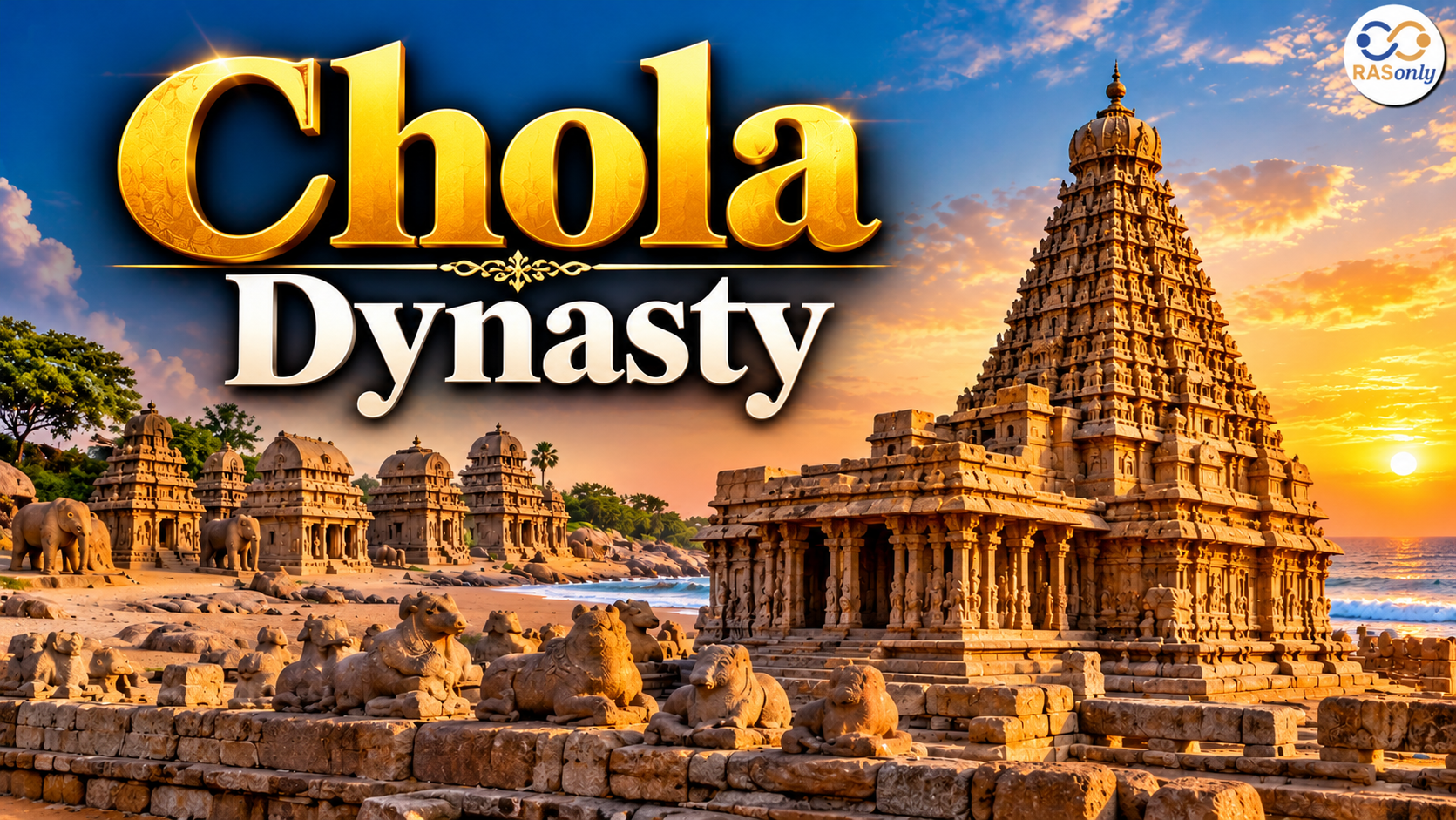
Chola Dynasty: Capital, Founder, Kings, Time Period and History
Green Hydrogen Mission Strategy for RAS Prelims 2026: Complete Notes, Current Affairs & Preparation Guide

Get in Touch with RASonly!

Green Hydrogen Mission has become one of the most important topics for RAS 2026 because it connects Science & Technology, Environment, Economy, Climate Change, Energy Security, and Current Affairs. Aspirants should focus on National Green Hydrogen Mission, hydrogen production, renewable energy linkage, Net Zero goals, industrial applications, and Rajasthan’s clean energy potential. Strong conceptual understanding and current affairs integration can make this a high-scoring topic in both Prelims and Mains.

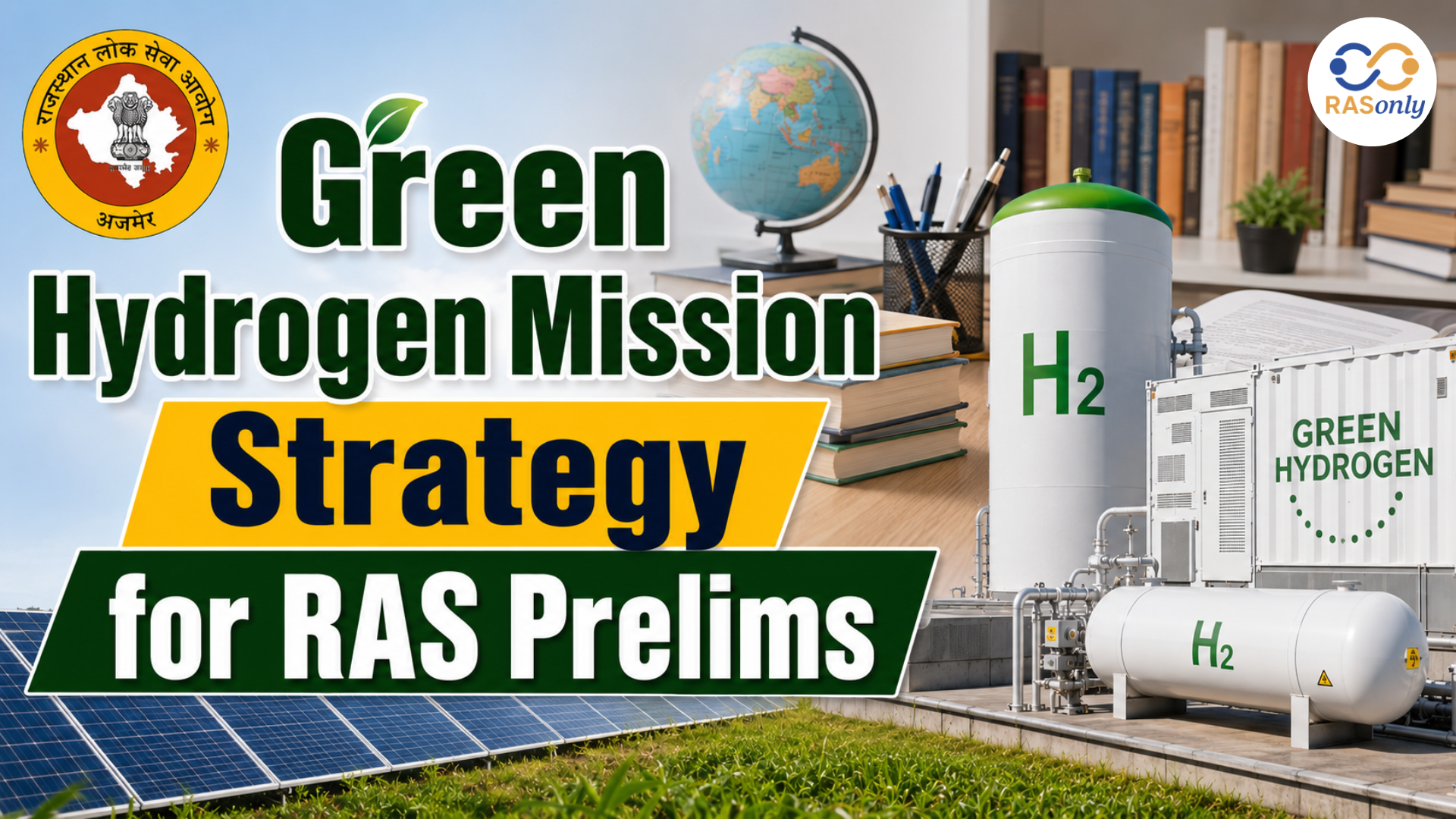
Green Hydrogen Mission is one of the most significant Science & Technology, Environment, Economy, Energy Security, and Current Affairs topics for the RAS Prelims 2026. Clean energy transition, renewable energy, climate commitments, Net Zero targets, energy security, industrial decarbonization and green technology initiatives. The topic is of great importance in the context of India's push for green hydrogen production, the development of the hydrogen industry, and the establishment of hydrogen-based industrial ecosystems, as this area is actively being promoted by the Government of India for competitive exams.
The National Green Hydrogen Mission aims to make India a world leader in green hydrogen production, use and export, and to lower the reliance on fossil fuel imports and promote sustainable development in the long run. It is advisable for the aspirants of the RAS 2026 exam to focus on the concept of green hydrogen, mission objectives, government initiatives, linkage to renewable energy, industrial applications, linkage to Rajasthan, current affairs, and MCQ practice rather than memorising facts in isolation.
Why Green Hydrogen Mission is Important for RAS 2026
Green Hydrogen is a subject that is linked to various topics of the RAS syllabus such as Environment, Climate Change, Economy, Energy Resources, Science & Technology, Sustainable Development and Current Affairs. It is one of the few subjects with which one can get conceptual, factual, statement- and application-based questions.
Benefits of Strong Preparation
- Improves Science & Technology preparation
- Helps in Environment & Climate Change topics
- Useful for Economy & Energy Security linkage
- Important for current affairs integration
- Helpful in both Prelims and Mains
- Through conceptual understanding
What is Green Hydrogen?
Green Hydrogen is hydrogen gas generated by splitting water with electricity generated from renewable energy sources like solar and wind. Green Hydrogen, in contrast to traditional hydrogen made from fossil fuels, produces almost no carbon emissions and is regarded as a clean energy source of the future.
Important Features
- Produced using renewable energy
- Low-carbon fuel
- Supports decarbonization
- Alternative to fossil fuels
- Important for clean energy transition
Smart Strategy
- Understand electrolysis concept
- Compare green, grey, and blue hydrogen
- Link with renewable energy
- Practice statement-based MCQs
National Green Hydrogen Mission Strategy for RAS 2026
The National Green Hydrogen Mission is the flagship initiative of India to build a complete Green Hydrogen Ecosystem. It seeks to improve domestic production and manufacturing, innovation and exports and aligns with India's clean energy and Net Zero goals. In 2023, this mission was approved, involving significant financial commitment and a long-term commitment of time to 2030.
Important Targets by 2030
- Green Hydrogen production capacity of at least 5 Million Metric Tonnes annually
- Around 125 GW renewable energy capacity addition
- Reduction in fossil fuel imports
- Employment generation
- Reduction in greenhouse gas emissions
Smart Strategy
- Revise mission objectives carefully
- Focus on 2030 targets
- Link with Net Zero 2070
- Practice current-affairs-based MCQs
Green Hydrogen Production Process
Understanding the production process helps aspirants solve conceptual questions related to clean energy and renewable technologies.
Green Hydrogen is generated by electrolysing water into hydrogen and oxygen gas. If the electricity used in this process is produced by renewable energy sources, then the hydrogen produced is known as Green Hydrogen. This makes it a clean fuel alternative to traditional fuels.
Key Components
- Water
- Electrolyser
- Renewable electricity
- Hydrogen production
- Oxygen by-product
Smart Strategy
- Learn electrolysis visually
- Understand renewable energy linkage
- Compare hydrogen production methods
- Practice science-based MCQs
Green Hydrogen vs Grey Hydrogen vs Blue Hydrogen
Comparisons of Green, Grey, and Blue Hydrogen are also crucial topics for RAS, as the production of these hydrogen fuels is often compared; carbon emissions, sustainability, and their contribution to the clean energy transition are among the questions asked. Aspirants will be able to answer conceptual and statement questions better if they know the differences between them.
| Feature | Green Hydrogen | Grey Hydrogen | Blue Hydrogen |
|---|---|---|---|
| Energy Source | Renewable Energy | Fossil Fuels | Fossil Fuels |
| Carbon Emissions | Very Low | High | Lower than Grey |
| Sustainability | High | Low | Moderate |
| Future Potential | Very High | Low | Medium |
Smart Strategy
- Focus on differences
- Learn emission characteristics
- Practice comparison-based MCQs
Green Hydrogen & Renewable Energy Linkage
Green Hydrogen is a key component of the clean energy transition as it will enable the efficient use of renewable energy and energy storage.
None of the renewable energy sources like solar, wind, etc. is continuous. Green Hydrogen can be used for storage, over long-term, to help industries that are hard to electrify directly.
Important Linkages
-
Solar Energy
- Wind Energy
- Energy Storage
- Grid Stability
- Renewable Integration
Smart Strategy
- Link hydrogen with renewable energy
- Focus on energy storage concepts
- Practice sustainability MCQs
Green Hydrogen and Climate Change
The generation of hydrogen from green energy sources is seen as a major solution to decarbonise the economy and decrease reliance on fossil fuels, making it a pivotal element in the pursuit of climate targets.
It helps enable the world's response to climate change by bringing a clean solution to industries, transport, shipping and other sectors with a high carbon footprint where direct electrification is not possible.
Important Climate Concepts
- Net Zero Emissions
- Carbon Neutrality
- Decarbonization
- Clean Energy Transition
- Sustainable Development
Smart Strategy
- Link climate goals with hydrogen
- Revise Net Zero concepts
- Practice climate-based MCQs
Industrial Applications of Green Hydrogen
Green Hydrogen is expected to play a transformative role in industries that are difficult to decarbonise through conventional renewable energy sources. Its applications in manufacturing, transportation, and heavy industries are increasingly important from both economic and environmental perspectives.
Important Sectors
- Fertilizer Industry
- Steel Industry
- Refineries
- Shipping
- Aviation
- Heavy Transport
Emerging Applications
- Green Ammonia
- Hydrogen Fuel Cells
- Industrial Fuel Replacement
- Long-term Energy Storage
Smart Strategy
- Focus on industrial applications
- Link with economic development
- Practice application-based MCQs
Green Hydrogen & Energy Security
India imports a large portion of its energy requirements, making energy security a major policy concern.
Green Hydrogen can help reduce dependence on imported fossil fuels while strengthening domestic energy production and long-term energy resilience.
Benefits
- Reduced import dependence
- Energy diversification
- Strategic fuel security
- Domestic manufacturing growth
Smart Strategy
- Link energy security with the economy
- Focus on import substitution
- Practice policy-based MCQs
India's Recent Green Hydrogen Developments
India has accelerated implementation of the Green Hydrogen Mission through incentives for hydrogen production, electrolyser manufacturing, pilot projects, green ammonia development, and industrial adoption. Recent allocations include support for hydrogen production and electrolyser manufacturing under various mission components.
Important Current Affairs Areas
- SIGHT Programme
- Electrolyser Manufacturing
- Green Ammonia Projects
- Hydrogen Refineries
- Hydrogen Mobility Projects
Smart Strategy
- Revise current affairs regularly
- Focus on mission implementation
- Practice statement-based questions
Rajasthan & Green Hydrogen Linkage
Rajasthan is one of India's most important states for Green Hydrogen development because of its enormous solar energy potential and expanding renewable energy infrastructure.
The state's vast desert regions, high solar radiation, and renewable energy projects make it a strong candidate for future green hydrogen production, storage, and industrial investment.
Important Rajasthan Linkages
- Solar Energy Leadership
- Renewable Energy Parks
- Green Hydrogen Potential
- Industrial Development
- Clean Energy Investments
Smart Strategy
- Link solar energy with hydrogen
- Focus on Rajasthan renewable potential
- Practice Rajasthan GK MCQs
Important Organisations & Institutions
Several organisations are involved in the planning, regulation, implementation, and promotion of Green Hydrogen in India.
| Organization | Main Role |
|---|---|
| Ministry of New and Renewable Energy (MNRE) | Mission implementation |
| Solar Energy Corporation of India (SECI) | Incentive schemes |
| NITI Aayog | Policy support |
| Ministry of Power | Energy integration |
| Ministry of Petroleum & Natural Gas | Industrial utilization |
Understanding institutional roles improves conceptual clarity in Economy, Energy, and Environment-related MCQs
Map Practice Strategy for Green Hydrogen
Map practice is useful because Green Hydrogen is closely linked with renewable energy zones, industrial corridors, ports, and energy infrastructure.
Important Areas to Practice
- Rajasthan solar regions
- Renewable energy parks
- Industrial corridors
- Major ports
- Hydrogen project locations
Smart Map Practice Tips
- Practice India maps regularly
- Mark renewable energy regions
- Link solar zones with hydrogen projects
- Revise energy infrastructure visually
Green Hydrogen MCQ Practice Strategy
MCQ practice is essential because Green Hydrogen questions are usually conceptual, statement-based, application-oriented, and linked with current affairs. Consistent practice improves conceptual clarity and enhances performance in Science, Environment, and Economy sections.
Important Focus Areas
- National Green Hydrogen Mission
- Electrolysis
- Green vs Grey Hydrogen
- Renewable Energy Linkage
- Net Zero Goals
- Green Ammonia
- Energy Security
Smart MCQ Strategy
- Solve topic-wise MCQs daily
- Practice PYQs regularly
- Analyse wrong answers carefully
- Revise current affairs repeatedly
Most Important Green Hydrogen Topics for RAS 2026
Certain Green Hydrogen topics carry higher exam relevance because they are directly linked with energy security, climate action, renewable energy, industrial development, and national missions. Aspirants should prioritise these areas during revision to maximise potential.
High-Weightage Topics
- National Green Hydrogen Mission
- Green Hydrogen Production
- Electrolysis Process
- Green Ammonia
- Net Zero 2070
- Renewable Energy Linkage
- Energy Security
- Rajasthan Renewable Energy Potential
| Topic | Importance Level |
|---|---|
| National Green Hydrogen Mission | Very High |
| Green Hydrogen Production | Very High |
| Net Zero & Climate Action | High |
| Green Ammonia | High |
| Energy Security | High |
Revision Strategy for Green Hydrogen
Revision is extremely important because mission targets, organisations, production methods, industrial applications, and climate linkages can easily be confused during the exam.
Smart Revision Tips
- Revise mission targets weekly
- Practice comparison tables
- Link current affairs with concepts
- Focus on renewable energy linkage
- Solve statement-based MCQs
| Revision Stage | Focus Area |
|---|---|
| First Revision | Concepts & Mission |
| Second Revision | Applications & Current Affairs |
| Final Revision | MCQs & Quick Notes |
Conclusion
Green Hydrogen Mission represents India’s long-term vision for clean energy transition, energy security, industrial decarbonization, and sustainable economic growth. As India moves towards Net Zero targets and expands renewable energy capacity, Green Hydrogen is expected to play a transformative role in sectors such as fertilisers, steel, transport, shipping, and energy storage.
For RAS 2026, aspirants should prepare this topic through conceptual clarity, comparison-based learning, current affairs integration, Rajasthan linkage, and repeated MCQ practice. Since Green Hydrogen connects Science & Technology, Environment, Economy, and Energy Security, it has the potential to generate multiple questions across different sections of the examination.
Green Hydrogen Mission - FAQs
Green Hydrogen is hydrogen produced through the electrolysis of water using electricity generated from renewable energy sources such as solar and wind power, resulting in very low carbon emissions.
Green Hydrogen is important because it is linked with renewable energy, climate change, Net Zero targets, energy security, industrial development, and current affairs, making it highly relevant for competitive exams.
The National Green Hydrogen Mission is a Government of India initiative aimed at making India a global hub for the production, utilisation, and export of Green Hydrogen while reducing dependence on fossil fuel imports.
Green Hydrogen is produced using renewable energy, Grey Hydrogen is produced from fossil fuels with high emissions, while Blue Hydrogen is fossil-fuel-based hydrogen with carbon capture mechanisms to reduce emissions.
Rajasthan has vast solar energy potential, large renewable energy parks, favorable climatic conditions, and expanding clean-energy infrastructure, making it one of India's most promising regions for Green Hydrogen production.
BEST SELLER
🏆 PRELIMS
RAS Pass
Prelims focused Hindi & English
₹399
✓
Prelims Topic-Wise Tests
✓
Subject-Wise Tests
✓
Full-Length Prelims Tests
✓
Daily Current Affairs Tests
✓
Prelims PYQs Tests
✓
Detailed Solutions & Analysis
✓
All Rajasthan Ranking
✓
Unlimited Reattempts
✓
Mains Tests
✓
Hindi & English Tests
✓
All Rajasthan Ranking
Trusted by 5,000+ Students
Post Category
- RAS Salary
- Result
- RAS Admit Card
- RAS Job
- RAS Cutoff
- Preparation Tips
- RAS Answer Key
- RAS Exam Analysis
- RAS Syllabus
- RAS Previous Year Papers
- RPSC RAS Exam Pattern
- RAS Interview
- RAS Exam Date
- RAS Vacancy
- RAS Test Series
- RAS Best Books
- RAS Preparation Resources
- RAS Coaching Centre
- History
- Polity
- Geography
- Economics
- Science
- Art and Culture
- RPSC RAS Application Form
- RPSC RAS Notification
- RAS Eligibility Criteria
- UPSC Exam
- RPSC RAS Mains
Visit Our RASonly Offline Center
Our Expert Faculty

Bhunesh Sir
Current Affairs · 13+ Yrs

Aamir Khan Sir
RAS-2017 · IIM Ahm.

Akash Sir
Polity · 8+ Yrs
Free Resources
Official Mobile App

RASOnly App
by OTSAdda · Free
Full Video Lectures
Mock Tests & PYQs
Daily Current Affairs
AI Mock Interview
Free Download · No subscription needed to install
RAS 2024 Toppers — RASonly
Rank 2
Virendra Charan
Rank 9
Bhoopinder Singh
Rank 26
Aanchal Nagpal
Rank 33
Lokendra Singh
Rank 45
Amar Rathore
Rank 46
Manasvini Verma

Join RASonly WhatsApp Community
Get daily current affairs, exam alerts, free study material and tips from expert faculty — right on WhatsApp.
Join for Free →RASonly Interview Guidance Program

Mr. Ashok Jain
Ex-Chief Secretary Govt of Rajasthan
- IAS officer of the 1981 batch, Rajasthan cadre.
- Passionate about mentoring the next generation of RAS officers with real-world insights.
- Got retired in Dec 2017 from the post of Chief Secretary of the state of Rajasthan.

Mr. Guru Charan Rai
Ex-ASP / SP in Jaisalmer
- Guru Charan Rai, IPS (Retd), retired as Inspector General of Police (Security), Rajasthan, Jaipur in 2017.
- Served as ASP and SP in Jaisalmer, Nagaur, Sri Ganganagar, Sawai Madhopur, Dausa, Sikar, and Karauli.
- He also held key positions as DIGP and IGP in the Law and Order division.

Mr. Rakesh Verma
Ex-IAS Officer, B.Tech, MBA, and M.A. (Economics)
- IAS officer of the 1981 batch and retired in Chief Secretary Rank.
- Civil servant of high repute and vast experience.
- Has been teaching UPSC CSE subjects for the last six years.
Related Post


Daily Current Affairs for RAS Exam Preparation 2026
Rajasthan’s First Sitaphal Processing Unit in Chittorgarh
October 19, 2026
Rajasthan Foundation Expansion New Chapters Announced
October 19, 2026
Continuous Biomass Torrefaction Reactor
October 17, 2026