Kushan Empire: History, Rulers, Administration, Economy, Art, Decline
RAS Mains Paper 3 Strategy and Answer Writing Frameworks: A Complete Preparation Guide

Get in Touch with RASonly!

Master RAS Mains Paper 3 with a practical preparation strategy covering syllabus, answer writing, current affairs, Rajasthan-specific examples, revision, mock tests, time management, and common mistakes to avoid for better performance in the examination.

Rajasthan Administrative Service (RAS) Mains Paper 3 is among the most searched preparation topics by aspirants, and for good reason: the paper is highly important for the final merit list, and the approach to preparing for it is quite different from that for Mains Paper 1 in the Prelims. RAS Exam Mains preparation for Paper 3 aims at testing the analytical thinking ability of the candidate, the ability to relate concepts to current affairs, and the ability to present arguments in an examiner-friendly manner in a specific time limit.
This guide explains the RAS Mains Paper 3 syllabus, why an answer-writing framework is imperative for high scores, and outlines a practical week-by-week programme that can be followed. If you're taking this paper for the first time or you're refining your strategy after a bad session, this is not a 'how-to' paper – it just provides you with a roadmap for the real exam.
Understanding RAS Mains Paper 3 Syllabus and Exam Pattern
It is essential to have a proper idea of what the topics for RAS Paper 3 are and the structure of the paper in the Mains examination before designing any strategy. RPSC RAS Mains examination has four papers in descriptive type, which are compulsory in nature, and General Studies Paper III is one of three papers of General Studies, which are equally important in determining the final score.
| Component | Details |
|---|---|
| Paper Type | General Studies – III (Descriptive) |
| Total Marks | 200 marks |
| Duration | 3 hours |
| Nature | No optional subjects; compulsory for all candidates |
| Negative Marking | Not applicable in Mains (unlike Prelims) |
| Core Focus Areas | Indian Polity & Governance, Public Administration & Management, Law and Administrative Behaviour, International Relations |
Unlike the Mains, there is no negative marking in this section, and therefore it is not necessary to know exactly what to answer, but rather to prepare completely and coherently within a limited time frame — hence the importance of an answer writing structure here more than anything else.
Why a Strong RAS Mains Paper 3 Strategy Matters for Your Final Rank
Many candidates think that the more books they read, the more marks they will get in Mains, which is not true. RAS Mains 2026 toppers have always been focused on presenting, structuring, and being relevant, and not just delivering content, as there are hundreds of copies being graded in a limited time.
- The topics for Paper 3, such as Polity, Public Administration, and Law, are conceptually dense, and unclear answers will not gain marks even if they are grammatically correct.
- When there is proper knowledge of the RPSC RAS Mains Exam Pattern, then you will be able to distribute your time according to the questions rather than over-writing on familiar topics.
- It is consistency in all three GS papers and not brilliance in one or two that propels a candidate to the merit list.
- While there are a few gaps in content, strong presentation skills make up for it; hence, it is crucial to learn tips for writing answers in the RAS.
Core Topics Covered in RAS Paper 3 GS
Paper 3 is broadly structured around three thematic pillars, and it is helpful to know this structure so that you can plan your revision by subject rather than the random approach you may have.
Indian Polity, Governance and International Relations
This section assesses the knowledge of the constitutional framework, governmental institutions and India's role in the international scenario. Aspirants must learn the impact of the provisions of the Constitution on governance, rather than memorising the articles in isolation. Answers are strengthened by making connections between static polity concepts and recent policy developments and diplomatic events.
Public Administration and Management Concepts
This unit contains theoretical components of public administration, organisational behaviour, public administration management, civil service values, and public administration reforms. Clarity of definitions, thinkers and models (e.g. classical management functions) is a more conceptual and less current affairs-based area, so this directly contributes to the quality of the answers.
Law, Human Rights and Administrative Behaviour
This section is a combination of legal awareness, ethical and behavioural aspects of administration such as judicial control and rights-based governance. This part is usually under-prepared, and giving it the same attention as Polity or Public Administration can earn significant marks.
RAS Mains Paper 3 Preparation Strategy
A sound RAS Mains Paper 3 strategy is built in layers — conceptual clarity first, followed by current affairs integration, and finally Rajasthan-specific customisation, since the exam rewards state-relevant examples even in national-level questions.
Building Conceptual Clarity Before Revision
If a student is tempted to dive straight into revision without a good conceptual foundation, the response will be superficial and generic. The first few weeks focus solely on developing a solid grasp of the core theories and frameworks, not just on notes from lectures that haven't been attached to the relevant concepts and ideas.
Integrating Current Affairs with Static Topics
Paper 3 is a very theory-heavy paper and requires more than just theory to be able to do well in it, as there is a significant overlap with governance and policy. Keep a current affairs file on hand organised by the themes in Paper 3 so that examples, committee recommendations, judgments, etc. can be recalled easily when it is time to write answers in the exam.
Adding Rajasthan-Specific Linkage
RPSC always gives credit to the answer that integrates national ideas with Rajasthan administrative and governance setup. Even a simple and accurate example about Rajasthan can make a difference between your answer and hundreds of others that are general.
| Preparation Phase | Focus Area | Recommended Duration |
|---|---|---|
| Foundation Phase | NCERT/standard books, basic concepts | 4–6 weeks |
| Advanced Phase | Standard reference notes, thematic depth | 6–8 weeks |
| Current Affairs Integration | Monthly compilations, Rajasthan-specific updates | Ongoing |
| Revision & Answer Writing | Structured practice, mock tests | Final 6–8 weeks |
Proven Answer Writing Framework for RAS Mains
A dependable RAS answer writing structure takes the guesswork out of the way you approach each question and will be consistent even when you're under the pressure of an exam. The following structure will work for polity, public administration, and law-based questions in Paper 3.
Introduction: Defining the Context in Two to Three Lines
Begin each answer with a concise, clear introduction that provides the context for the question and contains the definition of the key term. Avoid vague generalisations; a sharp, specific opening signals to the examiner that you understood the exact demand of the question.
Body: Structured Points with Sub-headings
The body should be divided into points or subheadings where the examiners will scan for organised content, and not be long paragraphs.
- Use numbered or bulleted points for factual or listing-type answers.
- Include subheadings when there are multiple dimensions of the question (e.g. causes, challenges, way forward).
- Use simple diagrams or flowcharts, where appropriate, to illustrate processes such as administrative structures or steps in a policy cycle.
- Use short, accurate examples to justify arguments related to the provisions of the Constitution, names of committees, or examples specific to Rajasthan.
Conclusion: Value Addition Without Repetition
Conclude with a forward-looking statement that provides value, rather than merely restating the introduction (a balanced observation, a brief recommendation, or a note on the way forward). This is where many candidates lose easy marks by writing monotonous and repetitive endings.
Daily and Weekly Answer Writing Practice Plan
It is nothing but consistent answer writing practice in RAS Mains that makes strategy work. Students rarely improve on test day when they do not practice the writing process regularly.
| Practice Type | Frequency | Purpose |
|---|---|---|
| Short answers (single concept) | Daily, 2–3 answers | Build speed and precision |
| Long analytical answers | 3–4 times a week | Practise structuring and time management |
| Full-length mock tests | Weekly (closer to exam) | Simulate real exam conditions |
| Previous year question analysis | Weekly | Understand examiner expectations and trends |
Common Mistakes Aspirants Make in Paper 3
The time saved in preparation and the loss of marks due to common mistakes that can be caught early are worth a lot.
- Writing very long introductions that take up more of the time than was available in the answer body.
- Failing to take the specifics of Rajasthan into account even if the question permits.
- Ignoring word limits, which leads to incomplete attempts of the full question paper.
- Providing only factually correct, but not timely, knowledge.
- Neglecting law and administrative behaviour topics in favour of more "popular" polity themes.
Time Management During the Exam
The most effective preparation can be ineffective if not coupled with good time management on the actual test day. Spend a little time (a couple of minutes) reading and planning the questions, and allow a little more time at the end for reviewing the questions, with each question having a proportional amount of time based on the marks allocated.
Important Links
| RAS Mains Exam Pattern | RAS Mains Syllabus |
| RAS Preparation Tips | RAS Previous Year Papers |
| Rajasthan Current Affairs | RAS 2026 Eligibility for Other State Candidates |
Conclusion
Finally, getting a good grade in the RAS Main Examination paper 3 is not so much about collecting a lot of notes as it is about a balance between conceptual clarity, integration of current affairs and a structured approach to writing answers. However, it is recommended that candidates prioritise such questions as Polity, Public Administration and Law rather than the familiar topics, as they will score better in the entire paper. This knowledge of the syllabus and exam pattern, coupled with consistent practice of writing answers on a time-limit basis, will lead to an improvement in the content quality and presentation of the answers. In the end, a clever RAS Mains Paper 3 preparation strategy, which is properly designed and executed with diligence, is the difference between an ordinary attempt and a successful one that can help you improve your final rank.
FAQs
RAS Mains Paper 3 is a compulsory paper for General Studies, which has 200 marks for 3 hours duration.
The paper broadly covers Indian Polity & Governance, Public Administration & Management, Law, Administrative Behaviour, and International Relations.
Answer writing helps candidates to present ideas clearly, structure their arguments, manage time, and enhance the overall quality of their answers.
Generally, a good essay will contain a brief introduction, a well-organized body (with points or subheadings), and a clear conclusion.
Candidates are expected to arrange current affairs with topics in Paper 3 and associate them with issues, recommendations of committees, judgments, and policies.
BEST SELLER
🏆 PRELIMS
RAS Pass
Prelims focused Hindi & English
₹399
✓
Prelims Topic-Wise Tests
✓
Subject-Wise Tests
✓
Full-Length Prelims Tests
✓
Daily Current Affairs Tests
✓
Prelims PYQs Tests
✓
Detailed Solutions & Analysis
✓
All Rajasthan Ranking
✓
Unlimited Reattempts
✓
Mains Tests
✓
Hindi & English Tests
✓
All Rajasthan Ranking
Trusted by 5,000+ Students
Post Category
- RAS Salary
- Result
- RAS Admit Card
- RAS Job
- RAS Cutoff
- Preparation Tips
- RAS Answer Key
- RAS Exam Analysis
- RAS Syllabus
- RAS Previous Year Papers
- RPSC RAS Exam Pattern
- RAS Interview
- RAS Exam Date
- RAS Vacancy
- RAS Test Series
- RAS Best Books
- RAS Preparation Resources
- RAS Coaching Centre
- History
- Polity
- Geography
- Economics
- Science
- Art and Culture
- RPSC RAS Application Form
- RPSC RAS Notification
- RAS Eligibility Criteria
- UPSC Exam
- RPSC RAS Mains
Visit Our RASonly Offline Center
Our Expert Faculty

Bhunesh Sir
Current Affairs · 13+ Yrs

Aamir Khan Sir
RAS-2017 · IIM Ahm.

Akash Sir
Polity · 8+ Yrs
Free Resources
Official Mobile App

RASOnly App
by OTSAdda · Free
Full Video Lectures
Mock Tests & PYQs
Daily Current Affairs
AI Mock Interview
Free Download · No subscription needed to install
RAS 2024 Toppers — RASonly
Rank 2
Virendra Charan
Rank 9
Bhoopinder Singh
Rank 26
Aanchal Nagpal
Rank 33
Lokendra Singh
Rank 45
Amar Rathore
Rank 46
Manasvini Verma

Join RASonly WhatsApp Community
Get daily current affairs, exam alerts, free study material and tips from expert faculty — right on WhatsApp.
Join for Free →RASonly Interview Guidance Program

Mr. Ashok Jain
Ex-Chief Secretary Govt of Rajasthan
- IAS officer of the 1981 batch, Rajasthan cadre.
- Passionate about mentoring the next generation of RAS officers with real-world insights.
- Got retired in Dec 2017 from the post of Chief Secretary of the state of Rajasthan.

Mr. Guru Charan Rai
Ex-ASP / SP in Jaisalmer
- Guru Charan Rai, IPS (Retd), retired as Inspector General of Police (Security), Rajasthan, Jaipur in 2017.
- Served as ASP and SP in Jaisalmer, Nagaur, Sri Ganganagar, Sawai Madhopur, Dausa, Sikar, and Karauli.
- He also held key positions as DIGP and IGP in the Law and Order division.

Mr. Rakesh Verma
Ex-IAS Officer, B.Tech, MBA, and M.A. (Economics)
- IAS officer of the 1981 batch and retired in Chief Secretary Rank.
- Civil servant of high repute and vast experience.
- Has been teaching UPSC CSE subjects for the last six years.



Daily Current Affairs for RAS Exam Preparation 2026
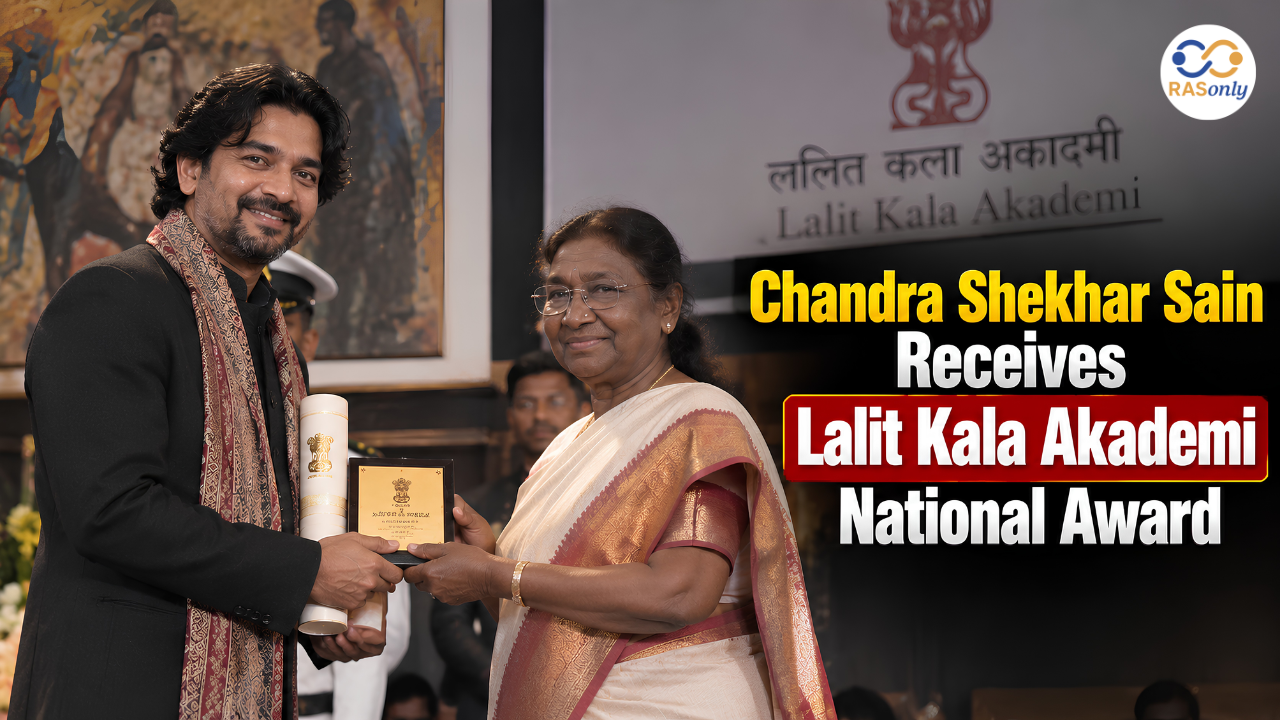
Chandra Shekhar Sain Receives Lalit Kala Akademi National Award
October 01, 2026
Jodhpur to Get India’s Third Dedicated Tropical Medicine Institute
October 01, 2026
Establishment of the Aesthetic Office
September 30, 2026