Kushan Empire: History, Rulers, Administration, Economy, Art, Decline
The Structure of the Earth and Plate Tectonics

Get in Touch with RASonly!


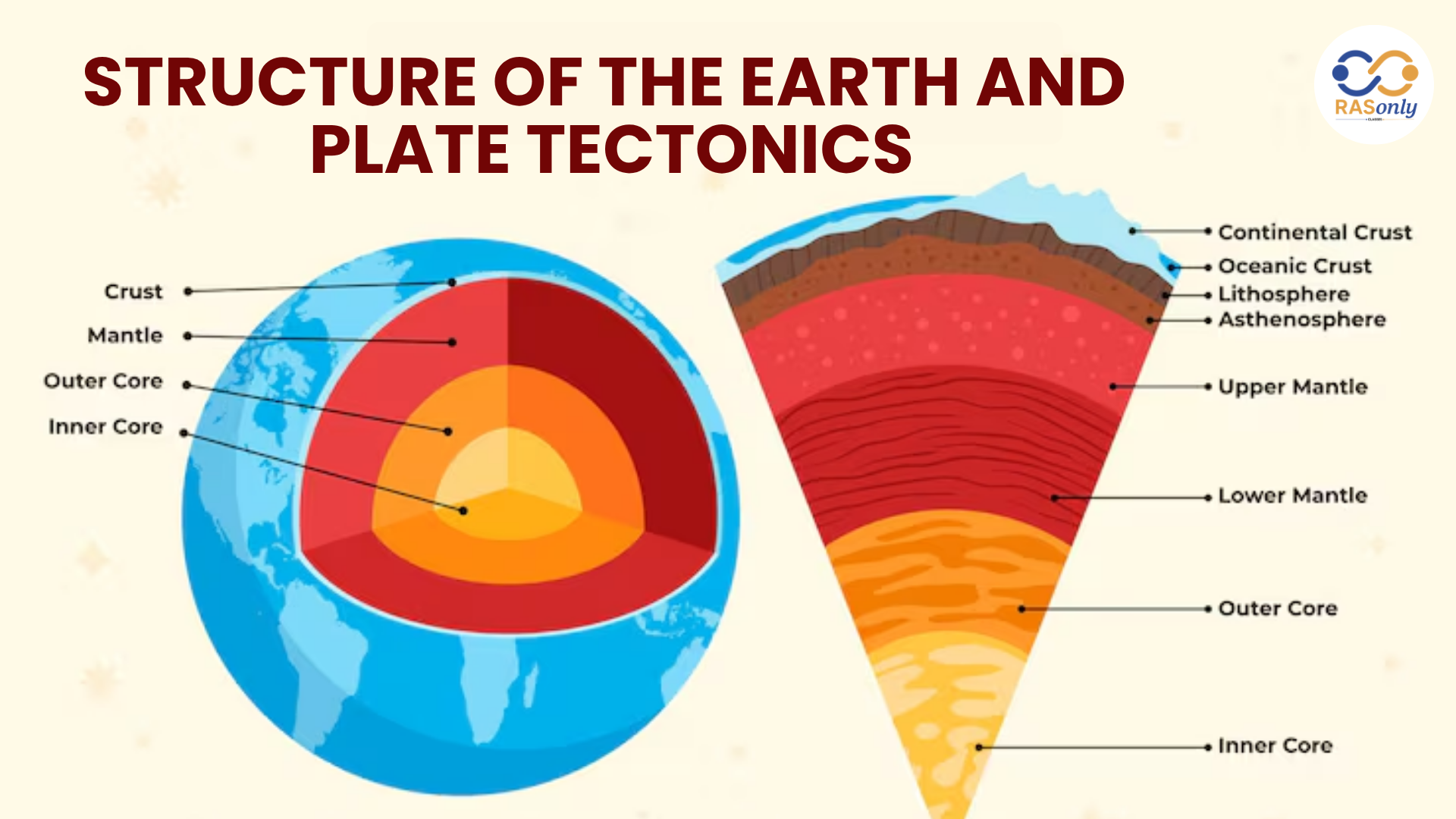
The Earth, our home planet, is a dynamic body that has been continuously changing since its formation about 4.6 billion years ago. Understanding the structure of the Earth and the theory of plate tectonics is essential for interpreting many physical processes that shape our planet—earthquakes, volcanoes, mountain building, and continental drift.
Structure of the Earth
The Earth’s internal structure can be studied through direct and indirect sources. Direct information comes from mining and drilling, while indirect information is derived from the study of seismic waves, gravity, magnetic field, and meteorite composition.
1. The Earth’s Layers
The Earth is broadly divided into three major layers—the Crust, Mantle, and Core. Each layer differs in composition, temperature, and density.
(a) Crust
- The outermost solid layer of the Earth.
- It forms only about 1% of Earth’s total volume.
- Two main types:
- Continental Crust – thicker (20–70 km), made mostly of granite (sial – silica and aluminium).
- Oceanic Crust – thinner (5–10 km), made of basalt (sima – silica and magnesium).
- Average density: 2.7 g/cm³ for continental crust and 3.0 g/cm³ for oceanic crust.
- The boundary between the crust and mantle is called the Mohorovičić Discontinuity (Moho).
(b) Mantle
- Reaches as deep as approximately 2,900 km from the surface.
- It is mostly composed of silicate minerals,which contain a lot of magnesium and iron.
- Divided into:
- Upper Mantle (including Asthenosphere): Semi-molten, which permits movement of the plates.
- Lower Mantle: It is more solid and dense because of the high pressure.
- Average density: 3.3 to 5.4 g/cm³.
- The mantle also causes conveyction currents and this is what causes plate tectonics.
(c) outer Core
- Grows between 2,900 km and 6,371 km below the surface.
- It is mainly composed of iron (Fe) and nickel (Ni), thus referred to as the Nife layer.
- Divided into:
- Outer Core: Liquid; it produces the magnetic field on the earth.
- Inner Core: Solid because of very high pressure.
- Density ranges from 9.5 to 13 g/cm³.
- The interface between the core and the mantle is referred to as the Gutenberg Discontinuity.
Discontinuities inside the Earth
| Discontinuity | Between | Remarks |
|---|---|---|
| Conrad Discontinuity | Upper and Lower Crust | Separates continental crustal layers. |
| Mohorovičić (Moho) Discontinuity | Crust and Mantle | Marks a change in seismic wave velocity. |
| Repetti Discontinuity | Upper and Lower Mantle | Zone of density increase. |
| Gutenberg Discontinuity | Mantle and Core | P-wave velocity drops sharply. |
| Lehmann Discontinuity | Outer and Inner Core | Identified by the reflection of seismic waves. |
P Waves and S Waves
Seismic waves generated by earthquakes provide critical information about the Earth’s interior.
- P waves, or Primary waves, are the first waves to arrive at a seismograph. P waves are the fastest seismic waves and can move through solid, liquid, or gas. They leave behind a trail of compressions and rarefactions in the medium they move through. P waves are also called pressure waves for this reason. Certain animals, such as dogs, can feel the P waves much before an earthquake hits the crust (surface waves arrive). Humans can only feel the ramifications it has on the crust.
- S waves, or secondary waves, are the second waves to arrive during an earthquake. They are much slower than P waves and can travel only through solids. It is after studying the trajectory of S waves through the layers of earth that, scientists were able to conclude that the earth’s outer core is liquid.
Plate Tectonics
Plate tectonics is a scientific theory that explains how major landforms are created as a result of Earth’s subterranean movements. The theory, which solidified in the 1960s, transformed the earth sciences by explaining many phenomena, including mountain-building events, volcanoes, and earthquakes.
This theory evolved from earlier ideas of:
- Continental Drift (Alfred Wegener, 1912), and
- Sea-Floor Spreading (Harry Hess, 1960).
Lithospheric Plates
The Earth’s lithosphere consists of 7 major and several minor plates, including:
- Major Plates: Pacific, North American, South American, African, Eurasian, Indo-Australian, and Antarctic Plates.
- Minor Plates: Philippine, Arabian, Cocos, Nazca, etc.
Each plate moves at a rate of a few centimeters per year—roughly the speed of fingernail growth.
Types of Plate Boundaries
1. Divergent Boundaries (Constructive)
- Plates move away from each other.
- New crust forms as magma rises from below.
- Found mostly at mid-ocean ridges (e.g., Mid-Atlantic Ridge).
- Example: The African Plate and the South American Plate diverging.
2. Convergent Boundaries (Destructive)
- Plates move toward each other.
- One plate subducts (sinks) beneath the other, forming trenches and volcanic arcs.
- Example: Indian Plate colliding with the Eurasian Plate → formation of the Himalayas.
- Another example: Nazca Plate subducting under the South American Plate → Andes Mountains.
3. Transform Boundaries (Conservative)
- Plates slide past each other horizontally.
- No crust is created or destroyed.
- Example: San Andreas Fault (North America) and North Anatolian Fault (Turkey).
Forces Driving Plate Movements
Plate movements are driven by energy and convection currents in the mantle:
- Mantle Convection Currents – Heat from the core causes the mantle to circulate, moving plates above.
- Ridge Push – Upwelling magma at divergent boundaries pushes plates apart.
- Slab Pull – Denser subducting plates pull the rest of the plate downward.
Effects of Plate Tectonics
Plate movements shape the Earth’s surface and cause several natural phenomena:
1. Mountain Building (Orogeny)
- Collision of plates forms fold mountains.
- Example: Himalayas (Indian and Eurasian plates).
- The Aravalli Range in Rajasthan is one of the world’s oldest folded mountain systems, formed by ancient tectonic activity.
2. Earthquakes
- Caused by sudden movement or release of stress at plate boundaries.
- Example: Bhuj Earthquake (2001) linked to intraplate tectonics.
- Rajasthan occasionally experiences mild tremors due to its proximity to the Aravalli Fault Zone.
3. Volcanoes
- Common along divergent and convergent boundaries.
- The Ring of Fire in the Pacific Ocean is the most active volcanic belt.
4. Ocean Trenches and Ridges
- Trenches at subduction zones (e.g., Mariana Trench) and ridges at divergent boundaries (e.g., Mid-Atlantic Ridge).
5. Rift Valleys and Faults
- Divergent movement causes rifting and subsidence.
- Example: Great Rift Valley in Africa, Narmada-Son Rift Zone in India.
Supporting Plate Tectonics
- Fit of Continents: Africa and South America appear to fit together.
- Fossil Correlation: Similar fossils found on continents now separated by oceans.
- Paleomagnetism: Magnetic patterns on the ocean floor show symmetrical stripes around mid-ocean ridges.
- Earthquake and Volcano Distribution: Concentrated along plate boundaries.
- Age of Ocean Floor: Newer near ridges, older away from them.

BEST SELLER
🏆 PRELIMS
RAS Pass
Prelims focused Hindi & English
₹399
✓
Prelims Topic-Wise Tests
✓
Subject-Wise Tests
✓
Full-Length Prelims Tests
✓
Daily Current Affairs Tests
✓
Prelims PYQs Tests
✓
Detailed Solutions & Analysis
✓
All Rajasthan Ranking
✓
Unlimited Reattempts
✓
Mains Tests
✓
Hindi & English Tests
✓
All Rajasthan Ranking
Trusted by 5,000+ Students
Post Category
- RAS Salary
- Result
- RAS Admit Card
- RAS Job
- RAS Cutoff
- Preparation Tips
- RAS Answer Key
- RAS Exam Analysis
- RAS Syllabus
- RAS Previous Year Papers
- RPSC RAS Exam Pattern
- RAS Interview
- RAS Exam Date
- RAS Vacancy
- RAS Test Series
- RAS Best Books
- RAS Preparation Resources
- RAS Coaching Centre
- History
- Polity
- Geography
- Economics
- Science
- Art and Culture
- RPSC RAS Application Form
- RPSC RAS Notification
- RAS Eligibility Criteria
- UPSC Exam
- RPSC RAS Mains
Visit Our RASonly Offline Center
Our Expert Faculty

Bhunesh Sir
Current Affairs · 13+ Yrs

Aamir Khan Sir
RAS-2017 · IIM Ahm.

Akash Sir
Polity · 8+ Yrs
Free Resources
Official Mobile App

RASOnly App
by OTSAdda · Free
Full Video Lectures
Mock Tests & PYQs
Daily Current Affairs
AI Mock Interview
Free Download · No subscription needed to install
RAS 2024 Toppers — RASonly
Rank 2
Virendra Charan
Rank 9
Bhoopinder Singh
Rank 26
Aanchal Nagpal
Rank 33
Lokendra Singh
Rank 45
Amar Rathore
Rank 46
Manasvini Verma

Join RASonly WhatsApp Community
Get daily current affairs, exam alerts, free study material and tips from expert faculty — right on WhatsApp.
Join for Free →RASonly Interview Guidance Program

Mr. Ashok Jain
Ex-Chief Secretary Govt of Rajasthan
- IAS officer of the 1981 batch, Rajasthan cadre.
- Passionate about mentoring the next generation of RAS officers with real-world insights.
- Got retired in Dec 2017 from the post of Chief Secretary of the state of Rajasthan.

Mr. Guru Charan Rai
Ex-ASP / SP in Jaisalmer
- Guru Charan Rai, IPS (Retd), retired as Inspector General of Police (Security), Rajasthan, Jaipur in 2017.
- Served as ASP and SP in Jaisalmer, Nagaur, Sri Ganganagar, Sawai Madhopur, Dausa, Sikar, and Karauli.
- He also held key positions as DIGP and IGP in the Law and Order division.

Mr. Rakesh Verma
Ex-IAS Officer, B.Tech, MBA, and M.A. (Economics)
- IAS officer of the 1981 batch and retired in Chief Secretary Rank.
- Civil servant of high repute and vast experience.
- Has been teaching UPSC CSE subjects for the last six years.

Daily Current Affairs for RAS Exam Preparation 2026
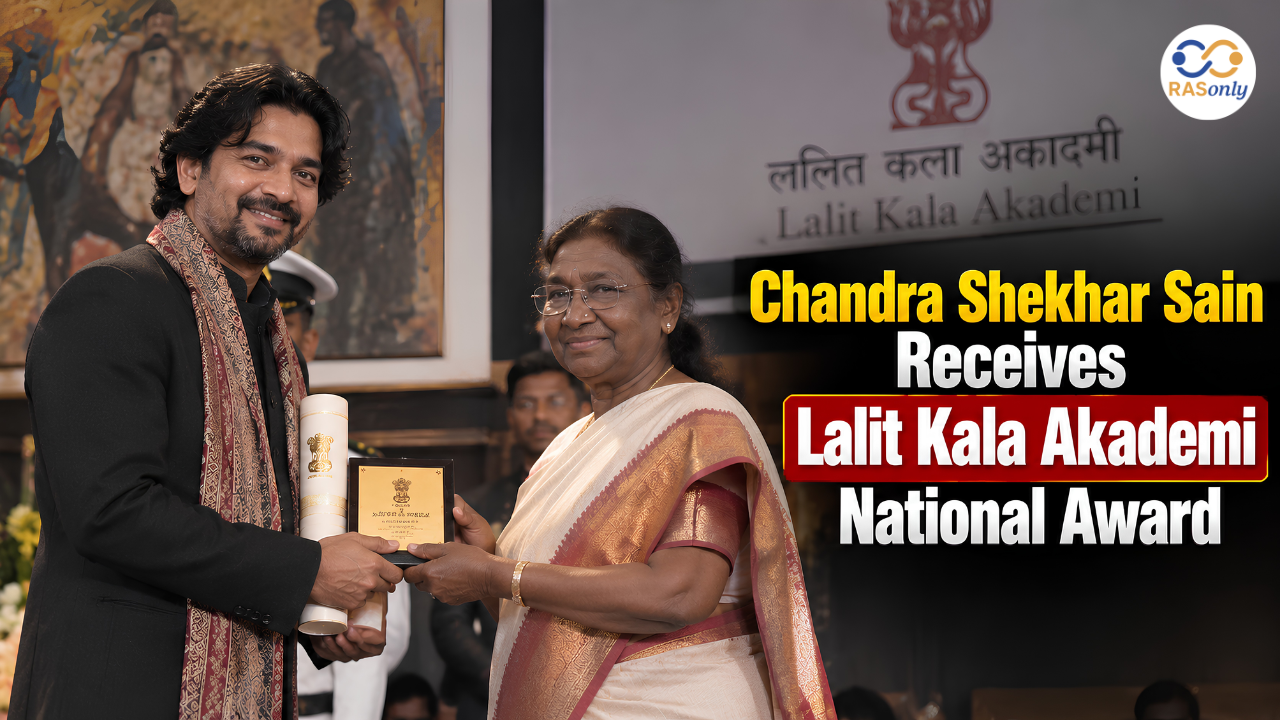
Chandra Shekhar Sain Receives Lalit Kala Akademi National Award
October 01, 2026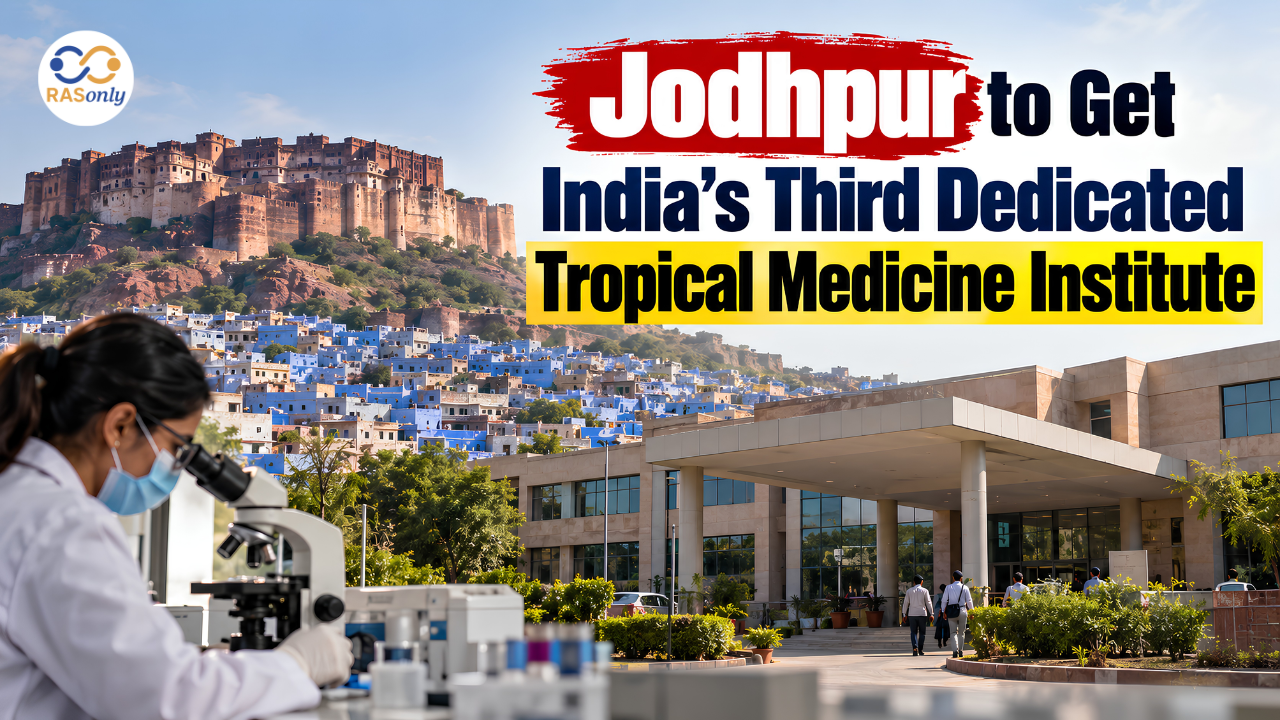
Jodhpur to Get India’s Third Dedicated Tropical Medicine Institute
October 01, 2026
Establishment of the Aesthetic Office
September 30, 2026