Chola Dynasty: Capital, Founder, Kings, Time Period and History
RAS Preparation Strategy for Beginners 2026 (Complete Guide for RPSC RAS Exam)

Get in Touch with RASonly!

The RAS Preparation Strategy for Beginners helps aspirants understand the RPSC RAS exam pattern, syllabus, and subject-wise preparation approach for the RAS Exam 2026. A proper study plan with current affairs preparation, mock tests, revision strategy, and previous year question practice improves exam performance. Following a structured RAS preparation strategy increases the chances of success in the RPSC RAS Prelims, Mains, and Interview stages.

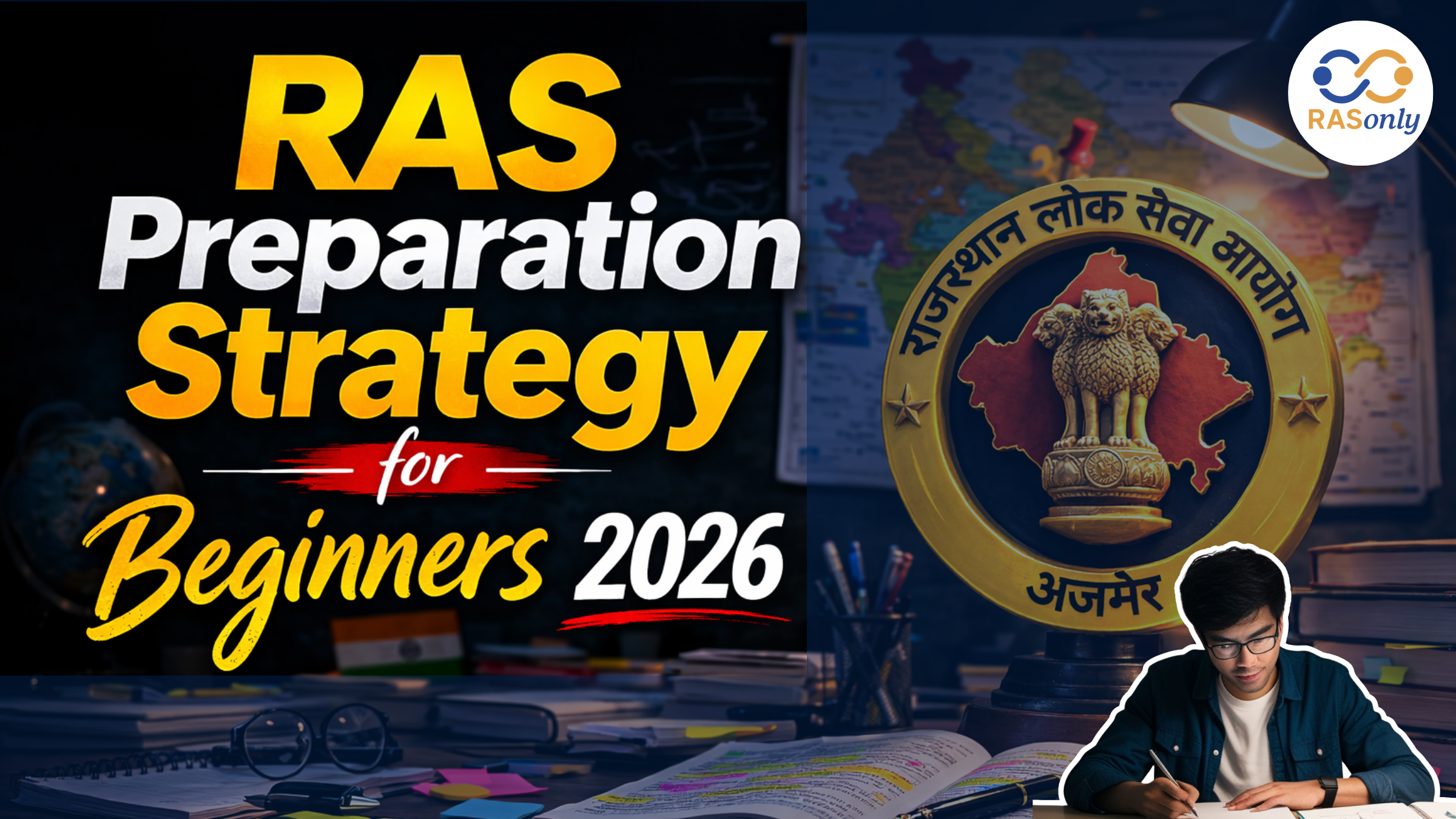
The RAS Preparation Strategy for Beginners is the first step toward clearing the RPSC RAS Exam 2026 conducted by the Rajasthan Public Service Commission. The Rajasthan Administrative Service (RAS) examination is one of the most competitive state civil service exams in India. Every year, thousands of candidates appear for the exam to become administrative officers in the Rajasthan government.
To succeed in preparing for the RAS exam, a beginner should be aware of the exam pattern, syllabus, study plan, current affairs preparation, and subject-wise strategies. A balanced RAS preparation model assists candidates in creating conceptual clarity, time management, and the complete RAS syllabus to the Prelims and Mains.
This detailed guide explains the best RAS preparation strategy for beginners, including the RAS exam structure, study plan, subject-wise preparation, current affairs strategy, revision techniques, and answer writing practice. Following a structured RPSC RAS preparation plan can significantly improve your chances of success in the RAS Prelims, RAS Mains, and RAS Interview stages.
Understanding the RAS Exam Pattern and Selection Process
The RRAS selection process and RPSC RAS exam pattern are very important to be well understood before one commences his/her RAS preparation as a beginner. The Rajasthan Administrative Service (RAS) examination by the Rajasthan Public Service Commission is based on three stages of selection. Aware of the RAS exam structure, RAS syllabus, and marking scheme, RAS candidates can plan an effective strategy of RAS preparation and also concentrate on the most important subjects in RPSC RAS Exam 2026.
The RAS recruitment process consists of three main stages.
|
|
|
|
|
|
|
|
|
|
|
|
|
|
|
|
The knowledge of RAS exam pattern used in Prelims, Mains, and Interview is beneficial to candidates in that they can prepare in a structured manner and they are more likely to pass the RPSC RAS examination.
RAS Prelims Exam
RAS Prelims examination is the initial examination in the RPSC RAS selection process and is a form of objective MCQ examination. The paper has a mark of 200 and primarily evaluates the candidate in the area of General Knowledge and General Science.
Important topics covered in the RAS Prelims syllabus include:
- Rajasthan History, Culture and Heritage
- Geography of Rajasthan and India
- Indian Polity and Constitution
- Economy and Economic Development
- General Science and Technology
- Environment and Ecology
- Current Affairs and Rajasthan Current Affairs
RAS Prelims exam is a widely-used screening test, with those who pass the test above the cutoff being eligible to take the RAS Mains examination. Consequently, preparation of the RAS Prelims topics as well as the RAS MCQ practice questions must be strong.
RAS Mains Exam
The second exam in the RPSC RAS test is the RAS Mains exam, which is descriptive in nature. In this level, the candidate’s analytical and conceptual knowledge, along with the skills of writing the answers to multiple subjects, are tested.
The RAS Mains exam pattern includes the following papers.
|
|
|
|
|
|
|
|
|
|
|
|
|
|
|
RAS Mains syllabus is based on the topics of Rajasthan history and culture, government, economy, social problems, science and technology, and principles of administration. To do well in this level of the RPSC RAS examination, candidates need to acquire considerable practice with writing answers and developing conceptual clarity.
RAS Interview (Personality Test)
Candidates who successfully clear the RAS Mains examination are invited for the RAS Interview or Personality Test, which is the final stage of the RPSC RAS selection process.
The RAS Interview evaluates the candidate’s:
- Personality and communication skills
- Administrative aptitude
- Decision-making ability
- Knowledge of Rajasthan and current affairs
Performing well in the RAS interview stage is crucial for securing a high rank in the RAS final merit list.
Analyze the RAS Syllabus Before Starting Preparation
One of the most important steps in the RPSC RAS preparation strategy is to analyze the RAS syllabus for Prelims and Mains.
The RAS syllabus mainly covers the following subjects:
- Rajasthan History, Culture, and Heritage
- Geography of Rajasthan and India
- Indian Polity and Governance
- Indian Economy and Economic Development
- Science and Technology
- Environment and Ecology
- Current Affairs (National and Rajasthan)
- Logical Reasoning and Quantitative Aptitude
For beginners, the best approach is to divide the RAS syllabus into small sections and start studying subject by subject.
A clear understanding of the RAS exam syllabus and important topics helps candidates focus on high-weightage areas frequently asked in the RPSC RAS examination.
RAS Study Plan for Beginners (Daily Study Strategy for RPSC RAS Preparation)
The RAS syllabus on Prelims and Mains is too long and spans across a variety of subjects, and therefore, without a well-built RAS study plan, beginners cannot prepare for RPSC RAS. Having a proper RAS preparation timetable with specific time allocated to studying the subject, current affairs, MCQs practice, and revision will assist the candidates to cover the syllabus in a systematic manner and enhance their strategy in preparing the RAS exams.
Important Elements of a RAS Study Plan
- Study 6 to 8 hours daily for consistent preparation
- Divide time between General Studies and Rajasthan-specific topics
- Read current affairs and newspapers daily
- Keep a separate time for revision and mock test practice
Example Daily RAS Study Plan
|
|
|
|
|
|
|
|
|
|
|
|
|
|
|
Following a disciplined RAS preparation timetable helps beginners cover the RPSC RAS syllabus efficiently and perform better in the RAS Prelims and RAS Mains exams.
Start RAS Preparation with Basic Books (Foundation Books for RPSC RAS Preparation)
Starting RAS preparation with basic books is very important for beginners because strong conceptual understanding helps in both RAS Prelims and RAS Mains preparation. Candidates should begin their RPSC RAS exam preparation with fundamental study materials such as NCERT books and Rajasthan-specific sources before moving to advanced reference books.
Important Study Sources for RAS Beginners
- NCERT textbooks for building basic concepts in History, Geography, Polity, Economy, and Science
- Rajasthan state board books for Rajasthan history, geography, and Rajasthan GK
- Standard reference books for subjects like Indian Polity, Economy, Geography, and History
- Government reports and economic surveys for understanding policies and development
- Current affairs magazines and newspapers for national and Rajasthan current affairs
Studying from reliable and standard resources helps candidates build strong conceptual clarity for the RPSC RAS exam and improves performance in both RAS Prelims and RAS Mains examinations.
Subject-Wise RAS Preparation Strategy for Beginners (RPSC RAS Study Strategy)
The RPSC RAS exam preparation strategy that is best suited to beginners is the subject-wise RAS preparation strategy since the RAS syllabus of Prelims and Mains covers several subjects, including history, geography, polity, economy, science, and current affairs. Having a plan for each subject will assist the candidates to cover the RAS syllabus in a systematic way, enhance the conceptual knowledge, and succeed in the RAS Prelims and RAS Mains examination.
History Preparation Strategy for RAS Exam
History is also a key topic in the RPSC RAS exam syllabus, and a lot of questions in the RAS Prelims examination are related to Rajasthan history and modern Indian history. As such, the candidates need to pay greater attention to the development of a good conceptual significance of historical events, significant rulers, and cultural evolution concerning Rajasthan and India.
Important areas to focus on for RAS history preparation
- Ancient and medieval history of Rajasthan
- Rajput dynasties and major historical battles
- Indian freedom movement and national movements
- Art, culture, and cultural heritage of Rajasthan
Understanding these topics helps candidates solve RAS history questions, Rajasthan history MCQs, and previous year RPSC RAS history questions more effectively.
Geography Preparation Strategy for RAS Exam
Geography is an important subject in the RPSC RAS Prelims syllabus, and many questions in the RAS exam are asked from both Rajasthan geography and Indian geography. The candidates who are planning to write RAS exam 2026 are advised to learn geographical concepts, physical features, and map based topics in Rajasthan. Accuracy can be enhanced by practicing with maps on a regular basis and learning the concepts when answering RAS geography questions and MCQs.
Important topics for RAS geography preparation
- Physical geography of Rajasthan
The - Aravalli mountain range and the Thar Desert
- Rivers and drainage system of Rajasthan
- Climate, rainfall, and agricultural patterns
- Natural resources and minerals of Rajasthan
Consistent map practice, geographical analysis, and revision of Rajasthan geography topics help candidates perform better in RPSC RAS geography questions.
Indian Polity Preparation Strategy for RAS Exam
Indian Polity is an exam subject that is rated in the RPSC RAS exam preparation, and questions are primarily based on the Indian Constitution, system of government, and administrative institutions. A strong understanding of constitutional provisions and political institutions is necessary for solving RAS polity questions and MCQs in the RAS Prelims and RAS Mains examinations.
Important topics for RAS polity preparation
- Fundamental Rights and Directive Principles of State Policy
- Parliament and State Legislature
- Constitutional bodies and statutory institutions
- Panchayati Raj system and local governance in Rajasthan
- Important constitutional amendments and governance provisions
Building strong conceptual clarity in Indian Polity for RAS exam preparation helps candidates answer RPSC RAS polity questions more accurately.
Economy Preparation Strategy for RAS Exam
Economics is another important subject in the RAS exam syllabus, and questions are often asked about economic concepts, government policies, and development programs. Candidates preparing for the RPSC RAS exam should focus on understanding both the basics of the Indian economy and Rajasthan's economic development.
Important topics for RAS economy preparation
- Basic concepts of Indian economy
- Economic planning and economic development
- Union Budget and Economic Survey
- Government schemes and welfare programs
- Rajasthan economy and state development policies
Regularly following economic news, government schemes, and policy updates strengthens RAS economy preparation and helps candidates perform better in RPSC RAS economy questions.
Science and Technology Preparation Strategy for RAS Exam
Science and technology are an important part of the RAS Prelims General Science syllabus, and most questions are based on basic scientific concepts and their applications in everyday life. Candidates should focus on building conceptual clarity in basic science topics rather than memorizing complex technical details.
Important topics for RAS science preparation
- Basics of physics and chemistry
- Environmental science and ecology
- Biotechnology and space technology developments
- Applications of science in daily life
Studying basic science concepts, everyday science topics, and environmental issues helps candidates easily solve RAS science MCQs and general science questions in the RPSC RAS examination.
Importance of Current Affairs in RAS Preparation
Some of the most important in the preparation of RAS exams are current affairs, particularly RPSC RAS Prelims and RAS Mains examinations. Many questions in the RAS syllabus are founded on the recent developments in the country and the state of Rajasthan. Hence, the regular reading of RAS current affairs, government schemes, policy updates, and significant national and international events will be necessary among the candidates to enhance their general strategy of preparation at RPSC RAS.
Important Areas for RAS Current Affairs Preparation
- National and international news and events
- Government policies and important government schemes
- Rajasthan state government initiatives and programs
- Economic developments and environmental issues
- Sports events, awards, important appointments, and reports
Maintaining handwritten notes for current affairs helps candidates revise important topics quickly and improves performance in RAS Prelims and RAS Mains examination.
Practice Previous Year RAS Question Papers
Practicing RAS previous year question papers is one of the most effective strategies for improving RPSC RAS exam preparation. Previous year papers help candidates understand the RAS exam pattern, important topics, and the difficulty level of questions asked in the examination.
Benefits of Solving Previous Year RAS Papers
- Understand the RAS exam pattern and question trend
- Identify important and frequently asked topics in the RAS syllabus
- Improve speed and accuracy in solving MCQs
- Build confidence for the RPSC RAS Prelims exam
Candidates should ideally solve at least 10 years of RPSC RAS previous year question papers to strengthen their RAS preparation strategy.
Mock Tests and Answer Writing Practice for RAS Exam
Mock tests are an essential part of RPSC RAS exam preparation, as they help candidates evaluate their preparation level and improve exam performance. Regular mock tests help aspirants simulate the real exam environment and strengthen their RAS exam strategy.
Benefits of Mock Tests in RAS Preparation
- Improve time management during the RAS exam
- Identify strengths and weak areas in the syllabus
- Practice exam-like RAS MCQs and conceptual questions
- Increase confidence before the RAS Prelims examination
For RAS Mains preparation, candidates must also focus on answer writing practice using a clear structure.
Effective RAS Mains Answer Writing Format
- Introduction
- Main explanation with facts, examples, or diagrams
- Conclusion
Strong answer-writing skills and analytical thinking are essential for scoring high marks in the RAS Mains examination.
Revision Strategy for RAS Exam Preparation
Revision is one of the most important components of a successful RAS preparation strategy for beginners. The RPSC RAS syllabus is very large, so revision is necessary on a regular basis so that the candidates remember significant information and are able to recall easily on the exam.
Effective Revision Methods for RAS Preparation
- Revise important subjects and topics weekly
- Maintain short notes for quick revision
- Practice RAS MCQs and topic-wise questions regularly
- Revise current affairs monthly
- Attempt full-length mock tests for revision
Regular and systematic revision improves concept retention, exam confidence, and overall performance in the RPSC RAS exam.
Time Management Tips for RAS Preparation
Time management is a crucial factor for success in RAS exam preparation, especially for beginners preparing for the RPSC RAS Exam 2026. Managing study time efficiently helps candidates complete the RAS syllabus, practice questions, and revise important topics effectively.
Important Time Management Tips for RAS Preparation
- Maintain a fixed daily study timetable
- Avoid unnecessary distractions while studying
- Focus more on high-weightage topics in the RAS syllabus
- Balance conceptual study with MCQ practice
- Stay consistent and disciplined in preparation
A well-managed study routine and proper RAS preparation timetable help candidates cover the entire RPSC RAS syllabus efficiently and perform better in both the RAS Prelims and RAS Mains examinations.
Conclusion
The RAS Preparation Strategy among beginners involves an obvious comprehension of the RPSC RAS exam plan, syllabus, and plan of preparation by subject. The candidates planning RAS Exam 2026 are recommended to develop a good conceptual base by studying such subjects as history, geography, polity, economy, science, and current affairs and having a regular practice of RAS previous year question papers and mock tests. Regular revision, good time management, and regular study are required to cover the RAS syllabus for Prelims and Mains in a proper way.
By following a structured RAS study plan, subject-wise preparation strategy, current affairs preparation, and answer writing practice, beginners can improve their chances of success in the RPSC RAS Prelims, RAS Mains, and Interview stages. With dedication, discipline, and the right preparation approach, candidates can confidently move closer to achieving their goal of becoming a Rajasthan Administrative Service (RAS) officer.
Frequently Asked Questions (FAQs)
Beginners should start RAS preparation by understanding the RPSC RAS syllabus and exam pattern, then create a structured study plan and begin with basic subjects like history, geography, polity, economy, and current affairs.
Most successful candidates preparing for the RPSC RAS exam study around 6 to 8 hours daily, focusing on conceptual learning, revision, and MCQ practice.
Yes, current affairs are very important for RAS exam preparation, especially topics related to national events, government schemes, Rajasthan developments, and economic policies.
Yes, candidates should prepare for RAS Prelims and RAS Mains together, because many topics, such as history, geography, polity, and economy, overlap in both stages.
Yes, solving RAS previous year question papers helps candidates understand the exam pattern, identify important topics, and improve accuracy for the RPSC RAS Prelims exam.
BEST SELLER
🏆 PRELIMS
RAS Pass
Prelims focused Hindi & English
₹399
✓
Prelims Topic-Wise Tests
✓
Subject-Wise Tests
✓
Full-Length Prelims Tests
✓
Daily Current Affairs Tests
✓
Prelims PYQs Tests
✓
Detailed Solutions & Analysis
✓
All Rajasthan Ranking
✓
Unlimited Reattempts
✓
Mains Tests
✓
Hindi & English Tests
✓
All Rajasthan Ranking
Trusted by 5,000+ Students
Post Category
- RAS Salary
- Result
- RAS Admit Card
- RAS Job
- RAS Cutoff
- Preparation Tips
- RAS Answer Key
- RAS Exam Analysis
- RAS Syllabus
- RAS Previous Year Papers
- RPSC RAS Exam Pattern
- RAS Interview
- RAS Exam Date
- RAS Vacancy
- RAS Test Series
- RAS Best Books
- RAS Preparation Resources
- RAS Coaching Centre
- History
- Polity
- Geography
- Economics
- Science
- Art and Culture
- RPSC RAS Application Form
- RPSC RAS Notification
- RAS Eligibility Criteria
- UPSC Exam
- RPSC RAS Mains
Visit Our RASonly Offline Center
Our Expert Faculty

Bhunesh Sir
Current Affairs · 13+ Yrs

Aamir Khan Sir
RAS-2017 · IIM Ahm.

Akash Sir
Polity · 8+ Yrs
Free Resources
Official Mobile App

RASOnly App
by OTSAdda · Free
Full Video Lectures
Mock Tests & PYQs
Daily Current Affairs
AI Mock Interview
Free Download · No subscription needed to install
RAS 2024 Toppers — RASonly
Rank 2
Virendra Charan
Rank 9
Bhoopinder Singh
Rank 26
Aanchal Nagpal
Rank 33
Lokendra Singh
Rank 45
Amar Rathore
Rank 46
Manasvini Verma

Join RASonly WhatsApp Community
Get daily current affairs, exam alerts, free study material and tips from expert faculty — right on WhatsApp.
Join for Free →RASonly Interview Guidance Program

Mr. Ashok Jain
Ex-Chief Secretary Govt of Rajasthan
- IAS officer of the 1981 batch, Rajasthan cadre.
- Passionate about mentoring the next generation of RAS officers with real-world insights.
- Got retired in Dec 2017 from the post of Chief Secretary of the state of Rajasthan.

Mr. Guru Charan Rai
Ex-ASP / SP in Jaisalmer
- Guru Charan Rai, IPS (Retd), retired as Inspector General of Police (Security), Rajasthan, Jaipur in 2017.
- Served as ASP and SP in Jaisalmer, Nagaur, Sri Ganganagar, Sawai Madhopur, Dausa, Sikar, and Karauli.
- He also held key positions as DIGP and IGP in the Law and Order division.

Mr. Rakesh Verma
Ex-IAS Officer, B.Tech, MBA, and M.A. (Economics)
- IAS officer of the 1981 batch and retired in Chief Secretary Rank.
- Civil servant of high repute and vast experience.
- Has been teaching UPSC CSE subjects for the last six years.
Related Post




Daily Current Affairs for RAS Exam Preparation 2026
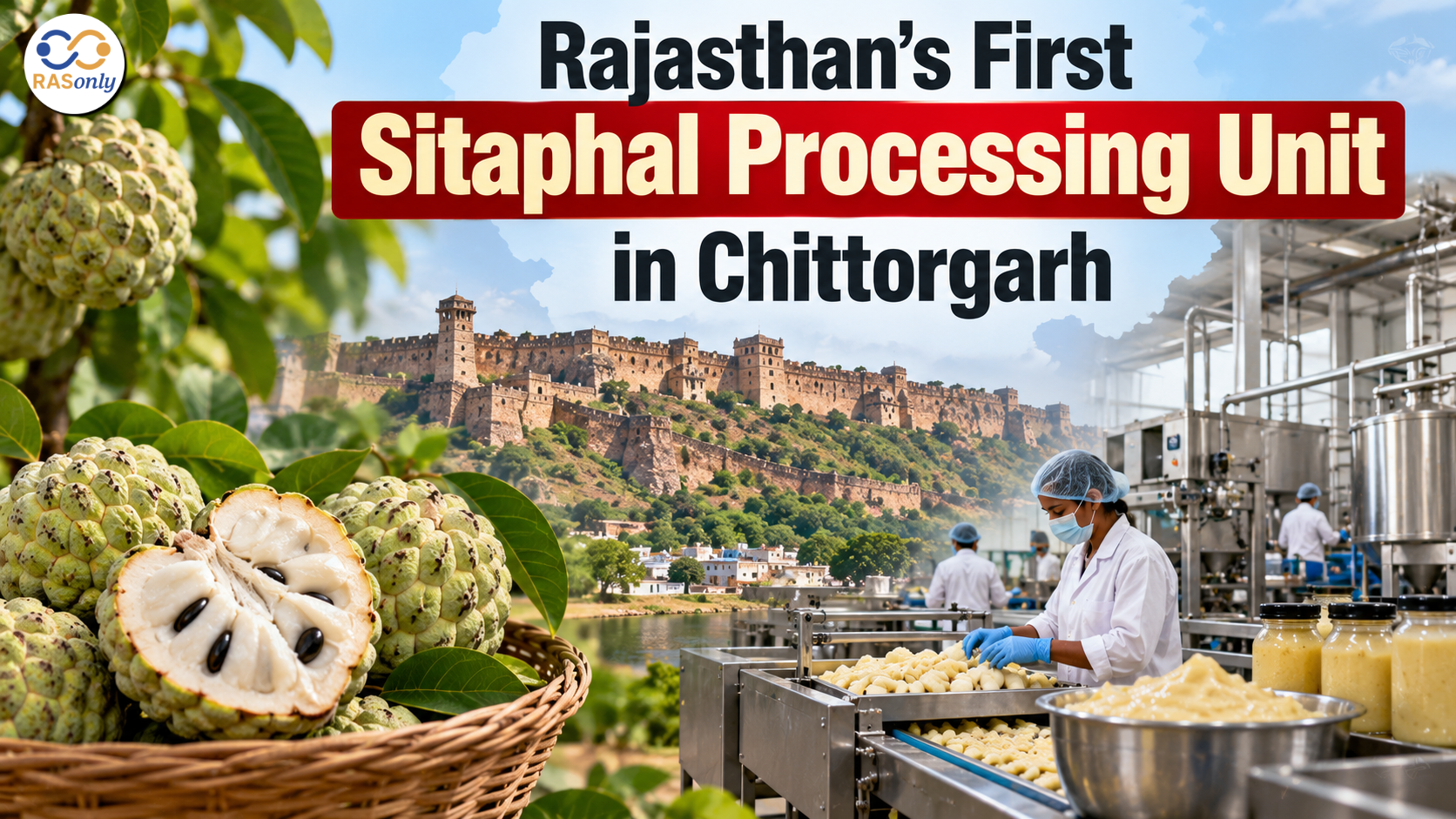
Rajasthan’s First Sitaphal Processing Unit in Chittorgarh
October 19, 2026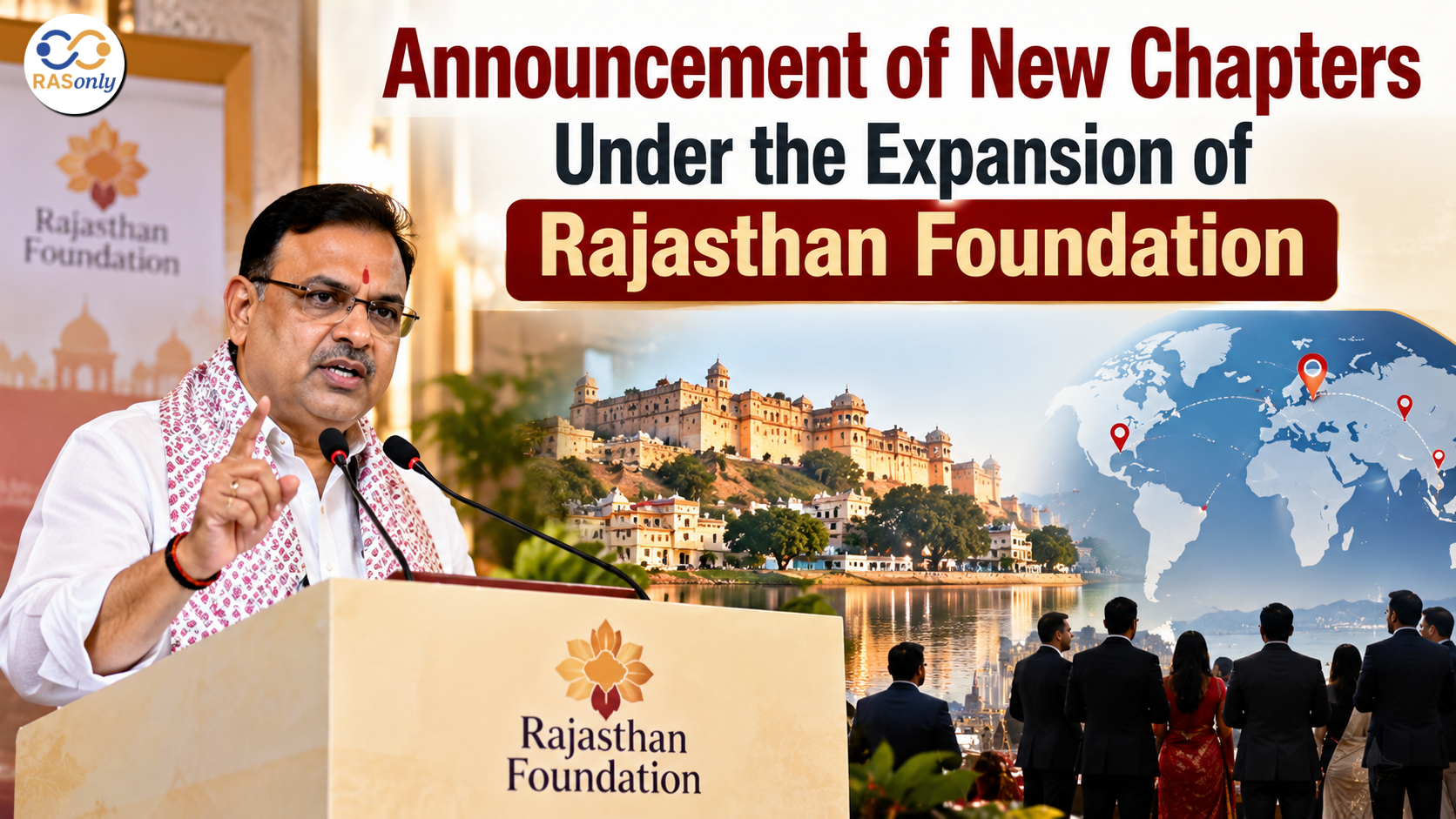
Rajasthan Foundation Expansion New Chapters Announced
October 19, 2026
Continuous Biomass Torrefaction Reactor
October 17, 2026