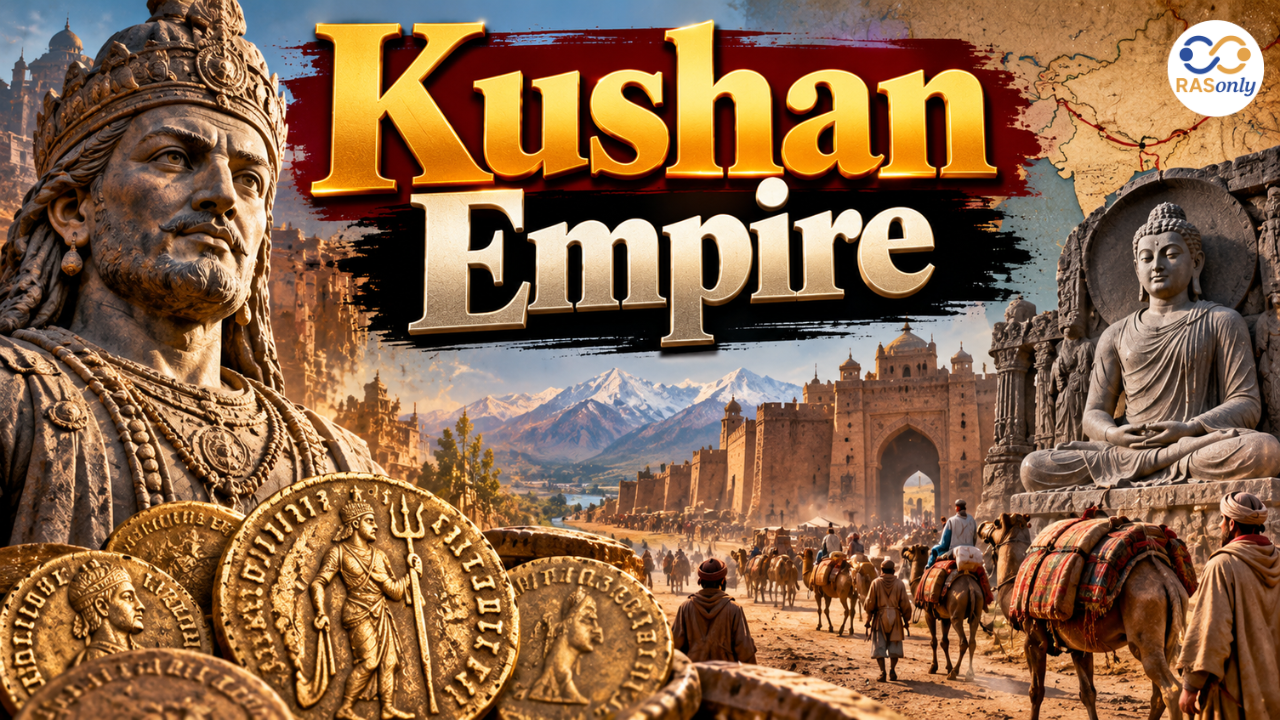
Kushan Empire: History, Rulers, Administration, Economy, Art, Decline
RPSC RAS Interview District-Wise Questions: Complete Preparation Guide

Get in Touch with RASonly!

RPSC RAS interview district-wise questions catch many candidates off guard simply because they seem too basic to prepare for. Yet the board treats district knowledge as a direct test of awareness and administrative thinking. This guide walks you through the exact categories panels ask about - geography, history, culture, economy, and governance - along with real sample questions, so you walk into your interview genuinely ready, not guessing.

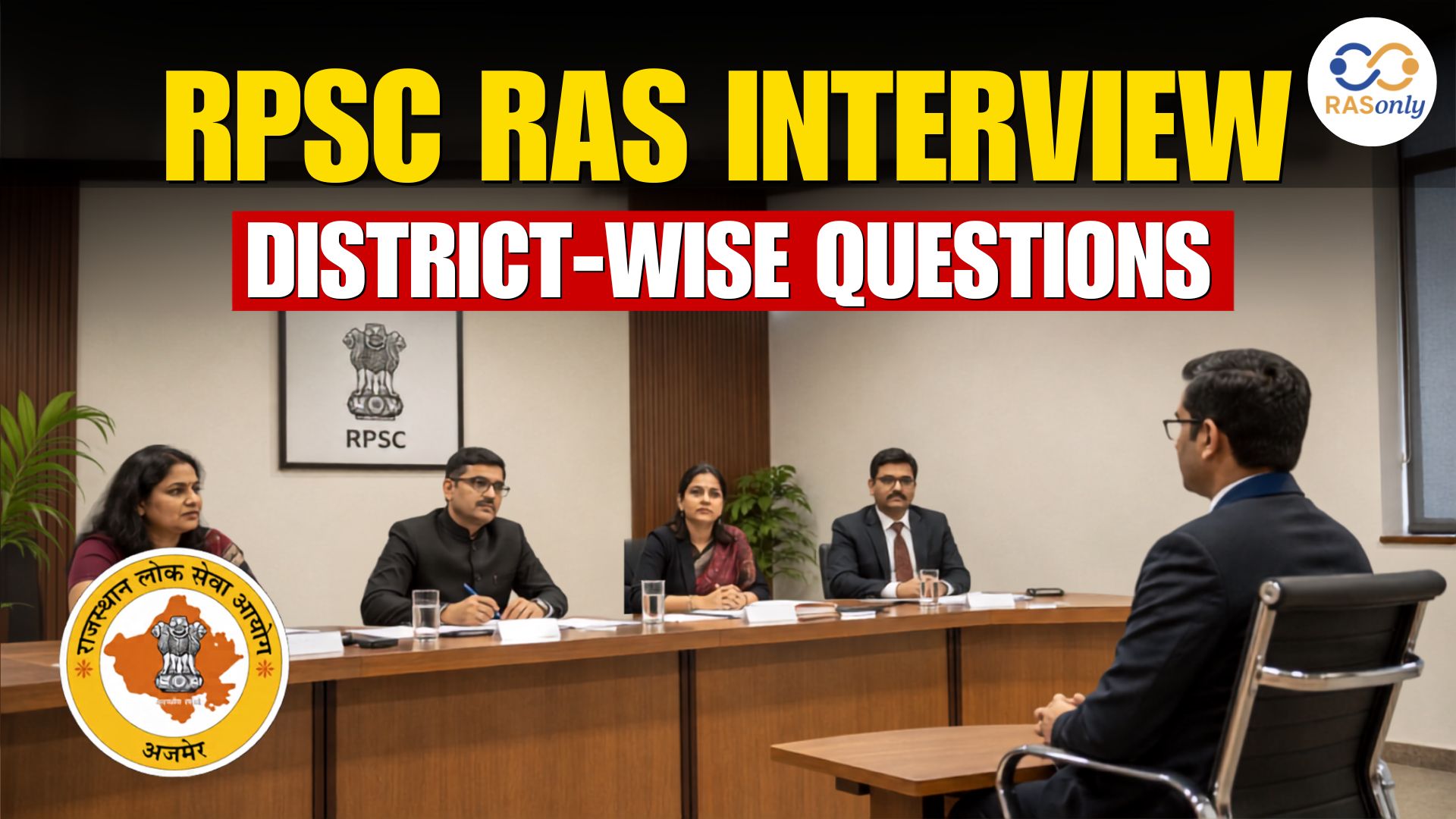
If you've cleared the RAS Mains and are now staring down the interview stage, there's one thing almost every successful candidate will tell you: know your district inside out. The RPSC board almost always dedicates a chunk of the interview to your home district, your posting preference district, or a district mentioned in your application form. It's one of the most predictable parts of the interview - and also one of the most neglected, because candidates spend months on GK and current affairs but barely revisit the district gazetteer.
This guide breaks down exactly what kind of district-related questions come up in the RAS interview, organized by category, with real example questions so you can build your own preparation notes around it.
Why the Board Asks District-Specific Questions
The interview panel isn't trying to trip you up. They're checking three things:
- Do you actually know the place you're from (or the place you might administer)?
- Can you connect local facts to broader administrative or policy issues?
- How do you communicate under a bit of pressure about something you're supposed to already know?
A candidate who fumbles basic facts about their own district raises an obvious red flag - it suggests either poor preparation or a disconnect from local reality, both of which matter a lot for someone who may end up as a Collector, SDM, or Tehsildar in a similar setting.
Categories of District-Wise Questions Asked in RAS Interview
1. Geographical Introduction
- This is almost always the opening question - a way to ease you in before the tougher stuff.
- Give a brief geographical introduction of your district.
- Which districts border your district?
- What is the total area and population of your district as per the last census?
- What is the terrain like - hilly, desert, plain, or riverine?
- Which climatic zone does your district fall under?
2. Rivers, Water Bodies and Irrigation
- Rajasthan's water scarcity makes this a favourite topic for panels, especially if you're from a desert or semi-arid district.
- Which rivers flow through your district?
- Name the major dams, lakes, or reservoirs in your district.
- What are the main sources of irrigation there - canal, tube well, or traditional water harvesting structures like johads and baoris?
- Is there any ongoing water conservation project in your district?
3. History and Historical Background
- What is the historical background of your district?
- Which dynasty or ruling family historically governed this region?
- Are there any forts, palaces, or historical monuments of importance?
- Was your district associated with any freedom struggle movement or significant historical event?
4. Administrative Setup
- How many tehsils, sub-divisions, and panchayat samitis are there in your district?
- Who is the current District Collector / SP of your district?
- What is the difference between a district headquarters and a divisional headquarters - and which is your district?
- Name any special administrative unit (like a Municipal Corporation, Cantonment Board, or Special Area Development Authority) present there.
5. Agriculture, Industry and Economy
- What are the major crops grown in your district?
- Which industries - mining, textile, handicraft, agro-based - are prominent there?
- Is your district known for any particular mineral or natural resource?
- What is the economic backbone of the district - agriculture, tourism, industry, or services?
6. Culture, Fairs, and Festivals
- Which fairs and festivals are unique to your district?
- Tell us about any local folk deity, tradition, or community specific to the region.
- Is there a distinct dialect, art form, or handicraft associated with your district?
- Name any famous folk dance or music form native to the area.
7. Tourism and Monuments
- What are the major tourist attractions in your district?
- Is there a UNESCO World Heritage Site, wildlife sanctuary, or national park located there?
- How is tourism contributing to the local economy?
- What steps, in your opinion, could improve tourism infrastructure in your district?
8. Notable Personalities
- Which freedom fighters, poets, saints, or historical figures belong to your district?
- Has any Padma Shri, Padma Bhushan, or national award recipient come from your district?
- Are there any well-known sportspersons, artists, or bureaucrats from the region?
9. Development, Government Schemes and Current Issues
- What are the major development challenges facing your district right now?
- Name a government scheme that has been particularly impactful in your district.
- Is there any ongoing infrastructure project - highway, railway line, industrial corridor - passing through it?
- If you were posted as Collector of your own district, what would be your top priority?
10. Wildlife and Environment
- Is there any wildlife sanctuary, tiger reserve, or biosphere reserve in your district?
- What environmental issues - deforestation, groundwater depletion, pollution - is your district currently facing?
- Any recent afforestation or environmental conservation drive undertaken there?
How to Prepare District-Wise Questions Effectively
- Start with the district gazetteer or official district website - most Rajasthan districts have a government portal with updated statistics, administrative structure, and schemes.
- Make a one-page fact sheet for your district covering geography, history, economy, culture, and current affairs. Keep it to bullet points, not paragraphs - you need recall speed, not essay writing.
- Follow local newspapers for the last three to six months to stay updated on ongoing projects, controversies, or achievements tied to your district.
- Practice saying it out loud. Interview panels respond to confident, structured answers more than encyclopedic ones. Two clear sentences beat five rambling ones.
- Connect facts to administration. If asked about a problem in your district, don't just describe it - mention what steps are being taken or what you'd suggest as an officer. This shows administrative thinking, which is exactly what the panel is evaluating.
Conclusion - District-wise RPSC Interview Questions
District-wise questions in the RAS interview aren't meant to test rote memory - they're testing whether you understand where you come from and how you'd think as an administrator responsible for a similar place. Treat your district preparation the same way you'd treat a mains answer: structured, factual, and tied back to governance. Candidates who walk in with a clear, confident picture of their district almost always leave a stronger impression than those who rely purely on generic GK.
If you're preparing for RAS 2026, start your district notes early - it's one section of the interview where preparation directly and visibly pays off.
Important Links
FAQs - District-wise RPSC Interview Questions
The board wants to check whether you're genuinely aware of your surroundings and can link local facts to administrative thinking - something every future officer needs.
Usually your home district, but sometimes the district mentioned in your application form or your graduation/work location can come up too.
Build a one-page fact sheet covering geography, history, economy, culture, and recent news for your district, and revise it a few days before the interview.
Both. Facts matter, but panels are also watching how you connect those facts to real administrative issues and possible solutions.
Stay calm and honest. Saying "I'm not certain about that specific detail" is far better than guessing incorrectly or rambling.

BEST SELLER
🏆 PRELIMS
RAS Pass
Prelims focused Hindi & English
₹399
✓
Prelims Topic-Wise Tests
✓
Subject-Wise Tests
✓
Full-Length Prelims Tests
✓
Daily Current Affairs Tests
✓
Prelims PYQs Tests
✓
Detailed Solutions & Analysis
✓
All Rajasthan Ranking
✓
Unlimited Reattempts
✓
Mains Tests
✓
Hindi & English Tests
✓
All Rajasthan Ranking
Trusted by 5,000+ Students
Post Category
- RAS Salary
- Result
- RAS Admit Card
- RAS Job
- RAS Cutoff
- Preparation Tips
- RAS Answer Key
- RAS Exam Analysis
- RAS Syllabus
- RAS Previous Year Papers
- RPSC RAS Exam Pattern
- RAS Interview
- RAS Exam Date
- RAS Vacancy
- RAS Test Series
- RAS Best Books
- RAS Preparation Resources
- RAS Coaching Centre
- History
- Polity
- Geography
- Economics
- Science
- Art and Culture
- RPSC RAS Application Form
- RPSC RAS Notification
- RAS Eligibility Criteria
- UPSC Exam
- RPSC RAS Mains
Visit Our RASonly Offline Center
Our Expert Faculty

Bhunesh Sir
Current Affairs · 13+ Yrs

Aamir Khan Sir
RAS-2017 · IIM Ahm.

Akash Sir
Polity · 8+ Yrs
Free Resources
Official Mobile App

RASOnly App
by OTSAdda · Free
Full Video Lectures
Mock Tests & PYQs
Daily Current Affairs
AI Mock Interview
Free Download · No subscription needed to install
RAS 2024 Toppers — RASonly
Rank 2
Virendra Charan
Rank 9
Bhoopinder Singh
Rank 26
Aanchal Nagpal
Rank 33
Lokendra Singh
Rank 45
Amar Rathore
Rank 46
Manasvini Verma

Join RASonly WhatsApp Community
Get daily current affairs, exam alerts, free study material and tips from expert faculty — right on WhatsApp.
Join for Free →RASonly Interview Guidance Program

Mr. Ashok Jain
Ex-Chief Secretary Govt of Rajasthan
- IAS officer of the 1981 batch, Rajasthan cadre.
- Passionate about mentoring the next generation of RAS officers with real-world insights.
- Got retired in Dec 2017 from the post of Chief Secretary of the state of Rajasthan.

Mr. Guru Charan Rai
Ex-ASP / SP in Jaisalmer
- Guru Charan Rai, IPS (Retd), retired as Inspector General of Police (Security), Rajasthan, Jaipur in 2017.
- Served as ASP and SP in Jaisalmer, Nagaur, Sri Ganganagar, Sawai Madhopur, Dausa, Sikar, and Karauli.
- He also held key positions as DIGP and IGP in the Law and Order division.

Mr. Rakesh Verma
Ex-IAS Officer, B.Tech, MBA, and M.A. (Economics)
- IAS officer of the 1981 batch and retired in Chief Secretary Rank.
- Civil servant of high repute and vast experience.
- Has been teaching UPSC CSE subjects for the last six years.
Daily Current Affairs for RAS Exam Preparation 2026
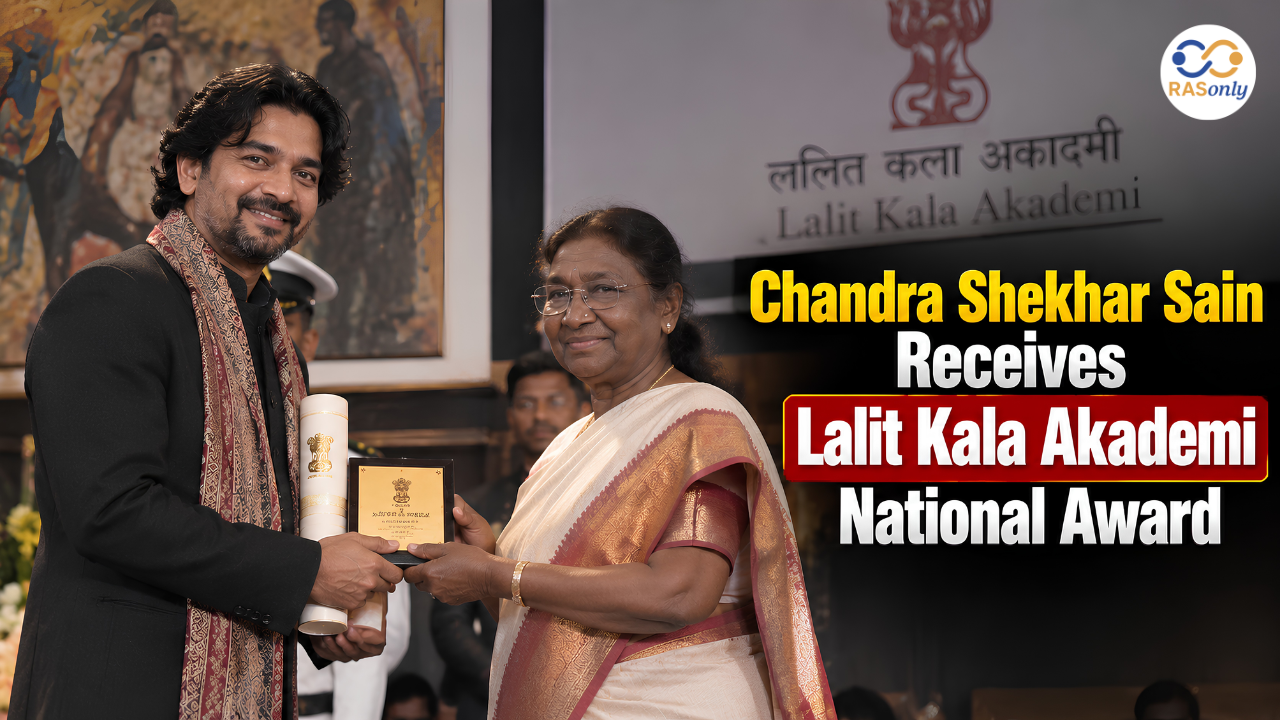
Chandra Shekhar Sain Receives Lalit Kala Akademi National Award
October 01, 2026
Jodhpur to Get India’s Third Dedicated Tropical Medicine Institute
October 01, 2026
Establishment of the Aesthetic Office
September 30, 2026