Chola Dynasty: Capital, Founder, Kings, Time Period and History
Union Public Service Commission, Role, Powers, Article, Key Functions

Get in Touch with RASonly!

The Union Public Service Commission (UPSC), established under Article 315, is India's apex recruitment body for civil services. Governed by Articles 315-323, it conducts examinations, advises on appointments, promotions, and disciplinary matters. With roots tracing back to 1926, UPSC ensures merit-based, transparent recruitment while maintaining constitutional independence and accountability to Parliament through its annual reports.


The Union Public Service Commission (UPSC) is the foremost and supreme body in India to conduct recruitment examinations for the Union government for public services. UPSC is an independent institution under Article 315 of the Constitution of India to conduct the recruitment and selection process of Civil Services based on fairness, merit and transparency. The rules and structure of its constitution are in the following Articles from the Constitution, namely, Articles 315 to 323. The Commission also has an important function in the recruitment for certain kinds of services in the Union, and it advises on appointments, promotions, transfers and disciplinary measures in certain cases. UPSC has certain constitutional safeguards that ensure its independence and credibility in India's public administration.
Origin of Public Service Commission in India
- 1853 – Introduction of Competitive Examination: The competitive system was first introduced for the Indian Civil Service (ICS). That was an early step on the road from patronage to meritocracy.
- 1919 – Government of India Act: The Government of India Act, 1919, established a Public Service Commission in India. It was the first significant legal acknowledgement of what an independent body should do for public service recruitment.
- 1923 – Lee Commission: or Royal Commission on the Superior Civil Services in India. The Lee Commission studied civil service recruitment and proposed a Public Service Commission.
- 1926 – First Public Service Commission: On 1 October 1926, it was founded with the support of Sir Ross Barker, its first Chairman.
- 1935 – Federal Public Service Commission: The Central level and three Provincial levels were introduced by the Government of India Act, 1935 via the Federal Public Service Commission.
- The First Chairman of the Union Public Service Commission: The UPSC was established under Article 315 with the implementation of the Constitution of India on 26 Jan 1950.
Constitutional Provisions Related to UPSC
The Union Public Service Commission (UPSC) is established by Part XIV, Chapter II of the Constitution of India. The constitutional status of Public Service Commissions, composition, appointment, term, removal, powers, infrastructure and reporting features are established in Articles 315 to 323. These arrangements are intended to uphold the autonomy and neutrality of UPSC while enabling it to carry out its task of recruiting personnel and providing advice.
Article 315 – Establishment of Public Service Commissions
- Providing for the establishment of Public Service Commissions – Article 315
- Constitution of India Article 315: Public Service Commission for the Union and States.
- The Union-level Commission is referred to as the Union Public Service Commission (UPSC), and there are commissions at the states' level which are known as State Public Service Commissions (SPSCs).
- The Constitution further allows for a Joint State Public Service Commission (JPSC) of two or more states, as long as the need is created by Parliament through law, upon the resolutions passed by the state legislatures concerned.
Article 316 – Appointment, Tenure and Eligibility
- Appointment and Term of office of Chairman and members (Article 316)
- The Chairman and members of UPSC are appointed by the President of India.
- A member serves for a period of six years, or till he/she attains the age of 65 years, whichever is earlier.
- A member may resign at any time before the expiration of his or her term by presenting written resignation to the President.
- The Constitution does not require an educational qualification or a competitive exam to be eligible to become Chairman or a member of UPSC.
- Importantly, one-half of the members of a Public Service Commission must be persons who have held office under the Government of India or a State Government for at least 10 years
Article 317 – Removal and Suspension of Members
The safeguards with respect to the chairperson and members of the Union Public Service Commission being removed or suspended have been set out in Article 317
The President may, on specific constitutional grounds, remove a member. However, in case of misbehaviour, the President may refer the matter to the Supreme Court of India for inquiry.
If, after a proper inquiry, the Supreme Court finds that the Chairman or a member is to be removed, then the President may issue an order for removal.
A member can also face removal in circumstances such as:
- Being declared insolvent.
- Engaging in paid employment outside of official duties during the term.
- Being deemed incapable of completing the term due to physical or mental incapacity.
Article 318 – Composition and Service Conditions
- Power to make regulations as to the number of members of UPSC, conditions of service and staff of Commission Article 318.
- A notable point is that it does not fix a specific number of UPSC members.
- Thus, the structure of the Commission is governed by the Constitution and rules made under Article 318.
- Finally, this provision also allows the Commission to create an administrative structure and personnel required for its functions.
Article 319: Limitations on Future Employment
- Article 319 of the Constitution also prohibits appointment for some time period after completion of tenure as Chairman or member of a Public Service Commission.
- For example, a person who has served as former Chairman of UPSC will not be eligible for future employment either under the Government of India or a State Government.
- Any Member other than the Chairman of UPSC may be eligible for appointment as Chairman of UPSC or as a Chairman of a State Public Service Commission under constitutional provisions.
- The restrictions aim to limit the potential for members to defer decisions during their time in office while expecting government jobs later on.
Article 320 – Functions of UPSC
One of the most significant constitutional provisions for UPSC functions is Article 320.
It conducts examinations for appointments to Union services and advises the government on service-related matters.
Its functions include:
- Recruitment of personnel into various Union services through specified examinations.
- Advising on methods of recruitment.
- Guiding basic tenets to be adhered to while making appointments, promotions and transfers.
- Consulting on disciplinary matters related to government employees.
- Fetting for proposals on the reimbursement of legal defence costs incurred by government servants in certain cases.
- Advising in relation to claims for pensions or compensation for deaths and injuries relating to Pensions, Compensation to Persons affected by Armed Forces (except while on duty).
Article 321 - Extension of Functions
- The legislature can also be defined in Article 321, which allows Parliament to extend the powers of Union Public Service Commission through legislation.
- This implies that Parliament can confer more tasks on the Commission than those explicitly stated in Article 320.
- It gives flexibility in adapting the UPSC's role to the emerging administrative needs.
Article 322 – Financial Independence
- Financial provisions for the Public Service Commissions.
- The expenditure incurred by the UPSC in the discharge of its functions is charged on the Consolidated Fund of India: All salaries, allowances and pensions payable to or in respect of members and staff.
- This is important because expenditure charged on the Consolidated Fund does not need Parliament to vote in the same way as voted expenditure.
- This partnership reinforces the financial autonomy of UPSC and facilitates it to perform its functions independently.
Article 323 – Annual Report
- UPSC has to prepare an annual report regarding its work and submit it to the President under Art 323.
- The President lays this report before both Houses of Parliament.
- Wherever consultation with UPSC is constitutionally required, if the advice of the Commission is not accepted, then in such cases, the government has to produce a memorandum explaining why its recommendations were not found acceptable.
- This reporting mechanism ensures accountability and transparency between the UPSC and the Union Government.
Functions and Responsibilities of Union Public Service Commission
- Conducts Recruitment Exams: UPSC holds big examinations for the recruitment of various Union services and posts such as in the areas of Civil Services, Engineering Services, Defence Service, Medical Service and other specialised services.
- Recommends Methods of Recruitment: The Union Public Service Commission, under Article 320, recommends methods and procedures for recruitment to Union services and civil posts to the government.
- Advice regarding Appointments and Promotions: The Commission is consulted when the approach for appointments, promotions and transfers between services is to be followed in every case where consultation is prescribed by this Act.
- Advises on Disciplinary matters: Decisions in designated disciplinary cases of government servants are advised by UPSC, thus maintaining procedures and fair play in service administration.
- Advice concerning claims for legal expenses: The Commission may advise on claims made by government employees seeking repayment of legal expenses incurred in respect of proceedings relating to the performance of their official duties.
- Advises on Legal Expense Claims: It can advise on specific claims regarding pensions or compensation for injuries sustained in the course of government service.
- Performs Additional Functions: It performs additional functions (i) as per the provisions of Article 321; the Union Public Service Commission can also be assigned extra roles by passing legislation from Parliament
- Ensures Institutional Independence: The constitutional provisions regarding UPSC's tenure, removal, finances, and post-retirement jobs ensure the independent functioning of UPSC.
- Submits Annual Report: UPSC submits its annual report under Article 323 of the Constitution to the President, who lays it before Parliament.
- Provides for Merit-Based Recruitment: UPSC functions as an advisory body and so, through its constitutional powers of enrolment, seems to facilitate a professional, neutral and merit-oriented public service system.
List of Union Public Service Commission Chairpersons: 1926 to 2026
| Period | Chairperson | Tenure | Significance |
|---|---|---|---|
| 1926–1932 | Sir Ross Barker | 1 Oct 1926 – Aug 1932 | First Chairman of the Public Service Commission established in British India. |
| 1932–1936 | Sir David Petrie | Aug 1932 – 1936 | Led the Commission during its early institutional development. |
| 1937–1942 | Sir Eyre Gorden | 1937 – 1942 | Chaired the Commission during the transition toward the Federal Public Service Commission framework. |
| 1942–1947 | Sir F.W. Robertson | 1942 – 1947 | Headed the Commission during the final phase of British rule. |
| 1947–1949 | H.K. Kripalani | 1 Apr 1947 – 13 Jan 1949 | Led the Commission during India's transition from colonial administration to independent governance. |
| 1949–1955 | R.N. Banerjee | 14 Jan 1949 – 9 May 1955 | Led the Commission during the establishment of the constitutional framework of independent India. |
| 1955 | N. Govindarajan | 10 May – 9 Dec 1955 | Continued the development of UPSC as an independent constitutional institution. |
| 1955–1961 | V.S. Hejmadi | 10 Dec 1955 – 9 Dec 1961 | Oversaw the Commission during the consolidation of post-Constitution recruitment. |
| 1961–1967 | B.N. Jha | 11 Dec 1961 – 22 Feb 1967 | Guided the Commission during the expansion of India's public-service system. |
| 1967–1971 | K.R. Damle | 18 Apr 1967 – 2 Mar 1971 | Continued UPSC's constitutional recruitment and advisory functions. |
| 1971–1973 | R.C.S. Sarkar | 11 May 1971 – 1 Feb 1973 | Led UPSC during a period of continuing expansion in Union services. |
| 1973–1979 | A.R. Kidwai | 5 Feb 1973 – 4 Feb 1979 | Strengthened continuity in Union-level recruitment and selection. |
| 1979–1985 | M.L. Shahare | 16 Feb 1979 – 16 Feb 1985 | Oversaw regular recruitment and advisory responsibilities of the Commission. |
| 1985–1990 | H.K. Capoor | 18 Feb 1985 – 5 Mar 1990 | Led UPSC through an important period in the growth of modern public administration. |
| 1990–1992 | J.P. Gupta | 5 Mar 1990 – 2 Jun 1992 | Maintained continuity in UPSC's examination and advisory functions. |
| 1992–1996 | R.M. Bathew (Kharbuli) | 23 Sep 1992 – 23 Aug 1996 | Became one of the notable women to head the Commission. |
| 1996 | S.J.S. Chhatwal | 23 Aug – 30 Sep 1996 | Served during a brief leadership transition. |
| 1996–1998 | J.M. Qureshi | 30 Sep 1996 – 11 Dec 1998 | Continued the Commission's constitutional recruitment responsibilities. |
| 1998–2002 | Lt. Gen. Surinder Nath | 11 Dec 1998 – 25 Jun 2002 | Brought extensive administrative and defence-service experience to UPSC leadership. |
| 2002–2003 | P.C. Hota | 25 Jun 2002 – 8 Sep 2003 | Led the Commission during discussions around public-service and recruitment reforms. |
| 2003–2005 | Mata Prasad | 8 Sep 2003 – 4 Jan 2005 | Continued UPSC's role in merit-based recruitment to Union services. |
| 2005–2006 | S.R. Hashim | 4 Jan 2005 – 1 Apr 2006 | Oversaw the Commission's recruitment and advisory responsibilities. |
| 2006–2007 | Gurbachan Jagat | 1 Apr 2006 – 30 Jun 2007 | Continued institutional functioning of UPSC's examination system. |
| 2007–2008 | Subir Dutta | 30 Jun 2007 – 16 Aug 2008 | Led UPSC during a period of increasing modernisation of recruitment processes. |
| 2008–2014 | D.P. Agrawal | 16 Aug 2008 – 16 Aug 2014 | Served a full six-year term and oversaw UPSC during a major period of examination-system development. |
| 2014 | Rajni Razdan | 16 Aug – 22 Nov 2014 | Continued the tradition of women leading the constitutional Commission. |
| 2014–2016 | Deepak Gupta | 22 Nov 2014 – 20 Sep 2016 | Led UPSC's examination and recruitment activities during a period of administrative modernisation. |
| 2017–2018 | David R. Syiemlieh | 3 Apr 2017 – 21 Jan 2018 | Served as Chairman during the Commission's continuing institutional expansion. |
| 2018–2020 | Arvind Saxena | 29 Nov 2018 – 7 Aug 2020 | Led UPSC during a period of increasing use of technology in examination administration. |
| 2020–2022 | Pradeep Kumar Joshi | 7 Aug 2020 – 4 Apr 2022 | Guided UPSC during the challenging COVID-19 period and its impact on examinations. |
| 2022–2024 | Manoj Soni | 5 Apr 2022 – 31 Jul 2024 | Served as Acting Chairman before becoming Chairman; led the Commission through a period of examination-system transition. |
| 2024–2025 | Preeti Sudan | 1 Aug 2024 – 29 Apr 2025 | Continued the Commission's constitutional recruitment role and its tradition of senior administrative leadership. |
| 2025–2026 | Dr. Ajay Kumar | From 15 May 2025 | Current Chairman; leads UPSC during its centenary-era phase and the ongoing modernisation of recruitment processes. |
Also Read
| Parliament of India | The President of India (Articles 52-62) |
| Supreme Court & Judicial Review | Comptroller and Auditor General of India (CAG) |
| Union Executive | Preamble of the Indian Constitution |
FAQs on Union Public Service Commission (UPSC)
The first Public Service Commission in India was established on 1 October 1926. It was the beginning of the institutional system that eventually evolved into the present-day UPSC.
Sir Ross Barker was the first Chairman of the Public Service Commission established in 1926.
It was established to create a more organised system for dealing with recruitment and service-related matters in the higher public services. It marked an important step toward institutionalised civil-service recruitment in India.
The Government of India Act, 1935 provided for a Federal Public Service Commission along with Provincial Public Service Commissions. This strengthened the institutional framework for public-service recruitment.
The Federal Public Service Commission became the Union Public Service Commission (UPSC) when the Constitution of India came into force on 26 January 1950.
BEST SELLER
🏆 PRELIMS
RAS Pass
Prelims focused Hindi & English
₹399
✓
Prelims Topic-Wise Tests
✓
Subject-Wise Tests
✓
Full-Length Prelims Tests
✓
Daily Current Affairs Tests
✓
Prelims PYQs Tests
✓
Detailed Solutions & Analysis
✓
All Rajasthan Ranking
✓
Unlimited Reattempts
✓
Mains Tests
✓
Hindi & English Tests
✓
All Rajasthan Ranking
Trusted by 5,000+ Students
Post Category
- RAS Salary
- Result
- RAS Admit Card
- RAS Job
- RAS Cutoff
- Preparation Tips
- RAS Answer Key
- RAS Exam Analysis
- RAS Syllabus
- RAS Previous Year Papers
- RPSC RAS Exam Pattern
- RAS Interview
- RAS Exam Date
- RAS Vacancy
- RAS Test Series
- RAS Best Books
- RAS Preparation Resources
- RAS Coaching Centre
- History
- Polity
- Geography
- Economics
- Science
- Art and Culture
- RPSC RAS Application Form
- RPSC RAS Notification
- RAS Eligibility Criteria
- UPSC Exam
- RPSC RAS Mains
Visit Our RASonly Offline Center
Our Expert Faculty

Bhunesh Sir
Current Affairs · 13+ Yrs

Aamir Khan Sir
RAS-2017 · IIM Ahm.
Akash Sir
Polity · 8+ Yrs
Free Resources
Official Mobile App

RASOnly App
by OTSAdda · Free
Full Video Lectures
Mock Tests & PYQs
Daily Current Affairs
AI Mock Interview
Free Download · No subscription needed to install
RAS 2024 Toppers — RASonly
Rank 2
Virendra Charan
Rank 9
Bhoopinder Singh
Rank 26
Aanchal Nagpal
Rank 33
Lokendra Singh
Rank 45
Amar Rathore
Rank 46
Manasvini Verma

Join RASonly WhatsApp Community
Get daily current affairs, exam alerts, free study material and tips from expert faculty — right on WhatsApp.
Join for Free →RASonly Interview Guidance Program

Mr. Ashok Jain
Ex-Chief Secretary Govt of Rajasthan
- IAS officer of the 1981 batch, Rajasthan cadre.
- Passionate about mentoring the next generation of RAS officers with real-world insights.
- Got retired in Dec 2017 from the post of Chief Secretary of the state of Rajasthan.

Mr. Guru Charan Rai
Ex-ASP / SP in Jaisalmer
- Guru Charan Rai, IPS (Retd), retired as Inspector General of Police (Security), Rajasthan, Jaipur in 2017.
- Served as ASP and SP in Jaisalmer, Nagaur, Sri Ganganagar, Sawai Madhopur, Dausa, Sikar, and Karauli.
- He also held key positions as DIGP and IGP in the Law and Order division.

Mr. Rakesh Verma
Ex-IAS Officer, B.Tech, MBA, and M.A. (Economics)
- IAS officer of the 1981 batch and retired in Chief Secretary Rank.
- Civil servant of high repute and vast experience.
- Has been teaching UPSC CSE subjects for the last six years.
Related Post



Daily Current Affairs for RAS Exam Preparation 2026

Kundan Art Display in Hong Kong
October 23, 2026
Rajasthan International Folk Festival 2026
October 23, 2026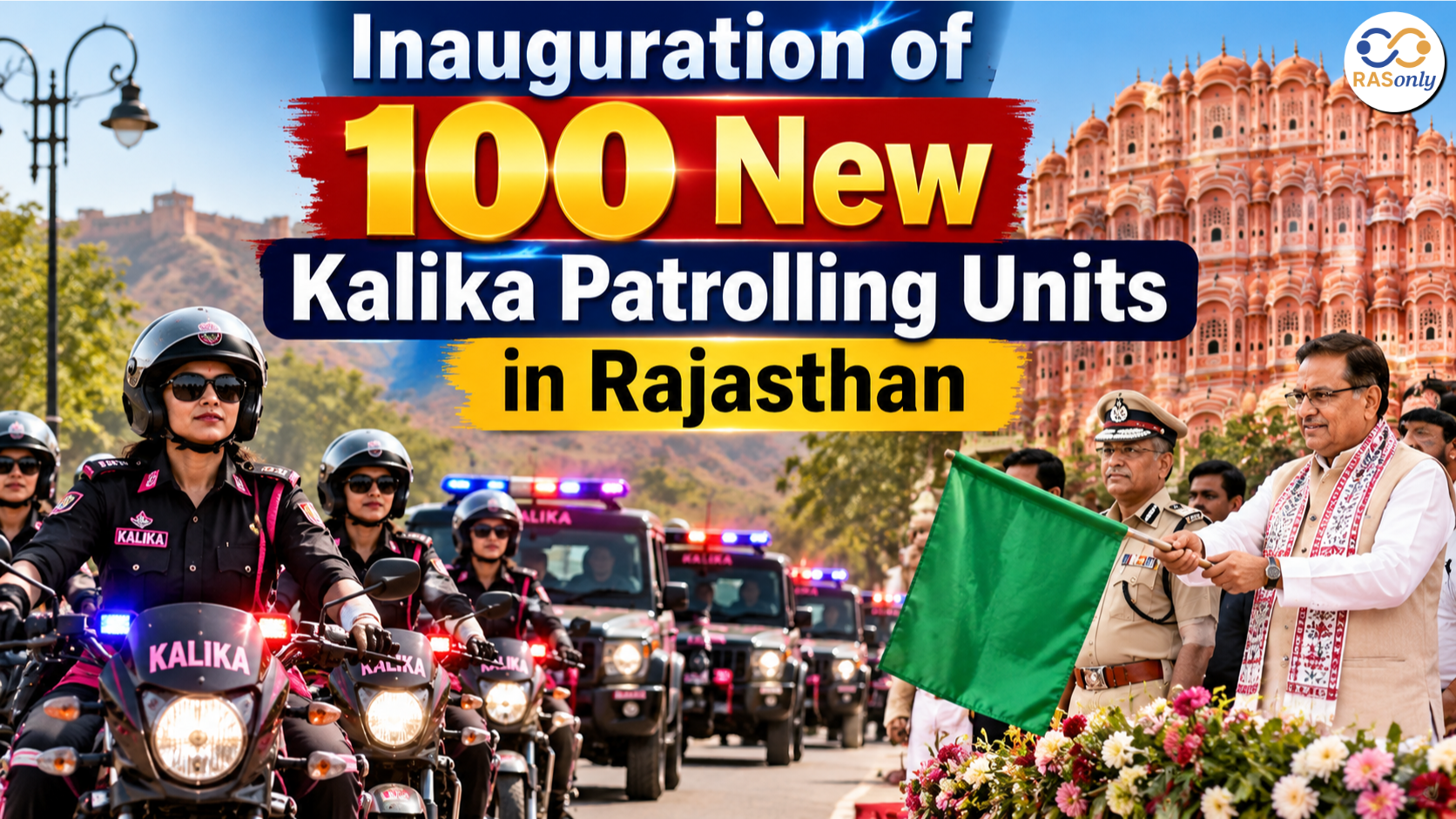
Inauguration of 100 New Kalika Patrolling Units in Rajasthan
October 21, 2026