Chola Dynasty: Capital, Founder, Kings, Time Period and History
Public Policy in India, Meaning, Types, Process, Importance and Challenges

Get in Touch with RASonly!

Public policy in India refers to government decisions, laws and programmes addressing social and economic issues across education, health, agriculture and welfare. Based on Theodore Lowi's classification, policies are distributive, regulatory, redistributive or constituent. Institutions like NITI Aayog, IIPA and NIPFP support policy research, while schemes like PM-KISAN and Ayushman Bharat implement these goals nationwide.

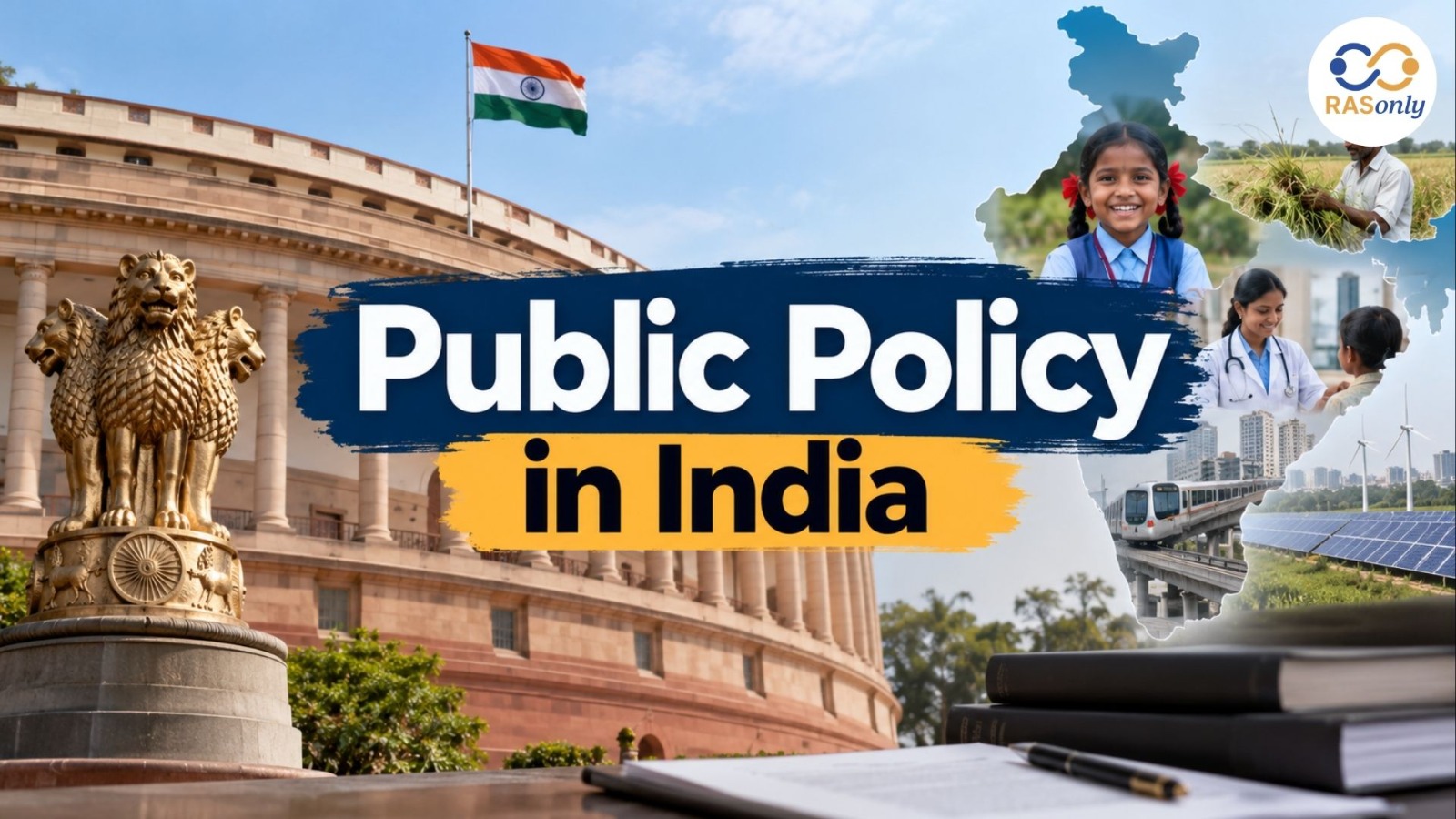
Public Policy in India: Government decisions, programmes, laws and strategic measures are taken to solve public issues and to meet the social and economic concerns of the general population. It encompasses education, health, agriculture, employment, environment, welfare and economic development. The effectiveness of public policy depends not only on the enactment of a law, but also on coordination, evaluation, and implementation. The policymaking process in India includes decision-making bodies like the Union government, State government, Parliament, bureaucracy, judiciary, local government bodies, and other policy stakeholders. The general legal and institutional context for the formulation and implementation of these policies
Types of Public Policy
Public policies are commonly classified by how government authority is used and how the benefits, costs or responsibilities are distributed across society. Theodore J. Lowi’s widely used classification identifies four major types:
1. Distributive Policy
- Provides public benefits, services or resources to specific groups, sectors or regions.
- The expenses are typically distributed throughout the general public.
- Examples: public infrastructure projects, agricultural support and agricultural and science scholarships.
2. Regulatory Policy
- Sets guidelines, standards or limitations that affect the actions of people, businesses or institutions.
- It is frequently applied in public safety, markets, health and environmental protection.
- Examples: pollution-control standards and financial-market regulations.
3. Redistributive Policy
- Aims to redistribute income, resources or opportunities among various groups of society.
- It has a close connection with tackling socio-economic inequalities.
- Examples: Progressivity of taxes, specific support for disadvantaged groups.
4. Constituent Policy
- Concerned with the formation, organisation, or reorganisation of public groups and government.
- It explains the distribution of responsibility and the powers of the state.
- Institutional changes are examples of institutional reforms and changes that impact the structure of local governance.
Major Institutions for Public Policy
The public policy environment in India comprises government think-tanks, government bodies and institutions engaged in policy research, evaluation and implementation. These are some of the top institutions:
- NITI Aayog (National Institution for Transforming India): It is the Government of India's top policy think tank. It gives strategic and technical inputs to the Centre, States and UTS and fosters cooperative federalism.
- Indian Institute of Public Administration (IIPA): IIPA was founded in 1954 to specialise in public administration, governance, public policy research, training and capacity building.
- National Institute of Public Finance and Policy (NIPFP): It was established in 1976 and is engaged in research in public economics, taxation, public expenditure, fiscal management and intergovernmental finance.
- National Council of Applied Economic Research (NCAER): One of the leading independent economic research institutes that provides research and evidence for economic and public-policy-making decisions.
- Indian Council of Social Science Research (ICSSR): Assists with social-science research which is useful in understanding governance, society and public-policy issues.
- Centre for Policy Research (CPR): Public-policy research organisation, specialising in the fields of governance, law, economy, environment and social policy.
Major Government Schemes in India
| Scheme | Launch Date | Who is Eligible? | Financial Benefit / Coverage | Significance in 2026 |
|---|---|---|---|---|
| MGNREGA | 2 February 2006 | Rural households whose adult members volunteer to undertake unskilled manual work | Up to 100 days of guaranteed wage employment per rural household in a financial year, subject to the Act | Acts as a rural employment and livelihood-security mechanism and creates community-level assets. |
| PM Jan Dhan Yojana (PMJDY) | 28 August 2014 | Individuals who do not have a bank account can open a basic savings account, subject to banking/KYC requirements | Basic banking access; eligible accounts can receive DBT and other financial benefits | Provides the financial-account infrastructure supporting DBT, digital payments and financial inclusion. |
| Swachh Bharat Mission | 2 October 2014 | Households, communities and institutions covered under the respective rural/urban components | Benefits are delivered through sanitation infrastructure, cleanliness and waste-management interventions rather than a uniform cash payment | Its 2026 relevance includes sanitation sustainability, waste management and public-health outcomes. |
| Beti Bachao Beti Padhao | 22 January 2015 | Girls and communities covered through programme interventions; it is not a universal cash-transfer scheme | Primarily awareness, mobilisation and multi-sectoral interventions rather than a fixed individual cash benefit | Supports gender equality, girls' education and improvement in social attitudes towards the girl child. |
| PMAY–Urban 2.0 | 2024 | Eligible urban families belonging to EWS/LIG/MIG categories and meeting housing-related conditions, including not owning a pucca house anywhere in India | Assistance varies by component and State/UT; PMAY-U 2.0 provides central assistance under its different verticals | 1 crore urban families are targeted under PMAY-U 2.0, making affordable housing a major 2026 urban-policy priority. |
| Pradhan Mantri Ujjwala Yojana (PMUY) | 1 May 2016 | Women aged 18+ from eligible poor households; household should not already have an LPG connection | Deposit-free LPG connection support; eligible beneficiaries also receive applicable government assistance/subsidy as notified | Promotes clean cooking energy, reducing dependence on traditional fuels and improving household welfare. Official PMUY data recorded over 10.56 crore connections by 31 August 2026. |
| PM Fasal Bima Yojana (PMFBY) | 18 February 2016 | Farmers growing notified crops in notified areas, subject to scheme/state conditions | Crop insurance; farmer's maximum premium share is 2% for Kharif, 1.5% for Rabi and 5% for annual commercial/horticultural crops | Provides a risk-management mechanism against crop losses, particularly important amid weather and climate risks. |
| PMAY–Gramin (PMAY-G) | 1 April 2016 | Eligible rural households identified under prescribed deprivation/eligibility criteria; households without a pucca house are central beneficiaries | Standard assistance is ₹1.20 lakh in plain areas and ₹1.30 lakh in hilly/difficult areas, with convergence support for basic amenities | Supports rural housing, asset creation and improved living conditions while targeting households facing housing deprivation. |
| Aspirational Districts Programme | January 2018 | Selected 112 aspirational districts, rather than individual beneficiaries | No standard individual cash transfer; development is driven through convergence, monitoring and outcome indicators | Important example of data-driven and outcome-based public policy, with district performance tracked across key development indicators. |
| Ayushman Bharat – PM-JAY | 23 September 2018 | Originally targeted poor and vulnerable families identified through prescribed deprivation/occupational criteria; all citizens aged 70+ are now eligible irrespective of income under the senior-citizen expansion | Up to ₹5 lakh per family per year for covered hospitalisation; for eligible 70+ senior citizens, the scheme provides the applicable ₹5 lakh cover irrespective of income | One of India's major health-financing interventions, reducing financial barriers to secondary and tertiary hospital care. |
| PM-KISAN | 24 February 2019 | Eligible landholding farmer families, subject to prescribed exclusion criteria | ₹6,000 per year, paid in three equal instalments of ₹2,000 through DBT | Provides predictable income support and demonstrates the role of direct transfers in agricultural policy. |
| Jal Jeevan Mission | 15 August 2019 | Rural households covered under the mission's implementation framework | Focus is on providing a Functional Household Tap Connection (FHTC) rather than a fixed cash payment | Makes household drinking-water access a core part of rural infrastructure, health and quality-of-life policy. |
| PM SVANidhi | 1 June 2020 | Eligible street vendors covered under the scheme's identification criteria | Working-capital credit support; subsequent lending tranches provide higher loan limits based on successful repayment | Brings informal street vendors into formal credit channels and supports urban livelihood resilience. |
| PM Gati Shakti | 13 October 2021 | Government ministries, departments and infrastructure agencies—not an individual-beneficiary scheme | No direct household cash benefit; provides an integrated infrastructure-planning framework | Improves coordination among infrastructure projects, supporting multimodal connectivity and logistics efficiency. |
| PM Vishwakarma | 17 September 2023 | Eligible traditional artisans and craftspeople working in the 18 notified trades, subject to scheme conditions | ₹15,000 toolkit incentive; collateral-free enterprise loans up to ₹3 lakh in two tranches, subject to conditions | Links traditional occupations with formal recognition, skills, credit, modern tools and market opportunities. |
| PM-JANMAN | 15 November 2023 | Particularly Vulnerable Tribal Group (PVTG) households/communities covered under the mission | Support is delivered through housing, roads, water, electricity, health, education and livelihood interventions rather than a single uniform cash payment | Represents a targeted last-mile development strategy for some of India's most vulnerable tribal communities. |
| PM Dhan-Dhaanya Krishi Yojana (PM-DDKY) | 2025 | Selected agricultural districts and their farming ecosystem; it is a district-focused development programme rather than an individual cash-transfer scheme | Focuses on coordinated interventions in agriculture and allied activities rather than a fixed household payment | Targets 100 districts and brings an outcome-oriented, district-level approach to agricultural development. |
Also Read
| Union Executive | Legislature and Judiciary in India |
| Local Self-Government in India | Panchayati Raj System in Rajasthan |
| Citizen Charter in Rajasthan | Ethical Governance in Rajasthan |
FAQs on Public Policy in India
The choices, laws, programmes and actions governments take to solve public issues and fulfil social and economic goals in India are known as public policy. It covers areas such as healthcare, education, employment, agriculture, infrastructure, social welfare and environmental protection.
There are four major types of policies: distributive policies, regulatory policies, redistributive policies and constituent policies. These types differentiate policies by government power and benefits.
NITI Aayog is the top public-policy thinking organisation under the Government of India. It does so by offering strategic and technical policy guidance, encouraging cooperative Federalism, and facilitating evidence-based policymaking between the Centre and States and UTs.
Public policy is the general strategy that is adopted to solve a public issue, and a government scheme is typically a tool employed to carry out a specific policy goal. For instance, financial inclusion is a policy goal, and PM Jan Dhan Yojana is a flagship programme to achieve financial inclusion.
The Ayushman Bharat – Pradhan Mantri Jan Arogya Yojana (PM-JAY) offers health cover of up to ₹5 lakh per eligible family per year for covered hospitalisation. The scheme began on 23 September 2018. The eligibility framework was also expanded to include all citizens who are 70 years old or older, regardless of income, with the senior-citizen expansion.
BEST SELLER
🏆 PRELIMS
RAS Pass
Prelims focused Hindi & English
₹399
✓
Prelims Topic-Wise Tests
✓
Subject-Wise Tests
✓
Full-Length Prelims Tests
✓
Daily Current Affairs Tests
✓
Prelims PYQs Tests
✓
Detailed Solutions & Analysis
✓
All Rajasthan Ranking
✓
Unlimited Reattempts
✓
Mains Tests
✓
Hindi & English Tests
✓
All Rajasthan Ranking
Trusted by 5,000+ Students
Post Category
- RAS Salary
- Result
- RAS Admit Card
- RAS Job
- RAS Cutoff
- Preparation Tips
- RAS Answer Key
- RAS Exam Analysis
- RAS Syllabus
- RAS Previous Year Papers
- RPSC RAS Exam Pattern
- RAS Interview
- RAS Exam Date
- RAS Vacancy
- RAS Test Series
- RAS Best Books
- RAS Preparation Resources
- RAS Coaching Centre
- History
- Polity
- Geography
- Economics
- Science
- Art and Culture
- RPSC RAS Application Form
- RPSC RAS Notification
- RAS Eligibility Criteria
- UPSC Exam
- RPSC RAS Mains
Visit Our RASonly Offline Center
Our Expert Faculty

Bhunesh Sir
Current Affairs · 13+ Yrs

Aamir Khan Sir
RAS-2017 · IIM Ahm.
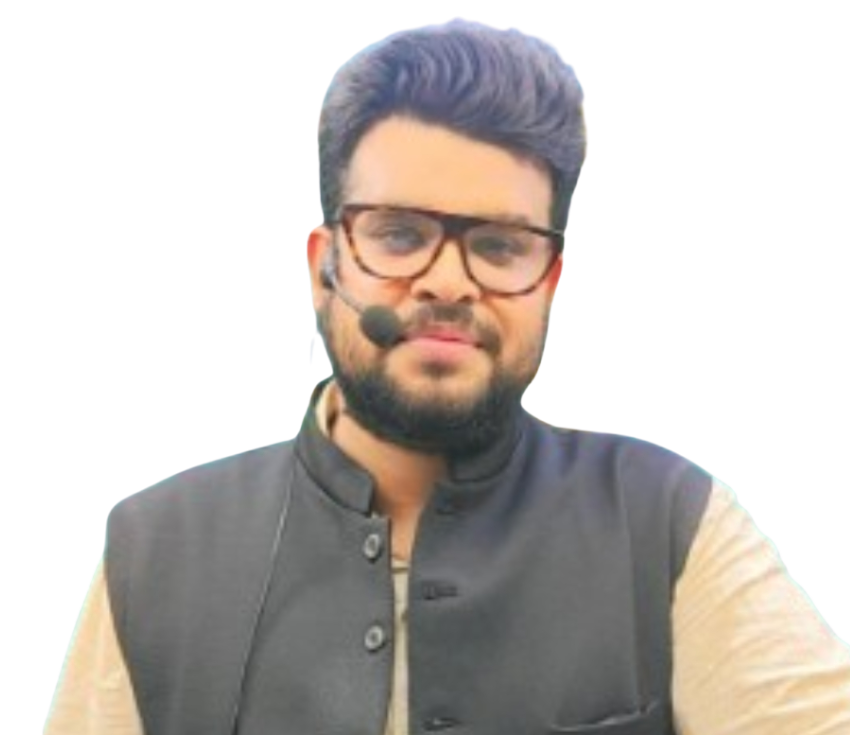
Akash Sir
Polity · 8+ Yrs
Free Resources
Official Mobile App

RASOnly App
by OTSAdda · Free
Full Video Lectures
Mock Tests & PYQs
Daily Current Affairs
AI Mock Interview
Free Download · No subscription needed to install
RAS 2024 Toppers — RASonly
Rank 2
Virendra Charan
Rank 9
Bhoopinder Singh
Rank 26
Aanchal Nagpal
Rank 33
Lokendra Singh
Rank 45
Amar Rathore
Rank 46
Manasvini Verma

Join RASonly WhatsApp Community
Get daily current affairs, exam alerts, free study material and tips from expert faculty — right on WhatsApp.
Join for Free →RASonly Interview Guidance Program

Mr. Ashok Jain
Ex-Chief Secretary Govt of Rajasthan
- IAS officer of the 1981 batch, Rajasthan cadre.
- Passionate about mentoring the next generation of RAS officers with real-world insights.
- Got retired in Dec 2017 from the post of Chief Secretary of the state of Rajasthan.

Mr. Guru Charan Rai
Ex-ASP / SP in Jaisalmer
- Guru Charan Rai, IPS (Retd), retired as Inspector General of Police (Security), Rajasthan, Jaipur in 2017.
- Served as ASP and SP in Jaisalmer, Nagaur, Sri Ganganagar, Sawai Madhopur, Dausa, Sikar, and Karauli.
- He also held key positions as DIGP and IGP in the Law and Order division.

Mr. Rakesh Verma
Ex-IAS Officer, B.Tech, MBA, and M.A. (Economics)
- IAS officer of the 1981 batch and retired in Chief Secretary Rank.
- Civil servant of high repute and vast experience.
- Has been teaching UPSC CSE subjects for the last six years.
Related Post
Daily Current Affairs for RAS Exam Preparation 2026

Kundan Art Display in Hong Kong
October 23, 2026
Rajasthan International Folk Festival 2026
October 23, 2026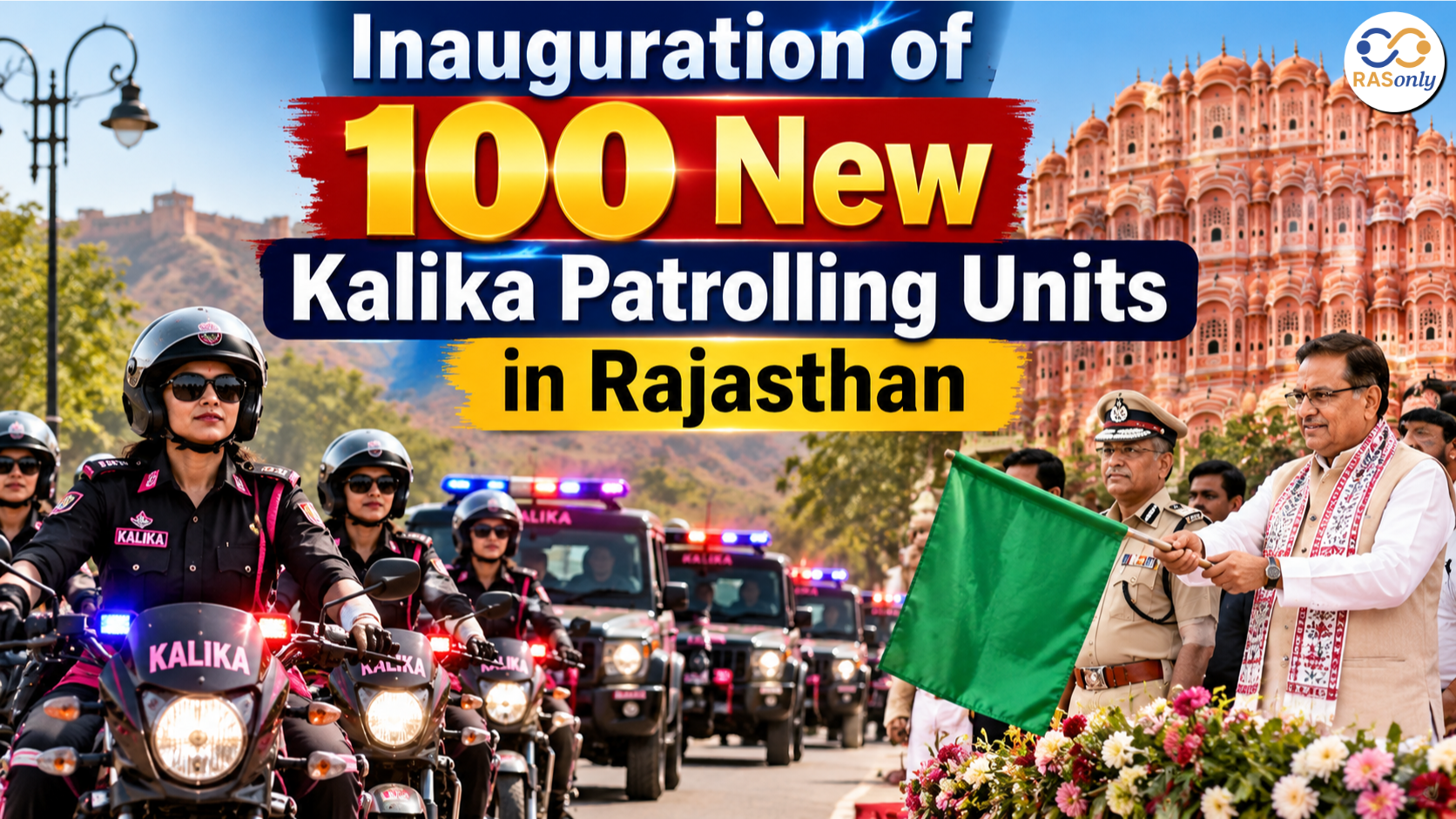
Inauguration of 100 New Kalika Patrolling Units in Rajasthan
October 21, 2026